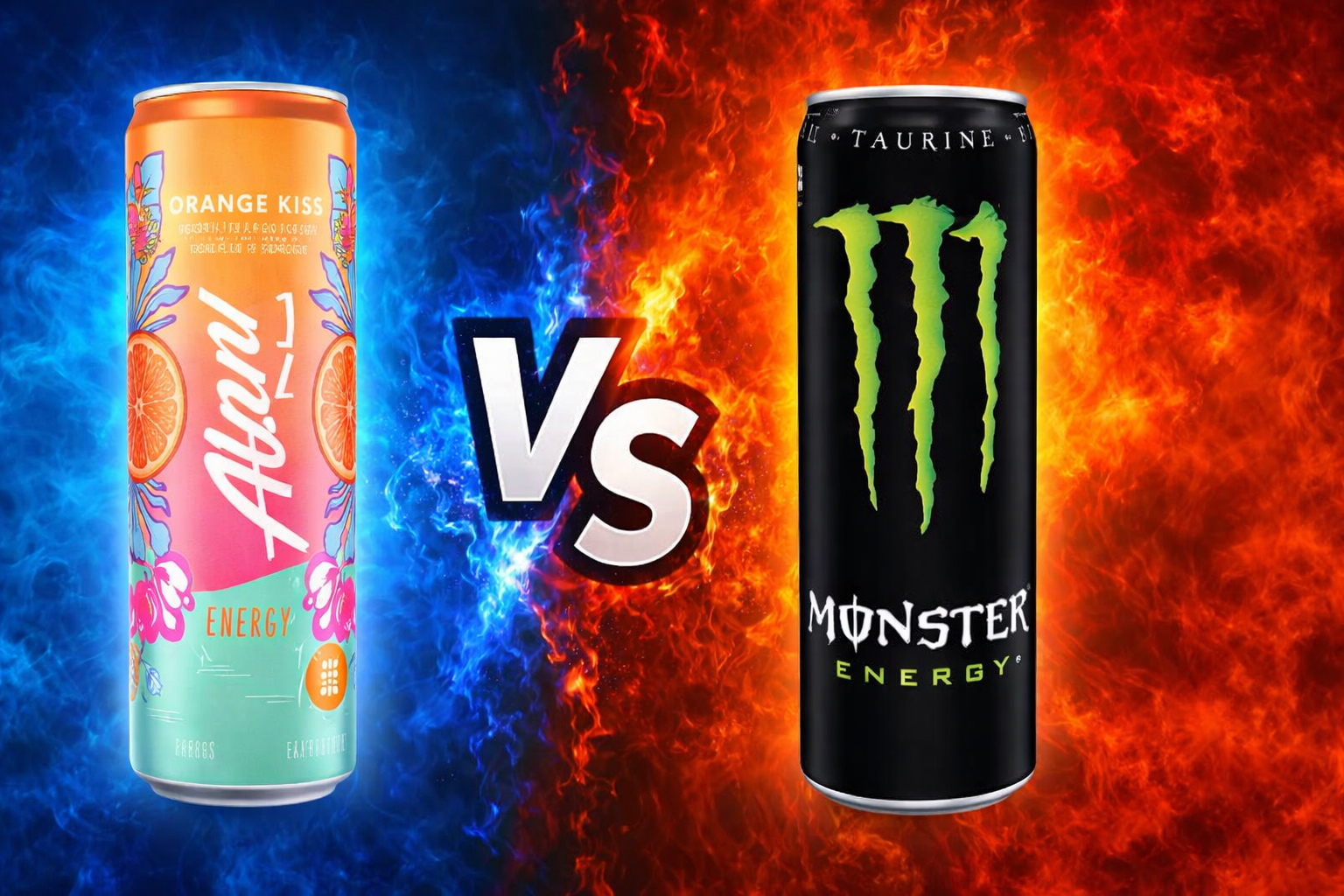
When people search for Alani Nu vs Monster, they’re usually trying to answer a simple question: which energy drink is better for everyday use? Both drinks promise energy, focus, and a boost during busy days, workouts, or long study sessions. But once you start paying attention to how people actually use them, the differences become pretty clear.
Monster has been around much longer and has built a reputation as a bold, high-energy drink often associated with extreme sports, gaming, and long nights. Alani Nu, on the other hand, feels like a newer generation of energy drink. It’s marketed more toward fitness enthusiasts and people who want energy without feeling like they’re drinking something heavy or overly aggressive.
In practical terms, both drinks usually contain around 200 mg of caffeine per can, which means the energy boost itself is fairly similar. The real differences show up in flavor style, branding, ingredients, and the situations where people tend to reach for each drink.
I first noticed this difference a few years ago at a gym where I used to work out regularly. In the refrigerator near the front desk, there were always cans of both brands sitting side by side. Monster cans were usually the big 16-ounce ones with the familiar claw logo, while Alani Nu cans were smaller, colorful, and looked almost like sparkling water or a trendy soda. People grabbing Monster often looked like they needed serious energy before a heavy workout or after a long day at work. Meanwhile, the people choosing Alani Nu often seemed to be picking something lighter before a cardio session or as a mid-morning boost.
The first thing most people notice is the flavor experience. Monster drinks tend to have a thicker, sweeter taste. Some flavors like Pipeline Punch or Mango Loco almost feel like fruit juice mixed with energy drink syrup. It’s bold and unmistakable. You can tell immediately you’re drinking an energy drink.
Alani Nu flavors feel different. They’re usually lighter, brighter, and less syrupy. I remember trying the Cosmic Stardust flavor for the first time and thinking it tasted closer to a flavored sparkling beverage than a traditional energy drink. It still had sweetness, but the carbonation and flavor balance made it feel easier to drink quickly.
Another difference I noticed over time is can size and consumption behavior. Monster’s standard cans are often 16 ounces, while Alani Nu cans are usually 12 ounces. That might not sound like a big deal, but in real life it changes how people drink them.
I’ve seen plenty of people slowly sip a Monster over an hour or two, especially at offices or gaming setups. The larger size makes it feel like something you settle in with. Alani Nu, being smaller, often gets finished faster. I’ve watched people grab one before heading into a gym class or while driving to work, almost like grabbing a soda.
The branding differences also play a huge role in why people choose one over the other. Monster has always leaned heavily into action sports and high-adrenaline imagery. You see it at motocross events, skate parks, and gaming tournaments. The black cans and neon logos give it a rebellious, edgy feel.
Alani Nu’s branding is almost the opposite. The cans are pastel-colored, playful, and modern. In many gyms and nutrition stores, I’ve noticed that Alani Nu displays are often placed near supplements like protein powders or pre-workouts rather than in the typical energy drink aisle.
This subtle positioning changes how people perceive it. Monster feels like a mainstream energy drink, while Alani Nu feels more like a fitness lifestyle product.
Another thing I’ve observed over the years is how different groups of people gravitate toward each drink. At convenience stores, Monster buyers are incredibly diverse. Construction workers grabbing one early in the morning, college students buying two before a long study session, night-shift workers stocking up before work. It has become a universal energy drink.
Alani Nu seems more concentrated among gym-goers, fitness influencers, and younger consumers who care about ingredients and aesthetics. I remember standing in line at a supplement shop once where two people in front of me were debating which Alani Nu flavor tasted best with a protein bar. That kind of conversation rarely happens with Monster.
The ingredient conversation also comes up frequently. Both drinks contain caffeine and common energy drink ingredients like taurine and B vitamins, but Alani Nu often highlights that it contains zero sugar and uses ingredients like L-theanine, which some people say helps create smoother energy without the jittery feeling.
Whether that difference is noticeable varies from person to person. Personally, I’ve noticed that Monster sometimes hits harder and faster. When I drink a full can quickly, the caffeine surge feels more intense. Alani Nu tends to feel steadier, especially if I drink it before a workout.
I remember one afternoon when I drank a Monster before a long drive. Within about twenty minutes, I felt extremely alert but also slightly restless. A week later I tried the same thing with Alani Nu, and the effect felt smoother, almost like drinking a strong coffee rather than a typical energy drink spike.
Another interesting difference is how people talk about flavors. Monster fans often have a single favorite flavor they stick with for years. I know people who drink nothing but the original Monster or Ultra White. It becomes almost part of their routine.
Alani Nu drinkers, in my experience, tend to rotate flavors more. The brand releases a lot of limited or trendy flavors like Cherry Slush or Breezeberry, and people often try new ones just out of curiosity. It reminds me a bit of how people explore different sparkling water brands or seasonal coffees.
Pricing behavior also reveals subtle differences. At many convenience stores, Monster cans are often discounted in 2-for deals. People frequently grab multiple cans at once, almost like stocking up.
Alani Nu usually sits in the premium section with fewer promotions. I’ve noticed people buying a single can rather than multiple. That small difference hints at how each drink is positioned in the market.
Another observation comes from how these drinks show up in social settings. Monster appears everywhere: gaming setups, road trips, construction sites, late-night study groups. It’s almost part of the background of modern work culture.
Alani Nu shows up more often in fitness-related contexts. I’ve seen people photograph the cans next to gym equipment or protein shakes. It has become part of the visual culture of workouts and health-oriented social media.
One small detail I realized after trying both brands repeatedly is how carbonation feels different. Monster tends to have stronger carbonation that lasts longer throughout the can. Alani Nu sometimes feels slightly softer, which actually makes it easier to drink quickly before a workout.
The visual design of the cans also influences perception more than people realize. When someone walks into a store fridge, Monster cans are instantly recognizable because of the large claw logo and darker colors. Alani Nu cans stand out differently with bright pastel colors and bold typography.
I once watched someone at a gas station stare at the cooler for nearly a minute deciding what to buy. They finally grabbed Alani Nu simply because the design looked “cleaner.” That moment stuck with me because it showed how packaging can influence decisions even when caffeine content is similar.
In terms of which one is better, the answer really depends on how someone plans to use it.
If someone wants a large, bold energy drink for long workdays, gaming, or intense focus, Monster tends to fit that role better. The larger cans and heavier flavor profile make it feel like a serious energy boost.
If someone wants a lighter energy drink before workouts or during busy mornings, Alani Nu often feels more approachable. The smaller can size and smoother flavor make it easier to drink without feeling overwhelmed.
Over time I realized that the two drinks actually serve slightly different moments in people’s routines. Monster often appears when people expect to need sustained energy for hours. Alani Nu shows up when someone wants a quick, clean boost without committing to a big 16-ounce can.
And that’s probably the biggest difference most comparison articles miss. On paper, both drinks look similar because the caffeine content is close. But once you watch how people actually choose them in real life — at gyms, convenience stores, and offices — you see they occupy very different spaces in daily habits.
Monster feels like the classic, heavy-duty energy drink that defined the category for years. Alani Nu feels like a modern, lifestyle-focused energy drink designed for a new generation that cares about flavor design, branding, and fitness culture.
Both work well, but they tend to show up in completely different moments of the day — and once you start noticing that pattern, it becomes impossible to unsee.