ATH Sport vs LMNT: My Honest Comparison In 2026
Most electrolyte products are designed around a single assumption: more sodium equals better hydration. That assumption only holds under specific physiological conditions — mainly high sweat loss or low insulin states. ATH Sport and LMNT diverge precisely at this point, which makes comparing them useful because their formulations reflect two very different interpretations of electrolyte replacement.
ATH is built around maintaining electrolyte balance during regular training loads, while LMNT assumes significant sodium depletion and prioritizes aggressive replacement. The gap between those assumptions shows up in electrolyte ratios, ingredient forms, taste profile, and real-world usability.
What Is ATH Sport?
ATH Sport comes from Athletic Truth Group, a performance nutrition company focused on athletes who train consistently but don’t necessarily operate in extreme endurance environments.
Its hydration formula is designed around the idea that most workouts don’t require massive sodium loading. Instead, the formula mirrors typical sweat composition more closely by pairing moderate sodium with meaningful potassium and magnesium.
The product sits in a middle ground between clinical oral rehydration solutions and minimalist electrolyte packets. That positioning makes it usable across a wide range of training intensities without pushing electrolyte intake into ranges that only heavy sweaters actually need.
The brand also emphasizes label transparency and avoids complex ingredient stacks, which keeps the formula predictable from a physiological standpoint.
What Is LMNT?
LMNT was built around a different premise: modern diets — particularly low-carb diets — often lead to lower insulin levels, which increase sodium excretion through the kidneys. Add heavy sweating and sodium requirements can climb significantly.
The formula is intentionally aggressive, delivering 1000 mg sodium per packet. That amount is closer to clinical rehydration ranges than typical sports drinks, though LMNT avoids glucose entirely.
Its target user isn’t casual gym-goers — it’s people training in heat, endurance athletes, sauna users, and low-carb followers who experience symptoms like headaches, fatigue, or dizziness linked to sodium depletion.
The simplicity of the formula reflects its purpose: high sodium with minimal interference from other nutrients.
Electrolyte Quality & Sources
ATH uses sodium chloride combined with potassium citrate and magnesium citrate. Citrate salts tend to be less irritating to the gastrointestinal tract and can slightly buffer acidity, which reduces the likelihood of stomach discomfort during moderate exercise.
LMNT uses sodium chloride, potassium chloride, and magnesium malate. Chloride salts deliver electrolytes quickly but contribute to the sharper saline taste profile. Magnesium malate is metabolically interesting because malate participates in the Krebs cycle, which may support energy metabolism during prolonged exertion, though the dose here is modest.
The difference in salt forms subtly affects both tolerance and taste perception. Citrates generally produce a smoother mouthfeel, while chloride-heavy formulas feel more mineral-forward.
Electrolyte Amounts (Exact Numbers Per Serving)
ATH Sport delivers approximately:
- Sodium: ~500 mg
- Potassium: ~250 mg
- Magnesium: ~50 mg
This creates a sodium-to-potassium ratio close to 2:1, which aligns more closely with average sweat electrolyte ratios.
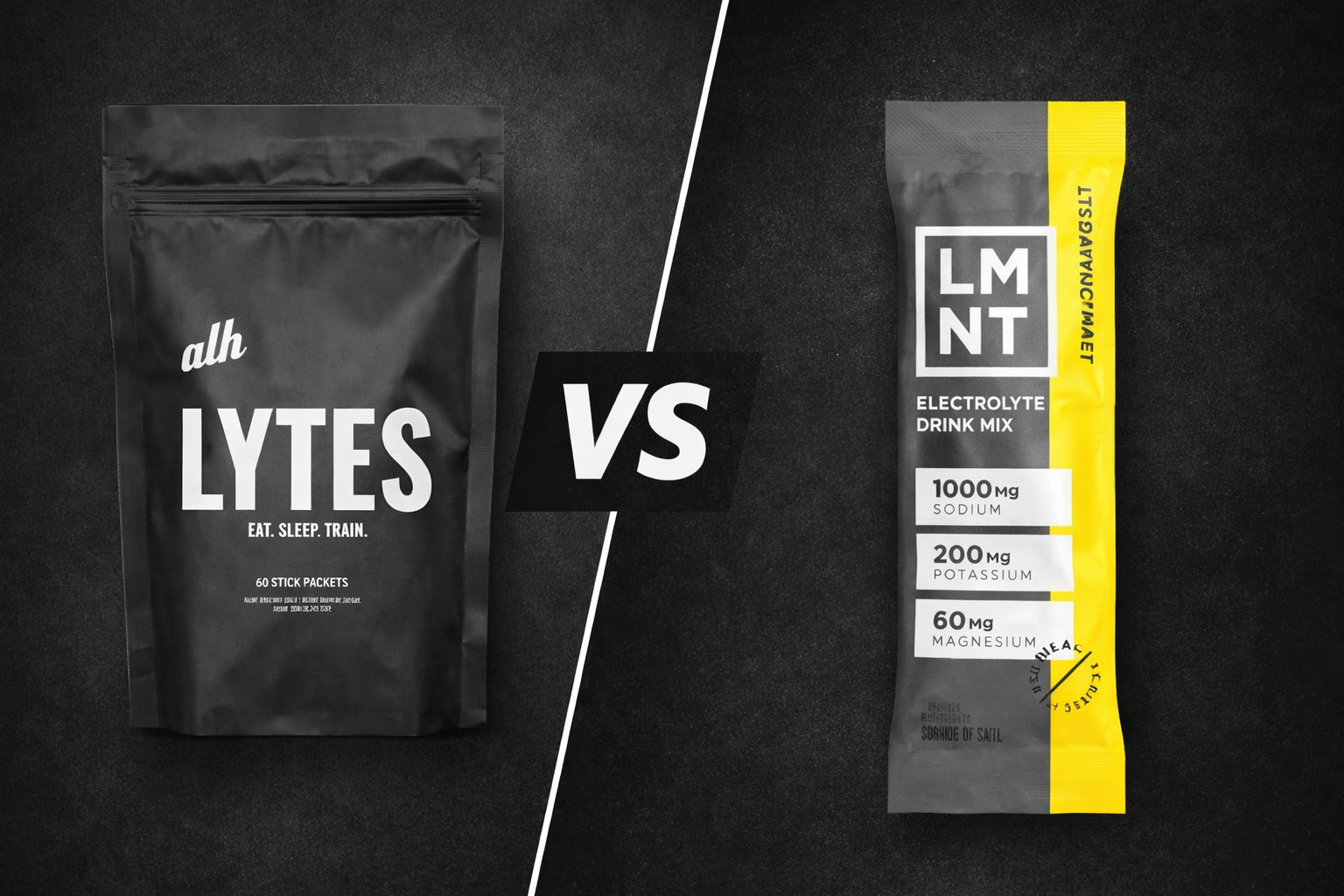
LMNT delivers:
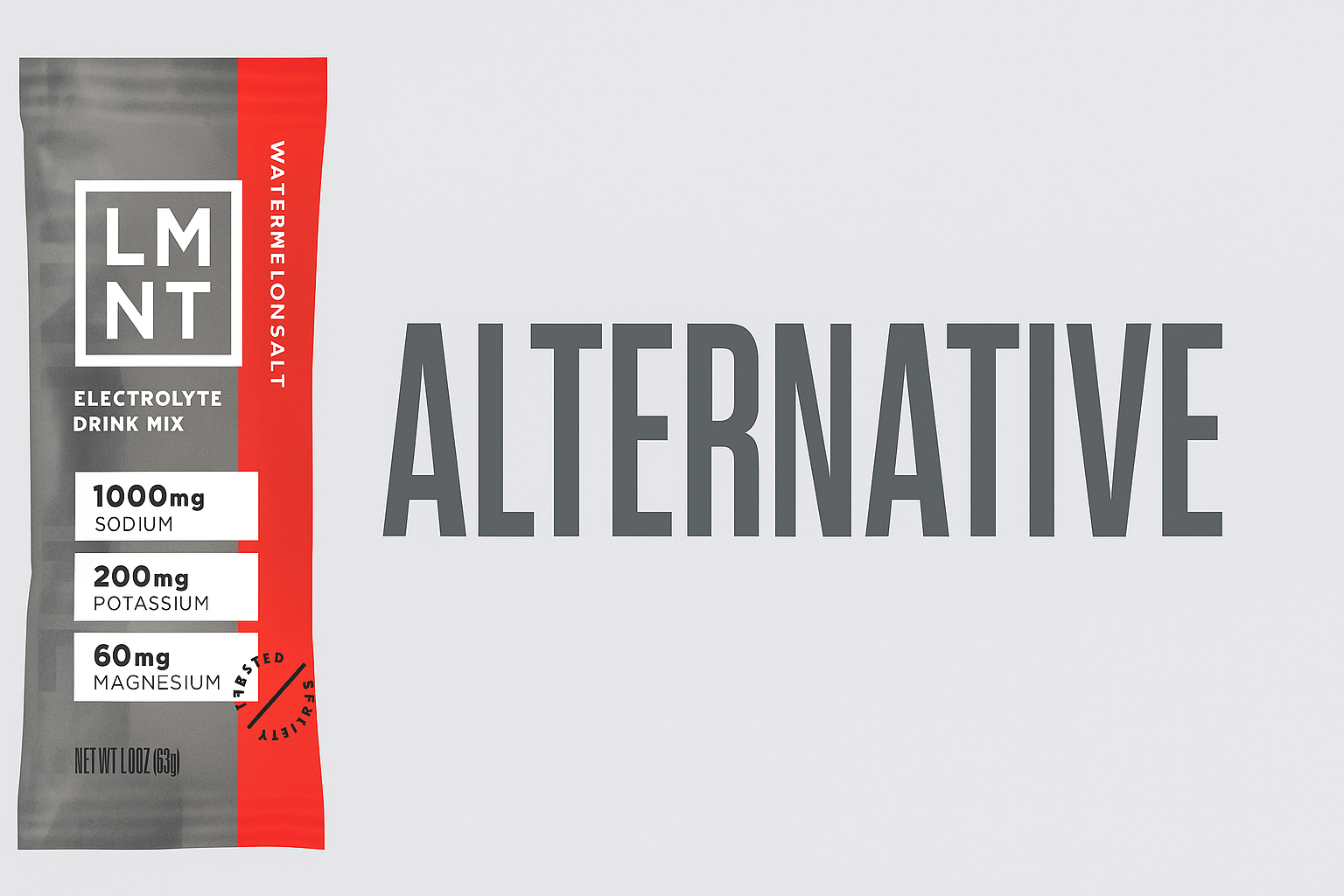
- Sodium: 1000 mg
- Potassium: 200 mg
- Magnesium: 60 mg
Here the ratio shifts closer to 5:1, clearly prioritizing sodium replacement over intracellular electrolyte balance.
The practical implication is fluid retention. Higher sodium increases plasma volume expansion, which can be beneficial during long endurance efforts but unnecessary for shorter sessions where potassium balance plays a larger role in cellular hydration.
Sugar Content
ATH includes roughly 1–2 grams of carbohydrate per serving. That small amount can activate sodium-glucose co-transporters (SGLT1) in the small intestine, which increases water absorption efficiency without meaningfully affecting blood glucose for most users.
LMNT contains zero carbohydrate, which eliminates any glycemic effect and keeps insulin response minimal. This is particularly relevant for fasting states where even small glucose amounts may be undesirable.
The tradeoff is transport efficiency versus metabolic neutrality. Small glucose amounts can improve absorption speed, while zero-carb formulas rely entirely on passive electrolyte-driven fluid movement.
Sweeteners Used
Both products rely on stevia, but their sensory profiles differ because of electrolyte concentration.
ATH’s lower sodium allows stevia’s sweetness to come through more clearly, resulting in a lighter flavor profile with minimal aftertaste.
LMNT’s high sodium dominates flavor perception, so stevia functions more as a balancing agent than a primary flavor driver. Some users detect a slight bitterness depending on flavor variant, which is common with stevia at higher mineral concentrations.
Taste tolerance becomes a practical consideration for daily use frequency.
Ingredient Cleanliness
ATH keeps its formula straightforward with natural flavors, no artificial dyes, and no preservatives. The inclusion of small carbohydrates slightly increases ingredient complexity but remains minimal compared to traditional sports drinks.
LMNT’s formula is even more stripped down, essentially combining electrolytes, natural flavor, and stevia. The absence of carbohydrates reduces ingredient interactions and simplifies digestion.
From a formulation standpoint, both prioritize functional simplicity over added performance compounds.
Hydration Effectiveness
ATH performs well in scenarios where fluid replacement needs are moderate but consistent — such as strength training sessions, indoor workouts, or long workdays with mild sweating. The balanced electrolyte profile supports both extracellular fluid retention and intracellular hydration without creating a strong osmotic pull.
LMNT’s effectiveness becomes noticeable during prolonged sweating or heat exposure. High sodium increases plasma osmolality, which stimulates thirst and encourages fluid retention, helping maintain blood volume during extended activity.
Because LMNT is hypertonic at typical mixing volumes, many users dilute it more heavily to reduce osmotic load and improve drinkability. That flexibility allows users to tailor concentration based on sweat rate.
Health & Wellness Benefits
ATH’s balanced mineral profile supports neuromuscular function during repeated training sessions. The moderate sodium reduces the likelihood of fluid shifts that can cause bloating, while potassium supports muscle contraction efficiency.
LMNT’s benefits are more noticeable in preventing symptoms associated with sodium depletion — such as orthostatic dizziness or exercise-associated headaches — particularly in low-carb diets where renal sodium loss increases.
The distinction here is maintenance versus correction. ATH supports steady electrolyte balance, while LMNT corrects larger sodium deficits.
Taste & Mixability
ATH dissolves quickly with a lighter mouthfeel due to lower mineral density. The flavor profile remains consistent even at lower water volumes.
LMNT mixes cleanly but produces a thicker mineral sensation, especially at standard dilution levels. Increasing water volume significantly improves drinkability without altering electrolyte intake.
Flavor intensity often determines whether users consume a product consistently over time.
Who Should Choose ATH Sport
ATH aligns well with athletes training under moderate conditions who want electrolyte support without pushing sodium intake toward upper ranges. It also suits individuals who experience stomach sensitivity with high-sodium formulas or who prefer a lighter flavor profile that can be consumed daily.
Who Should Choose LMNT
LMNT fits scenarios involving high sweat rates, long-duration endurance training, hot environments, or low-carb diets where sodium losses increase significantly. It also works well for individuals who notice performance drops or fatigue linked to sodium depletion rather than general dehydration.
Key Differences That Matter Most
- Sodium content differs by roughly 500 mg, which changes fluid retention dynamics
- ATH maintains a closer sodium-potassium balance, while LMNT heavily favors sodium
- ATH includes small carbohydrates to enhance absorption; LMNT avoids them entirely
- LMNT produces a stronger osmotic effect, influencing thirst and fluid intake behavior
- Taste intensity differs significantly due to mineral concentration
Pros and Cons
ATH Sport
Pros
- Balanced electrolyte ratios
- Easier daily usability
- Lower sodium reduces risk of excessive intake
- Smoother taste profile
Cons
- May underdeliver sodium for prolonged sweating
- Slight carbohydrate presence may not suit strict fasting
LMNT
Pros
- High sodium supports heavy sweat replacement
- Zero carbohydrate
- Minimal ingredient list
- Strong plasma volume support
Cons
- Too concentrated for casual hydration
- Strong taste limits frequent use for some people
- Sodium intake may exceed needs in low-sweat conditions
Which One Makes More Sense?
The deciding factor is sweat rate combined with dietary sodium intake.
For most indoor training or moderate workouts, ATH provides enough electrolyte support without overshooting sodium needs. For long sessions, heat exposure, or low-carb diets, LMNT’s higher sodium prevents the drop in plasma volume that can reduce performance.
Rather than choosing based on brand preference, matching electrolyte intake to actual sodium losses produces the most noticeable difference in how you feel during and after training.
Practical Decision Framework
Choose ATH if your workouts are under 90 minutes, sweat loss is moderate, and you want something you can drink regularly without monitoring sodium intake closely.
Choose LMNT if you train in heat, sweat heavily, follow a low-carb diet, or notice symptoms that improve with higher sodium intake.
Electrolyte formulas work best when matched to physiology rather than trends — and these two products illustrate how different hydration strategies can serve completely different needs.