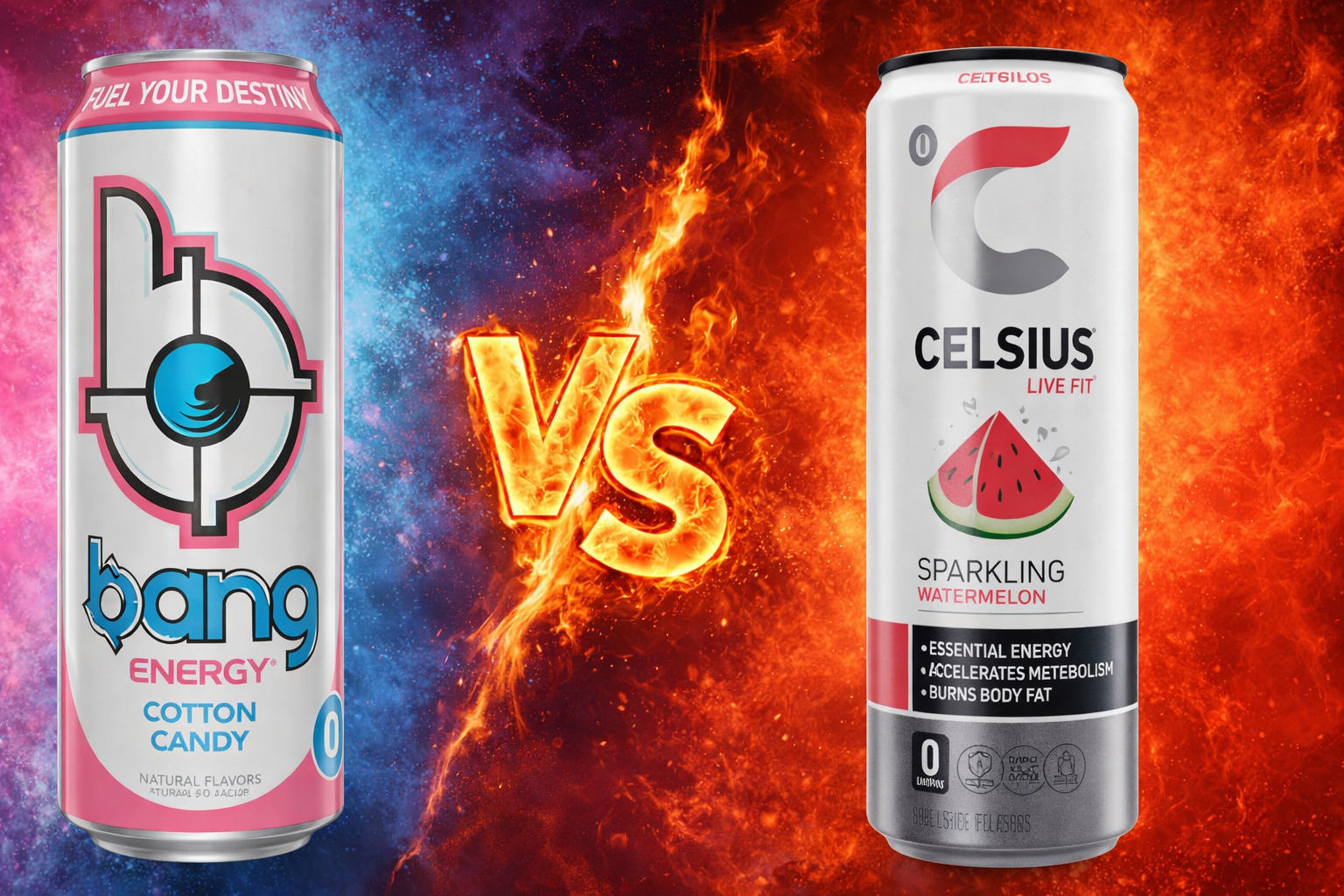
If you’ve ever stood in front of a gas station fridge staring at Bang and Celsius, wondering “Which one is actually better for me?” — yeah, I’ve been there. I’ve tried both more times than I can count, for workouts, long writing sessions, and those brutal afternoons when coffee just doesn’t cut it.
This isn’t a lab-coat review. This is my real, personal experience breaking down Bang vs Celsius in plain English, for people who just want to know what they’re putting into their body.
What Is Bang Energy? (And How It Hits)
Bang Energy is the drink I reach for when I want maximum impact. One can packs around 300 mg of caffeine, which is… a lot. You feel it fast.
Bang markets itself as zero sugar, zero calories, and “supercharged” with things like BCAAs and CoQ10. From my experience, Bang is less about balance and more about raw stimulation. When I drink it, I’m locked in — but I also know I’m riding close to my caffeine limit.
My honest feeling:
Bang feels like flipping a switch from OFF to ON instantly.
What Is Celsius? (And Why It Feels Different)
Celsius takes a completely different approach. One can usually contains 200 mg of caffeine, mostly from green tea and guarana, plus ingredients like ginger and chromium.
Celsius doesn’t smack you in the face with energy. Instead, it builds gradually. I notice it more during workouts — steady energy, less jitters, and no “wired” feeling.
My honest feeling:
Celsius feels cleaner, smoother, and easier on my system.
Caffeine: This Is the Biggest Difference
Let’s be real — caffeine is why most of us are here.
- Bang: ~300 mg caffeine
- Celsius: ~200 mg caffeine
For me:
- Bang = intense focus, fast energy, but easy to overdo
- Celsius = controlled energy I can drink without worrying as much
If you’re sensitive to caffeine, Bang can feel overwhelming. Celsius rarely does.
Sugar, Calories & Carbs
This is one area where both drinks shine — especially compared to older energy drinks.
- Bang: 0 sugar, 0 calories, 0 carbs
- Celsius: 0 sugar, ~10 calories, very low carbs
In real life, I don’t notice a difference here. Neither spikes my blood sugar, and both work fine if you’re watching calories.
Ingredients: Synthetic vs Functional Feel
Here’s how I personally categorize them:
Bang ingredients feel “performance-focused.”
BCAAs, creatine-related compounds, CoQ10 — lots of buzzwords. Some are controversial, some are underdosed, but the caffeine does the heavy lifting.
Celsius ingredients feel “fitness-focused.”
Green tea extract, ginger, chromium — more in line with metabolism and endurance.
If I’m lifting or doing cardio, I lean Celsius. If I’m grinding through work, Bang wins.
Taste & Flavor (This Actually Matters)
Let’s talk flavor honestly.
- Bang flavors: Wild, bold, sometimes too much
- Hits hard but can taste artificial
- Celsius flavors: Cleaner, lighter, more drinkable
- Easier to finish without flavor fatigue
I’ve dumped unfinished Bang cans before because the sweetness got overwhelming. I’ve never had that issue with Celsius.
How They Make Me Feel After
This is where my preference really splits.
Bang after-effects (for me):
- Strong energy
- Sometimes jittery
- Mild crash if I haven’t eaten
Celsius after-effects (for me):
- Smooth comedown
- No noticeable crash
- Feels easier on my stomach
If I drink Bang too late in the day, sleep is not happening. Celsius gives me more flexibility.
Price & Availability
Both are easy to find — gas stations, grocery stores, online.
- Bang: Often cheaper, especially in bulk
- Celsius: Slightly more expensive, but feels more “premium”
If price matters, Bang usually wins. If how you feel matters, Celsius justifies the extra cost.
Bang vs Celsius: Which One Should You Choose?
Here’s my straight-up recommendation:
Choose Bang if:
- You want maximum caffeine
- You need intense focus right now
- You’re tolerant to high caffeine
- Taste is secondary to effect
Choose Celsius if:
- You want clean, steady energy
- You work out or stay active
- You avoid caffeine crashes
- You care about ingredient quality
Final Thoughts: Bang vs Celsius — My Honest Verdict
After drinking both Bang and Celsius in real life (not just reading labels), here’s my straight-up conclusion.
If I want raw power and instant stimulation, Bang does exactly what it promises. The caffeine hit is strong, fast, and undeniable. But it’s also something I treat carefully. For me, Bang isn’t an everyday drink — it’s more of a “I really need this today” option.
Celsius, on the other hand, fits much more naturally into a daily routine. The energy feels cleaner, the ingredients align better with an active lifestyle, and I don’t worry about crashes or feeling overstimulated. That’s why I see so many people — myself included — treating Celsius more like coffee than a traditional energy drink.
So when it comes to Bang vs Celsius, I don’t think one is objectively “better.” They’re built for different people and different moments.
- Choose Bang if you want maximum caffeine and immediate impact
- Choose Celsius if you want steady, functional energy you can rely on daily
Bang vs Celsius: Brand Momentum, Market Pressure & What I’m Seeing
When I look at Bang vs Celsius beyond caffeine, flavor, and ingredients, I think the brand and market story matters just as much — especially if you’re deciding which drink fits into your daily routine.
In today’s crowded energy drink space, Celsius and Bang Energy are both fighting hard for consumer attention, but they’re clearly playing different games.
Celsius, in particular, has been on a wild ride. Its stock price dropped more than 50% in a short period, and at one point it was nearly 70% down from its peak. That kind of decline naturally made people question whether Celsius’s growth story was slowing down.
From my point of view, though, the situation isn’t that simple.
I’ve seen analysis from Barron’s suggesting that Celsius may actually be oversold. And honestly, that argument makes sense when you look at how the brand is expanding into grocery stores and online sales — exactly where health-conscious buyers are spending their money right now.
What really stands out to me is Celsius’s marketing strategy. The brand leans heavily into sugar-free, functional energy and promotes itself through fitness influencers rather than flashy celebrity ads. That approach is working. Reports show that gym-related sales jumped by roughly 30% in Q2 2023, which matches what I personally see at gyms — Celsius is everywhere.
Still, the pressure is real.
According to Nielsen data, Bang Energy has been growing faster, with sales growth around 13.4%, compared to Celsius’s 5.9%. That gap highlights just how competitive the energy drink market is, especially with major players like Red Bull and Monster Beverage dominating shelves.
From my perspective, Bang wins on raw intensity and short-term impact. Celsius feels like it’s aiming to become a daily habit, more like coffee than a once-in-a-while energy boost. That point really clicked for me after seeing commentary from Anthony Vendetti at Maxim Group, who mentioned that many consumers drink Celsius daily without thinking twice.
I also see potential upside in Celsius’s international expansion plans. If executed well, those markets could unlock serious growth as demand rises for “better-for-you” energy drinks.
That said, Celsius still has work to do. Slower sales growth means it has to fight harder to keep momentum — especially against a faster-growing competitor like Bang.