Bang vs Monster Energy: My Honest Comparison
I’ve had both Bang Energy and Monster Energy more times than I can count. Early mornings, late nights, workouts, deadlines. Sometimes for energy. Sometimes just to survive the day.
People argue hard about which one’s better. So instead of stats or labels, I’m sticking to what actually matters to me: how they feel when I drink them.
This is my real, no-nonsense experience with Bang vs Monster.
What Is Bang Energy?
Bang Energy is a sugar-free energy drink that comes in a 16-oz can. It’s marketed hard toward athletes, gamers, and anyone chasing a strong stimulant kick.
Here’s what stands out:
- Around 300 mg of caffeine per can
- Zero sugar and zero calories
- Added ingredients like Super Creatine, EAAs/BCAAs, CoQ10, and B-vitamins
- Loud, candy-style flavors
In reality, Bang’s punch comes almost entirely from caffeine. The extra ingredients are included in very small amounts and work more as marketing than real performance boosters.
What Is Monster Energy?
Monster Energy is one of the most popular energy drink brands in the world. It comes in a huge range of options, from full-sugar and zero-sugar cans to juice blends, hydration drinks, and coffee-style energy.
Here’s the quick breakdown:
- About 160 mg of caffeine per 16-oz can (varies by line)
- Available in high-sugar and zero-sugar versions
- Includes ingredients like taurine, B-vitamins, ginseng, guarana, and L-carnitine
- Massive variety in flavors and formats
Monster is less about an extreme stimulant hit and more about being a sippable, everyday energy drink you can ease into.
Electrolyte Amounts (Exact Numbers per Can)
| Drink | Electrolyte Presence |
|---|---|
| Bang Energy | Small amounts of potassium, magnesium, and calcium salts. Trace levels only. Not hydration-focused. |
| Monster Energy (standard) | Minimal electrolytes. Not designed as a hydration drink. |
| Monster Rehab | Some sodium and magnesium, but still modest compared to real sports drinks. |
Bottom line: Neither Bang nor standard Monster replaces a true electrolyte or hydration drink.
Caffeine Content
Bang Energy delivers about 300 mg of caffeine per 16-oz can. That’s a heavy dose in one sitting and lands close to the generally recommended daily maximum of 400 mg per day for healthy adults. For me, one can already feels like pushing the upper limit.
Monster Energy contains roughly 160 mg of caffeine per 16-oz can. It’s noticeably lower and easier to manage, especially if you sip it over time or plan to have another source of caffeine later in the day.
The big difference is simple: Bang packs nearly double the caffeine of Monster in a single can, which makes it feel more intense but also easier to overdo.
Sugar Content
Bang Energy contains 0 grams of sugar. No spikes, no sweetness from real sugar, and no added calories.
Monster Energy depends on the version. Monster Original has roughly 50 to 54 grams of sugar, which is a lot in one can. Monster Zero and Ultra versions drop that to 0 grams.
If sugar matters to you, Bang or Monster Ultra are the obvious choices.
Carbohydrate Content
Bang sits around 0 to 2 grams of carbs, depending on the flavor. It stays low because there’s no sugar involved.
Monster varies again by type. Monster Original has about 54 grams of carbs, almost all from sugar. Monster Zero comes in much lower, usually around 2 to 3 grams.
The key difference is simple: Monster’s carbs come almost entirely from sugar in the full-sugar versions, while Bang stays low across the board.
Ingredients Breakdown
Bang Energy
Bang keeps things pretty straightforward. The main driver is caffeine anhydrous, and that’s where almost all of the effect comes from. The rest of the formula sounds impressive on the label but shows up in very small doses.
It includes Creatyl-L-leucine (branded as “Super Creatine”), which has weak supporting evidence and is likely underdosed. You also get EAAs and BCAAs, but again, in tiny amounts that don’t meaningfully impact performance.
On top of that, Bang adds CoQ10 and B-vitamins (B3, B6, B12), plus artificial sweeteners like sucralose and acesulfame-K to keep calories at zero.
Monster Energy
Monster uses a more blended stimulant approach. Its caffeine comes from both synthetic sources and guarana, which tends to feel a bit smoother for some people.
The formula also includes taurine, Panax ginseng, L-carnitine, and inositol. None of these are high-dose performance enhancers on their own, but together they contribute to Monster’s more balanced, less aggressive feel.
Monster also relies on B-vitamins, and the sweetener choice depends on the version. Full-sugar cans use real sugar, while zero and Ultra versions use artificial sweeteners instead.
Health & Wellness Benefits
Bang Energy delivers strong alertness and focus mainly because of its very high caffeine content. The upside is zero sugar and zero calories, which helps if you’re watching intake. The downside is that the added ingredients don’t offer much real-world benefit beyond what the caffeine already does.
Monster Energy provides a more moderate caffeine boost. The full-sugar versions can give quick energy, but they also come with a higher risk of a crash later on. Zero-sugar and Ultra lines lower the calorie load, but the added ingredients still offer limited performance benefits beyond caffeine.
At the end of the day, neither Bang nor Monster should be considered a health product. They’re functional energy drinks, not wellness supplements.
Price
Bang Energy usually costs around $2 to $3 per can in the US. Where it stands out is value per stimulant. You’re getting a lot of caffeine for the money.
Monster Energy is priced in the same $2 to $3 per can range, but it often gets cheaper when you buy multipacks or catch store deals.
Flavor and Taste
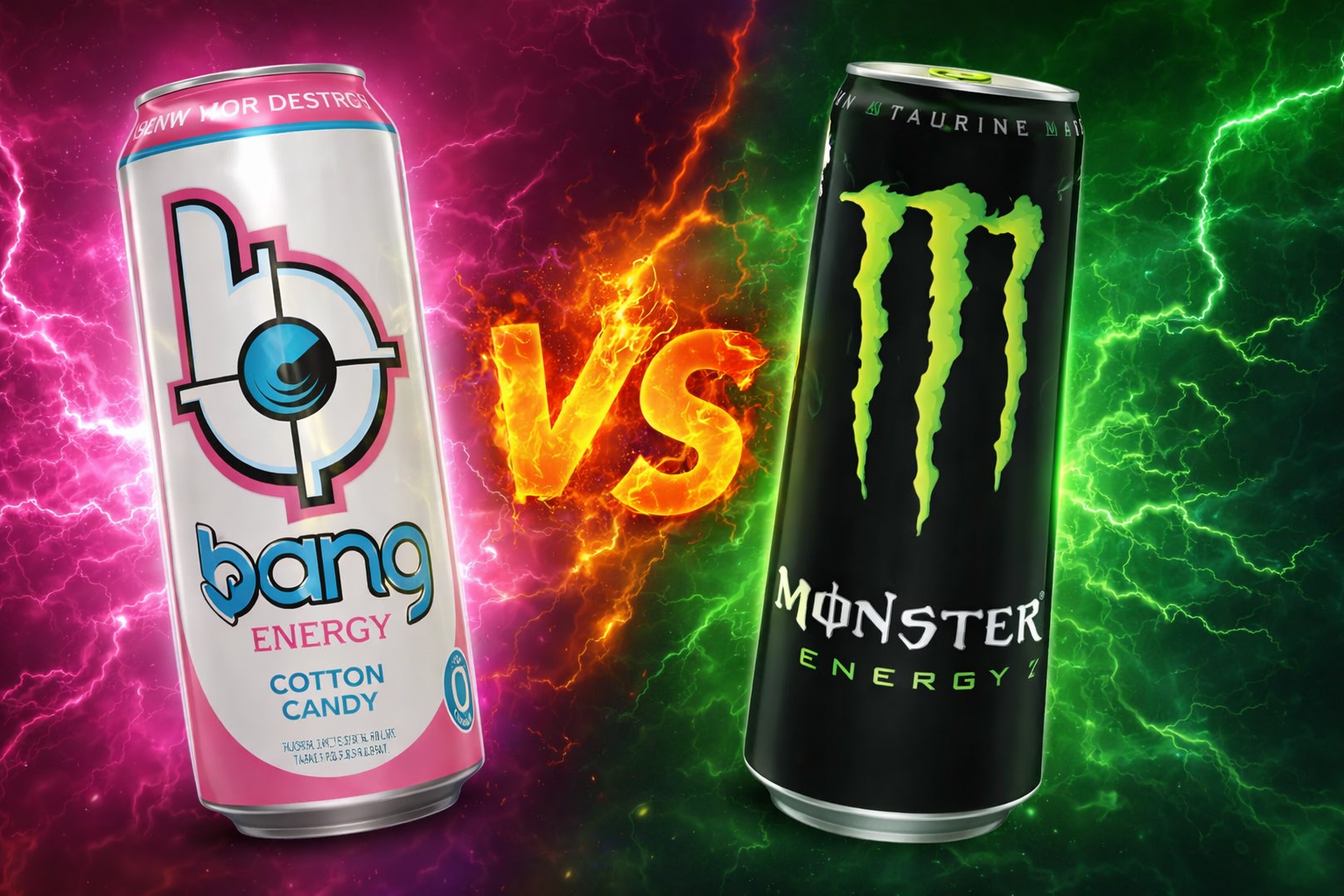
Bang Energy leans hard into candy-style flavors. They’re very sweet, loud, and impossible to miss. Popular picks include Blue Razz, Cotton Candy, Purple Haze, and Star Blast.
That sweetness is also what turns some people off. The artificial taste can feel overwhelming if you don’t like candy-flavored drinks.
Monster Energy offers a much wider flavor range. Standouts for a lot of people are Original Green, Zero Ultra, and the Juice Monster line.
Monster tends to feel more balanced overall, especially if you prefer something less sugary or artificial-tasting. It’s usually the safer choice for people who don’t like candy-style flavors.
Customer Experience
Availability
Both Bang Energy and Monster Energy are easy to find. You’ll see them in convenience stores, supermarkets, and online without much effort.
Packaging
Both brands use the standard 16-oz can, but Monster goes further. It offers more sizes and formats across its different product lines, which gives you more choice depending on how much energy you want.
Customer Satisfaction
Bang fans tend to love the intense energy and bold flavors, but a common complaint is jitters or feeling overstimulated. Monster fans usually point to consistency, variety, and overall drinkability as the reason they stick with it.
Which One Should You Choose?
Choose Bang Energy if you want the most caffeine possible in a single can. It’s the better pick if you avoid sugar and calories, need a strong and fast stimulant hit, and care more about the effect than the taste.
Choose Monster Energy if you prefer a more moderate caffeine boost. It makes sense if flavor variety matters to you, you want the option of sugar or zero-sugar, and you like sipping your drink instead of chugging it.
Final Thought
Both Bang Energy and Monster Energy do what they’re supposed to do. They give you energy. The difference is how they get you there.
Bang is intense and efficient. Monster is smoother and easier to live with. I reach for Bang when I need to feel something now. I reach for Monster when I want energy that lasts without thinking about it.
Neither is better for everyone. The right choice comes down to how hard you want the energy to hit and how much control you want over the experience.