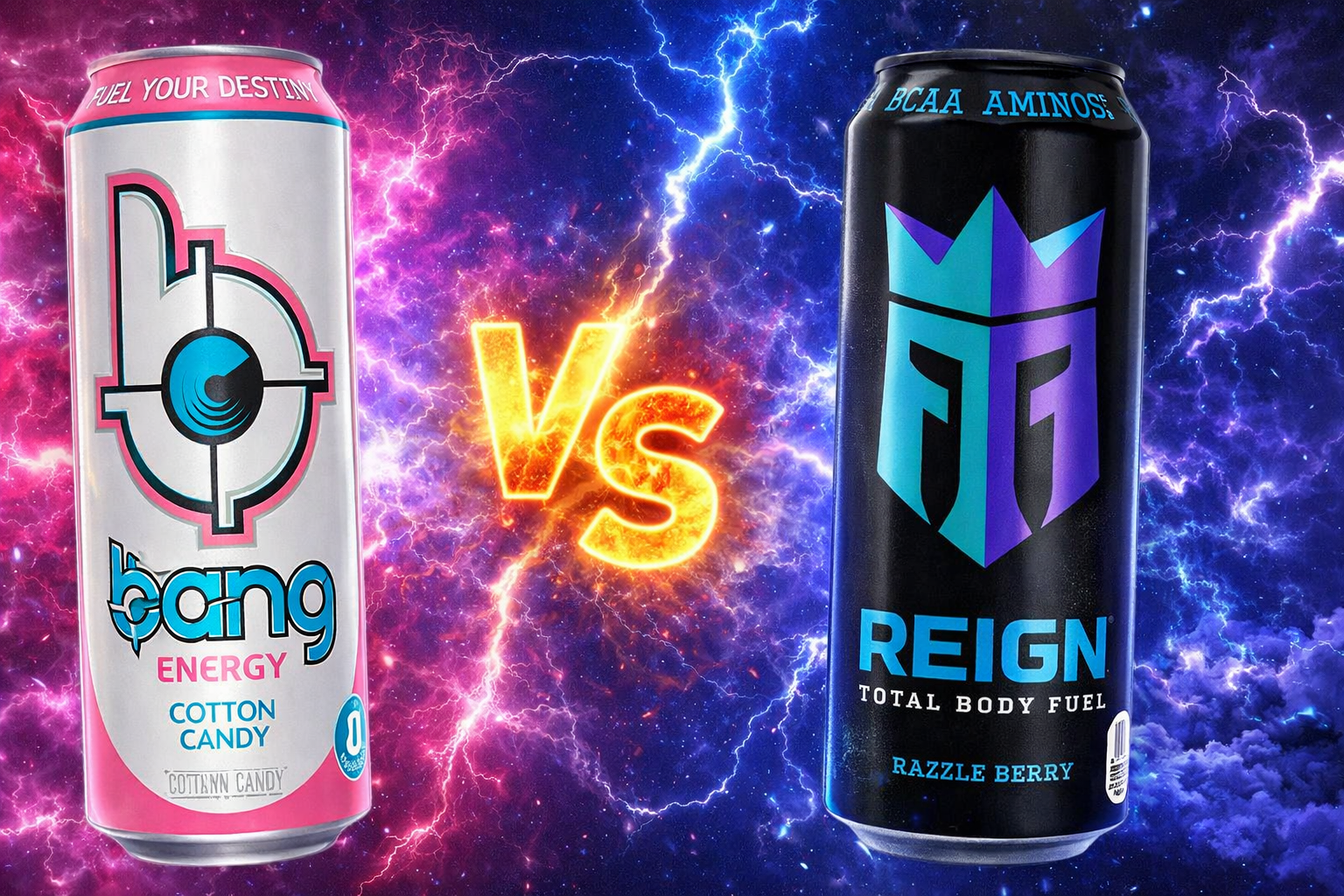
I’ve gone back and forth between Bang Energy and Reign Total Body Fuel more times than I can count. Usually it’s early morning, I’m half awake, standing in front of a gas station fridge, trying to decide which can is less likely to ruin my day. They both promise energy, focus, and better workouts. They both look aggressive enough to wake me up on looks alone. But they don’t hit the same.
After drinking both for workouts, long workdays, and the occasional “I barely slept” morning, I’ve noticed some real differences. Not the marketing stuff, but how they actually feel once you crack the can and start sipping. Taste, energy, crashes, and how my body reacts over the next few hours all matter more to me than flashy claims.
This isn’t a lab test or a sponsored take. It’s just my experience with Bang vs Reign, what I reach for now, and why.
Quick Comparison Snapshot (TL;DR)
Here’s the fast version I wish I had when I first started comparing these two. This is the stuff I actually care about when I’m deciding which can to grab.
| Feature | Bang Energy | Reign Total Body Fuel |
|---|---|---|
| Caffeine (per can) | 300 mg | 300 mg |
| Calories | 0 | 0 |
| Sugar & carbs | 0 sugar, 0 carbs | 0 sugar, 0 carbs |
| Key functional ingredients | Creatine, BCAAs, CoQ10 | BCAAs, electrolytes, CoQ10 |
| Best use case | Long days, general energy, focus | Workouts, gym sessions, physical performance |
| Overall winner (preview) | Better for everyday energy | Better for training and workouts |
If you just want the headline: they’re tied on caffeine and calories, but they’re built for slightly different situations. I’ll break down what that actually feels like in real life next.
What Is Bang Energy?
Bang Energy has always positioned itself as the loud, extreme option in the energy drink aisle. From the neon cans to the over-the-top claims, Bang isn’t trying to be subtle. It’s built around the idea of pushing harder, longer, and faster than everything else on the shelf.
From what I’ve seen and experienced, Bang is aimed squarely at people who want maximum stimulation. Not casual coffee drinkers. Not someone easing into caffeine. This is for the “give me all the energy right now” crowd. Gym regulars, long-shift workers, gamers pulling late nights. Anyone who thinks 300 mg of caffeine sounds reasonable before noon.
The core philosophy has always been simple: zero sugar, zero calories, and a very high caffeine hit. Bang leaned hard into functional-sounding ingredients like BCAAs, CoQ10, and its headline feature, “Super Creatine.” The message was clear. This wasn’t just an energy drink. It was supposed to be performance fuel.
That “Super Creatine” claim is also where things got messy. Bang faced lawsuits and criticism over marketing language that suggested performance and muscle benefits that weren’t clearly supported. Over time, the branding softened, formulations shifted, and some of the louder claims were dialed back. If you’ve been drinking Bang for years, you’ve probably noticed it doesn’t feel or market itself quite the same way it used to.
In my experience, Bang still delivers strong, clean-feeling energy. But it’s less about cutting-edge performance now and more about being a powerful, zero-sugar energy option that lasts for hours. It’s intense, no question. Just not as revolutionary as the label once made it sound.
What Is Reign Total Body Fuel?
Reign Total Body Fuel feels like it was built with a much clearer purpose than most energy drinks. It’s backed by Monster Energy, but it doesn’t try to copy Monster’s party-all-night image. Reign is positioned more like a performance supplement in a can, something you drink because you’re about to do something physical, not just because you’re tired.
The target audience is pretty obvious once you drink it. This is for gym-goers, runners, CrossFit-style workouts, and anyone who treats caffeine as part of their training routine. It’s less “I need energy to survive the day” and more “I need energy to lift, sprint, or sweat.”
The whole “Total Body Fuel” concept is about supporting workouts, not just blasting you with caffeine. Along with the same 300 mg caffeine punch, Reign focuses on BCAAs for muscle support and electrolytes for hydration. I notice this most during workouts. Reign feels steadier, more controlled, and less jittery than some other high-caffeine drinks. It’s like it’s designed to stay out of the way while you move.
Over time, Reign has cleaned up and refined its lineup. Some flavors have been discontinued, others improved, and newer ones tend to be less syrupy and more drinkable. The formula itself hasn’t gone through dramatic overhauls, but the brand clearly leans harder into fitness now than it did at launch.
From my experience, Reign knows exactly what it wants to be. It’s not trying to impress with wild claims. It’s trying to be reliable workout fuel. And honestly, that clarity shows once you start using it consistently.
Caffeine Content: Bang vs Reign (Exact Numbers)
If you’re comparing these two, this is usually the first thing you want to know. The short answer is simple. The longer answer matters more.
Caffeine per can
Both Bang Energy and Reign Total Body Fuel contain 300 mg of caffeine per 16 oz can.
There’s no winner here. No sneaky difference. If you’re searching bang vs reign caffeine or how much caffeine in bang vs reign, the answer is the same number for both.
What changes is how that caffeine feels once it’s in your system.
How 300 mg of caffeine affects the body
Three hundred milligrams is a lot. For context, that’s roughly:
- 3 strong cups of coffee
- Almost a full day’s recommended caffeine intake in one can
When I drink that much caffeine, I feel it fast. Increased alertness, sharper focus, and a noticeable boost in energy within 15 to 30 minutes. Heart rate goes up a bit. Appetite usually disappears for a while. During workouts, it can improve endurance and intensity. During workdays, it can lock me in mentally for hours.
That said, it’s not gentle. If you’re sensitive to caffeine, 300 mg can feel overwhelming. Jitters, anxiety, or a wired-but-uncomfortable feeling aren’t uncommon.
Who should not consume this much caffeine
This level of caffeine isn’t for everyone. If you:
- Are caffeine-sensitive
- Have heart issues or blood pressure concerns
- Are pregnant
- Don’t regularly consume high-caffeine drinks
…then 300 mg in one sitting is probably too much. Even for regular caffeine users, this isn’t something I’d recommend stacking with coffee or pre-workout.
I personally won’t touch either drink late in the day. Sleep will not happen.
Tolerance differences and crash potential
Here’s where Bang and Reign start to feel different, even with the same caffeine number.
Bang tends to hit harder upfront for me. The energy feels sharp and intense, which I like for long workdays. But if I drink it on an empty stomach, I’m more likely to feel a dip later.
Reign feels smoother. The energy ramps up more gradually and holds steadier during workouts. I notice less of a crash afterward, especially if I’m active while drinking it.
Tolerance plays a huge role here. If you already consume a lot of caffeine, both will feel manageable. If you don’t, either one can feel like too much, too fast.
Bottom line: Bang and Reign are tied on caffeine at 300 mg per can. The real difference isn’t the number. It’s how your body reacts and what you’re using that energy for.
Ingredients Breakdown (Side-by-Side Analysis)
This is where Bang and Reign really start to separate. On paper, they look similar. In practice, the ingredient choices explain why they feel different once I drink them.
Stimulants & Energy Sources
Caffeine sources
Both Bang Energy and Reign Total Body Fuel rely on synthetic caffeine rather than natural sources like green tea or guarana.
That matters because synthetic caffeine hits fast and predictably. No slow release. No smoothing effect from plant compounds. When I drink either one, I know exactly what I’m signing up for.
Absorption speed & duration
Bang feels sharper on the front end. The energy spikes quickly, which is great when I need to wake up my brain fast. The downside is that the drop-off can be more noticeable if I’m sitting still or haven’t eaten.
Reign ramps up a bit slower and feels steadier. During workouts, that smoother curve makes a difference. I don’t feel wired. I just feel fueled.
Same caffeine amount. Different experience.
Amino Acids & Performance Ingredients
This section is where most of the bang vs reign ingredients debate lives.
BCAAs (types & dosages)
Both drinks include BCAAs: leucine, isoleucine, and valine.
Neither brand discloses exact dosages, which is frustrating. In real-world use, I don’t drink either expecting muscle growth. I see BCAAs here as fatigue support, not a replacement for protein.
Reign clearly leans harder into the workout angle. Bang includes BCAAs, but they feel more like a supporting bullet point than the main focus.
CoQ10 (science vs marketing)
CoQ10 shows up in both cans, and honestly, this is more marketing than magic.
There is real science behind CoQ10 and cellular energy, but the doses in energy drinks are typically too small to make a dramatic difference. I’ve never noticed a clear “CoQ10 effect” from either drink.
I treat this as a nice extra, not a reason to buy one over the other.
L-Carnitine & Beta-Alanine (where applicable)
Reign includes L-Carnitine, which supports fat metabolism and endurance. I actually notice this more during longer workouts or cardio-heavy sessions.
Bang used to make bigger performance claims around creatine (“Super Creatine”), but those claims were scaled back after legal issues. Current formulas don’t feel performance-driven in the same way Reign does.
Neither drink gives me the beta-alanine tingles you’d expect from hardcore pre-workout. That’s a good thing for everyday use.
Vitamins & Micronutrients
B-vitamin types and %DV
Both Bang and Reign load up on B vitamins, especially:
- B3 (niacin)
- B6
- B12
Most are well over 100% of daily value.
This is standard energy drink territory.
Do energy drink vitamins actually help?
Short answer: not much, if you already eat decently.
B vitamins help convert food into energy, but they don’t create energy on their own. If you’re deficient, they help. If you’re not, your body just excretes the excess.
For me, the caffeine does the heavy lifting. The vitamins are a bonus, not the reason I feel energized.
Ingredient takeaway
If you’re comparing bang vs reign benefits, here’s how I see it:
- Bang focuses on raw energy and mental stimulation
- Reign focuses on physical performance and workout support
Neither ingredient list is bad. They’re just built for different priorities. The better choice depends on whether you want energy to sit and focus or energy to move and train.
Nutrition Facts Comparison
If you’re watching calories or sugar, this is one of the easiest parts of the Bang vs Reign comparison. On a nutrition label level, they’re almost identical.
Calories
Both Bang Energy and Reign Total Body Fuel contain 0 calories per can.
If you’re searching bang vs reign calories, there’s no real decision to make. Neither one is adding calories to your day.
Sugar (or lack of it)
This is another tie.
Both drinks have:
- 0 grams of sugar
- 0 grams of added sugar
For anyone tracking sugar intake, bang vs reign sugar isn’t really a debate. They’re both fully sugar-free.
Carbohydrates
Total carbohydrates are also listed as 0 grams on both cans.
That makes both drinks keto-friendly and easy to fit into low-carb diets. I’ve never noticed any blood sugar swings from either one, which lines up with the label.
Sodium
Here’s one of the few small differences.
Reign contains slightly more sodium than Bang. That’s intentional. Reign is designed for workouts, and the extra sodium helps with hydration and electrolyte balance when you’re sweating.
Bang keeps sodium lower, which makes more sense for everyday energy use when you’re not training.
It’s not a huge amount either way, but it fits each brand’s purpose.
Artificial sweeteners used
Both Bang and Reign rely on artificial sweeteners instead of sugar:
- Sucralose
- Acesulfame potassium (Ace-K)
This is standard for zero-calorie energy drinks. If you’re sensitive to artificial sweeteners, you may notice digestive issues or an aftertaste, especially if you drink these often. Personally, I tolerate both fine, but flavor choice makes a big difference.
Health & Safety Considerations
This is the part most Bang vs Reign articles barely touch, and honestly, it matters more than flavors or branding. I’ve learned the hard way that just because something works doesn’t mean it’s always a good idea.
Is 300 mg of caffeine safe daily?
For healthy adults, up to 400 mg of caffeine per day is generally considered the upper safe limit. On paper, one can of Bang Energy or Reign Total Body Fuel fits under that.
In real life, it’s not that simple.
If that 300 mg is your only caffeine for the day, you’re probably fine. If you also drink coffee, pre-workout, or soda, you can blow past that limit without realizing it. I’ve done it, and it’s not fun.
I personally treat either drink as my main caffeine source for the day. No stacking.
Potential side effects
At this caffeine level, side effects are very real, especially if you’re sensitive or dehydrated.
The most common ones I’ve noticed or experienced:
- Jitters or shaky hands
- Increased anxiety or restlessness
- Elevated heart rate
- Stomach discomfort
- Headaches when it wears off
- Sleep disruption, even if I drink it early afternoon
Bang tends to feel more intense upfront, which can amplify jitters for some people. Reign feels smoother to me, but the caffeine dose is still the same, so sleep issues are just as likely if timing is bad.
If you’re searching bang vs reign side effects, the truth is the side effects mostly come from the caffeine, not the brand.
Who should avoid Bang and Reign
I wouldn’t recommend either drink if you:
- Are sensitive to caffeine
- Have heart conditions or high blood pressure
- Are pregnant or breastfeeding
- Struggle with anxiety or panic attacks
- Have sleep issues already
Even if you’re healthy, these aren’t beginner energy drinks. If someone asks me if Bang or Reign is safe for their first energy drink, my answer is no.
Bang vs Reign for Workouts & Fitness
This is where the decision actually becomes clear for me. I’ve used both before lifting, cardio sessions, and even on days where I probably should’ve just had coffee. They can both work as a pre-workout, but they don’t work the same way.
Pre-workout effectiveness
If you’re strictly asking bang vs reign pre workout, Reign feels purpose-built.
Reign Total Body Fuel is designed to be consumed before training. The combination of caffeine, BCAAs, electrolytes, and L-carnitine makes it feel closer to a light pre-workout than a standard energy drink.
Bang Energy can still work before the gym, but it feels more like using raw caffeine as fuel. It gets me energized, but it doesn’t feel as supportive once the workout actually starts.
Energy timing: fast hit vs sustained focus
Bang hits fast. Within 15 minutes, I feel switched on and ready to go. That’s great for short, intense workouts or days when motivation is low.
The downside is that the energy curve is steeper. If my workout runs long, that initial spike can fade.
Reign builds slower and holds longer. The energy feels more controlled and steady, which I prefer for longer lifting sessions or cardio-heavy days. I’m less likely to feel overstimulated early on.
Muscle endurance vs hype ingredients
Neither drink is a replacement for a real pre-workout supplement.
Bang’s past performance claims, especially around “Super Creatine,” never translated into noticeable strength or endurance gains for me. The current formula feels more mental than physical.
Reign’s ingredients don’t magically increase strength either, but the endurance support feels more honest. I last longer before fatigue sets in, especially during high-rep or circuit-style workouts.
Cardio vs strength training use cases
Here’s how I personally use them:
- Cardio or HIIT: Reign wins. The smoother energy and electrolytes help me stay consistent without feeling jittery.
- Strength training: Reign still wins for longer sessions. Bang can work for short, heavy lifts but feels less stable overall.
- Quick workouts or motivation days: Bang is fine when I just need that mental push to get moving.
Taste Test & Flavor Comparison
Taste is way more subjective than caffeine or nutrition facts, but it’s also the reason most people stick with one brand over the other. I’ve tried more flavors from both than I probably should admit, and there’s a clear pattern in how each brand approaches flavor.
Bang Flavor Experience
Bang Energy goes bold. Sometimes that works. Sometimes it really doesn’t.
Most liked flavors
From my experience and what I hear most often:
- Blue Razz
- Cherry Blade Lemonade
- Purple Haze
- Sour Heads
When Bang gets a flavor right, it’s intense and memorable. These are the cans I’ll still grab without thinking.
Most disliked flavors
This is where Bang gets controversial:
- Birthday Cake Bash
- Rainbow Unicorn
- Cotton Candy
They’re experimental, and I respect that, but some of them taste more like melted candy than an actual drink. Birthday Cake is the biggest offender for me. I wanted to like it. I didn’t.
Common taste complaints
The biggest knock on Bang is the artificial aftertaste. That sharp, lingering sweetness from sucralose can stick around longer than I want, especially if the flavor is already aggressive.
Bang flavors are loud. If you like subtle, this isn’t your brand.
Reign Flavor Experience
Reign Total Body Fuel takes a much safer, cleaner approach to flavor.
Most popular flavors
These are consistently solid:
- Reignbow Sherbet
- White Gummy Bear
- Melon Mania
- Razzle Berry
None of these are groundbreaking, but they’re reliable. I’ve never cracked a Reign and regretted it halfway through.
Smoother vs stronger taste profile
Reign tastes smoother overall. The sweetness feels more controlled, and the flavors don’t punch you in the face. That makes it easier to drink during workouts or when I’m already overheated.
I also notice less chemical bitterness on the back end compared to Bang.
Consumer Reviews & Real-World Feedback
Beyond labels and ingredients, I wanted to see if my experience lined up with what other people are saying online. After spending way too much time reading threads and comments, especially when searching bang vs reign reviews, a few patterns show up again and again.
What Reddit users say
Reddit is brutally honest, sometimes to a fault. When Bang and Reign come up, the tone is usually practical, not hype-driven.
Most users agree on two things:
- Both drinks are very strong
- Neither should be treated like a casual energy drink
A lot of people frame the debate around how the energy feels, not how strong it is.
Common praise vs complaints
Bang Energy gets praised for:
- Strong, fast mental energy
- Helping with long workdays or gaming
- Unique flavor options
But it also gets criticized for:
- Jitters and anxiety
- Hard crashes for some people
- Overly sweet or artificial taste
Reign Total Body Fuel is praised for:
- Smoother energy
- Better gym performance
- Easier-to-drink flavors
Common complaints include:
- Still too much caffeine for casual users
- Some flavors being “boring”
- Less of a mental punch compared to Bang
Energy duration and crash reports
This is one of the biggest differences people mention.
Bang is often described as:
- Strong upfront hit
- Noticeable comedown if you’re inactive
- More crash-prone when used daily
Reign is usually described as:
- Slower onset
- Longer-lasting energy
- Less dramatic crash, especially during workouts
That lines up closely with my own experience. When people complain about crashes, it’s almost always tied to Bang or to stacking caffeine on top of it.
Loyalty trends
One interesting trend I’ve noticed is switching behavior.
A lot of users say they started with Bang, then moved to Reign once they began training regularly or wanted something smoother. The reverse happens too, usually when someone wants stronger mental stimulation or gets bored with Reign’s flavor lineup.
So when people ask is Reign better than Bang, the most honest answer I see is:
Reign is better for consistency and fitness. Bang is better for raw intensity.
Price, Value & Availability
Price is usually the deciding factor once you already know which one you like. I’ve bought both ways more times than I can count, in stores and online, and here’s how it usually shakes out in the real world.
Average price per can
At most convenience stores and gyms, pricing is similar:
- Bang Energy: about $2.50–$3.50 per can
- Reign Total Body Fuel: about $2.75–$3.75 per can
Reign is usually a little more expensive at retail, especially at gas stations. It’s not a huge gap, but it’s noticeable if you buy often.
Subscription vs retail pricing
This is where costs drop fast.
Buying cases online (12–24 packs) or through subscriptions usually brings the price down to:
- $1.75–$2.25 per can for both brands
Bang often runs deeper discounts and bulk deals, which makes it slightly cheaper if you’re stocking up. Reign subscriptions are competitive, but they don’t always get as aggressive with sales.
If you drink these regularly, buying single cans is the worst value by far.
Availability in stores vs online
Both are easy to find, but Bang still has the edge in sheer reach.
- Bang: gas stations, grocery stores, gyms, supplement shops, vending machines
- Reign: grocery stores, supplement shops, gyms, and most big-box retailers
Online availability is equal. Every major retailer carries both, with a wider flavor selection than most physical stores.
Value per mg of caffeine
This is where things get simple.
Both drinks contain 300 mg of caffeine. Since pricing is similar, the value per mg is almost identical.
Example:
- $3.00 ÷ 300 mg = $0.01 per mg of caffeine
Bang can be slightly better value if you catch sales or buy in bulk, but there’s no massive difference. You’re paying for flavor and formulation, not caffeine quantity.
Final Thoughts: Bang vs Reign
After drinking both for years, here’s my honest takeaway.
Bang Energy and Reign Total Body Fuel aren’t really trying to win the same fight. They just happen to share the same caffeine number.
Bang is about intensity. It hits fast, feels aggressive, and works best when I need mental energy now. Long workdays, deadlines, or days when motivation is low. The tradeoff is that it’s easier to overdo and more likely to cause jitters or a crash if I’m not careful.
Reign is about control. The energy comes on smoother and lasts longer, especially during workouts. It feels more intentional, less chaotic, and easier to use consistently without feeling wired or anxious.