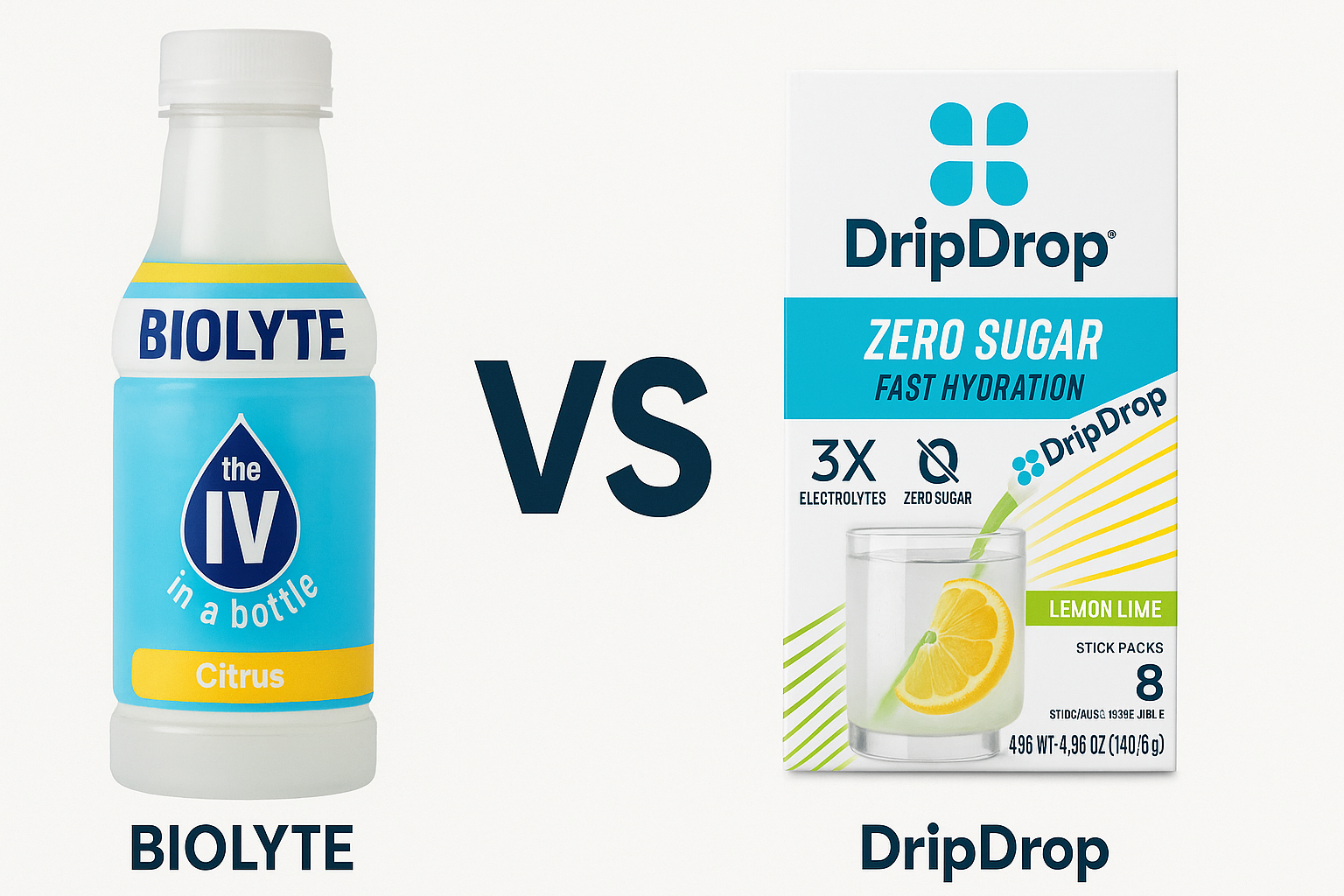
When you’re dehydrated, you want something that works fast. Two names that come up a lot are Biolyte and DripDrop. They’re both electrolyte drinks, both promise quick relief, and both are popular with people who need more than just water. But they’re not the same, and the differences matter depending on why you’re reaching for one in the first place.
In this guide, we’ll break down how Biolyte and DripDrop compare in flavor, ingredients, effectiveness, and cost so you can decide which one actually fits your needs.
Table of Contents
What Is Biolyte?
Biolyte is a hydration drink that was created by a doctor to work like an IV you can drink. The idea is simple: when you’re really dehydrated—whether from being sick, overheated, or just worn out—water or a regular sports drink might not be enough. Biolyte is packed with a high amount of electrolytes, so it’s meant to help your body recover faster than the usual options on the shelf.
What people usually want to know is what makes it different. The main thing is the electrolyte load. One bottle has enough sodium, potassium, and other minerals to act more like a medical-grade hydration formula than a basic sports drink. It also has a little sugar because your body absorbs electrolytes more effectively when sugar is present. On top of that, Biolyte includes B vitamins and a few ingredients meant to help with energy and nausea, which is why people often reach for it when they’re feeling rundown.
Biolyte’s core claim is that it offers “IV-level hydration” without the IV. The brand also says it helps you bounce back faster than sports drinks and eases common dehydration symptoms like headaches, fatigue, and muscle cramps. Whether someone is recovering from a stomach bug, a tough workout, or a long night out, Biolyte positions itself as a stronger, faster way to get rehydrated.
Pros and Cons of Biolyte
Pros
- Works quickly for moderate dehydration.
- Higher electrolyte levels than standard sports drinks.
- Includes B vitamins and ingredients that may help with nausea.
- Convenient to find in many stores.
Cons
- Taste can be strong or salty.
- More expensive than typical hydration drinks.
- High sodium content may not suit everyone.
- Can be more than you need for mild dehydration.
What Is DripDrop?
DripDrop is an oral rehydration powder designed to help your body absorb fluids quickly. It follows the same basic formula used in medical oral rehydration solutions but comes in flavors that are easier to drink. You mix the powder with water, and the balance of sodium, potassium, glucose, and electrolytes helps pull fluid into your system faster than water alone.
People use DripDrop for things like heavy sweating, travel, long workouts, illness, or anytime they need reliable hydration without a ton of sugar. It’s lighter than Biolyte in taste and calories, and because it comes in packets, it’s easy to keep in a gym bag, purse, or emergency kit. DripDrop’s main appeal is that it gives you more effective hydration than a sports drink while still being convenient and easy to sip.
Pros and Cons of DripDrop
Pros
- Uses a medical-style oral rehydration formula for fast absorption.
- Lower in sugar than many sports drinks.
- Comes in powder packets, which makes it easy to carry and mix anywhere.
- Wider range of flavors, generally lighter and easier to drink.
- Good option for workouts, travel, and everyday dehydration.
Cons
- You have to mix it yourself, which isn’t as convenient as a ready-to-drink bottle.
- Can taste slightly salty depending on the flavor.
- Still contains some sugar, which might not suit everyone.
- Effectiveness depends on proper mixing with the right amount of water.
Which Is Healthier?
When you look at the formulas side by side, DripDrop comes out as the healthier option for most people. It’s lower in sugar, lower in calories, and not as heavy in sodium. Because of that, it fits better for regular use or mild dehydration. Biolyte isn’t unhealthy, but it’s much more concentrated and is really meant for times when you’re genuinely drained or dehydrated. So in everyday situations, DripDrop is the lighter, more balanced choice.
Which Is Better for Hydration?
Both drinks hydrate well, but they work at different strengths. Biolyte is the stronger option because it has a higher electrolyte load. It’s built for moments when you’re more seriously dehydrated from illness, heat, or exhaustion. DripDrop still hydrates effectively, but it’s lighter and better suited for mild to moderate dehydration. So the better choice depends on how depleted you are: Biolyte for stronger, faster hydration, and DripDrop for steady, everyday recovery.
Which Has More Flavors?
DripDrop has more flavor options. It comes in a wide range of packets like lemon, berry, watermelon, orange, and even spicy varieties. Because of that, most people find it easier to pick a flavor they actually enjoy.
Biolyte has fewer choices and the taste is stronger because of the high electrolyte content. Some people like it, but others find it salty or intense.
So if flavor variety matters, DripDrop offers more options and is usually easier to drink.
Which Has More Natural Ingredients?
DripDrop leans more toward simple, straightforward ingredients. Its formula is based on the standard oral rehydration mix of electrolytes, sugar, and natural flavors, without many added extras. Because of that, people often see it as the cleaner option.
Biolyte uses more added functional ingredients, like B vitamins and amino acids. These aren’t unhealthy, but they make the ingredient list longer and less “natural” compared to DripDrop.
So if you’re looking for the drink with the more natural, minimal ingredient profile, DripDrop is the closer fit.
Which Has More Vitamins?
Biolyte contains more vitamins overall. Its formula includes several B vitamins, such as B3 (niacin), B5 (pantothenic acid), B6, and B12. These are added to help with energy, recovery, and fatigue.
DripDrop stays focused on electrolytes and doesn’t include this extra vitamin support.
So if you want a hydration drink that also provides added vitamins, Biolyte is the one that offers more.
Which Is Better in Taste?
Most people find DripDrop tastes better. It comes in more flavors, and the overall taste is lighter and easier to sip because the formula isn’t as concentrated.
Biolyte’s flavor is stronger and can taste salty because of the high electrolyte content. Some people like it, but others find it intense.
Which Is More Affordable?
DripDrop is usually the more affordable option. The powder packets often cost around $1 to $1.50 per serving, and buying larger boxes or tubs can bring the price down even further. Because you mix it with water yourself, the overall cost stays low.
Biolyte is more expensive since it’s a ready-to-drink bottle with a stronger formula. A single bottle typically costs $3.50 to $5, depending on where you buy it. Most people use it when they need quick, heavy hydration rather than for everyday drinking.
So if price matters, DripDrop tends to be the cheaper and more flexible option.
Overall Winner
DripDrop is the overall winner.
Here’s why:
Across the main categories people care about—healthier formula, better taste, more natural ingredients, more flavors, and affordability—DripDrop comes out ahead. It’s easier to drink, easier on your system, and easier on your budget. It also fits everyday hydration much better.
Biolyte is still the stronger choice for intense dehydration, but that’s the one category where it wins.