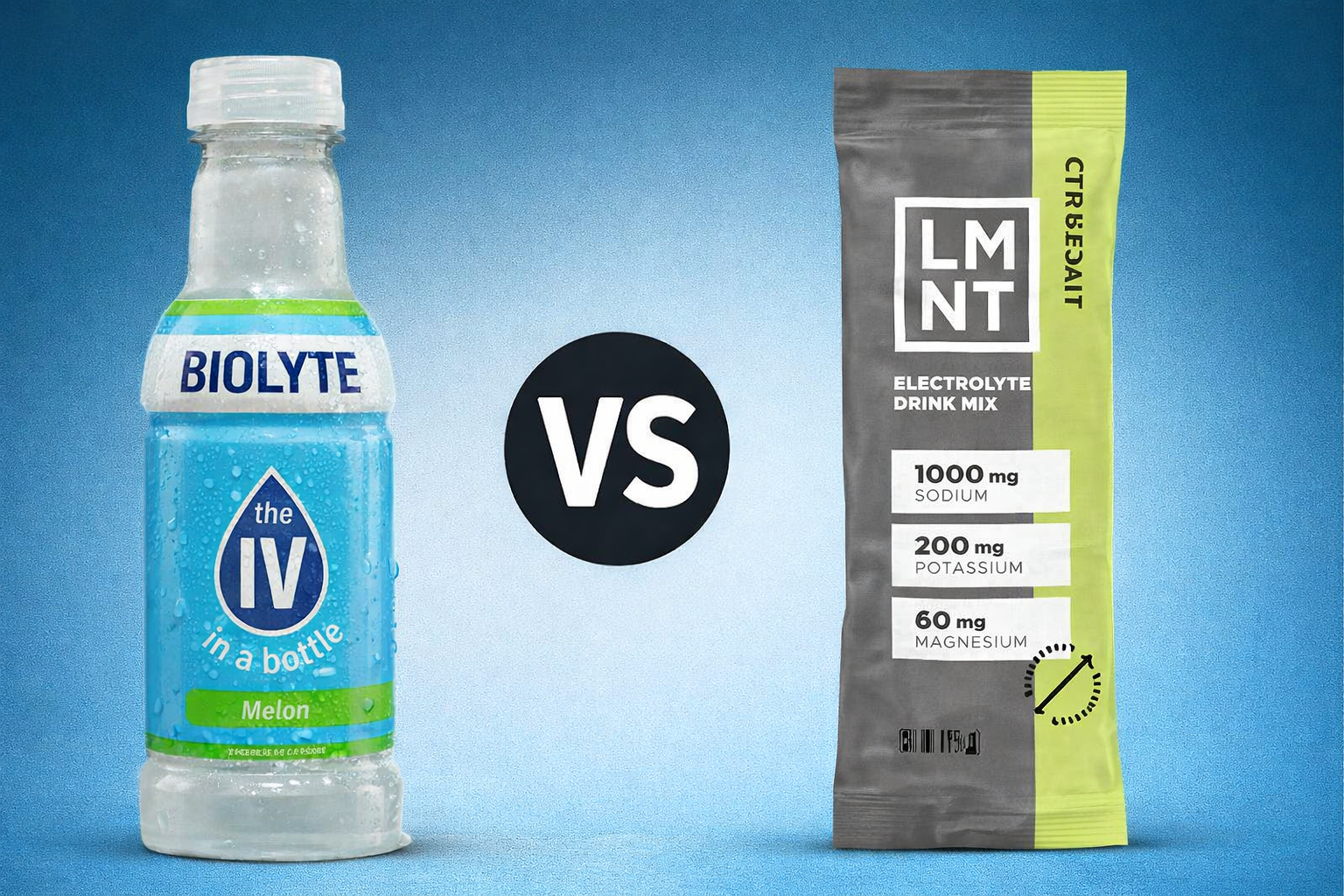
I didn’t plan on becoming someone who compares electrolyte drinks, but here we are. After a few workouts that wiped me out more than they should have and a couple rough mornings where water just wasn’t cutting it, I started paying more attention to hydration. That’s how I ended up bouncing between BioLyte and LMNT.
At first glance, they seem to promise the same thing: better hydration, fewer headaches, and feeling human again after sweating, traveling, or not drinking enough water. But once I actually tried both, I realized they’re built for very different people and very different situations. One feels more like a ready-to-go recovery drink. The other feels more like a deliberate daily habit.
I’ve spent enough time using both to notice the differences that don’t always show up on the label. This isn’t a scientific breakdown. It’s just my experience with BioLyte vs LMNT, what I liked, what I didn’t, and which one I reach for depending on the day.
What Is BioLyte?
BioLyte is a ready-to-drink electrolyte beverage that markets itself as “IV-level hydration.” That sounds intense, but in practice, it just means it’s designed to rehydrate you fast without any mixing, measuring, or prep.
From my experience, BioLyte feels very much like a functional recovery drink. It’s physician-formulated and aimed at situations where you’re already behind on hydration. Think travel days, brutal heat, being sick, or the kind of morning after where plain water isn’t even close to enough.
What really defines BioLyte for me is convenience. You grab the bottle, drink it, and you’re done. No packets, no shaker bottle, no math.
Key positioning (from how I see it):
- It comes fully mixed in a bottle, which makes it easy when you don’t want to think.
- It uses sugar, specifically dextrose, to help with absorption. That gives it a more traditional “medical hydration” feel compared to zero-sugar options.
Overall, BioLyte feels less like an everyday wellness drink and more like something I reach for when I need a quick fix and don’t care about calories or sweetness in that moment.
What Is LMNT?
LMNT is a powdered electrolyte mix that’s clearly built for a different kind of user than BioLyte. It’s made for athletes, people eating keto or low-carb, and anyone who sweats a lot and actually needs serious sodium.
Unlike BioLyte, LMNT isn’t something you casually sip. From my experience, it feels intentional. You tear open a stick pack, mix it with water, and commit to it. There’s no sugar, no carbs, and no attempt to make it taste like juice.
The defining feature of LMNT is how much sodium it delivers. The first time I tried it, I double-checked the label because the number looked wild compared to most electrolyte drinks. But once I started using it during hard workouts and long, sweaty days, it made sense.
Key positioning (based on how it’s built):
- Powdered stick packs that you mix yourself.
- Zero sugar and zero carbs, which works well if you’re avoiding blood sugar spikes.
- Extremely high sodium content compared to most electrolyte options.
LMNT feels less like a recovery drink and more like a performance tool. I don’t reach for it when I’m mildly dehydrated, but when I know I’m going to sweat or already have, it’s the one that actually makes a noticeable difference for me.
Electrolyte Amounts (Exact Numbers per Serving)
This is where the difference between LMNT and BioLyte becomes very obvious. On paper, they’re both “electrolyte drinks,” but they’re built with totally different priorities.
LMNT (1 stick mixed with water):
- Sodium: 1,000 mg
- Potassium: 200 mg
- Magnesium: 60 mg
- Sugar: 0 g
BioLyte (16 fl oz bottle):
- Sodium: ~700 mg
- Potassium: ~400 mg
- Chloride: ~1,100 mg
- Sugar: ~10 g
From my experience, LMNT is all about sodium first. It’s aggressive, almost surgical. If I’ve been sweating hard or feel that heavy, drained feeling that water won’t fix, LMNT hits fast and noticeably.
BioLyte takes a more balanced, medical-style approach. It spreads things out across multiple electrolytes and adds sugar to help with absorption. That sugar also makes it easier to drink quickly when you’re already feeling rough.
LMNT delivers significantly more sodium, while BioLyte provides a broader electrolyte spread with sugar to aid absorption.
Sugar Content
LMNT: 0 g sugar
BioLyte: ~10 g sugar (from dextrose)
Why this matters
Sugar helps electrolyte absorption, which is a core principle behind oral rehydration solutions. That’s part of why BioLyte works well when I’m already dehydrated or feeling run down.
At the same time, sugar adds calories and can be a dealbreaker if you’re low-carb, keto, or just trying to avoid blood sugar swings. In those cases, LMNT fits much better since it skips sugar entirely and leans hard on sodium instead.
Takeaway:
BioLyte hydrates with sugar, while LMNT hydrates without sugar — by brute sodium force.
Carbohydrate Content
LMNT: 0 g carbs
BioLyte: ~12 g total carbohydrates
Takeaway:
LMNT is keto-safe, while BioLyte is not ideal for strict low-carb or diabetic users.
Ingredients Comparison
LMNT
- Sodium chloride
- Potassium chloride
- Magnesium malate
- Natural flavors / stevia (some flavors)
- No vitamins, no sugar
BioLyte
- Water
- Dextrose
- Electrolytes (sodium, potassium, chloride)
- Added vitamins and botanical extracts (varies by flavor)
Takeaway:
LMNT keeps ingredients minimal and performance-focused, while BioLyte adds functional extras for recovery.
Hydration Effectiveness
LMNT works better for intense workouts, endurance training, fasting, and heavy sweating due to its very high sodium load.
BioLyte works better for dehydration from illness, vomiting, travel, or alcohol where sugar-assisted absorption helps.
Takeaway:
LMNT hydrates faster for athletes, while BioLyte hydrates more gently for recovery situations.
Health & Wellness Benefits
LMNT
- Prevents electrolyte imbalance during heavy sweating
- Supports muscle function and endurance
- Ideal for keto and fasting
BioLyte
- Helps restore fluids during nausea or dehydration
- Easier to tolerate when appetite is low
- Includes vitamins for short-term recovery
Caution
Both products are high in sodium and may not be suitable for people with hypertension without medical advice.
Takeaway:
LMNT benefits performance and sweat loss, while BioLyte benefits short-term recovery and rehydration.
Price & Value
LMNT is sold in multi-pack sticks. It usually comes out to a higher cost per serving, but it’s easy to customize with water and very portable.
BioLyte is sold as single bottles or in 12-packs. It’s convenient and ready to drink, but heavier and not as travel-friendly.
Takeaway:
LMNT offers better long-term value, while BioLyte offers better convenience.
Flavor & Taste
LMNT: Very salty by design. Flavor intensity varies, but the saltiness is always noticeable.
BioLyte: Sweet and fruity, closer to a traditional sports drink taste.
Takeaway:
BioLyte tastes easier for beginners, while LMNT tastes functional, not indulgent.
Customer Experience
LMNT users: Athletes, keto dieters, endurance trainers, heavy sweaters
BioLyte users: Travelers, hangover recovery, illness hydration, casual users
Takeaway:
LMNT fits structured routines, while BioLyte fits situational hydration needs.
Which One Should You Choose?
Choose LMNT if:
- You sweat heavily
- You follow keto or low-carb diets
- You want maximum sodium with zero sugar
Choose BioLyte if:
- You’re recovering from dehydration, illness, or alcohol
- You want ready-to-drink convenience
- You tolerate sugar better than extreme saltiness
Final Thought
After using both, I don’t see this as a “one is better” situation. LMNT is what I reach for when performance matters and I know I’m going to sweat or already have. It’s purposeful, intense, and works best when hydration is part of a routine.
BioLyte, on the other hand, is what I grab when I feel depleted and just need something easy that works without thinking. It’s more forgiving, easier to drink, and better suited for recovery moments rather than training ones.