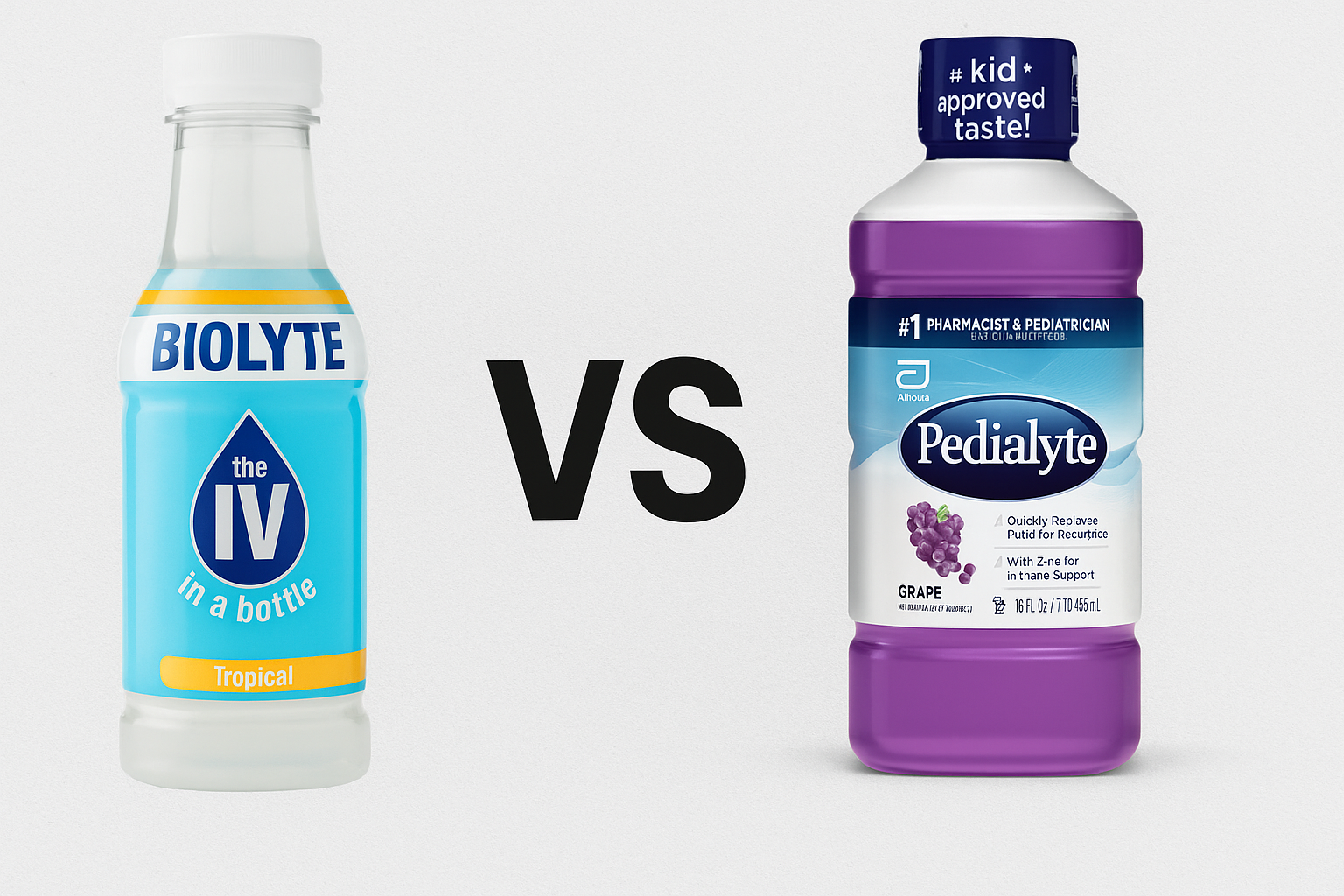
You’ve been there — after a long workout, an intense day under the sun, or recovering from a hangover — plain water just doesn’t cut it. That’s when electrolyte drinks come in. Two names often pop up: Biolyte and Pedialyte.
Both promise rapid hydration, better recovery, and real relief. But which one actually works better for your needs? Let’s break it down clearly — ingredients, nutrition, use cases, and pros vs cons — so you can make a smart choice, not just a familiar one.
What Are Biolyte and Pedialyte?
Understanding Their Purpose and Who They’re Made For
When you’re drained from a long workout, a late-night party, or even a bad flu — water alone often isn’t enough. That’s where electrolyte drinks come in. They’re designed to restore the balance your body loses through sweat, dehydration, or illness.
Two names that often pop up in this space are Biolyte and Pedialyte. While both promise fast hydration, they come from very different backgrounds and are designed for slightly different goals.
Biolyte
Biolyte was developed by an anesthesiologist with a focus on IV-style hydration in a bottle. Its formula is designed to closely mimic the electrolyte balance of an IV drip — without the needles.
Biolyte is marketed heavily toward athletes, people recovering from dehydration, and anyone who needs fast, medical-style rehydration. It’s especially popular for post-workout recovery and hangovers.
Purpose: Rapid rehydration and electrolyte replacement
Key Users: Athletes, gym-goers, people recovering from dehydration or hangovers
Core Strength: IV-mimicking electrolyte profile with low sugar
Pedialyte
Pedialyte was originally created as an oral rehydration solution for children suffering from dehydration due to illness. Over time, adults realized it worked just as well — if not better — than many sports drinks.
Today, Pedialyte is widely used by adults for illness recovery, heat exhaustion, and dehydration. While it still has medical roots, it’s now a household hydration staple.
Purpose: Clinical rehydration and fluid balance
Key Users: Children, adults recovering from illness, heat exposure, or dehydration
Core Strength: Clinically proven electrolyte ratios for rehydration
How Biolyte and Pedialyte Work Inside Your Body
Hydration isn’t just about drinking water — it’s about how your body uses that water.
When you sweat or get sick, your body loses fluids and electrolytes like sodium, potassium, and chloride. These minerals are critical for nerve function, muscle contraction, and energy. Without replacing them properly, you feel weak, foggy, and exhausted.
Both Biolyte and Pedialyte fix that problem — but they do it a little differently.
How Biolyte Works
The moment you drink Biolyte, your body begins absorbing its electrolyte-rich formula through the small intestine.
Its formulation is designed to closely resemble IV fluids, allowing for fast and efficient absorption.
Here’s what happens step by step:
- Rapid Absorption: Sodium helps your body pull water into the bloodstream quickly
- Electrolyte Replenishment: Potassium and sodium restore fluid balance and reduce cramping
- Low-Sugar Energy: Minimal sugar avoids spikes while still supporting absorption
- Cell-Level Hydration: Electrolytes help your cells function efficiently again
Within 10–15 minutes, many people feel clearer, less fatigued, and noticeably less thirsty.
What It Feels Like: Strong, fast relief — like your body finally caught up on what it was missing.
How Pedialyte Works
Pedialyte uses a clinically tested oral rehydration formula designed to maximize fluid absorption during dehydration.
Here’s how it works:
- Optimized Electrolyte Ratio: Sodium and glucose work together to improve water uptake
- Fluid Retention: Helps prevent water from passing straight through your system
- Gentle Recovery: Designed to be easy on the stomach during illness
- Steady Rehydration: Restores fluids gradually but reliably
Pedialyte doesn’t feel intense — but it works steadily and predictably.
What It Feels Like: Calm and stabilizing. You don’t feel “boosted,” but you feel normal again.
All Product Variants and Their Specific Use Cases
Not all hydration needs are the same — sometimes you’re drenched in sweat, sometimes you’re recovering from sickness. Biolyte and Pedialyte both offer multiple variants to match different situations.
Biolyte Product Lineup and Use Cases
Biolyte is sold as a ready-to-drink bottled beverage focused on rapid hydration.
1. Biolyte Original
Use Case: Severe dehydration or recovery
✅ Best For: Post-workout recovery, heat exhaustion, hangovers
2. Biolyte Low-Calorie
Use Case: Hydration with reduced sugar
✅ Best For: Sugar-conscious users, frequent hydration needs
3. Biolyte Tropical / Citrus Flavors
Use Case: Hydration with improved taste
✅ Best For: Athletes who want fast hydration without harsh flavor
Pedialyte Product Lineup and Use Cases
Pedialyte is available in bottles, powder packs, freezer pops, and specialty formulas.
1. Pedialyte Classic
Use Case: Illness-related dehydration
✅ Best For: Flu, stomach bugs, heat exhaustion
2. Pedialyte AdvancedCare
Use Case: Faster rehydration with prebiotics
✅ Best For: Moderate to severe dehydration
3. Pedialyte Sport
Use Case: Athletic hydration
✅ Best For: Light to moderate workouts
4. Pedialyte Zero Sugar
Use Case: Hydration without sugar
✅ Best For: Low-carb and diabetic users
Final Words
Hydration isn’t just about quenching thirst — it’s about feeling normal again.
If you feel drained, foggy, or wiped out, that’s your body asking for balance.
- Biolyte delivers fast, IV-style recovery
- Pedialyte offers steady, clinical rehydration
Listen to your body.
Choose the drink that fits why you’re dehydrated — not just what’s popular.
Frequently Asked Questions (FAQs)
1. Why do I still feel dehydrated after drinking water?
Because you may be missing electrolytes. Water hydrates, but electrolytes help your body retain it.
2. What are electrolytes, and why do they matter?
They regulate fluids, muscle function, and nerve signals. Without them, hydration doesn’t stick.
3. Which is better — Biolyte or Pedialyte?
Biolyte works faster for severe dehydration. Pedialyte is ideal for illness and steady recovery.
4. Can I drink them every day?
Yes, but moderately. Pedialyte suits frequent use. Biolyte is better when you’re truly dehydrated.
5. Is water enough in extreme heat?
Usually not. Heavy sweating requires electrolyte replacement.
6. Do they help with hangovers?
Yes.
🏆 Winner: Biolyte for faster recovery.
7. How fast do they work?
Usually 15–30 minutes.
8. Are they safe for kids?
Pedialyte is designed for children. Always monitor sugar and sodium intake.
9. Can they replace meals?
No. They restore fluids and minerals — not nutrition.
10. Which is more cost-effective?
Pedialyte for daily use. Biolyte for recovery.
🏆 Winner: Pedialyte daily, Biolyte when it counts.