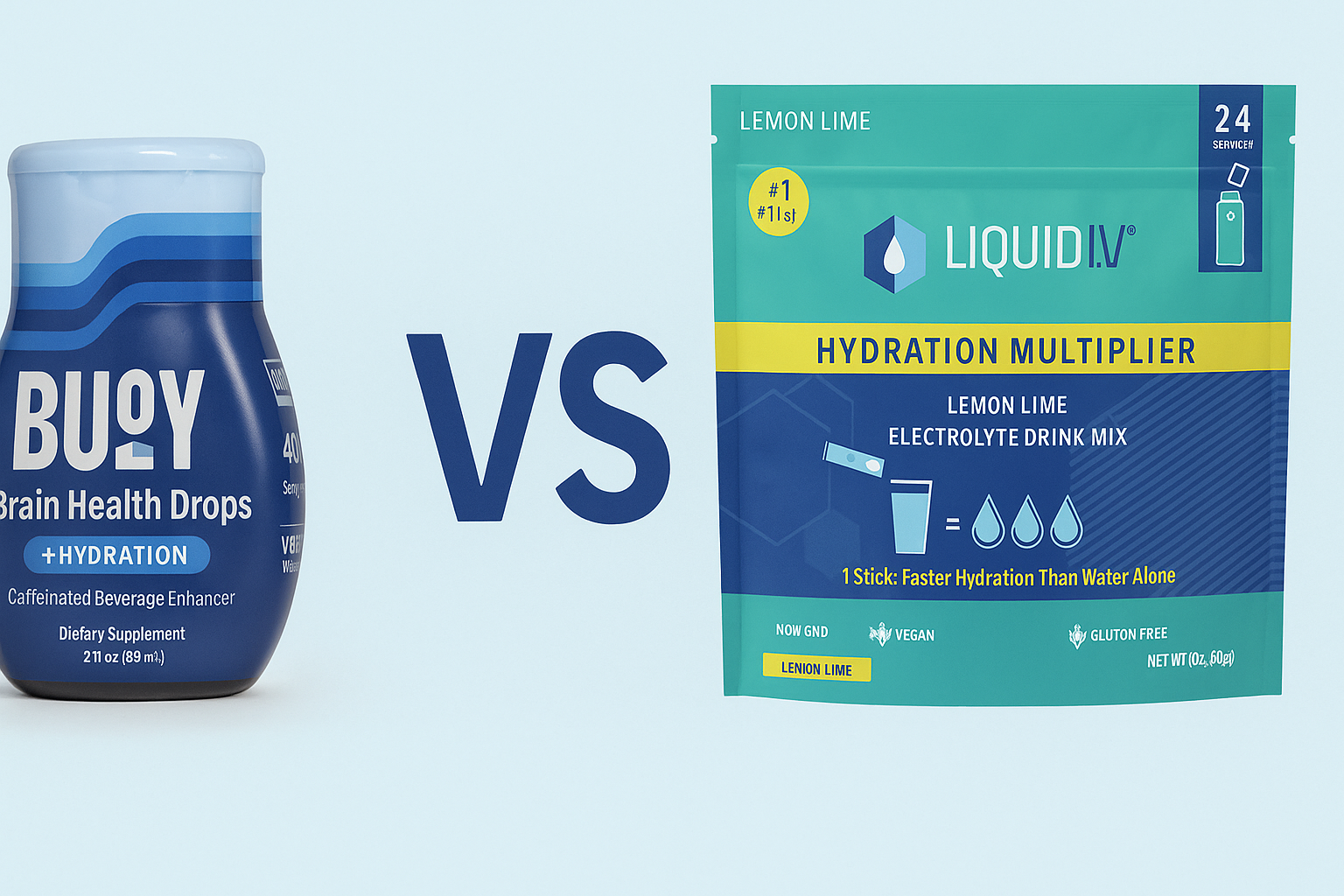
People often compare Buoy Hydration and Liquid I.V. because they’re both used for hydration support, but they’re built for very different needs. On the surface, they solve the same problem. In practice, they’re used in very different ways.
I’ve seen both used for daily hydration, managing symptoms tied to chronic conditions like POTS, migraines, or dizziness, and for recovery after workouts, illness, or hangovers. That overlap is what makes the comparison confusing.
The core difference comes down to philosophy. Buoy is designed to be gentle, sugar-free, and easy to use every day without overwhelming your system. Liquid I.V., on the other hand, is built for high-dose, fast recovery, using higher electrolytes and sugar to push hydration quickly.
This comparison breaks down how those approaches actually play out, and which one makes sense depending on how and why you hydrate.
What Is Buoy?

Buoy Hydration is a sugar-free electrolyte drop you add to any drink. Water, coffee, tea, smoothies, even soup. That flexibility is kind of the whole point.
What makes Buoy different is its micro-dosing hydration strategy. Instead of taking in a big hit of electrolytes all at once, you use small amounts multiple times throughout the day. For me, that felt more natural and easier on my body, especially when I didn’t need aggressive rehydration.
Buoy uses deep-ocean sourced electrolytes plus 87+ ionic trace minerals — a broader mineral profile than most simple electrolyte powders.
Includes a B-vitamin complex (B1, B5, B6) that some versions deliver at quite high %RDA when taken multiple drops per day.
Buoy is:
- Flavorless, so it doesn’t change how your drink tastes
- Completely sugar-free
- Designed to be used several times a day, not just once
It also includes over 87 ocean-sourced trace minerals from natural sea salt. These aren’t huge doses of individual electrolytes, but a broad mix that supports steady hydration over time.
From what I’ve seen and experienced, Buoy works best for:
- Daily hydration, especially if you sip fluids throughout the day
- People with sensitive stomachs who don’t tolerate sweet or salty drinks well
- Those managing chronic conditions like POTS, migraines, or frequent dizziness, where consistent electrolyte intake matters more than quick recovery
Buoy isn’t trying to fix dehydration fast. It’s built to help you stay hydrated consistently, without forcing your body to handle too much at once.
What Is Liquid I.V.?

Liquid I.V. is a powdered electrolyte drink mix you add to water. It’s built around the idea of fast, efficient hydration rather than gentle, ongoing support.
The formula is based on World Health Organization (WHO) Oral Rehydration Solution (ORS) principles, which use a specific balance of sodium and glucose to help the body absorb water more effectively. Liquid I.V. calls this approach Cellular Transport Technology (CTT).
In simple terms, the sugar and sodium work together to pull water into the bloodstream faster. That’s why Liquid I.V. tends to feel stronger and more noticeable than lighter hydration options.
It’s designed for situations like:
- Intense workouts
- Illness-related dehydration
- Travel dehydration
- Hangovers
From my experience, Liquid I.V. works best as a single, high-impact serving. It’s not something I’d sip all day. It’s more of a “use when you need it” hydration boost, meant to correct dehydration quickly rather than maintain hydration gradually.
Sodium & Electrolyte Strength

This is where the difference between Buoy and Liquid I.V. becomes very obvious once you look at the numbers.
Buoy (per serving)
- Sodium: 50 mg
- Potassium: 10 mg
- Magnesium: 0.5 mg
- Calcium: 0.5 mg
- Chloride: 80 mg
Buoy is clearly built for daily use. The idea isn’t to load up on electrolytes all at once, but to spread them out. If you use Buoy consistently throughout the day, around 4 to 7 servings, that adds up to roughly:
- Up to 350 mg sodium
- About 70 mg potassium
That steady intake felt easier on my body, especially when I didn’t want a big electrolyte hit at once.
Liquid I.V. (per serving)
- Sodium: 500–584 mg
- Potassium: 370–380 mg
- Phosphorus: ~40 mg
- Magnesium & calcium: not meaningful amounts in the original formula
Liquid I.V. delivers a much stronger dose in one go. One serving gives you about 10 times more sodium than Buoy does per serving, plus significantly more potassium. You feel it fast.
The key difference
Liquid I.V. is designed for fast correction of dehydration with a single, high-impact serving. Buoy is designed to gently support hydration across the entire day. Neither is better by default, but they’re clearly meant for very different hydration needs.
Ingredients & Sweetness
The ingredient and sweetness difference between Buoy and Liquid I.V. is one of the first things I noticed when using them.
Buoy has no sugar and no artificial sweeteners. The ingredient list is very clean and plant-based, focusing on:
- Purified water
- Organic blood orange extract
- Organic acacia
- Rosemary, star anise, and citrus extracts
- A B-vitamin complex
There’s no added sweetness at all. In plain water, I noticed a very faint mineral taste, but it was subtle and easy to ignore. Most of the time, I couldn’t taste it at all, especially when added to flavored drinks, coffee, or tea.
Liquid I.V. takes the opposite approach. Each serving contains about 11 grams of added sugar, coming from pure cane sugar and dextrose. It also uses stevia (Rebaudioside A) alongside the sugar.
That sweetness is intentional. The sugar helps support ORS-style absorption and also masks the high sodium taste. For me, Liquid I.V. tasted noticeably sweet, which made it effective when I needed quick hydration but less appealing for all-day use.
In short, Buoy stays neutral and sugar-free, while Liquid I.V. uses sweetness as part of its hydration strategy.
Natural Flavors vs Artificial Ingredients
This was something I paid attention to because “natural flavors” can mean very different things depending on the product.
Buoy Hydration is very transparent about what’s inside. The ingredients are fully plant-based, using botanicals like rosemary, star anise, citrus, and organic extracts. These aren’t there to make it taste good. They’re used for preservation and antioxidant support. There are no artificial flavors, no colors, and no dyes. The goal is simple: hydration without flavor. And in day-to-day use, that’s exactly how it feels.
Liquid I.V., on the other hand, lists “natural flavors,” which is a common industry term. While it doesn’t use artificial colors, the flavor blend itself is proprietary, so you don’t really know what’s doing the flavoring. From my experience, it still feels more processed, mainly because it’s designed to taste the same every time and cover up the strong saltiness.
The difference comes down to intent. Buoy aims for flavorless, low-interference hydration. Liquid I.V. aims for consistent taste and drinkability, even if that means more processing behind the scenes. Both avoid artificial colors, but Buoy is much clearer about exactly what you’re consuming.
Effectiveness (Hydration Science)
This is where the science behind each product really lines up with how they feel in real life.
Buoy Hydration is built for slow, steady hydration. According to a clinical study cited by the manufacturer, Buoy is 64% more hydrating than water and 49% more hydrating than a leading sugary competitor. What stood out to me is that it avoids sugar altogether, so there’s no sugar-driven diuretic effect. In practice, that meant I felt more consistently hydrated across the day without ups and downs.
Buoy worked best for me when I used it all day, adding small amounts to drinks to prevent dehydration from building up in the first place. It wasn’t dramatic, but it was steady and noticeable over time.
Liquid I.V. takes the opposite approach. It’s designed for rapid rehydration, using an ORS-style combination of sodium and glucose to speed water absorption through the gut. When I used Liquid I.V. after heavy sweating or when I felt clearly dehydrated, it worked fast and felt more intense.
For me, the takeaway was simple:
- Buoy is best for all-day hydration and prevention
- Liquid I.V. is best for acute dehydration, heavy sweating, and fast recovery
Taste
Taste is another big reason people end up preferring one of these over the other.
Buoy Hydration is essentially tasteless. I’ve added it to water, coffee, tea, and even juice without it changing the flavor in any noticeable way. In plain water, I sometimes noticed a very slight mineral note, but it was subtle and easy to ignore. Most of the time, I forgot it was even there. That’s kind of the point. Buoy is meant to hydrate without drawing attention to itself.
Liquid I.V. goes in the opposite direction. It has strong, fruity flavors like Lemon Lime and Acai Berry, with a sweet, sports-drink-like profile. It’s bold and obvious. For people who don’t like plain water, that can be a big plus. The flavor makes it easier to drink a full bottle quickly.
From my experience, Buoy works best if you want hydration without taste. Liquid I.V. works better if flavor helps you actually drink more fluids.
Convenience
This is one of the biggest day-to-day differences between the two, and it mattered more to me than I expected.
Buoy Hydration is extremely easy to use. It comes in a small squeeze bottle with about 40 servings, so one bottle lasts a while. I could add it to hot or cold drinks without any issue. No shaking, no stirring, no waiting. Just a quick squeeze and done.
What I really liked is how discreet it is. I could use it at a restaurant, at work, or while traveling without anyone noticing. It didn’t interrupt what I was doing, which made it easier to stay consistent.
Liquid I.V. is still portable, but less flexible. Each serving is a single-use powder stick that needs about 16 oz of water. You have to open it, pour it in, and shake or stir. It’s not hard, but it does require more effort and the right amount of water.
From my experience, Buoy fit more naturally into everyday life. Liquid I.V. felt better suited for specific moments when I could stop, mix it properly, and drink it all at once.
How Well They Help Symptoms (POTS & Real-World Use)
This is where real-world use matters more than labels, especially for people dealing with ongoing symptoms.
Buoy Hydration comes up a lot in forums and communities around POTS, dysautonomia, and chronic migraines. From both my experience and what others report, it tends to help with:
- Brain fog
- Dizziness or lightheadedness
- Midday fatigue
- Mild muscle cramps
What stood out is that Buoy works best with consistent, daily use. It’s not about a sudden boost. It’s about keeping electrolytes steady so symptoms don’t spike in the first place. For people who are sensitive to sugar or big electrolyte hits, that gentle approach seems to matter.
Liquid I.V. shows up in a different context. Users often talk about:
- A rapid energy boost
- Fast relief after dehydration crashes
- Feeling noticeably better within a short time
The most common complaints I’ve seen (and felt myself) are that it can be too sweet and hard to tolerate first thing in the morning, especially if you’re nauseous or sensitive to sugar. That said, when dehydration is acute, Liquid I.V. tends to deliver strong, noticeable symptom relief.
From what I’ve seen, Buoy is better for managing symptoms day to day, while Liquid I.V. is better for pulling yourself out of a crash. Different tools, different moments.
Overall Winner
There isn’t one clear winner for everyone, but if I had to choose an overall winner based on everyday usefulness, it would be Buoy Hydration.
The reason is consistency. Buoy fits into daily life better. It’s sugar-free, flavorless, easy to use multiple times a day, and gentle enough for long-term hydration. For people managing ongoing symptoms or just trying to stay hydrated without thinking about it, that matters more than a single big hydration hit.
That said, Liquid I.V. clearly wins in short-term, high-impact situations. If I’m severely dehydrated, sick, traveling, or recovering from heavy sweating, Liquid I.V. works faster and feels stronger.