
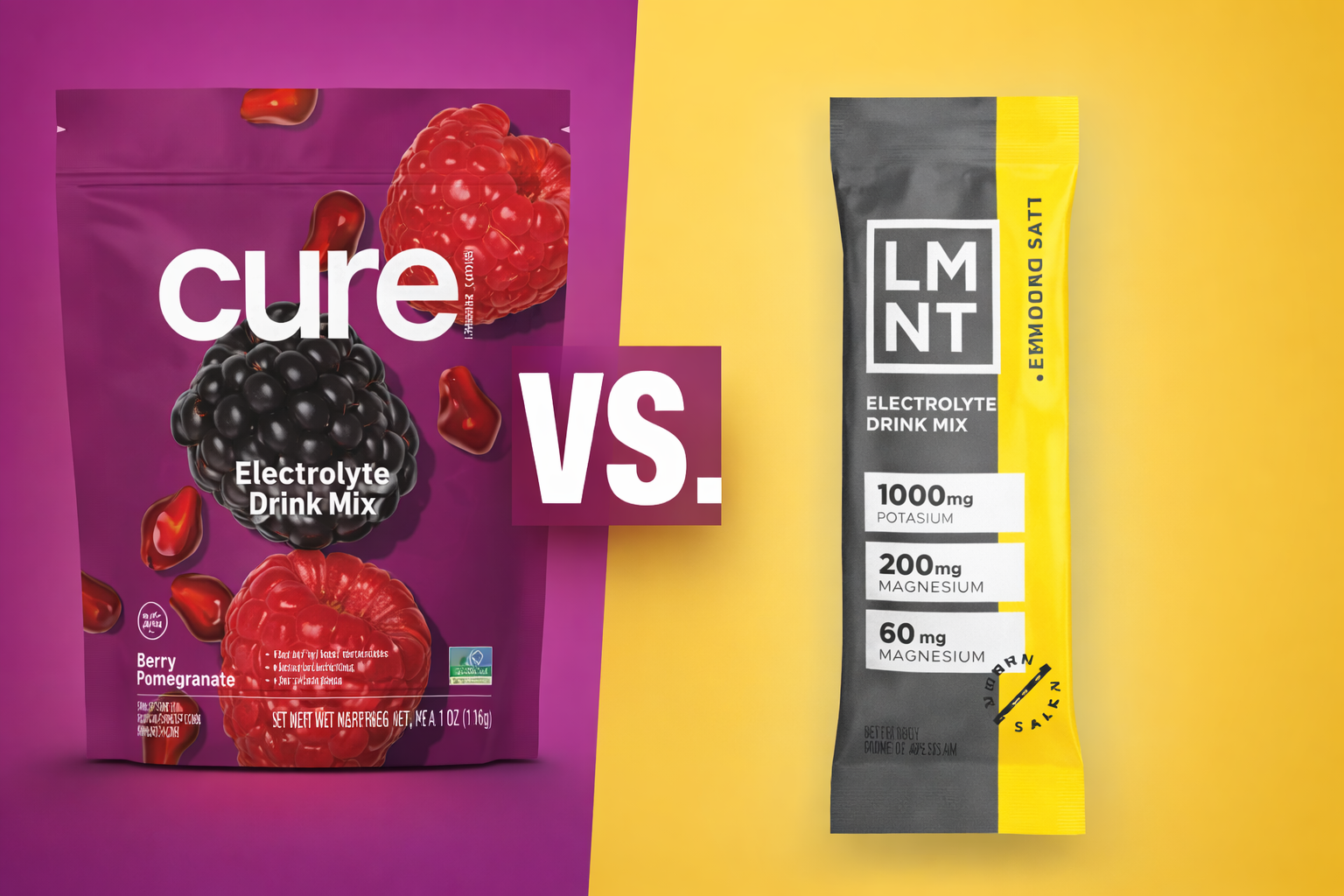
Hydration isn’t just about drinking water—it’s about replacing electrolytes in the right balance for your body and situation. Let’s compare Cure vs LMNT across electrolytes, ingredients, taste, price, and real-world use cases.
What Is Cure?
Cure Hydration is a plant-based electrolyte drink mix inspired by World Health Organization (WHO) oral rehydration solution (ORS) guidelines. It’s designed to support hydration using simple, recognizable ingredients and modest electrolyte levels.
Cure focuses on:
- Plant-based ingredients
- Organic coconut water powder
- Small amounts of natural sugar
- Clean-label transparency
Cure is often used for mild dehydration, illness recovery, and everyday hydration.
👉 Official site: https://drinkcure.com
What Is LMNT?
LMNT is a zero-sugar electrolyte drink mix built around very high sodium intake. It’s designed for people who sweat heavily, follow keto or fasting protocols, or need aggressive electrolyte replacement.
LMNT emphasizes:
- 1,000 mg sodium per serving
- Zero sugar and very low calories
- Minimal, transparent ingredient list
- Bold, salt-forward flavors
LMNT is popular among endurance athletes and low-carb communities.
👉 Official site: https://drinklmnt.com
Key Electrolytes (Exact Amounts per Serving)
Electrolyte levels highlight the biggest contrast in Cure vs LMNT.
Electrolyte Breakdown (Per Serving)
| Electrolyte | Cure | LMNT |
|---|---|---|
| Sodium | ~240 mg | 1,000 mg |
| Potassium | ~260 mg | 200 mg |
| Magnesium | Minimal | 60 mg |
| Calcium | Minimal | Not included |
Key takeaway:
- LMNT delivers over 4x more sodium.
- Cure provides gentler electrolyte support aligned with ORS-style hydration.
Key Ingredients
Ingredient philosophy clearly separates these two products.
Cure Ingredients
- Organic coconut water powder
- Sea salt
- Organic cane sugar
- Organic tapioca dextrose
- Natural flavors
LMNT Ingredients
- Sodium chloride
- Potassium chloride
- Magnesium malate
- Natural flavors
- Stevia (in flavored versions)
Cure relies on whole-food–based ingredients, while LMNT prioritizes precise mineral dosing.
Which One Helps With Fast Hydration?
Hydration speed depends on sodium concentration and carbohydrate presence.
- LMNT: High sodium supports rapid fluid retention after heavy sweating or dehydration.
- Cure: Uses sugar-electrolyte ratios similar to WHO ORS, effective for mild dehydration and illness.
According to the World Health Organization, glucose-electrolyte solutions improve water absorption during dehydration.
Source: https://www.who.int
Sugar Content
Sugar content is a major decision point in Cure vs LMNT.
- Cure: ~4g sugar per serving (from organic sources)
- LMNT: 0g sugar
Cure’s sugar supports absorption, while LMNT is better suited for keto and fasting.
Vitamins
- Cure: No added vitamins
- LMNT: Core formulas contain no vitamins (some specialty SKUs may vary)
Both focus primarily on electrolytes rather than micronutrient supplementation.
How Does It Taste?
Taste differences are noticeable.
Cure Taste
- Light and subtle
- Mildly sweet
- Clean, natural finish
LMNT Taste
- Very salty
- Bold and intense
- Often diluted by users
People sensitive to saltiness often prefer Cure.
Artificial vs Natural Color
- Cure: No artificial colors
- LMNT: No artificial dyes
Both products maintain clean-label standards.
Convenience
Convenience is similar.
- Single-serve packets
- Easy to mix with water
- Travel-friendly
LMNT also offers sparkling canned options, while Cure focuses on powder mixes.
Price
Average Cost Per Serving
- Cure: ~$1.50–$2.00
- LMNT: ~$1.50–$2.00
Pricing is comparable and varies by retailer and subscription.
Is It Worth It?
Value depends on hydration needs.
- Cure is worth it for gentle, everyday or illness-related hydration.
- LMNT is worth it for high sodium replacement during heavy sweat loss.
Using either outside its intended purpose may feel unnecessary.
Are They Healthy?
Both can be healthy when used appropriately.
- Cure’s sugar content is modest but still present.
- LMNT’s sodium level may be excessive for casual daily use.
People with medical conditions should consult a healthcare professional.
Use Cases
Cure Is Best For:
- Mild dehydration
- Illness recovery
- Everyday hydration
- Ingredient-conscious users
LMNT Is Best For:
- Heavy sweating
- Endurance sports
- Keto or fasting
- Hot climates or sauna use
Final Thoughts
When comparing Cure vs LMNT, the difference comes down to balanced, food-based hydration versus aggressive sodium replacement. Cure aligns with WHO-style rehydration using simple ingredients and moderate electrolytes, while LMNT delivers maximum sodium for people who truly need it. Both are effective tools—when used in the right context.
FAQs
Is Cure better than LMNT?
Neither is better overall—they serve different hydration needs.
Which has more sodium?
LMNT by a large margin.
Is Cure keto-friendly?
Not strictly, due to its sugar content.
Can I drink LMNT every day?
Only if you have high sodium needs; otherwise, moderation is advised.