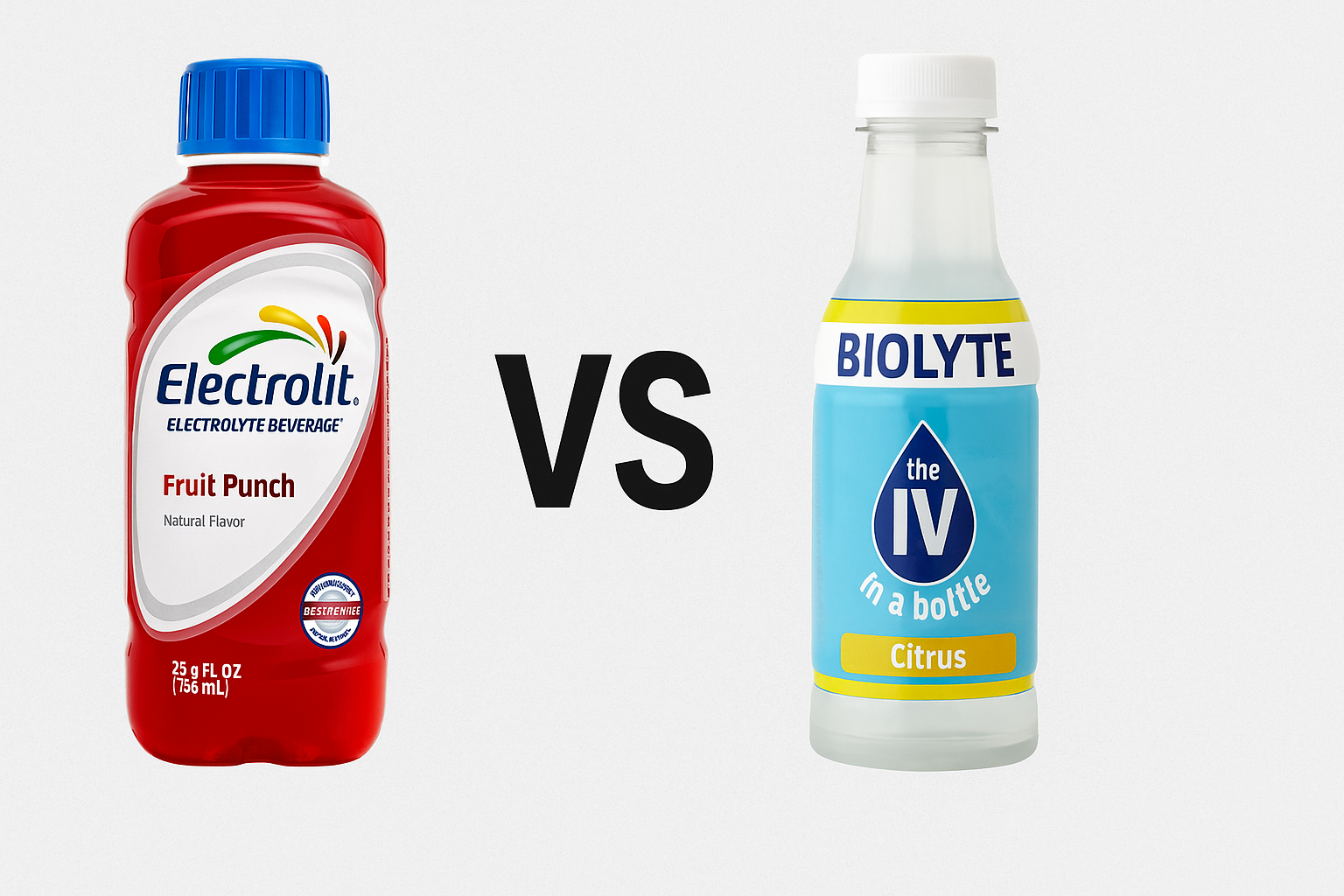
Hydration drinks aren’t all made equal — and if you’ve ever compared Electrolit and Biolyte, you’ve probably noticed both claim to offer “IV-level hydration.” But how do they really stack up?
Let’s break this down with real nutrition data, brand history, and how each drink performs in real-world situations.
A Quick Background: How Each Brand Started
Electrolit: From Mexico to the U.S.
Electrolit was created in 1950 in Guadalajara, Mexico, by Grupo Pisa, one of Latin America’s largest pharmaceutical companies. It was originally formulated as a medical rehydration drink for patients suffering from severe dehydration, especially due to heat or illness.
For decades, Electrolit was primarily sold in hospitals and pharmacies across Mexico. Around 2014, it entered the U.S. market, promoted as a sports and recovery beverage. Today, it’s a major competitor to Gatorade, Pedialyte, and BodyArmor in the hydration aisle.
Fun fact: During the 2020 COVID-19 pandemic, Electrolit saw a big jump in sales across U.S. grocery stores as consumers sought hospital-grade hydration at home.
Biolyte: The “IV in a Bottle” Story
Biolyte has a much more personal origin. It was founded in Georgia, USA, by Dr. Trey Rollins, an anesthesiologist, whose wife Jesslyn Rollins later became the CEO. The idea came when Dr. Rollins wanted to create a drink that could help patients — especially his wife’s family — recover from dehydration caused by surgery, illness, or hangovers without needing an IV drip.
Launched in 2017, Biolyte calls itself the “IV in a Bottle.” It’s made in the U.S. and is marketed as a medical-grade hydration drink that replenishes electrolytes and energy faster than traditional sports drinks.
Real brand moment: Biolyte gained national attention in 2022, when several professional athletes and college teams began using it during tournaments, citing its strong sodium and electrolyte profile for fast recovery in humid conditions.
Product Comparison: What’s Inside the Bottle?
Here’s how actual Electrolit and Biolyte flavors compare based on official nutrition labels and retail data.
| Brand & Flavor | Calories | Sodium | Potassium | Sugars | Key Extras |
|---|---|---|---|---|---|
| Electrolit Fruit Punch (12 oz) | 70 kcal | 250 mg | 280 mg | 18 g | Magnesium 17 mg, Calcium 29 mg |
| Electrolit Strawberry-Kiwi (21 oz) | 130 kcal | 430 mg | 490 mg | 31 g | Magnesium 30 mg, Calcium 50 mg, Chloride 670 mg |
| Biolyte Berry (16 oz) | 45 kcal | 700 mg | 400 mg | 10 g | Chloride 1100 mg, Magnesium 16 mg, B6, B12, Niacin, Pantothenic Acid |
| Biolyte Tropical Mix Stick (16 oz) | 40–45 kcal | 700 mg | 400 mg | 10 g | Added Vitamins & Electrolytes |
The Key Differences (Backed by Real Data)
1. Electrolyte Strength
Biolyte delivers nearly double the sodium compared to Electrolit (≈700 mg vs 250–430 mg).
That makes it more suitable for intense dehydration — like heat exhaustion, vomiting, or long runs.
Electrolit, with its lower sodium and higher sugar, fits better for moderate rehydration or post-exercise refreshment.
2. Sugar and Calorie Load
Electrolit’s fruity flavors can pack up to 31 grams of sugar, adding around 130 calories per bottle.
Biolyte stays lighter — 10 grams of sugar and 45 calories — which appeals to users who want hydration without the sugar spike.
3. Added Ingredients
Electrolit focuses mainly on core electrolytes: sodium, potassium, magnesium, calcium, and chloride.
Biolyte goes further. It includes:
- B-complex vitamins (B6, B12, Niacin, Pantothenic Acid) for energy metabolism
- L-carnitine and taurine in some blends for recovery
- Higher chloride levels (≈1100 mg) that mimic IV fluid composition
That’s why Biolyte markets itself as a medical-grade recovery drink, while Electrolit is more of a performance and sports rehydration beverage.
Taste and Flavor Experience
- Electrolit comes in bright, sweet flavors like Fruit Punch, Strawberry-Kiwi, and Coconut. It tastes similar to Gatorade but thicker and more syrupy due to higher sugar content.
- Biolyte has a salty-sweet balance — the strong sodium is noticeable. It tastes closer to a medical rehydration solution than a sports drink, which some people find less enjoyable but more effective.
Real-World Scenarios
- Post-Workout Hydration:
If you’ve just hit a long cardio session, Electrolit gives you quick carbs and moderate electrolytes to refuel. - Dehydration from Illness or Heat:
When you’re sick, hungover, or heat-exhausted, Biolyte offers faster fluid and sodium replacement — similar to what IV fluids provide. - For Everyday Use:
Electrolit works better as a daily hydration or sports drink. Biolyte’s formula is more concentrated and might be too strong for casual sipping.
Price and Availability
- Electrolit: Around $2.50–$3.00 per 21 oz bottle, found in stores like Walmart, Target, and Costco.
- Biolyte: Around $3.50–$4.00 per 16 oz bottle, available in CVS, Walgreens, and online retailers.
Electrolit offers larger bottles for less, but Biolyte packs more electrolytes per ounce.
Final Verdict: Which One Should You Choose?
| Choose Electrolit if… | Choose Biolyte if… |
|---|---|
| You want a flavorful, easy-to-drink electrolyte beverage | You need strong, medical-grade hydration fast |
| You’re recovering from light exercise or daily dehydration | You’re dealing with illness, hangover, or heavy sweating |
| You prefer more sweetness and larger servings | You prefer lower sugar and more electrolytes |
The Bottom Line
Both Electrolit and Biolyte are excellent hydration drinks — but they serve different purposes.
- Electrolit = Sports hydration + taste + affordability
- Biolyte = Medical-level hydration + lower sugar + rapid recovery
If you’re an athlete or fitness enthusiast, start with Electrolit.
If you’re recovering from dehydration or want IV-level support at home, Biolyte is your best bet.