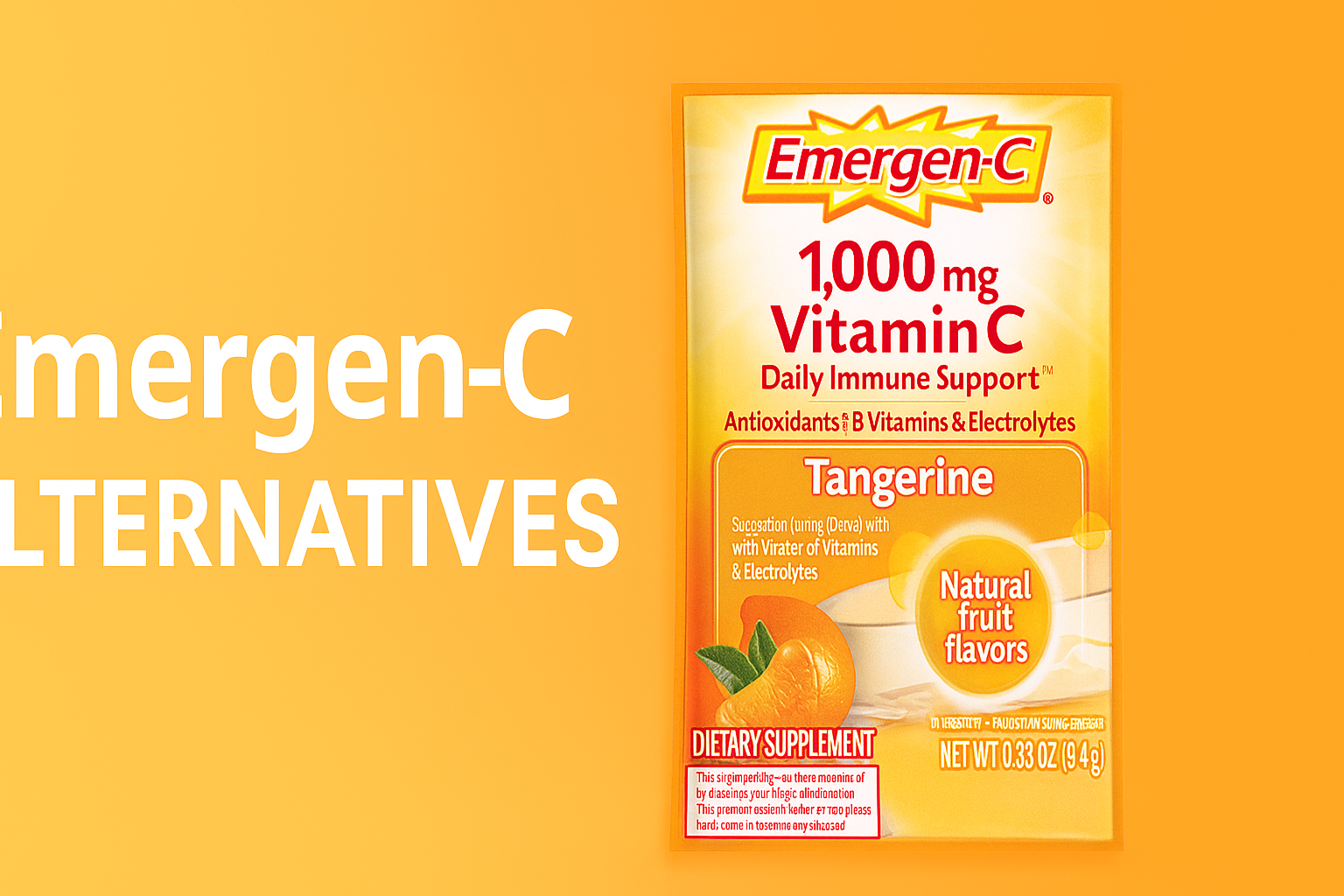
It’s that time of year again — sniffles, sore throats, and sudden coughs are making the rounds. You wake up feeling that familiar scratch in your throat, shuffle to the kitchen, and reach for that bright orange packet of Emergen-C. You pour, stir, sip — and hope that fizzy drink will help your immune system fight back.
But halfway through the glass, you pause. Is this really the best way to get my vitamin C fix?
Emergen-C has long been the go-to for a quick immunity boost. Packed with vitamin C, B vitamins, and electrolytes, it promises to support your immune system in one bubbly shot. Yet, more people today are questioning whether it’s the most natural or effective choice.
If that sounds like you, you’re not alone. The demand for Emergen-C alternatives has grown as health-conscious consumers look for cleaner, food-based, and more holistic ways to stay healthy — without all the added sugars and synthetic extras.
In this post, we’ll explore the best natural and supplement-based alternatives to Emergen-C, backed by science and expert insight — so you can keep your immune system strong the smart way.
II. Why People Are Looking for Emergen-C Alternatives
The vitamin C supplement market is booming — and it’s expected to hit $1.8 billion by 2030 (Grand View Research). But even as sales rise, more people are turning away from powdered drinks like Emergen-C toward whole-food and clean-label options.
Here’s why:
- Sugar Content: Some Emergen-C packets pack in up to 6 grams of sugar — not ideal when sugar itself can suppress immune function in high amounts.
- Synthetic Ingredients: The product relies on processed vitamin C (ascorbic acid) and artificial flavors, which may not offer the same natural benefits as whole foods.
- Lifestyle Shifts: People are moving beyond “quick fixes” toward long-term wellness habits — like better nutrition, sleep, and hydration.
In short, many want more sustainable immune support, not just a temporary lift in a glass.
III. Supplement-Based Alternatives to Emergen-C
If you still love the convenience of supplements but want cleaner, more effective options, these are the best Emergen-C alternatives worth considering.
1. Airborne
What It Is:
Airborne is a close cousin to Emergen-C — an effervescent immunity booster packed with vitamin C, zinc, and herbal extracts like echinacea and ginger.
Pros:
- Easy-to-use tablets, great for travel
- Includes herbs that support immunity
- Available in sugar-free versions
Cons:
- Some flavors contain artificial sweeteners
- Slightly pricier than regular vitamin C tablets
Who It’s Best For:
Frequent travelers or anyone needing a quick defense during cold season.
Expert Insight:
Research in The Lancet Infectious Diseases found that echinacea may cut cold risk by up to 58%, especially in frequent users.
2. Vitamin C Tablets
Why It Works:
Sometimes, simple is best. Vitamin C tablets deliver the same immune benefits as Emergen-C — minus the sugars and fillers.
What the Research Says:
According to the Cochrane Database of Systematic Reviews, vitamin C can reduce the duration of colds by 8–14% in active adults.
Pro Tip:
Choose ascorbic acid for high potency or buffered vitamin C (calcium ascorbate) if you have a sensitive stomach.
Budget Bonus:
They’re affordable and widely available — often costing less than 10% of what you’d spend on Emergen-C.
3. Zinc Lozenges
Why It Works:
Zinc plays a critical role in producing white blood cells that help your body fight infections. Taken early, zinc lozenges can reduce the severity and length of a cold.
Science Says:
A study in The Journal of Family Practice found zinc can shorten colds by around 33%.
Watch Out:
Too much zinc (over 40 mg a day) can upset your stomach or affect copper absorption — moderation is key.
Best For:
Those who want short-term immune relief right when symptoms begin.
4. Herbal Supplements
Top Picks:
Echinacea, elderberry, and astragalus — three immune-supporting herbs with centuries of traditional use.
What Studies Show:
A 2016 study in Nutrients found that elderberry reduced flu duration by up to 4 days.
Best For:
Those who prefer natural, plant-based immune support.
Tip:
Always choose herbal brands tested by third parties for purity and potency.
IV. Natural and Lifestyle Alternatives: Building Immunity the Holistic Way
True immunity isn’t built from supplements alone — it’s built by how you live every day. Let’s explore some simple, science-backed ways to support your immune system naturally.
1. Eat Vitamin C–Rich Foods
Whole foods provide more than just vitamin C — they come with antioxidants, fiber, and natural compounds that help your body absorb nutrients better.
Try These:
- Oranges, lemons, and grapefruit
- Bell peppers
- Strawberries and papaya
- Spinach and kale
Fun Fact:
One medium orange gives you over 90% of your daily vitamin C needs — no added sugar required.
2. Support Your Gut with Probiotics
Your gut is home to about 70% of your immune cells. Keeping it balanced helps your entire system work better.
Add These to Your Diet:
- Yogurt with live cultures
- Kefir
- Fermented foods like kimchi and sauerkraut
Pro Tip:
Look for strains like Lactobacillus rhamnosus and Bifidobacterium bifidum for the biggest immune benefits.
3. Use Kitchen Remedies
You don’t have to look far — your spice rack already holds powerful immune boosters.
In Your Pantry:
- Ginger reduces inflammation and soothes sore throats
- Garlic boosts white blood cell activity
- Turmeric contains curcumin, a strong antioxidant
Try This:
Make a soothing tea with ginger, honey, and lemon — a daily ritual your immune system will love.
4. Stay Hydrated
Even mild dehydration can make your immune system sluggish.
Best Hydration Sources:
Water, herbal teas, or fruit-infused water. Aim for at least 8 glasses per day.
Hydration helps your body circulate nutrients, flush toxins, and keep your airways moist — your first line of defense against infections.
5. Prioritize Sleep
Sleep is when your body regenerates and produces infection-fighting proteins.
Research Insight:
People who sleep fewer than 7 hours a night are three times more likely to catch a cold than those who sleep eight or more (Archives of Internal Medicine).
Action Step:
Create a relaxing bedtime routine and aim for 7–9 hours nightly.
6. Manage Stress
Chronic stress increases cortisol levels, which weakens your immune response.
Effective Stress-Relievers:
- Mindfulness or meditation
- Journaling
- Time in nature
- Deep breathing
Science Fact:
A study in Frontiers in Psychology found mindfulness can lower inflammation markers by 32%.
7. Exercise Regularly
Regular, moderate activity keeps immune cells active and moving.
Data Point:
Exercise can increase immune cell mobility by 30% (Journal of Sport and Health Science).
Best Practices:
Aim for 150 minutes of moderate exercise a week — think walking, yoga, or swimming.
V. Quick Comparison: Emergen-C vs. Other Options
| Feature | Emergen-C | Airborne | Vitamin C Tablets | Zinc Lozenges | Natural Foods |
|---|---|---|---|---|---|
| Form | Powder drink | Effervescent tablets | Pill/tablet | Lozenge | Whole foods |
| Vitamin C (mg) | 1000 | 1000 | 500–1000 | ~5–10 | 60–100 per serving |
| Sugar Added | Yes (up to 6g) | Sometimes | No | Sometimes | None |
| Other Nutrients | B vitamins, electrolytes | Zinc, echinacea | None | Zinc | Antioxidants |
| Best For | Quick boost | Travel | Daily support | Early colds | Long-term health |
VI. Choosing the Right Option for You
Your ideal alternative depends on your goals:
- Daily Support: Choose vitamin C tablets or a diet rich in fresh produce.
- Quick Prevention: Airborne or zinc lozenges work best during cold season.
- Holistic Health: Focus on diet, stress, hydration, and rest for sustainable results.
Watch the Sugar:
If you’re avoiding sweeteners, go for sugar-free or food-based options.
Expert Tip:
Mix it up! You might take zinc lozenges when traveling, but rely on citrus fruits and greens the rest of the year.
VII. Conclusion: Rethink Immunity — It’s a Lifestyle, Not a Packet
Emergen-C can offer a temporary lift, but real immunity comes from consistent healthy habits — nutrient-rich foods, movement, rest, and mindful living.
Your immune system is like an orchestra: every choice you make — from your breakfast to your bedtime — plays a part. When those choices work in harmony, your body thrives naturally.
So next time you feel a sniffle coming on, skip the sugar packet.
Instead, pour a cup of ginger tea, take a deep breath, and trust the habits you’ve built.
The strongest immune defense isn’t found in a packet — it’s built by you, one healthy choice at a time.