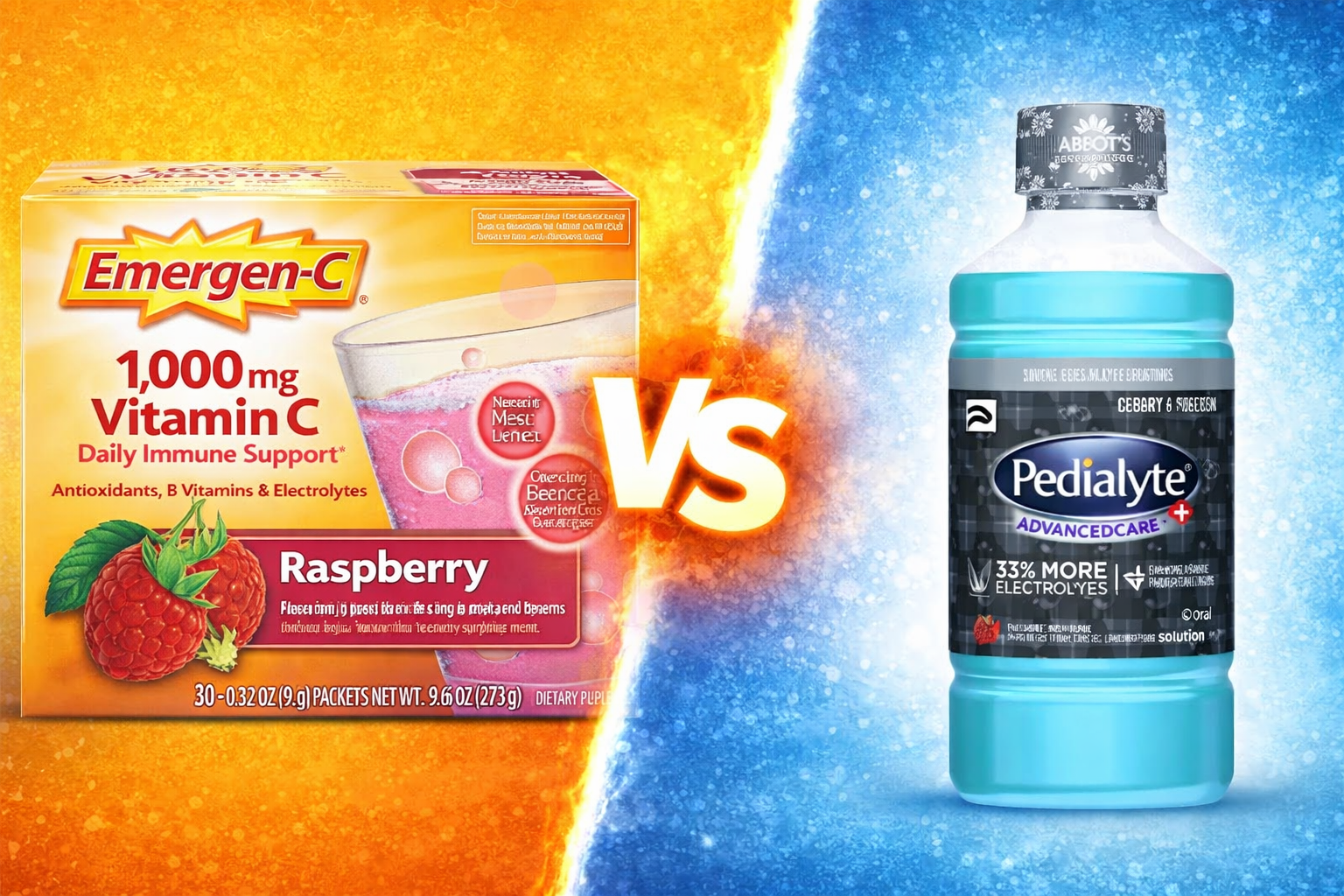
I started paying more attention to hydration and recovery when I realized not every “drink mix” is trying to solve the same problem. Sometimes I’d reach for something when I felt run down or was catching a cold, and other times I just needed to rehydrate after travel, heat, or long days. That’s when I noticed how different vitamin drinks and electrolyte solutions actually are once you look past the packaging.
Hydration depends heavily on electrolyte balance, especially sodium and potassium, which help your body absorb and retain fluids. Vitamins, on the other hand, support immune function and energy metabolism. When you mix those two goals together, products can look similar but perform very differently.
Two of the most recognized options are Emergen-C and Pedialyte. Both are commonly used when people aren’t feeling their best, but they’re designed with completely different priorities. Once I compared the ingredients, electrolyte levels, and real-world effects, the differences became very clear.
In this comparison, I’ll break down exactly what each one does, including electrolyte sources, exact amounts, sugar levels, ingredient quality, hydration performance, and when each actually makes sense to use.
What Is Emergen-C?
Emergen-C is a powdered dietary supplement drink mix primarily designed for immune support rather than hydration. Each packet typically contains 1,000 mg of vitamin C, along with B vitamins like B6 and B12 that support energy metabolism.
What stood out immediately is that the formula is vitamin-dense but electrolyte-light. The focus is on antioxidants and micronutrients rather than fluid replacement.
Emergen-C also includes small amounts of minerals like potassium and manganese, but they’re present more for metabolic support than hydration performance.
Another noticeable feature is the light carbonation that forms when mixed with water due to citric acid and mineral ascorbates. It feels more like a fizzy vitamin drink than a hydration solution.
From how it’s formulated, Emergen-C makes the most sense for daily immune support, travel wellness routines, or when you feel run down, rather than correcting dehydration.
What Is Pedialyte?
Pedialyte is an oral rehydration solution designed specifically to prevent or treat dehydration by restoring fluids and electrolytes quickly.
Its formula is based on oral rehydration therapy principles, meaning the ratio of sodium to glucose is optimized to improve water absorption in the small intestine through sodium-glucose transport mechanisms.
Pedialyte is widely used during illness (like stomach flu), heat exposure, and heavy sweating because it replaces electrolytes lost through fluids more effectively than water alone.
Unlike vitamin powders, Pedialyte prioritizes electrolyte balance over micronutrient density. The ingredient list is built around hydration efficiency rather than wellness supplementation.
Electrolyte Quality & Sources
Emergen-C provides electrolytes mainly through potassium bicarbonate and mineral ascorbates, but the amounts are relatively small. The minerals support general cellular function rather than fluid balance.
Pedialyte uses sodium chloride, potassium citrate, and sodium citrate, which are standard electrolyte salts used in medical hydration solutions. These forms are chosen specifically because they dissolve easily and support rapid absorption.
The key difference is intent: Emergen-C includes electrolytes as supportive nutrients, while Pedialyte uses clinically established electrolyte salts designed for rehydration efficiency.
Electrolyte Amounts (Exact Numbers per Serving)
Emergen-C per packet (approximate):
- Sodium: 65 mg
- Potassium: 200 mg
- Calcium: 50 mg
- Magnesium: small trace amount
Total primary electrolytes are under 300 mg, which is relatively low for hydration purposes.
Pedialyte per 8 oz serving:
- Sodium: 370 mg
- Potassium: 280 mg
- Chloride: 440 mg
- Zinc: 0.5 mg
That’s over 1,000 mg of key electrolytes, with significantly higher sodium to support fluid retention.
This difference explains why Pedialyte feels noticeably more hydrating when you actually need electrolyte replacement.
Sugar Content
Emergen-C contains about 6 grams of sugar per packet, providing roughly 25 calories. The sugar mainly improves taste rather than playing a functional hydration role.
Pedialyte contains about 9 grams of glucose per serving, which is intentionally included because glucose helps drive sodium and water absorption in the intestines.
So while Pedialyte has slightly more sugar, it’s included for physiological reasons rather than just flavor.
Sweeteners Used
Emergen-C uses cane sugar along with natural flavors and sometimes stevia extract depending on the variety. The sweetness level is moderate and masks the strong vitamin taste.
Pedialyte uses glucose along with flavoring agents, and some versions include sucralose to balance taste without increasing calories too much.
The taste difference reflects their purpose: Emergen-C tastes like a vitamin supplement, while Pedialyte tastes more like a clinical hydration drink.
Ingredient Cleanliness
Emergen-C has a longer ingredient list that includes multiple vitamins, antioxidants, flavorings, and color sources. The complexity comes from its role as a dietary supplement rather than a simple hydration formula.
Pedialyte has a shorter, function-focused ingredient list centered around water, electrolytes, glucose, and stabilizers. It’s designed for performance rather than supplementation.
Both are well-regulated products, but Pedialyte feels more purpose-built, while Emergen-C feels more like a multi-nutrient blend.
Hydration Effectiveness
Emergen-C can support mild hydration simply because you’re increasing fluid intake, but the low sodium level means it doesn’t significantly improve fluid retention or correct electrolyte imbalance.
Pedialyte is noticeably more effective when dehydration is present. The higher sodium concentration helps the body retain fluids, while the balanced electrolytes restore proper hydration status more quickly than water alone.
In real-world use, Pedialyte feels more functional when hydration actually needs fixing rather than just maintaining fluid intake.
Health & Wellness Benefits
Shared benefits
Both encourage fluid intake and can help reduce mild fatigue associated with low hydration or feeling run down.
Emergen-C benefits
The high vitamin C dose supports immune function, while B vitamins help with energy metabolism. It’s useful during travel, seasonal illness risk, or when dietary vitamin intake is low.
Pedialyte benefits
Pedialyte helps prevent dehydration symptoms like dizziness, dry mouth, and fatigue. It’s particularly useful during illness, heat exposure, or recovery after fluid loss.
Emergen-C vs Pedialyte: Which One Should You Choose?
Choose Emergen-C if you want:
- 1,000 mg vitamin C immune support
- A daily wellness supplement
- Light electrolyte support
- A vitamin-focused drink
Choose Pedialyte if you want:
- Clinically balanced hydration
- Higher sodium for fluid retention
- Support during illness or heat
- Faster electrolyte replacement
Overall Winner
If the goal is hydration performance, Pedialyte clearly comes out on top.
The significantly higher sodium and total electrolyte levels make a real difference when dehydration is noticeable. It restores fluid balance faster and more effectively than Emergen-C.
That said, Emergen-C isn’t meant to compete on hydration. Its strength is immune support and vitamin supplementation, where it performs exactly as intended.
If you want something to support your immune system, Emergen-C makes sense. If you need to actually rehydrate and restore electrolytes, Pedialyte is the more reliable choice.