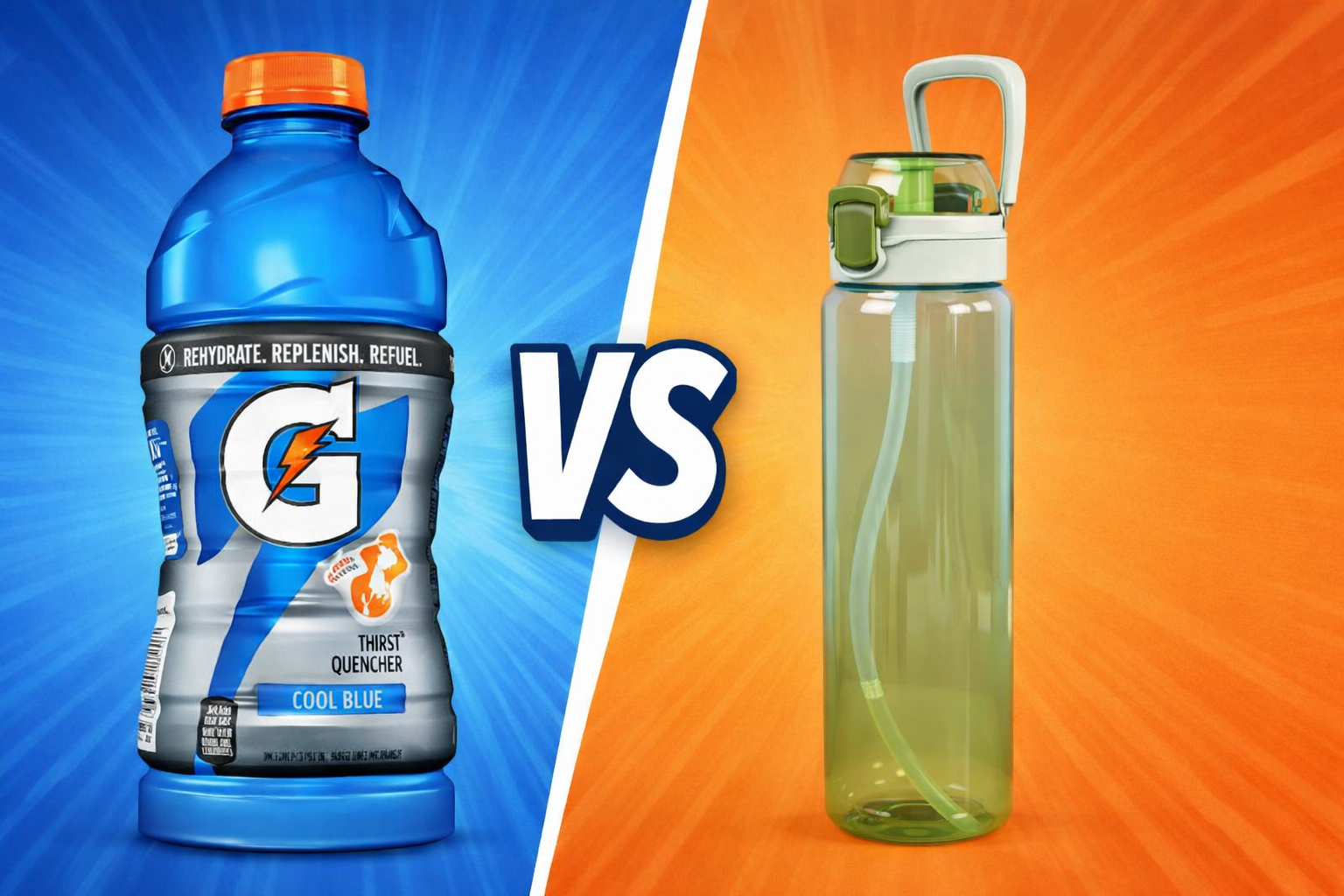
Hydration isn’t one-size-fits-all. The best option depends on activity level, sweat loss, and overall health. Let’s break down Gatorade vs water step by step.
What Is Gatorade?
Gatorade is a sports drink originally developed for athletes to replace fluids, electrolytes, and carbohydrates lost during intense physical activity. It’s now widely consumed by athletes and non-athletes alike.
Gatorade is designed to provide:
- Electrolytes (mainly sodium and potassium)
- Carbohydrates (sugar) for energy
- Rapid fluid replacement
- Palatable flavors that encourage drinking
It’s most commonly used during or after sports, workouts, and heavy sweating.
👉 Brand reference: https://www.gatorade.com
What Is Water?
Water is the most basic and essential hydration source for the human body. It contains no calories, no sugar, and no additives, yet it supports nearly every bodily function.
Water helps with:
- Temperature regulation
- Nutrient transport
- Digestion
- Joint lubrication
- Everyday hydration
It’s universally accessible, affordable, and required for survival.
👉 Health reference: https://www.cdc.gov
Key Electrolytes (Exact Amounts)
Electrolytes are the biggest nutritional difference in Gatorade vs water.
Electrolyte Breakdown (Typical 20 oz)
| Nutrient | Gatorade | Water |
|---|---|---|
| Sodium | ~270 mg | 0 mg |
| Potassium | ~75 mg | 0 mg |
| Magnesium | Minimal | 0 mg |
| Calcium | Minimal | 0 mg |
Key takeaway:
- Gatorade replaces electrolytes lost through sweat.
- Water does not supply electrolytes but still hydrates effectively in low-loss situations.
Which One Helps With Fast Hydration?
Hydration speed depends on sweat loss.
- Water hydrates efficiently during rest, light activity, or daily life.
- Gatorade may improve fluid retention during prolonged or intense exercise due to sodium content.
According to the American College of Sports Medicine, electrolyte-containing beverages help maintain hydration during long-duration exercise.
Source: https://www.acsm.org
Sugar Content
Sugar is the most controversial part of Gatorade vs water.
- Gatorade: ~34g sugar per 20 oz bottle
- Water: 0g sugar
Gatorade’s sugar provides quick energy for athletes but can be unnecessary—or harmful—for sedentary individuals if consumed frequently.
Calories
- Gatorade: ~140 calories per 20 oz
- Water: 0 calories
For weight management or general health, water has a clear advantage.
Vitamins
- Gatorade: Typically no meaningful vitamins
- Water: No vitamins (unless mineral water)
Neither option is intended as a vitamin source.
How Does It Taste?
Taste influences how much people drink.
Gatorade Taste
- Sweet and bold
- Easy to drink during exertion
- Encourages higher fluid intake
Water Taste
- Neutral and refreshing
- Varies by source (tap, spring, filtered)
- No flavor fatigue
For some people, flavored drinks make hydration easier—but also easier to overconsume.
Artificial vs Natural Color
- Gatorade: Many flavors use artificial dyes (e.g., Yellow 5, Red 40)
- Water: No coloring
Color-sensitive or ingredient-conscious users often prefer water.
Convenience
Gatorade
- Ready-to-drink bottles
- Available everywhere
- No mixing required
Water
- Universally available
- Free or very low cost
- Can be bottled, filtered, or tap
Both score high, but water wins on cost and accessibility.
Price
Average Cost
- Gatorade: ~$1.50–$2.50 per bottle
- Water: Free to ~$1.00 bottled
Over time, water is significantly more economical.
Is It Worth It?
Value depends on use case.
- Gatorade is worth it for endurance sports, long practices, or heavy sweating.
- Water is worth it for everyday hydration and general health.
For most people, daily Gatorade consumption isn’t necessary.
Are They Healthy?
Health impact depends on frequency and context.
- Water is universally healthy and essential.
- Gatorade can be helpful or harmful depending on activity level.
Regular intake of sugary sports drinks without exercise may increase the risk of weight gain and blood sugar issues.
Use Cases
Gatorade Is Best For:
- Long or intense workouts
- Team sports
- Outdoor activity in heat
- Situations with heavy sweat loss
Water Is Best For:
- Everyday hydration
- Office and school
- Light exercise
- Weight management
- General wellness
Final Thoughts
When it comes to Gatorade vs water, the right choice depends on what your body is doing. Water is the gold standard for hydration and should be the primary fluid for most people, most of the time. Gatorade serves a specific purpose—replacing fluids, electrolytes, and energy during intense physical exertion.
In short:
- Water = daily hydration foundation
- Gatorade = performance-specific tool
Using each where it makes sense is the smartest approach.
FAQs
Is Gatorade better than water?
Only during intense or prolonged physical activity. Otherwise, water is better.
Can I drink Gatorade every day?
You can, but it’s usually unnecessary unless you exercise heavily.
Does Gatorade hydrate faster than water?
During heavy sweating, yes. For everyday hydration, water is sufficient.
Is zero-sugar Gatorade healthier?
It reduces calories but includes artificial sweeteners.