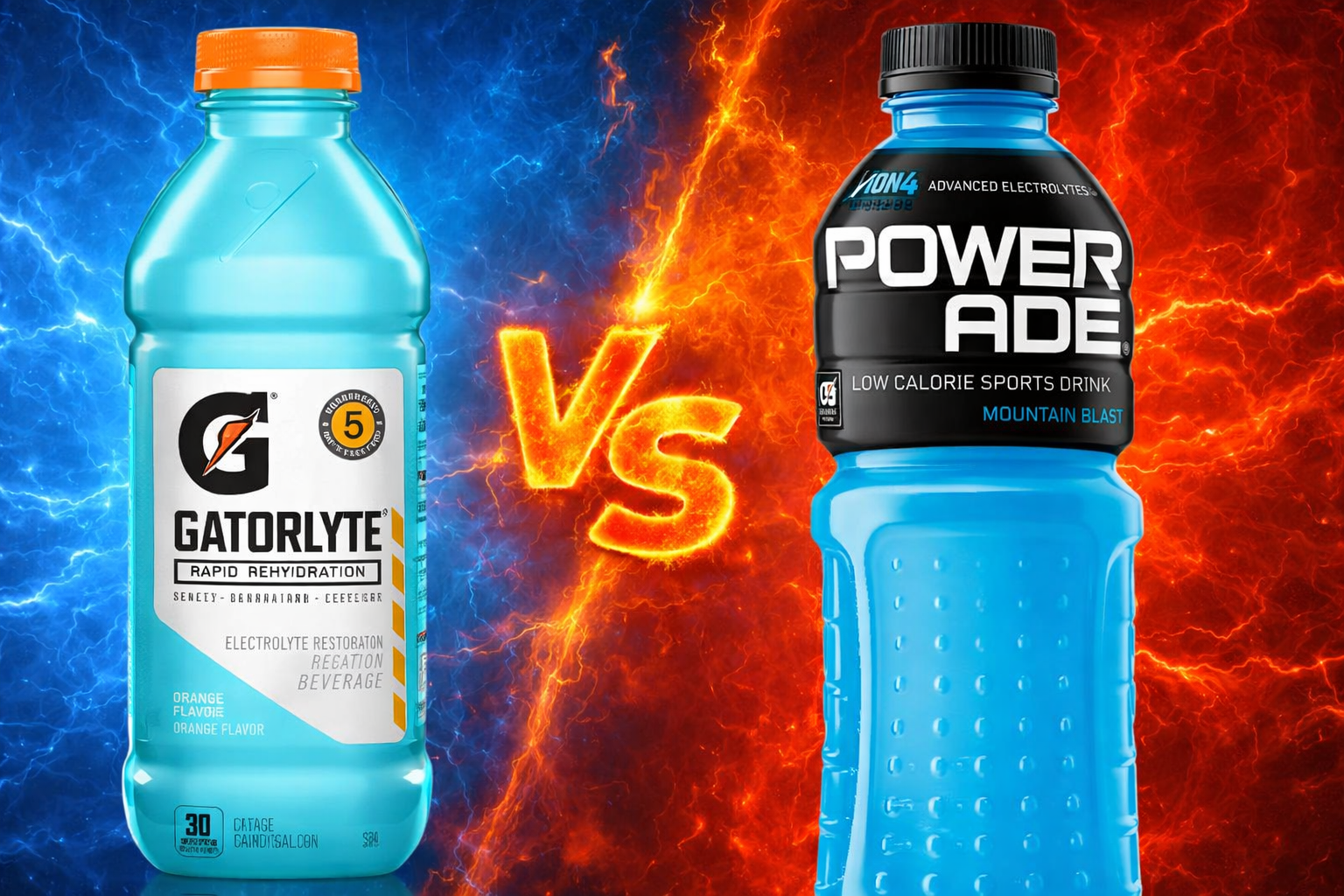
Gatorlyte vs Powerade: Hy Honest Comparison
I’ve tried a lot of sports drinks over the years. Some because I was actually dehydrated and needed help. Others because they were cold, cheap, and sitting right there in the fridge. For the longest time, Powerade was my default. It’s everywhere, it tastes fine, and I never really questioned it.
Then I started paying more attention to how I felt after workouts, long days in the heat, and those mornings where water alone just wasn’t cutting it. That’s when I gave Gatorlyte a real shot. Not once, but enough times to notice patterns.
This isn’t a lab test or a breakdown full of science jargon. It’s just my experience using Gatorlyte and Powerade in real situations: workouts, sweaty afternoons, and recovery days. If you’re trying to figure out which one actually works better for you, here’s how it played out for me.
What Is Gatorlyte?

Gatorlyte is Gatorade’s rapid-rehydration drink, and it’s made for situations where you’ve sweated a lot and plain water just isn’t enough. You can get it in ready-to-drink bottles or powder sticks, which is nice if you want to toss a few in a gym bag or travel backpack.
What sets it apart from regular Gatorade is the goal. It’s not really about fueling performance with carbs or sugar. It’s about replacing what you lose when you sweat heavily.
Here’s what Gatorlyte is built around:
- A blend of five electrolytes: sodium, potassium, magnesium, chloride, and calcium
- Noticeably higher sodium than classic Gatorade
- Lower sugar and fewer calories
- Backing from the Gatorade Sports Science Institute
From a science standpoint, the “rapid rehydration” claim actually makes sense. Higher sodium helps your body retain fluids better after intense sweating. It’s not a medical-grade oral rehydration solution, but for workouts, hot weather, travel days, or feeling wiped out from dehydration, it fits the bill.
From my experience, it feels less like a sweet sports drink and more like something designed to fix a problem. Not fancy, not flashy, just focused on rehydration.
What Is Powerade?

Powerade is one of those sports drinks most of us grew up seeing everywhere. It’s a mainstream isotonic drink made by Coca-Cola, and it’s built to do a little bit of everything: replace fluids, restore electrolytes, and provide carbohydrates during exercise.
It’s meant to be used before, during, or after workouts, especially when you’re training long enough to burn through energy as well as sweat.
Powerade mainly comes in two versions:
- Powerade ION4 (the regular version with sugar and calories)
- Powerade Zero (no sugar, no calories)
From a science perspective, Powerade’s formula is solid for what it’s trying to do. The combo of carbohydrates and electrolytes is well supported by sports nutrition research, especially for moderate to longer workouts. Compared to water alone, carbs plus electrolytes help improve fluid absorption and can support endurance.
In my experience, Powerade feels more like a “fuel while you move” drink. It’s sweeter, more familiar, and works best when I’m actively exercising rather than trying to recover from heavy dehydration.
Electrolyte Amounts (Exact Numbers per Serving)
Quick note before diving in: formulations can vary by country, flavor, and whether you’re looking at powder or bottles. These numbers are typical, not gospel. Always double-check the label you’re linking to.
Gatorlyte (Typical Powder Stick – Approximate)
- Sodium: ~300–420 mg
- Potassium: ~210–300 mg
- Chloride: ~640 mg (often paired with sodium on the label)
- Magnesium: ~95 mg
- Calcium: ~100 mg
- Calories: ~35–45 kcal
- Carbs/Sugar: ~9–21 g (Zero version available)
My takeaway: Sodium is clearly the star here. Compared to standard sports drinks, Gatorlyte pushes sodium much higher, which lines up better with heavy sweat losses. When I’m drenched after a long, hot session, this is where it feels different.
Powerade (Regular ION4 – 12 fl oz / 355 ml)
- Sodium: ~240 mg
- Potassium: ~80 mg
- Magnesium & Calcium: present, but in small amounts
- Calories: ~80 kcal
- Sugar: ~21 g added sugar
Powerade Zero
- Calories: 0
- Sugar: 0
- Electrolytes: similar sodium and potassium to regular Powerade
My takeaway: Powerade isn’t trying to max out electrolytes. It’s built around the combo of carbs plus electrolytes to support energy and hydration during exercise. That works well when I’m actively training, but it doesn’t hit the same way as Gatorlyte when I’m already depleted.
If I had to sum it up simply: Gatorlyte feels like recovery-first hydration. Powerade feels like fuel-with-hydration.
Sweeteners Used
With Gatorlyte, the first thing I noticed was the taste. It’s definitely less sweet than traditional sports drinks. Most versions use reduced amounts of sugar, and some SKUs lean on stevia or low-sugar blends instead. There are also zero-sugar options if you want electrolytes without any calories. The trade-off is flavor. Gatorlyte tastes more salt-forward, almost medicinal at times, but that also makes it feel more purposeful. I don’t sip it casually. I drink it when I actually need rehydration.
Powerade goes the opposite direction. The regular versions rely on added sugars, usually sucrose or syrup blends, which gives it that familiar sweet sports drink flavor. Powerade Zero skips sugar entirely and uses artificial sweeteners instead. From my experience, regular Powerade works well during longer workouts when I want both hydration and quick energy. Outside of that, the sugar load feels like overkill for casual hydration, especially if I’m just sitting or lightly active.
Ingredients (Functional Breakdown)
With Gatorlyte, the ingredient list feels very focused. Sodium and chloride do most of the heavy lifting by improving fluid retention, which is exactly what you want when you’ve been sweating a lot. Potassium helps support normal nerve signaling and muscle contraction, while magnesium and calcium are included in supportive amounts. They’re not clinical doses, but they round out the electrolyte profile nicely. There’s also very little vitamin fortification, which reinforces the idea that this drink is about rehydration first, not energy or immune support.
Powerade takes a broader approach. It uses sodium chloride or sodium citrate for electrolyte replacement, along with potassium citrate or phosphate to help maintain electrolyte balance. Magnesium sulfate and calcium chloride are present, but mostly in trace amounts. The big functional difference is the added sugar, which provides quick energy during exercise. Some versions also include vitamin C and B-vitamins, pushing it more toward performance and fueling rather than pure hydration.
Hydration Effectiveness
From my experience, Gatorlyte shines when rehydration is the main goal. After heavy sweating, long practices in the heat, or days where I’m clearly sodium-depleted, it works fast. The higher sodium content helps my body hold onto fluids instead of just flushing them out. It’s the drink I reach for when water feels like it’s not doing the job on its own.
Powerade works better for a different situation. If I’m exercising for 45 to 60 minutes or longer, especially at a steady or intense pace, the mix of electrolytes and carbohydrates makes more sense. It keeps energy levels up while still supporting hydration, which is something Gatorlyte isn’t really designed to do.
One important caveat: neither of these is a medical-grade oral rehydration solution. For dehydration caused by vomiting or diarrhea, products like Pedialyte are still the better choice. These sports drinks are built for athletic and heat-related hydration, not clinical dehydration.
Health & Wellness Benefits
Looking at this from a real-life use case angle makes the differences pretty clear.
For heavy sweating, Gatorlyte has been more effective for me. The higher sodium content helps replace what’s actually lost, so it earns an easy win here. Powerade can help, but it feels more moderate in comparison when sweat loss is high.
During long workouts, the tables turn. Powerade performs better because it provides both hydration and carbohydrate fuel. Gatorlyte can keep you hydrated, but it doesn’t offer much energy, so it feels limited once workouts stretch on.
For casual hydration, neither option is perfect. Gatorlyte tastes noticeably salty, which makes it hard to drink casually. Regular Powerade goes too far the other way. It’s simply too sugary for everyday sipping when you’re not training.
If low calories matter, Gatorlyte has clear options that fit the bill, and Powerade only matches that with Powerade Zero.
For kids or illness-related dehydration, I wouldn’t rely on either. Gatorlyte isn’t a true oral rehydration solution, and regular Powerade is heavy on sugar. In those cases, a medical ORS is still the safer choice.
Overall, each drink makes sense in specific scenarios. The mistake is using one as a catch-all when it’s really built for a narrow purpose.
Price Comparison (U.S. Only)
In the U.S., Gatorlyte sits on the higher end of the sports drink price range. Powder sticks usually cost more than plain hydration mixes or water, but they’re still reasonable if you use them selectively. The ready-to-drink bottles are noticeably expensive per ounce, especially if you’re buying singles. The value improves when you buy multi-packs, but it’s still a premium option overall.
Powerade is much more budget-friendly. In most U.S. stores, a 20 oz bottle typically runs about $1 to $2, and multipacks bring the cost down even further. If you’re drinking sports drinks regularly, Powerade is easier to justify from a cost standpoint.
Bottom line: Powerade is generally cheaper per serving, while Gatorlyte costs more because of its higher electrolyte density and more specialized use.
Taste Comparison
Gatorlyte tastes very different from a typical sports drink. It’s much less sweet and noticeably salty, especially if you’re used to classic Gatorade or Powerade. Orange and Strawberry Kiwi are the most common flavors I see, and the reaction to them is pretty split. Some people find it refreshing and clean, especially after heavy sweating. Others think it tastes medicinal. I fall somewhere in the middle. When I’m actually dehydrated, it tastes better. When I’m not, it can be hard to finish.
Powerade goes all in on sweetness. The flavors are bold and familiar, with Mountain Berry and Fruit Punch being the most popular. It’s easy to drink, even when you’re not that thirsty, but that’s also where the criticism comes in. The sweetness, especially in regular Powerade, can feel artificial and overpowering after a while.
If taste is your top priority, Powerade is usually the safer bet. If function matters more than flavor, Gatorlyte makes more sense.
Customer Experience
With Gatorlyte, availability hasn’t been an issue for me. It’s easy to find in U.S. grocery stores, sports retailers, and online. The powder sticks are especially convenient for travel or keeping in a gym bag. Most of the complaints I see, and agree with, focus on the taste rather than how well it works. People either like the salt-forward flavor or they really don’t, but performance-wise, it generally delivers what it promises.
Powerade is about as easy to find as a sports drink gets. It’s widely available across the U.S. and globally, from gas stations to big-box stores. Retailer ratings are usually strong, often around the 4.5-star range, which lines up with how familiar and accessible it is. Availability is great, but pricing can be inconsistent outside the U.S., especially when importing or buying specialty versions.
Which One Should You Choose?
Choose Gatorlyte if you’re someone who sweats a lot or trains in hot conditions and hydration is the main concern. It makes more sense if you want higher sodium for faster rehydration, prefer lower sugar or zero-sugar options, or like the convenience of powder sticks for travel. It’s not a casual drink, but when you actually need electrolyte replacement, it does its job well.
Choose Powerade if your workouts regularly last longer than 45 to 60 minutes and you need both hydration and energy. The combination of carbohydrates and electrolytes works better for sustained exercise, and the bold flavors make it easy to drink. It’s also more affordable and widely available, which matters if you’re buying it often.
For me, it comes down to intent. If I’m trying to recover from heavy sweating, I grab Gatorlyte. If I’m in the middle of a long workout and need fuel, Powerade still earns its spot.
Final Thoughts
After using both, I don’t see this as a true “winner vs loser” situation. Gatorlyte and Powerade are built for different jobs, and problems only show up when you use one outside its lane.
Gatorlyte feels like a tool. I reach for it when I’m clearly dehydrated, sweating heavily, or dealing with heat. It’s not something I drink for enjoyment, but it works when hydration actually matters. Powerade, on the other hand, feels more like a classic sports drink. It’s easier to drink, cheaper, and better suited for longer workouts where energy and hydration need to work together.
If you match the drink to the situation, both make sense. If you’re just grabbing whatever’s cold without thinking about why you need it, that’s when disappointment usually follows.