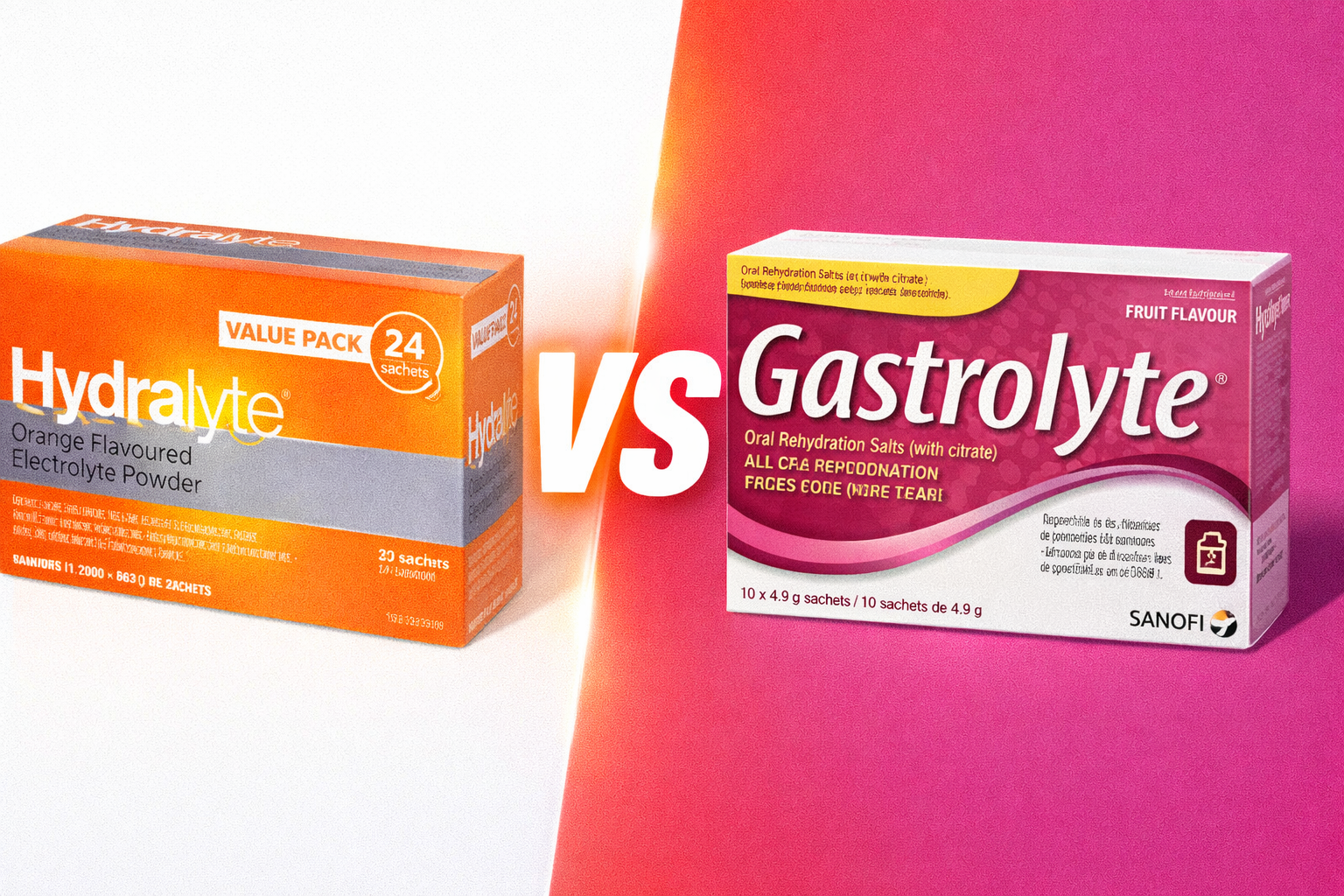
When you’re dehydrated, sick, wiped out after a workout, or completely drained by the heat, branding is the last thing on your mind. Clever packaging doesn’t matter either. You want one thing — relief that actually works.
Recently, I found myself standing in a pharmacy aisle, staring at two nearly identical boxes and asking the same question many shoppers quietly wonder:
Hydralyte vs Gastrolyte — which one is actually better for dehydration?
Do they perform differently?
Or is one simply benefiting from stronger marketing?
Instead of guessing, I decided to test both products for 10 consecutive days. I tracked hydration levels, energy, taste, stomach comfort, recovery, and overall value to see how they performed in real life.
This isn’t a theoretical electrolyte comparison. It’s a practical, firsthand evaluation.
By the end of this article, you’ll understand:
- Which drink works faster
- Which tastes better
- Which offers stronger value
- Which is better suited for illness, heat, and workouts
- And ultimately — which one I’d choose again
Let’s get into it.
Why I Decided to Test Hydralyte vs Gastrolyte
Electrolyte drinks have quietly become everyday essentials. Athletes rely on them for recovery. Parents keep them on hand during stomach bugs. Travelers pack them as a precaution. Even desk workers increasingly use them to combat fatigue.
Yet pharmacy-grade oral rehydration salts (ORS) like Hydralyte and Gastrolyte rarely receive the same attention as heavily marketed sports drinks.
Both claim to combat dehydration effectively. Both are rooted in proven oral rehydration science. Both are widely recommended during vomiting, diarrhea, and heat exhaustion.
Still, noticeable differences emerge at first glance — pricing, flavor variety, and packaging all vary.
If you’ve ever hesitated in the pharmacy trying to choose between them, you’re in good company.
So rather than relying on assumptions, I ran my own test.
The Testing Rules: Keeping It Fair
For this comparison to mean anything, consistency was non-negotiable. I created a structured yet realistic testing approach.
Duration: 10 days
- Days 1–5: Hydralyte
- Days 6–10: Gastrolyte
Conditions remained consistent:
- Consumed at roughly the same time daily
- Maintained similar hydration stress through light workouts and warm weather
- Limited intake to one serving unless additional hydration was genuinely needed
What I tracked:
- Energy levels
- Headaches and fatigue
- Urine color (a surprisingly reliable hydration marker)
- Stomach comfort
- Taste and aftertaste
- Mixability
- Cost per serving
No lab coats. No clinical instruments. Just structured, intentional observation — far more reliable than casual opinion.
What’s Inside? Ingredient Breakdown
When evaluating Hydralyte vs Gastrolyte, ingredients tell the real story. Branding may attract attention, but formulation determines effectiveness.
Both products follow oral rehydration therapy principles designed to replace fluids and electrolytes lost through illness, sweating, or heat exposure.
Here’s a simplified comparison:
| Component | Hydralyte | Gastrolyte |
|---|---|---|
| Sodium | Moderate to high | Comparable ORS-level sodium |
| Glucose | Yes — supports absorption | Yes |
| Potassium | Included | Included |
| Artificial Sweeteners | Present in some flavors | Typically minimal |
| WHO ORS Alignment | Yes | Yes |
Why Glucose Is Essential
Glucose isn’t added merely for flavor. It enables your body to absorb sodium and water through a process called sodium-glucose co-transport. Without this mechanism, hydration becomes significantly less efficient.
That’s precisely why plain water often isn’t enough during illness.
Understanding Sodium Levels
Both drinks contain more sodium than typical sports beverages — intentionally so. ORS formulas are built for medical hydration, not casual sipping.
On paper, the formulations are strikingly similar. In practice, however, subtle differences in sweetness and concentration shape the overall drinking experience — which brings us to taste.
Taste Test: The Honest Verdict
Taste influences hydration more than most people realize. If a drink isn’t enjoyable, consistency drops — and inconsistent hydration reduces effectiveness.
Hydralyte
- Slightly sweeter profile
- Broader flavor selection
- Cleaner finish
- Easy to sip gradually
My immediate reaction? Unexpectedly pleasant.
It felt closer to a flavored hydration beverage than a clinical solution.
Gastrolyte
- Noticeably salt-forward
- Less sweetness
- Mild medicinal aftertaste
- Classic ORS flavor
One of these surprised me — and not entirely in a good way.
Gastrolyte wasn’t unpleasant, but it felt functional rather than enjoyable — something you drink because you need it.
Taste Winner: Hydralyte
And when it comes to hydration, drinkability matters more than people think.
Energy & Hydration Results After 10 Days
This is where the test became genuinely revealing.
Days 1–3 (Hydralyte Phase)
- Faster perceived hydration
- Fewer afternoon energy dips
- Zero bloating
- Excellent stomach tolerance
Post-workout recovery felt especially smooth.
Days 4–5
Performance remained consistent. Energy stayed stable, and digestive comfort never wavered.
Then came the switch.
Days 6–8 (Gastrolyte Phase)
- Slightly slower “refresh” sensation
- Noticeable saltiness
- Continued stomach comfort
- Strong post-exercise hydration
It worked — clearly and reliably — but felt less refreshing overall.
Days 9–10
Results stabilized. Gastrolyte restored hydration effectively, yet the experience remained more clinical than satisfying.
Overall Performance Comparison
Hydralyte
- Smoother drinking experience
- More refreshing
- Easier to consume regularly
- Better suited for everyday hydration
Gastrolyte
- Dependable and effective
- Strong traditional ORS profile
- Particularly reliable during heavier dehydration
From a purely functional standpoint, both delivered.
The real differentiator? User experience.
Price & Value: Are You Paying for Branding?
This is where many buyers pause.
Gastrolyte is typically slightly cheaper per sachet, while Hydralyte often commands a premium — especially for flavored versions.
When calculating cost per prepared liter:
- Gastrolyte wins on raw affordability
- Hydralyte wins on taste and convenience
So the better question becomes:
Are you paying for performance — or for drinkability?
If consistent hydration is the goal — particularly for children — better taste may justify the higher price.
After all, the best hydration solution is the one you’ll actually finish.
Which Is Better for Kids, Illness, or Heat?
Let’s look at real-world scenarios.
Mild Dehydration (Travel or Warm Weather)
Hydralyte stands out thanks to its drinkability.
Stomach Bugs or Diarrhea
Both are designed precisely for this situation. Those who prefer a traditional ORS approach may lean toward Gastrolyte.
Vomiting Recovery
Small, frequent sips are essential. Taste becomes a decisive advantage — making Hydralyte easier to tolerate.
Post-Workout Recovery
Once again, Hydralyte feels more refreshing, which encourages consistent use.
The Real Winner
Let’s keep this simple.
Hydralyte Wins For:
- Taste
- Flavor variety
- Everyday usability
- Post-workout hydration
- Kid-friendly appeal
Gastrolyte Wins For:
- Lower typical cost
- Traditional ORS formulation
- Straightforward ingredient profile
- Clinical reliability
But if I had to choose just one?
I’d choose Hydralyte.
Not because Gastrolyte falls short — it absolutely performs — but because hydration only works when you actually drink the solution.
Hydralyte made that effortless.
Who Should Choose Hydralyte vs Gastrolyte?
Choose Hydralyte if:
- Taste is a priority
- You plan to use it during workouts
- You’re buying for children
- Convenience matters
Choose Gastrolyte if:
- Budget is your primary concern
- You prefer a classic ORS formulation
- You’re addressing acute dehydration
Skip both if:
- You’re only mildly thirsty
- Electrolyte loss is minimal
- You must follow sodium-restricted medical guidance
What Most People Get Wrong About Electrolyte Drinks
Misconceptions around electrolyte beverages are surprisingly common.
Not all electrolyte drinks are sports drinks.
ORS formulas are medically designed, while many sports drinks contain more sugar and less sodium.
More sodium isn’t automatically better.
High sodium helps during dehydration — not for everyday hydration.
Water isn’t always enough.
Without electrolytes and glucose, fluid absorption slows during illness.
Taste directly impacts hydration success.
If it tastes bad, people drink less. It’s that simple.
Final Thoughts: What I Learned After 10 Days
After testing Hydralyte vs Gastrolyte side by side, one conclusion stood out immediately:
The formulas are more similar than different.
What truly separates them is taste, user experience, and price positioning.
Hydration science matters — but practicality matters just as much.
If effectiveness is your only priority, either option will serve you well.
But if you value consistency, long-term usability, or child-friendly hydration, Hydralyte holds a noticeable edge.
Now I’d love to hear your experience:
Have you tried Hydralyte or Gastrolyte? Which worked better for you — and why?
Share your thoughts in the comments. Your perspective might help the next person standing in that pharmacy aisle make a confident choice.