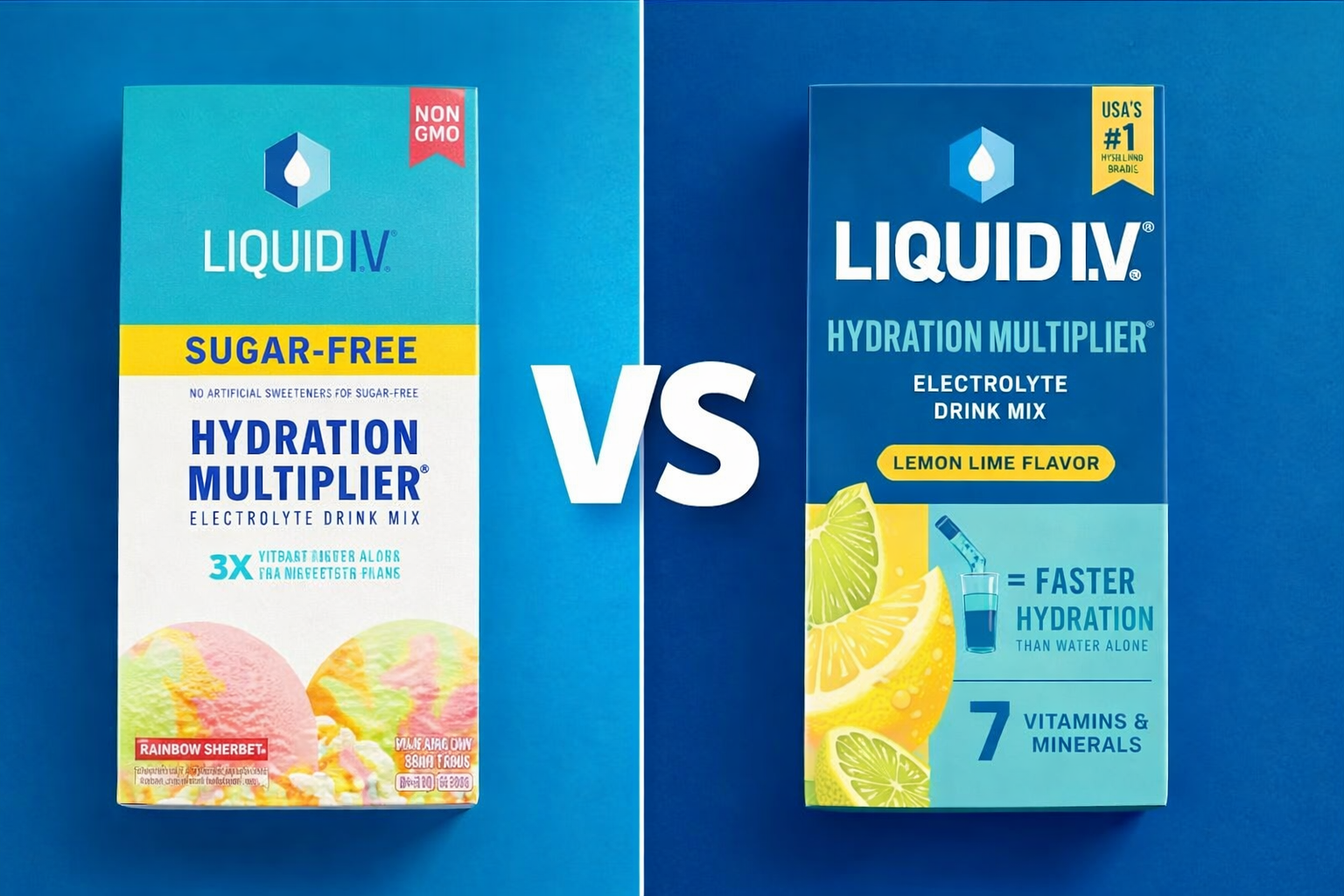
You finish a tough workout. Your shirt is soaked, your energy feels drained, and you reach for an electrolyte packet to recover fast. Then comes the pause: do you grab the regular version or go sugar-free?
At first glance, sugar-free seems like the healthier choice. Meanwhile, the regular formula promises faster hydration thanks to its glucose content. It’s no surprise many people wonder whether removing sugar slows hydration — or if that claim is mostly marketing.
If you’ve compared Liquid I.V. Sugar-Free vs Regular and asked which hydrates faster, you’re not alone. The answer isn’t as simple as choosing one over the other. It depends on how hydration works inside your body and the situation you’re in.
This guide breaks down the science behind hydration speed, explains how each formula works, and shows when each makes the most sense — so you can choose with confidence.
What “Fast Hydration” Actually Means (And How It’s Measured)
Before comparing formulas, it helps to define what fast hydration really means. It’s not just about quenching thirst. True hydration is about how efficiently fluids move from your digestive system into your bloodstream.
Several factors influence how quickly this happens.
Fluid Absorption Rate
This describes how quickly water passes through the intestines and enters circulation. Certain nutrients can speed up this process.
Electrolyte Balance
Sodium plays a central role in fluid retention and absorption. Without enough sodium, water moves through the body too quickly instead of being retained where it’s needed.
Osmolality
Osmolality measures the concentration of particles in a solution. Drinks with balanced osmolality absorb more efficiently than plain water or overly concentrated beverages.
Perceived vs Actual Hydration
Feeling refreshed doesn’t always mean you’re fully rehydrated. Flavor, sugar, and temperature can influence perception even when hydration levels are similar.
Together, these factors explain why different formulas perform differently depending on context.
The Science Behind Liquid I.V.’s Hydration System
Liquid I.V. is built around Cellular Transport Technology (CTT), a concept rooted in oral rehydration science.
The principle is simple yet powerful: combining sodium and glucose enhances water absorption in the small intestine through sodium-glucose co-transport. When sodium and glucose enter intestinal cells together, they pull water along with them, improving fluid uptake.
This mechanism is widely used in medical rehydration solutions and works especially well during dehydration caused by sweating or illness.
This is where the presence — or absence — of sugar becomes critical when comparing Liquid I.V. Sugar-Free vs Regular.
Liquid I.V. Regular Formula — Why Sugar Plays a Role
The regular formula contains glucose (usually derived from cane sugar), and it serves a purpose beyond sweetness.
Glucose-Assisted Sodium Transport
Glucose activates sodium-glucose transporters in the intestine, helping water enter the bloodstream more efficiently.
Hydration Speed During Exercise
During heavy sweating, this mechanism can improve fluid uptake compared to electrolyte-only drinks.
Energy Boost Effect
Carbohydrates provide a small but noticeable lift, helping you feel recovered more quickly.
Performance Benefits
During endurance activities, carbohydrates help maintain glycogen levels and delay fatigue.
The key takeaway: sugar supports both hydration efficiency and perceived recovery speed.
Liquid I.V. Sugar-Free Formula — How It Hydrates Without Sugar
The sugar-free version relies primarily on electrolytes rather than glucose-assisted transport.
Electrolyte-Driven Hydration
Sodium still helps maintain fluid balance and supports water retention.
Alternative Sweeteners
Sweeteners provide flavor without calories but don’t activate absorption pathways the way glucose does.
Effective Hydration
Even without sugar, the formula replenishes electrolytes and supports hydration — particularly during mild dehydration.
Situations Where Sugar Isn’t Necessary
For daily hydration, light activity, or low-carb lifestyles, glucose isn’t essential.
While it doesn’t use glucose transport, the sugar-free formula remains a reliable hydration option.
Head-to-Head Comparison — Which Actually Hydrates Faster?
When comparing Liquid I.V. hydration speed, context matters more than most people expect.
Absorption Speed
The regular formula typically hydrates slightly faster because of sodium-glucose transport.
Hydration Efficiency at Rest
Both formulas perform similarly when dehydration is mild.
During Intense Exercise
The regular version may have a noticeable advantage because carbohydrates support both absorption and energy.
Everyday Hydration
For daily use, the difference is minimal and often unnoticeable.
Real-World Scenarios: When Each Formula Makes More Sense
Looking at real-life situations makes the choice clearer.
Long Workouts or Endurance Training → Regular
Added glucose supports faster hydration and energy replenishment.
Daily Hydration or Low-Carb Lifestyle → Sugar-Free
Provides electrolytes without added sugar or calories.
Travel or Mild Dehydration → Either
Both options work well when hydration needs are moderate.
Recovery After Heavy Sweating → Regular
Faster absorption and carbohydrate support can improve recovery.
The Energy Factor Most People Don’t Consider
One reason people perceive the regular formula as faster is the energy response.
Sugar slightly raises blood glucose, creating a quicker “feel better” effect. That doesn’t always mean hydration is dramatically faster, but it can enhance perceived recovery.
Psychologically, sweetness and energy availability can make a drink feel more effective even when hydration differences are modest.
Common Myths About Sugar-Free vs Regular Hydration
Myth: Sugar-Free Hydrates Slower for Everyone
In reality, hydration differences are small during normal activity.
Myth: Regular Is Unhealthy
In moderation, the sugar content is modest and can be beneficial during intense activity.
Myth: Electrolytes Alone Don’t Work
Electrolyte-only drinks still support hydration effectively.
Myth: Sugar Automatically Causes Dehydration
Sugar doesn’t cause dehydration when consumed in balanced electrolyte solutions.
Verdict — Which Liquid I.V. Hydrates Faster Overall?
If your goal is maximum hydration speed during physical stress or heavy sweating, the regular formula holds a slight advantage thanks to glucose-assisted absorption.
For daily hydration, light activity, or general wellness, the sugar-free version delivers comparable hydration without added sugar.
The best choice ultimately depends on when — and why — you’re hydrating.
Quick Comparison Summary
- Fastest during workouts → Regular
- Best for daily hydration → Sugar-Free
- Best for energy boost → Regular
- Best for reducing sugar intake → Sugar-Free
Conclusion — The Right Choice Depends on How You Hydrate
Choosing between Liquid I.V. Sugar-Free vs Regular isn’t about finding a universally better option. It’s about matching the formula to your needs.
If you’re pushing your limits, sweating heavily, or need rapid recovery, the regular version offers a small but meaningful edge in hydration speed and energy support. If your goal is steady daily hydration with lower sugar intake, the sugar-free formula is more than capable.
Hydration isn’t one-size-fits-all. Understanding the science behind these formulas helps you choose with clarity and confidence.
So the real question becomes: are you hydrating for performance — or simply staying hydrated?