If you have ever dealt with a rough bout of diarrhea, you know how fast your body can go from “I’m fine” to “Why do I feel this drained?” That heavy, tired, almost shaky feeling is usually dehydration. When your gut is moving too quickly, you lose more than water. You lose sodium, potassium, and other electrolytes that keep your muscles, nerves, and energy levels steady. When those drop, you feel awful.
This is why replacing fluids and electrolytes quickly is such a big deal during diarrhea. Drinking plain water helps a little, but it does not fix the losses your body actually needs to recover. You need something that can get fluid back into your system fast.
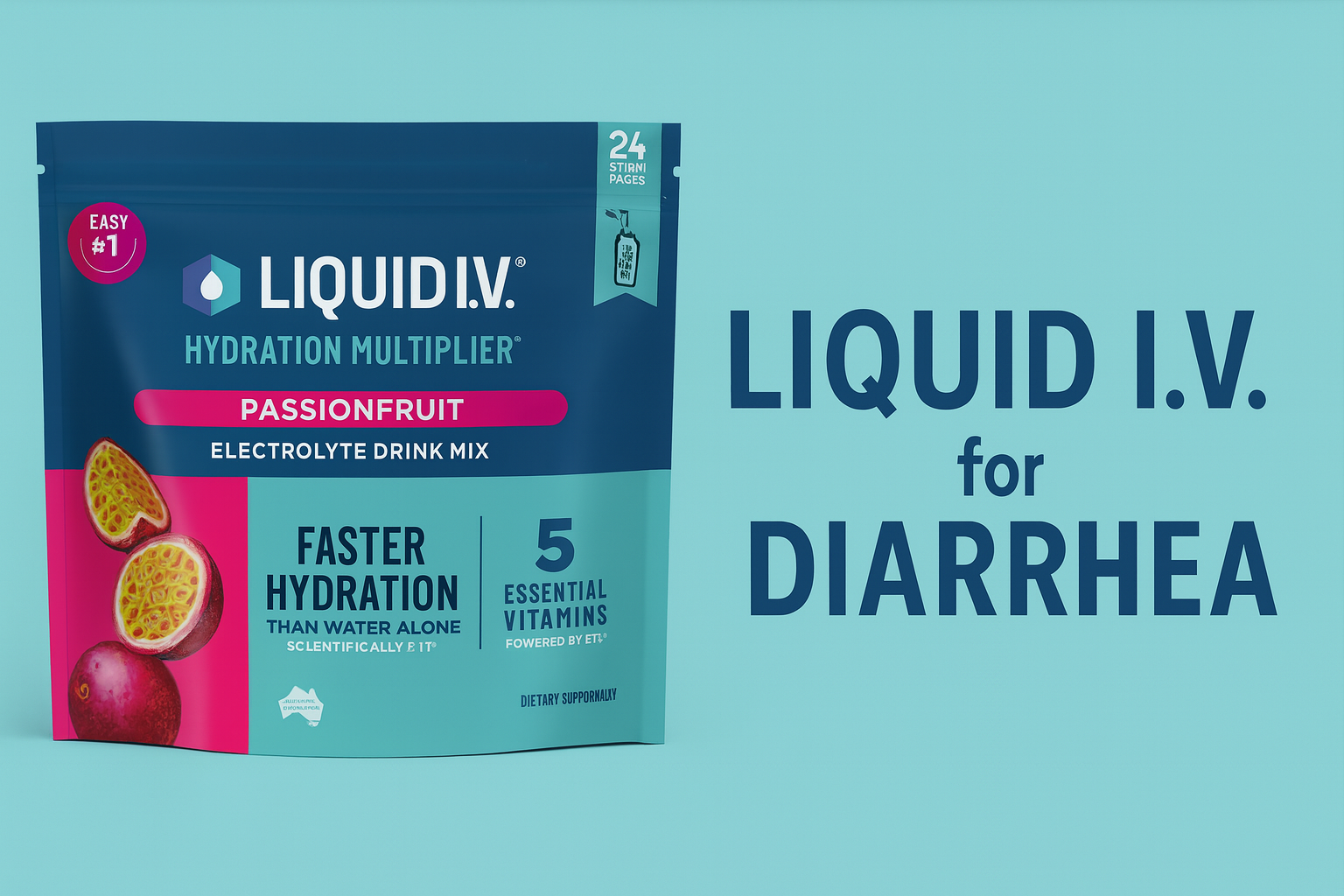
This is where products like Liquid I.V. come in. If you have wandered the hydration aisle or scrolled wellness TikTok, you have probably seen it. It is a powder you mix with water that claims to hydrate you more effectively than water alone.
But if you are dealing with diarrhea, the real questions are simple. Does it actually help? Is it safe to use when your stomach is already upset? And how does it stack up against traditional Oral Rehydration Solutions that doctors usually recommend?
Those are the things we are going to walk through, in a straightforward way, so you can decide what is right for your situation.
What Happens to the Body During Diarrhea
When diarrhea hits, everything in your digestive system speeds up. Food and fluid move through your intestines too fast for your body to absorb what it needs, and that is where the trouble starts.
Fluid Loss Mechanism
Diarrhea pushes water out of the intestines before your body can pull it back in. Along with that water, you lose key electrolytes like sodium, chloride, and potassium. These aren’t small losses. They are the minerals that keep your fluid levels steady, help your muscles work, and support your nerves. When they drop too low, your whole system feels off.
Symptoms of Mild to Severe Dehydration
At first, dehydration feels pretty simple. You might notice:
- A stronger sense of thirst
- A dry mouth
- That dragging, low-energy feeling
- Less urine than usual
If things get worse, the symptoms get more serious. You might feel dizzy when you stand up, your heart might beat faster, and your urine may become very dark or barely appear at all. In severe cases, dehydration can cause confusion, sunken eyes, and almost no urine output. Those are signs to get medical care right away.
Why Electrolyte Balance Matters
Your body needs more than water to rehydrate. It needs electrolytes, especially sodium and glucose, because they work together to pull water across the intestinal wall. This is a basic, well-established part of human physiology. If sodium and glucose are there in the right balance, your body can absorb water much faster and more effectively.
What Is Liquid I.V.?
If you have seen Liquid I.V. online or in stores, you know it is marketed as a fast hydration booster. At its core, it is a powdered mix you stir into water, and the whole idea is to help your body absorb fluid more quickly.
Product Overview
Liquid I.V. promotes something called “Cellular Transport Technology.” That name is mostly marketing, but the idea behind it is real. The mix combines sodium and glucose in a way that supports faster water absorption, which is the same basic principle used in the World Health Organization’s Oral Rehydration Solution. So while the branding sounds fancy, the science underneath it is pretty standard.
Key Ingredients
The formula includes ingredients your body actually needs when you are dehydrated:
- Sodium
- Potassium
- Glucose
These three matter most for hydration. Liquid I.V. also adds vitamins like vitamin C and several B vitamins. They are not the heroes of dehydration recovery, but they are there to round out the mix.
How It Claims to Work
The product leans on the sodium and glucose transport mechanism, which helps your intestines pull water into the body more efficiently. This is a normal and well understood process. Liquid I.V. also contains more electrolytes than a typical sports drink, although exact comparisons are hard to make since reliable, standardized numbers are not published.
Can Liquid I.V. Help With Dehydration From Diarrhea?
When you are dealing with diarrhea, rehydration becomes the main priority. The question is whether Liquid I.V. can actually help you bounce back.
The Science: Sodium Glucose Cotransport
Your intestines absorb water much more effectively when sodium and glucose show up together. They act like a team, pulling water across the intestinal wall. This is one of the most reliable principles in hydration science. When that mechanism is working, your body can rehydrate faster than it would with plain water.
How Liquid I.V. Compares to WHO Oral Rehydration Solution
The World Health Organization’s Oral Rehydration Solution is the gold standard for dehydration caused by diarrhea. It is a precise mix that doctors trust for everything from stomach bugs to cholera outbreaks. It is created specifically for gastrointestinal fluid loss.
Liquid I.V. is not sold as a medical ORS. It is a consumer hydration mix. Still, it follows the same basic idea. It uses sodium and glucose to support faster absorption, just in a more flavored, ready to drink format.
Potential Benefits
For mild dehydration, Liquid I.V. can be useful. It helps replace sodium and potassium, which you lose with each loose stool. It is easy to mix, tastes better than medical ORS for most people, and is simple to carry around. Those small conveniences matter when you already feel lousy.
Limitations
Liquid I.V. is not a perfect substitute for medical grade ORS if dehydration becomes moderate or severe. ORS is carefully balanced for situations where the body is losing fluid fast. Liquid I.V. also tends to have more sugar than the WHO formula, although exact comparisons are hard to make because reliable numbers are not always available.
It is also worth keeping in mind that Liquid I.V. only helps with dehydration. It does not fix the cause of diarrhea itself. If symptoms worsen or you cannot keep fluids down, it is important to get medical help.
When Liquid I.V. May Be Useful
Liquid I.V. can have a place in managing dehydration, as long as you use it in the right situations.
Mild Diarrhea Leading to Mild Dehydration
If your symptoms are on the lighter side, Liquid I.V. can be a simple way to stay on top of hydration. It works well when you are dealing with things like fatigue, thirst, mild dizziness, or a dry mouth. In these cases, the goal is mostly to replace what you are losing and keep things from getting worse. A flavored electrolyte mix can make it easier to drink enough, especially if plain water sounds unappealing.
Situations Where It May Provide Convenience
Sometimes the biggest advantage of Liquid I.V. is convenience. It fits easily in a bag, which makes it helpful when you are traveling and dealing with a sudden stomach issue. It also comes in handy if you are somewhere hot and losing more fluid than usual, or if you are in a spot where you simply cannot get to a pharmacy for a proper oral rehydration solution. In those moments, having something is better than having nothing, and Liquid I.V. can bridge that gap.
When Liquid I.V. Is Not Appropriate
Liquid I.V. has its place, but there are situations where it is not enough and sometimes not safe.
Moderate to Severe Dehydration
If dehydration is moving past the mild stage, you need more than a consumer hydration mix. Warning signs include:
- Feeling unusually lethargic
- Repeated vomiting that makes it impossible to keep fluids down
- Very little urine or urine that is extremely dark
- Any signs of shock, like clammy skin, rapid breathing, or confusion
In these cases, medical grade ORS or direct medical care is the safer choice.
Diarrhea With Red Flags
Some symptoms mean you should skip Liquid I.V. and get proper evaluation. These include:
- Blood in the stool
- A fever
- Severe or worsening abdominal pain
- Diarrhea that lasts more than two days
- Any of these symptoms in infants or older adults, who can dehydrate much faster
These situations need medical attention because they may point to infections or conditions that require more than hydration alone.
Medical Conditions That Require Caution
There are also health conditions where electrolyte mixes need careful use. If you have kidney disease, heart failure, or you are on a salt restricted diet, the sodium and potassium in Liquid I.V. may not be appropriate. In those cases, it is better to check with a doctor before using any electrolyte product.
How to Use Liquid I.V. Safely During Diarrhea
If you decide to use Liquid I.V. while dealing with diarrhea, a little care goes a long way.
Recommended Mixing Instructions
Stick to the label. Each packet is meant to be mixed with a specific amount of water, and that ratio matters. If you make it too strong, the sodium load becomes higher than intended. If you dilute it too much, you lose the hydration benefit.
Dosage Considerations
It can be tempting to drink packet after packet when you feel drained, but that is not a good idea. Each serving contains a noticeable amount of sodium. Too much in a short window can work against you. There is no reliable, one size fits all limit because everyone’s health background is different, so the safest advice is simple: if you are thinking about using multiple packets in a day, especially if you have health conditions, check with a medical provider first.
Combining With Other Rehydration Methods
Liquid I.V. works best as one part of your overall hydration plan. You still need regular water in between servings. Simple, bland foods can help settle the stomach and provide some potassium, especially bananas or BRAT style foods like rice and toast. At the same time, try to avoid drinks that pull more fluid out of you, like alcohol, sugary sodas, and caffeine.
Comparing Liquid I.V. to Other Hydration Options
There are plenty of ways to rehydrate during diarrhea. Liquid I.V. is just one option, so it helps to see how it stacks up.
Liquid I.V. vs WHO ORS
WHO Oral Rehydration Solution is the gold standard for diarrhea related dehydration. It has a precise balance of sodium, glucose, and potassium that has been tested for decades in medical settings. It is what doctors rely on because the formula is built specifically for fluid loss from the gut.
Liquid I.V. is designed for everyday hydration. It uses the same basic science but includes added vitamins and flavoring. It is easier to drink, but it is not a medical ORS and should not be treated like one in moderate or severe dehydration.
Liquid I.V. vs Sports Drinks
Sports drinks are everywhere, but they are not the best match for diarrhea. They usually have less sodium than what you need during gastrointestinal fluid loss, and many contain a lot of sugar. That sugar can sometimes make diarrhea worse. Liquid I.V. typically provides more electrolytes than a standard sports drink, although exact numbers vary and reliable comparisons are limited.
Liquid I.V. vs Homemade ORS
You can also make a simple rehydration mix at home using water, salt, and sugar. When measured correctly, this homemade formula follows the same principles as WHO ORS and is very effective. It is cheap and useful when you cannot get a packaged product. The only challenge is accuracy. Too much salt or sugar can throw the balance off, so measurements matter.
Evidence and Research Summary
It helps to separate what we actually know from what we are assuming.
What Is Known
We do know that medical science strongly supports using electrolyte and glucose solutions during diarrhea. The sodium and glucose pairing is a proven way to help the intestines absorb water more efficiently. This principle is the backbone of every trusted rehydration formula, from WHO ORS to many consumer electrolyte mixes.
What Is Unknown
What we do not have are direct clinical trials comparing Liquid I.V. to a true medical ORS. There is also no clinical study showing that Liquid I.V. treats diarrhea itself. Its role is hydration support, not symptom control or cure.
Personal Experience
I first tried Liquid I.V. during a mild stomach bug that left me wiped out and tired. I was drinking water, but it felt like it was going straight through me without doing much. A friend handed me a packet of Liquid I.V. and told me it might help me stay ahead of the dehydration.
The first thing I noticed was that it was easier to sip something with flavor. Plain water sounded unappealing at the time, but this went down without much effort. Within an hour or two, I felt a little steadier on my feet and less foggy. It did not fix the stomach issue itself, but it helped me keep up with fluids when my appetite was gone.
Later, once I compared it with a proper ORS, I understood the difference. ORS works better when dehydration is more than mild, but the taste can be tough when you already feel queasy. Liquid I.V. was simply easier to drink and helped me stay hydrated enough to function.
That experience taught me something simple. When symptoms are mild and you are just trying to stay on top of fluid loss, Liquid I.V. can be helpful. But if things start to go downhill fast, the medical grade stuff is still the safer bet.