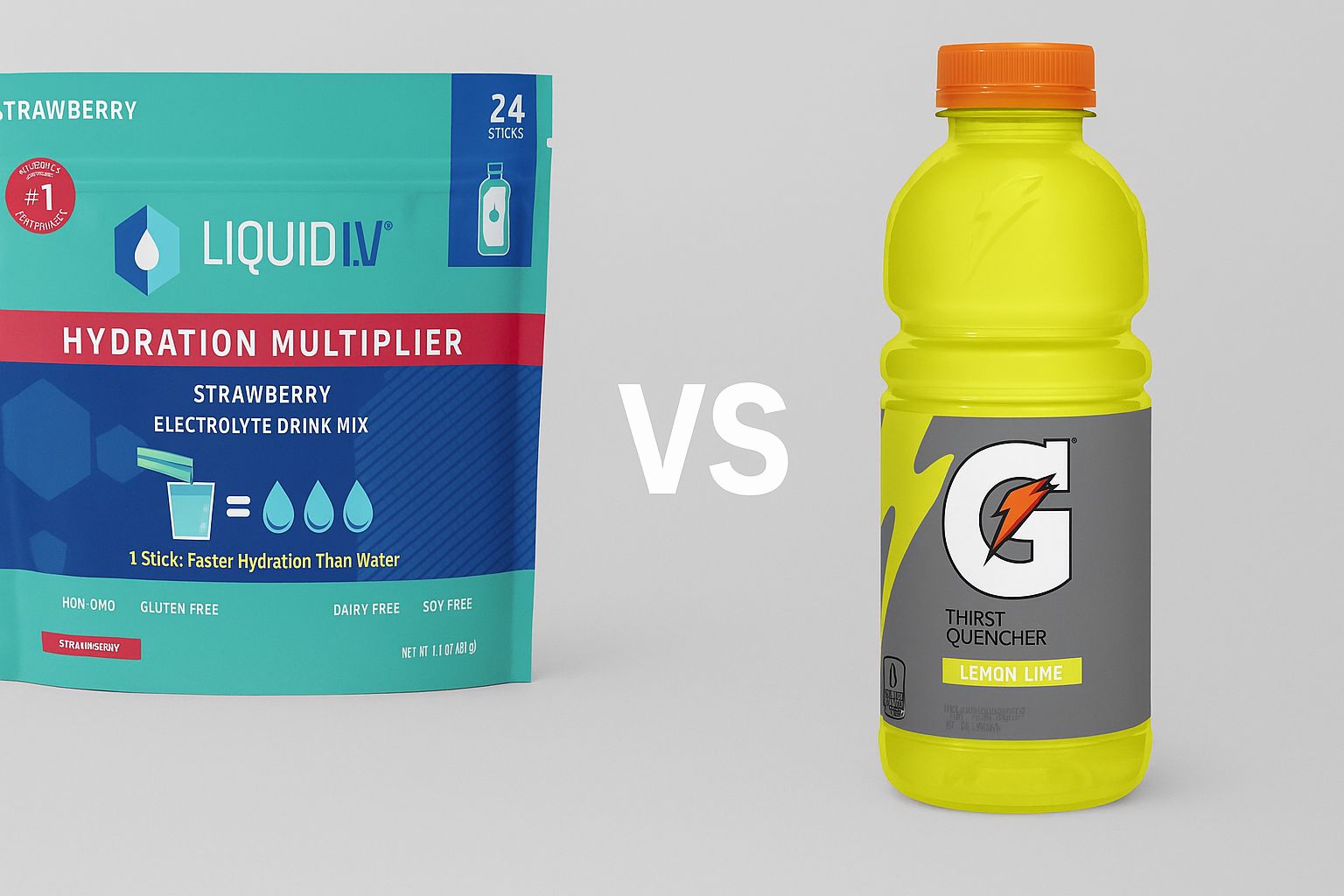
If you have ever stood in front of a store shelf staring at rows of colorful drinks and packets, you know hydration has gotten confusing. There are more “performance hydrators” than most of us can keep track of, each promising quicker recovery, better workouts, and more energy. It is a lot to sort through.
Still, two names keep popping up in conversations about sports, fitness, and everyday hydration: Liquid I.V. and Gatorade. They show up in gym bags, on sidelines, in travel backpacks, and all over social media, which is why people keep comparing them.
In this guide you will get a clear breakdown of what regular users, medical experts, and wellness blogs actually say about both products, without the marketing noise. The goal is simple. Help you decide what works for your body and your daily life.
Hydration Basics — What Your Body Actually Needs
Before comparing Liquid I.V. and Gatorade, it helps to understand what your body is trying to do in the first place. Electrolytes like sodium, potassium, and magnesium keep your fluid levels steady, help your muscles contract, and make sure your nerves fire the way they should. When these levels drop, you feel it. Think headaches, sluggishness, cramps, or that drained feeling after a tough workout.
Harvard Health points out something most people forget. The average person already gets plenty of electrolytes from food. In fact, many of us take in too much sodium without realizing it. That means most days your body is not begging for an electrolyte drink. Water is usually enough.
So when do electrolyte drinks actually make sense? When your body is losing fluids fast. Heavy sweating from long workouts, high humidity, or hot weather. Stomach issues like vomiting or diarrhea. Training at high altitude. Long days of physical labor where you are constantly moving and sweating. In these situations, an electrolyte boost can keep you from feeling wiped out.
Harvard also gives a simple warning. Using these drinks when you do not need them can load you up with extra sugar, sodium, and calories that do nothing for your health. The goal is to hydrate smarter, not just drink more.
Liquid I.V.
Liquid I.V. has become the go to choice for people who want something stronger than plain water but lighter than a full sports drink. One standout is its higher electrolyte content per serving. Nüvo You compared several hydration products and found that Liquid I.V. packs more electrolytes into a single packet than many traditional options, which is why some users feel the effects a bit faster after a tough workout or a long day in the heat.
It also keeps sugar lower than classic sports drinks. You still get some sugar because the product uses glucose to help speed up absorption, but it is nowhere near the level of something like regular Gatorade.
Liquid I.V. adds B vitamins and vitamin C too. These sound impressive on the label, but the company leans hard into ideas like “immune support” and “skin health.” Those claims are more marketing than medical fact. If you are already eating a normal diet, you are likely getting enough of those vitamins anyway.
One thing people consistently love is the convenience. The packets weigh almost nothing, fit in any bag, and make it simple to stay prepared during travel, hikes, or long workdays. It is hydration you can stash anywhere.
Gatorade
Gatorade has been around long enough that most of us grew up seeing it on sidelines and in coolers at every sporting event. It was created for endurance athletes who needed quick carbs and sodium to keep going during long, intense workouts. That original purpose still shows in the formula.
The sugar content is noticeably higher than what you get in newer hydration products. For marathon runners, long distance cyclists, or anyone pushing through hours of training, that sugar gives a real energy bump. For casual daily hydration, though, it can be more than your body needs.
Where Gatorade wins big is convenience. It is everywhere, often at a lower price than powder packets or premium electrolyte mixes. No mixing, no measuring, and you can walk into almost any store in the world and grab a bottle. For many people, that alone makes it the easy go to.
What People Love About Liquid I.V.
A lot of users say Liquid I.V. hits the sweet spot on longer workouts. Cyclists often mention that it helps them stay steady on rides that go past an hour and that it is easy on the stomach. No heavy, sugary feeling.
The flavors get plenty of love too. Most people find them lighter and cleaner than standard sports drinks, and the powder mixes smoothly without clumps. That alone makes it easier to drink regularly.
Where Liquid I.V. really shines is recovery after long or brutally hot sessions. Users say they feel noticeably less drained and bounce back faster, especially after summer workouts or long days outside. It is simple, it works, and it does not weigh you down.
What People Hate or Struggle With
Liquid I.V. has its fans, but it also has a few common complaints. Some people find it too sweet or a bit cloying, even when mixed with extra water. A small number of users report stomach discomfort, especially if they drink it fast or use it during hard workouts.
Endurance athletes point out another issue. Liquid I.V. does not have enough carbs to fuel long, intense rides or runs. It can replace electrolytes just fine, but it will not give you the steady energy you need over several hours. Because of that, many cyclists and long distance runners stick to options like Skratch, LMNT, homemade mixes, or simply water paired with real food.
Why Gatorade Still Has Loyal Fans
Even with all the newer hydration products out there, Gatorade still holds its ground. For long rides or workouts that push past the one hour mark, the mix of sugar and electrolytes does exactly what it was designed to do. It keeps energy levels steady and helps muscles keep firing when you are deep into a tough session.
Convenience is another big reason people stick with it. You can grab a bottle at almost any gas station or corner shop, which makes it an easy mid-ride or mid-run fix. No packets, no mixing, just quick hydration on the go.
And then there is the price. Gatorade is usually cheaper and it is something most people already know and trust. Sometimes familiarity wins.
When Liquid I.V. Wins
There are situations where Liquid I.V. simply makes more sense. If you live or train in hot climates like India, the Middle East, or the U.S. Southwest, sweat loss is no joke. A packet of Liquid I.V. can feel like a quick reset when the heat drains you fast.
It also fits well with short to moderate workouts in the 30 to 60 minute range. You get the electrolytes you need without loading up on sugar you do not actually burn off. The same goes for travel days, outdoor labor, and long hikes. The packets are light, and you can toss them into any bag without thinking.
A lot of people choose it when they want better hydration but prefer to avoid sugary drinks. It gives you support without the heavy sweetness of traditional sports drinks.
And for recovery after a workout, it tends to shine. You feel rehydrated without feeling stuffed, which is exactly what most people want once the hard part is over.
When Gatorade Wins
Gatorade really shows its strength once you cross into true endurance territory. If you are cycling 50 kilometers or more, running past the ninety minute mark, or doing any workout where your energy dips hard, the combo of carbs and electrolytes helps you keep going. Liquid I.V. can hydrate you, but it cannot fuel you the way Gatorade does during these long sessions.
It also wins anytime you need something fast. On a ride or run, you can duck into a gas station, grab a bottle, and be back out in seconds. No mixing, no packets, no fuss.
And if you are working with a tighter budget, Gatorade is the simpler choice. It is cheaper, easy to find, and gets the job done for the kind of workouts it was built for.
Health Considerations
Most people do not need electrolyte drinks every day. If you are not sweating hard or losing fluids quickly, plain water usually does the job. Regular use of electrolyte mixes can add way more sodium than your body needs, which can be a problem for anyone with high blood pressure or kidney issues.
Gatorade brings another concern. The sugar content can cause quick spikes in blood sugar, which is not ideal for diabetics or anyone trying to manage their glucose levels. It is helpful for endurance workouts, but not great as an everyday drink.
No matter which option you prefer, your baseline hydration should still come from water and real food. Fruits, vegetables, and balanced meals supply more electrolytes than most people realize.
If you want natural or low cost alternatives, coconut water and ORS are worth considering. They are simple, effective, and easy to digest. Some people use them as their main hydration tools and save sports drinks for when they truly need them.
My Experience With Both Brands
Trying both Liquid I.V. and Gatorade in real situations makes the differences obvious. They are not built for the same purpose, and you feel that the first time you switch between them.
Liquid I.V. in everyday life
The first thing you notice with Liquid I.V. is how convenient the packets are. I kept a few in my backpack during summer, and they came in handy on days when the heat wiped me out faster than expected. One packet in a bottle of cold water felt like a quick reset. The hydration hits pretty fast, especially after yard work, travel, or short workouts where you lose a lot of sweat but not a ton of energy.
The taste is a mixed experience. Some flavors are clean and refreshing. Others can feel a bit sweet after a while, almost syrupy if you mix them with too little water. I learned to dilute them more than the packet suggests, which made the taste smoother and easier to sip.
During workouts, Liquid I.V. works well up to a point. For 30 to 60 minute sessions, I felt hydrated without any heavy feeling in my stomach. But once I crossed the one hour mark, especially on a long bike ride, I started missing the carbs. You stay hydrated, but your energy dips because Liquid I.V. does not give you fuel. That is when you understand it is designed for hydration, not endurance.
The added vitamins are a nice bonus on the label, but in day to day life I did not feel any difference from them. Hydration was the only real effect, and to be fair, that is the part it does well.
Gatorade during long workouts
Gatorade feels completely different because it hits you with sugar and electrolytes together. On long rides, especially anything over fifty kilometers, I could feel the quick boost. You drink it and within a few minutes you have a little more push in your legs. It is not subtle, and when you are deep into a tough workout, you appreciate it.
It is also incredibly practical. If you forget your bottle or run out mid-ride, you can stop at any gas station, grab a cold Gatorade, and keep going. There is zero planning involved. That convenience alone has saved me more than once.
The downside is the sweetness. When you are not burning a lot of calories, Gatorade can feel heavy and too sugary. On normal days or short workouts, it almost feels like drinking dessert. And if you try to drink a lot of it in hot weather without enough movement, you feel sluggish instead of refreshed.
After workouts, Gatorade works for refueling but not for rehydrating cleanly. You get carbs, but you also feel the sugar crash later if you drink too much. Liquid I.V. felt gentler on recovery days.
The bottom line from experience
Liquid I.V. is what I reach for when I need hydration without turning my drink into a sugar bomb. Travel days, hot weather, light workouts, hiking, or just feeling drained after being outside too long. It is clean, easy, and you feel better fast.
Gatorade is what I use when I know I will be burning real energy. Long runs. Long rides. Long training sessions. Situations where carbs are not optional. In those moments, the sugar is exactly what helps you keep going.
Using both side by side makes the choice clear. Liquid I.V. hydrates you. Gatorade hydrates and fuels you, but at the cost of more sugar. The trick is knowing what your body needs on that specific day and choosing the right tool.
Final Verdict — Which Should You Use?
- Both Liquid I.V. and Gatorade work — but for different situations.
- Choose based on:
- Workout length
- Heat/humidity
- Sweat rate
- Diet
- Budget
- Stomach sensitivity