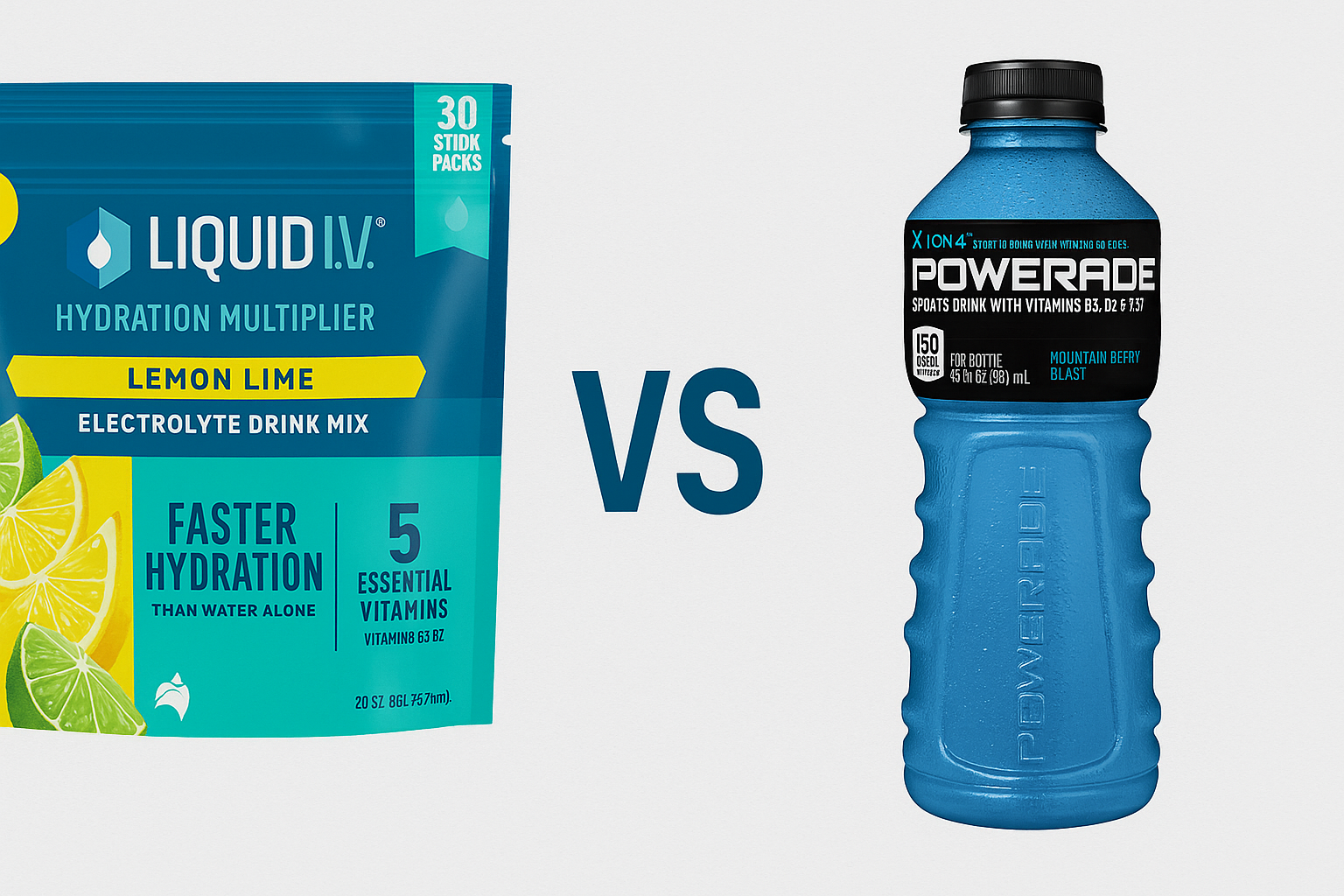
Proper hydration can make or break your workout, recovery, or even just getting through a busy day. But when you’re reaching for something beyond plain water, the choices can be overwhelming. Two popular contenders in the hydration market—Liquid I.V. and Powerade—take very different approaches to keeping you hydrated.
Liquid I.V. has gained a devoted following for its focus on rapid hydration through science-backed formulation. Powerade, on the other hand, has been a staple in gyms and sports fields for decades, promising to replenish what you lose through sweat.
Both products claim to hydrate better than water alone, but they use different ingredients, sweeteners, and formulations to achieve their goals. Understanding these differences will help you make an informed choice based on your specific needs, activity level, and health priorities.
This comparison breaks down everything from electrolyte composition to sugar content, helping you determine which hydration solution deserves a spot in your gym bag.
What Is Liquid I.V.?
Liquid I.V. is a hydration multiplier that comes in powder form, designed to be mixed with water. The brand’s flagship product uses Cellular Transport Technology (CTT), which is based on the World Health Organization’s oral rehydration solution formula.
CTT works by using a precise ratio of sodium, glucose, and potassium to enhance water absorption in the bloodstream. The science behind it is straightforward: glucose helps the small intestine absorb sodium and water more efficiently, allowing for faster hydration than drinking water alone.
Each stick of Liquid I.V. is designed to provide hydration equivalent to drinking 2-3 bottles of water. The brand markets itself as a premium hydration solution, appealing to health-conscious consumers who want more than just electrolyte replacement.
Liquid I.V. comes in various flavors, including Lemon Lime, Passion Fruit, and Acai Berry. The brand emphasizes clean ingredients, non-GMO certification, and added vitamins to support overall wellness.
What Is Powerade?
Powerade is a sports drink manufactured by The Coca-Cola Company, launched in 1988 to compete with Gatorade. It’s formulated specifically for athletes and active individuals who need to replenish electrolytes lost through sweat during intense physical activity.
The drink is ready-to-consume and comes in bottles or powder form. Powerade uses a blend of electrolytes, carbohydrates, and B vitamins to help athletes maintain performance and recover after exercise.
Powerade’s formula focuses on providing quick energy through carbohydrates while replacing key minerals lost during sweating. The brand offers several product lines, including Powerade Zero (sugar-free) and Powerade Ultra (with added creatine and BCAAs).
Available in numerous flavors like Mountain Berry Blast, Fruit Punch, and Orange, Powerade has built its reputation on affordability and widespread availability. You’ll find it in virtually every convenience store, vending machine, and supermarket across the country.
Electrolyte Quality & Sources
The quality and source of electrolytes differ significantly between these two products.
Liquid I.V. uses mined salt for its sodium content and includes potassium derived from potassium citrate. The formulation emphasizes clean, traceable mineral sources that align with the brand’s focus on premium ingredients. The electrolytes work in conjunction with the CTT formula to optimize absorption.
Powerade relies on sodium citrate and potassium phosphate for its electrolyte content. These are food-grade minerals commonly used in sports drinks. While effective for electrolyte replacement, they’re not specifically formulated for enhanced absorption like Liquid I.V.’s CTT approach.
The key difference lies in intention: Liquid I.V. prioritizes rapid absorption through its carefully balanced formula, while Powerade focuses on straightforward electrolyte replacement to match what’s lost in sweat.
Both products contain the two most important electrolytes for hydration—sodium and potassium—but they deliver them in different forms and concentrations.
Electrolyte Amounts (Exact Numbers per Packet)
When it comes to electrolyte content, the numbers tell an interesting story.
Liquid I.V. (per 16g packet):
- Sodium: 500mg
- Potassium: 370mg
Powerade (per 12 fl oz serving):
- Sodium: 150mg
- Potassium: 35mg
The difference is striking. Liquid I.V. contains more than three times the sodium and over ten times the potassium compared to Powerade. This higher electrolyte concentration is intentional—it’s designed to work with the glucose in the formula to maximize water absorption.
Higher sodium content might sound concerning, but for active individuals or those experiencing dehydration, adequate sodium is crucial. Sodium helps retain fluid and prevents excessive water loss through urination.
Powerade’s lower electrolyte content is suitable for moderate exercise or casual physical activity. However, for intense workouts, significant fluid loss, or situations requiring rapid rehydration, the concentrations may not be sufficient.
The potassium difference is particularly notable. Potassium plays a vital role in muscle function and preventing cramps, making Liquid I.V.’s higher concentration beneficial for athletes and those engaged in prolonged physical activity.
Sugar Content
Sugar content is a major consideration for anyone monitoring their carbohydrate intake or blood sugar levels.
Liquid I.V.:
- Contains 11g of sugar per packet
- Uses cane sugar as the primary sweetener
- The sugar serves a functional purpose in the CTT formula, not just for taste
Powerade:
- Contains 21g of sugar per 12 fl oz serving
- Uses high fructose corn syrup as the sweetener
- Provides quick energy for athletic performance
Powerade contains nearly twice the sugar of Liquid I.V. per serving. However, context matters. Powerade positions itself as an energy drink for athletes who need carbohydrate fuel during workouts. The sugar provides immediate energy to power through intense exercise.
Liquid I.V. uses sugar strategically as part of its absorption technology. The glucose works with sodium to facilitate rapid hydration through the small intestine. The amount is calibrated specifically for optimal absorption rather than energy provision.
For those watching sugar intake, Liquid I.V. offers a lower-sugar option while still maintaining hydration effectiveness. Powerade Zero provides a sugar-free alternative, though it uses artificial sweeteners instead.
Sweeteners Used
The type of sweetener matters as much as the amount.
Liquid I.V. uses pure cane sugar—a natural sweetener that’s part of the functional formula. The brand avoids artificial sweeteners in its original hydration multiplier line, aligning with its clean-ingredient philosophy. Some flavors may include stevia leaf extract to reduce overall sugar content while maintaining sweetness.
Powerade relies on high fructose corn syrup (HFCS) in its regular formulation. HFCS is a common sweetener in mass-market beverages due to its low cost and effectiveness. However, some consumers prefer to avoid HFCS due to concerns about its metabolic effects compared to other sugars.
Powerade Zero uses sucralose, an artificial sweetener that provides sweetness without calories or sugar. While this appeals to those avoiding sugar entirely, some people prefer natural sweeteners.
The sweetener choice reflects each brand’s positioning: Liquid I.V. caters to health-conscious consumers willing to pay premium prices for cleaner ingredients, while Powerade prioritizes affordability and mass-market appeal.
Ingredient Cleanliness
Examining the full ingredient list reveals important differences in formulation philosophy.
Liquid I.V. emphasizes clean, simple ingredients. The product is non-GMO verified and free from artificial colors and flavors. The brand uses natural fruit extracts for flavoring and coloring. This transparency appeals to consumers who scrutinize labels and prefer minimal processing.
The ingredient list is relatively short and recognizable: dextrose, sodium citrate, citric acid, potassium citrate, natural flavors, and stevia (in some varieties). Each ingredient serves a specific functional purpose.
Powerade’s ingredient list includes synthetic dyes like Blue 1 and Red 40, which give the drink its vibrant colors. While these dyes are FDA-approved, some consumers prefer to avoid artificial colorants due to potential sensitivities or personal preference.
Powerade also contains modified food starch and artificial flavoring. These ingredients help maintain consistency, shelf stability, and taste across massive production volumes.
Neither product is inherently “bad,” but they target different consumer priorities. Liquid I.V. positions itself as a wellness product with premium, clean ingredients. Powerade focuses on performance and accessibility, using ingredients that make sense for large-scale production and affordability.
Hydration Effectiveness
The ultimate question: which product actually hydrates better?
Liquid I.V.’s CTT formula is scientifically designed for rapid hydration. The specific ratio of glucose, sodium, and potassium optimizes absorption through the small intestine. Clinical studies on oral rehydration solutions (the basis for CTT) show they can deliver hydration 2-3 times faster than water alone.
This makes Liquid I.V. particularly effective for situations requiring quick rehydration: after illness, during travel, following intense exercise, or in hot weather. Users often report feeling the effects within 20-30 minutes of consumption.
Powerade provides adequate hydration for moderate activity levels. It replaces fluids and electrolytes lost through sweat, helping maintain performance during workouts. However, its lower electrolyte concentration means it doesn’t leverage the enhanced absorption mechanisms that Liquid I.V. employs.
For everyday hydration needs or light to moderate exercise, Powerade works well. For rapid rehydration needs, significant electrolyte depletion, or optimization of fluid absorption, Liquid I.V. has the advantage.
The trade-off is cost and convenience. Powerade is ready to drink and inexpensive. Liquid I.V. requires mixing and costs more per serving, but delivers more concentrated hydration support.
Health & Wellness Benefits
Beyond basic hydration, both products offer additional nutrients.
Liquid I.V. provides:
- Vitamin C (500mg): Supports immune function and acts as an antioxidant
- B Vitamins (B3, B5, B6, B12): Aid energy metabolism and cellular function
- Non-GMO ingredients: Appeals to those avoiding genetically modified foods
The vitamin content in Liquid I.V. positions it as more than just a hydration product. It’s marketed as a wellness solution that supports overall health while hydrating efficiently.
Powerade offers:
- B Vitamins (B3, B6, B12): Help convert food into energy
- ION4 Advanced Electrolyte System: Their branded electrolyte blend
- Quick carbohydrate energy: Fuels athletic performance
Powerade’s formula is optimized for athletes who need both hydration and energy. The carbohydrates provide fuel for muscles during exercise, while electrolytes maintain fluid balance.
Liquid I.V. delivers significantly more vitamins per serving, particularly vitamin C. This makes it suitable for immune support, recovery from illness, or travel situations where extra nutritional support is beneficial.
Powerade focuses purely on performance and electrolyte replacement without the additional wellness angle.
Which One Should You Choose?
Your choice depends on your specific needs, activity level, and priorities.
Choose Liquid I.V. if you:
- Need rapid rehydration after illness, travel, or intense activity
- Prefer clean, non-GMO ingredients without artificial colors
- Want added immune support from vitamins
- Are willing to pay more for enhanced absorption technology
- Don’t mind mixing powder with water
- Seek lower sugar content with functional benefits
Choose Powerade if you:
- Need immediate, ready-to-drink hydration
- Require carbohydrate energy during extended athletic activities
- Prefer budget-friendly hydration options
- Want widespread availability and convenience
- Don’t prioritize natural or non-GMO ingredients
- Need various product options (regular, zero sugar, enhanced formulas)
Athletes engaging in prolonged, intense exercise lasting over an hour may benefit from Powerade’s combination of electrolytes and quick carbohydrates. The sugar provides immediate fuel, and the drink is easy to consume during activity.
Those recovering from illness, dealing with hangovers, traveling, or needing efficient hydration without excess sugar may find Liquid I.V. more effective. The enhanced absorption technology and vitamin content offer advantages beyond basic hydration.
Consider your budget as well. Liquid I.V. costs approximately $1.50-$2.00 per serving, while Powerade averages $1.00-$1.50 per bottle (less if bought in bulk). For daily use, this difference adds up.
Overall Winner
If we’re judging purely on hydration effectiveness and ingredient quality, Liquid I.V. comes out ahead. Its scientifically-backed CTT formula, cleaner ingredients, higher electrolyte content, and added vitamins make it the superior choice for optimal hydration.
However, “winner” depends on context. Powerade excels in its category as an affordable, accessible sports drink that effectively serves athletes during workouts. Its combination of electrolytes and carbohydrates makes it ideal for fueling extended physical activity.
For rapid rehydration, recovery situations, and health-conscious consumers who prioritize clean ingredients, Liquid I.V. is the clear winner. Its enhanced absorption technology and nutritional profile justify the higher price point for those who value these benefits.
For budget-conscious athletes who need readily available hydration during workouts and appreciate the energy boost from carbohydrates, Powerade wins on convenience and value.
The best approach might be using both strategically: Powerade during and immediately after intense workouts for energy and electrolyte replacement, and Liquid I.V. for situations requiring rapid, efficient rehydration with added wellness benefits.
Ultimately, both products successfully hydrate—they just take different paths to get there. Your lifestyle, activity level, health priorities, and budget will determine which path makes more sense for you.