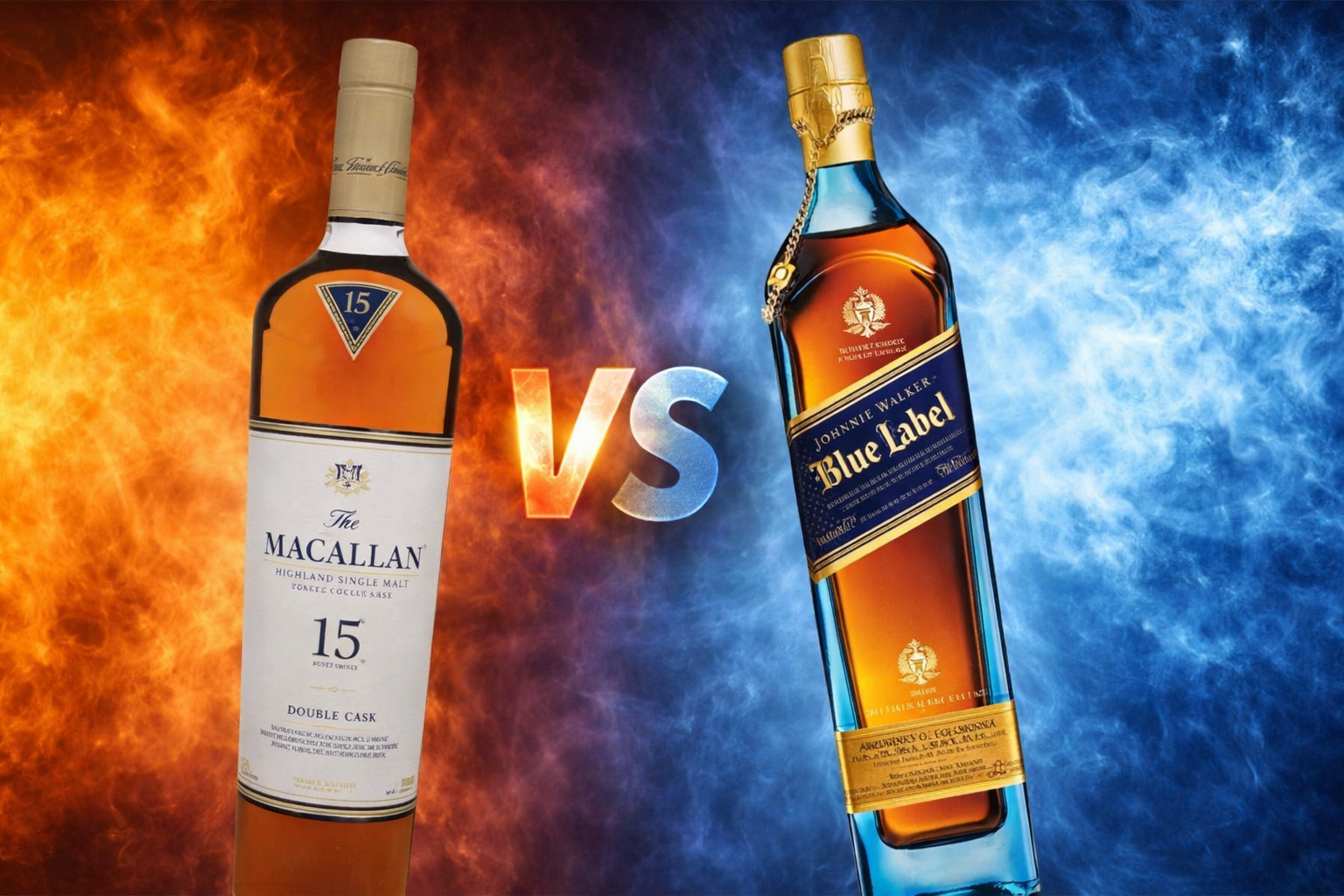
When it comes to premium Scotch whisky, the debate around Macallan vs Blue Label pops up again and again. Walk into any upscale bar or duty-free shop, and you’ll spot both bottles sitting proudly behind the counter. They look luxurious, they’re priced high, and they carry serious reputations.
But here’s the thing—these two whiskies are very different beasts. One leans heavily on tradition and single-malt purity, while the other is all about balance and blending mastery. So, which one’s actually worth your money? And more importantly, which one suits your palate?
Let’s cut straight to the chase and compare Macallan vs Blue Label across taste, age, strength, price, and overall experience.
What Is Macallan?
The Macallan is one of the most respected single malt Scotch whisky distilleries in the world. Founded in 1824 in Scotland’s Speyside region, Macallan has built its reputation on quality, consistency, and an almost obsessive focus on wood maturation.
What sets Macallan apart?
- It uses 100% malted barley
- Distilled at a single distillery
- Famous for sherry-seasoned oak casks
- Known for rich, full-bodied flavors
Macallan isn’t just whisky—it’s a status symbol. Bottles like Macallan 12, 18, and rare editions often fetch eye-watering prices at auctions. Collectors love it, connoisseurs respect it, and beginners often aspire to it.
Entity reference: The Macallan Distillery (Speyside, Scotland)
What Is Blue Label?
Johnnie Walker Blue Label is the crown jewel of the Johnnie Walker lineup. Unlike Macallan, Blue Label is a blended Scotch whisky, meaning it’s made by combining multiple malt and grain whiskies from different distilleries across Scotland.
Key highlights of Blue Label:
- Crafted from rare and old Scotch whiskies
- No age statement, but includes very mature stocks
- Designed for smoothness and balance
- Produced by Diageo, one of the world’s largest spirits companies
Blue Label is all about approachability. It’s smooth, elegant, and designed to appeal to a wide audience—even people who don’t normally drink whisky.
Entity reference: Johnnie Walker (Diageo)
Single Malt or Blended Scotch?
This is where the Macallan vs Blue Label debate really starts to split.
Macallan
- Single Malt Scotch
- Made at one distillery
- Uses malted barley only
- Flavor reflects a single production style
Blue Label
- Blended Scotch Whisky
- Mix of malt and grain whiskies
- Sourced from multiple distilleries
- Flavor designed to be consistent and smooth
In simple terms:
- Choose Macallan if you value tradition, depth, and individuality
- Choose Blue Label if you want balance, smoothness, and easy sipping
Neither is “better”—they’re just built differently.
Taste Comparison: Macallan vs Blue Label
Taste is subjective, sure—but patterns don’t lie.
How Does Macallan Taste?
Macallan whiskies are known for being rich and complex, thanks largely to sherry oak casks.
Common tasting notes:
- Dried fruits (raisins, figs)
- Dark chocolate
- Vanilla and spice
- Oak and nutty undertones
The mouthfeel is often thick and luxurious, especially in older expressions. Macallan rewards slow sipping and attention.
How Does Blue Label Taste?
Blue Label is designed to be exceptionally smooth.
Typical flavor profile:
- Honey and vanilla
- Soft smoke
- Gentle fruit notes
- A long, mellow finish
There’s no sharp burn, no aggressive peat—just a silky glide from start to finish. It’s whisky that doesn’t challenge you; it welcomes you.
Quick takeaway:
Macallan = bold and layered
Blue Label = smooth and refined
How Old Is This Scotch?
Age matters in whisky, but it’s not always straightforward.
Macallan Age Statements
Most Macallan bottles clearly state their age:
- Macallan 12 Years
- Macallan 15 Years
- Macallan 18 Years
This transparency appeals to purists. You know exactly what you’re getting.
Blue Label Age
Blue Label has no age statement, which often raises eyebrows. However, it’s widely accepted that it contains whiskies aged well over 20 years, including some very rare casks.
So while Macallan is upfront, Blue Label relies on trust in the blender’s skill.
Sipping or Mixing: What’s Better?
Let’s be real—mixing either of these with cola would be borderline criminal.
Macallan
- Best enjoyed neat or with a few drops of water
- Ice is optional but can mute complexity
- Not recommended for cocktails
Blue Label
- Also best neat
- Can handle a large ice cube without losing character
- Occasionally used in ultra-luxury cocktails, but rarely
Bottom line:
Both are sipping whiskies, not mixers.
How Strong Is It? (ABV Comparison)
Alcohol strength plays a role in mouthfeel and intensity.
- Macallan: Typically 40%–43% ABV, depending on expression
- Blue Label: Usually 40% ABV
Macallan can feel stronger due to its bolder flavors, even when the ABV is similar.
Price Comparison: Is It Worth the Money?
Here’s where wallets start to sweat.
Macallan Pricing
- Macallan 12: Moderate-premium range
- Macallan 18: Very expensive
- Rare editions: Sky’s the limit
You’re paying for craftsmanship, age statements, and brand prestige.
Blue Label Pricing
- Generally priced at the high-premium level
- One consistent bottle, fewer variations
- Often seen as a luxury gift whisky
In terms of value:
- Macallan offers more variety across price points
- Blue Label offers one polished, premium experience
Macallan vs Blue Label: Quick Comparison Table
- Type: Single Malt vs Blended Scotch
- Taste: Rich & complex vs Smooth & balanced
- Age: Clearly stated vs No age statement
- Best for: Whisky enthusiasts vs Luxury gifting
- Price: Ranges widely vs Consistently high
FAQs
Is Macallan better than Blue Label?
Not objectively. Macallan suits those who love depth and tradition, while Blue Label is perfect for smooth, easy luxury.
Which is better for beginners?
Blue Label is more beginner-friendly due to its smoothness.
Is Blue Label really high quality?
Yes. Despite being blended, it uses rare and mature whiskies.
Why is Macallan so expensive?
Limited production, sherry cask aging, age statements, and collector demand drive the price.
Final Thoughts: Which One Should You Choose?
Choosing between Macallan vs Blue Label isn’t about right or wrong—it’s about preference. If you love bold flavors, heritage, and don’t mind exploring complexity, Macallan’s your pick. If you want effortless elegance, smooth sipping, and a guaranteed crowd-pleaser, Blue Label won’t let you down.
Either way, you’re not just buying whisky—you’re buying an experience. So pour a dram, take your time, and enjoy the journey.
External Resources for Further Reading: