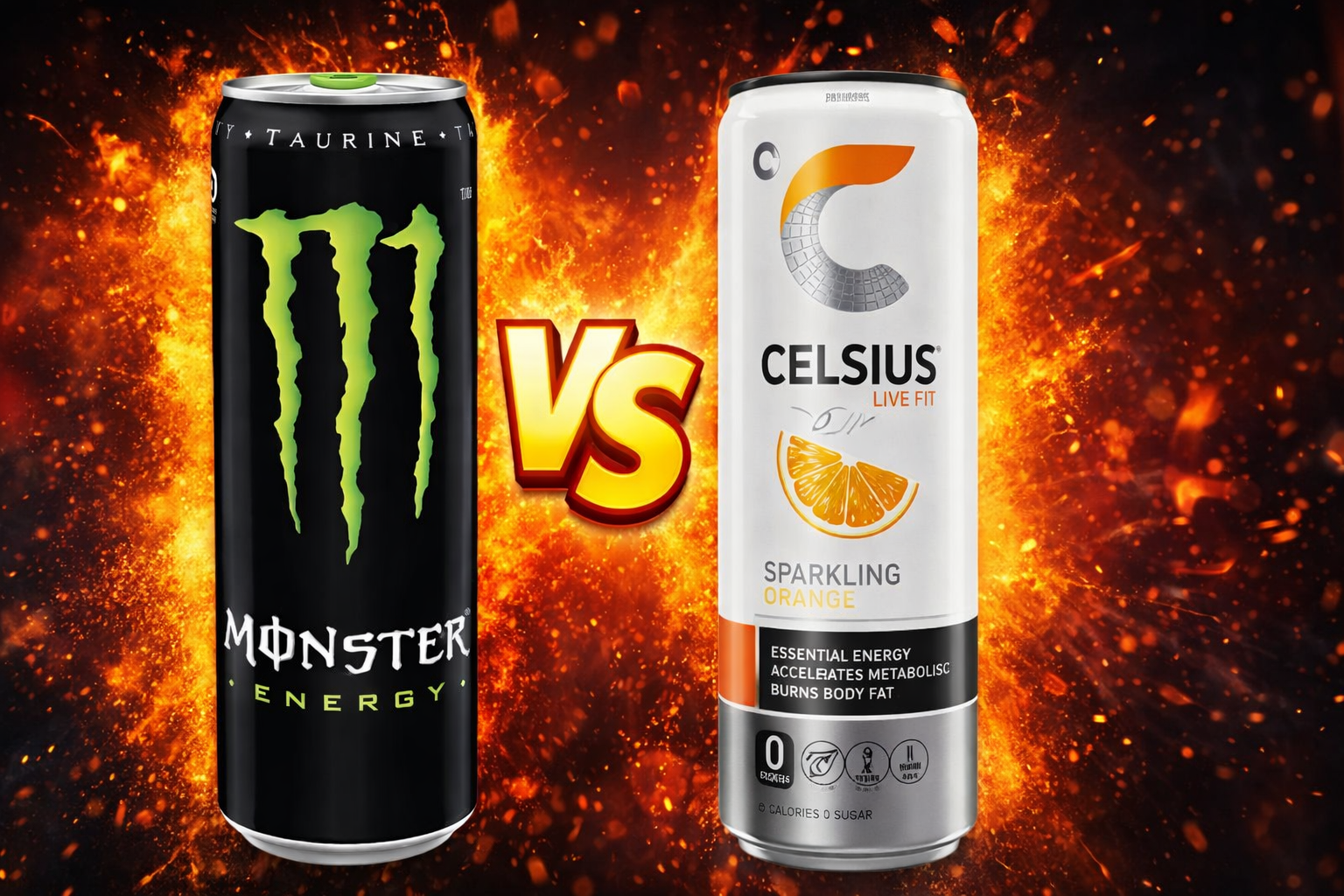
Ever found yourself stuck in front of a cooler, unsure between a quick energy boost and a healthier choice? Choosing the best energy drink can be tough. It’s all about finding the right mix of taste and benefits.
Looking at celsius vs monster shows they cater to different needs. If you’re into health and fitness, Celsius might be your go-to. It offers clean ingredients and unique benefits for your metabolism.

But, some days you need a big energy kick to get through a long day or a late-night drive. Both Celsius and Monster have their own strengths. The best choice depends on your health goals and how you want to feel afterwards.
Key Takeaways
- Celsius is designed primarily as a fitness supplement to boost metabolism.
- Monster offers a wider variety of bold flavors and traditional energy blends.
- Sugar content and calorie counts differ drastically between the two brands.
- Individual health goals should dictate which beverage you choose for your daily routine.
- Both drinks provide significant caffeine hits but use different ingredient profiles to do so.
- Clean labels and natural thermogenics are the main draw for health-conscious shoppers.
What You Need to Know About Celsius and Monster Energy Drinks
Celsius and Monster are top picks in the energy drink world. Knowing what makes them special is key.
Celsius focuses on fitness. It’s a thermogenic drink that boosts energy and helps burn fat. The brand says Celsius is “a fitness drink that helps you burn calories.”
“Celsius is not just an energy drink; it’s a fitness drink that helps you achieve your wellness goals,”
showing its dedication to a healthy lifestyle.
Celsius: The Fitness-Focused Energy Drink
Celsius is all about clean ingredients and wellness. It has metabolism-boosting ingredients like green tea and ginger. It also has vitamins and minerals for health and fitness.

Its focus on fitness and wellness has won over health-conscious fans. Celsius is perfect for those who want an energy boost that fits their fitness goals.
Monster Energy: The Classic Energy Drink Giant
Monster is known for its bold flavors and quick energy. It offers many flavors to appeal to different tastes. Monster is famous for its high caffeine and its link to extreme sports.
Monster has a range of drinks, from the original to Monster Zero Ultra. This variety lets people pick what they like best.
When choosing between Celsius and Monster, knowing their unique approaches helps. This knowledge helps you decide which is best for you.
Nutritional Breakdown: Comparing the Facts
To make an informed decision, let’s dive into the nutritional breakdown of Celsius and Monster. Understanding the nutritional content is essential to choosing the energy drink that best suits your needs.
Calories and Sugar Content Comparison
Celsius and Monster differ significantly in their calorie and sugar content. Celsius is marketed as a fitness-focused energy drink with a calorie-free formula. This makes it an attractive option for those watching their calorie intake. In contrast, a standard 16-ounce can of Monster contains 210 calories and 54 grams of sugar, which can be a concern for those monitoring their sugar intake.
Here’s a comparison table to illustrate the difference:
| Nutritional Aspect | Celsius | Monster |
|---|---|---|
| Calories per serving | 0-10 | 210 |
| Sugar content per serving | 0g | 54g |
Vitamins and Minerals in Each Drink
Both Celsius and Monster contain various vitamins and minerals, but their formulations differ. Celsius is fortified with essential vitamins and minerals like Vitamin C, Vitamin B, and chromium. These are important for metabolism and energy production. Monster also contains some B vitamins but in different amounts compared to Celsius.
Celsius focuses on providing a blend that supports metabolic health and energy. Monster’s formulation is more geared towards providing a quick energy boost.
Active Ingredients That Matter
The active ingredients in Celsius include green tea extract, ginger root, and guarana. These are known for their metabolic and energizing effects. Monster, on the other hand, relies heavily on caffeine and taurine for its energizing effects.
Understanding these differences is key to choosing the right energy drink for your lifestyle and preferences. Whether you prioritize low calorie and sugar content or are looking for a specific blend of vitamins and minerals, the choice between Celsius and Monster depends on your individual needs.
Celsius vs Monster Caffeine Content
When looking at energy drinks, caffeine content is key. Both Celsius and Monster are well-liked, but they have different caffeine levels.
Caffeine Levels in Celsius
Celsius energy drinks have 200 mg of caffeine in a 12-ounce can. This caffeine comes from natural sources like green tea and guarana. It’s a good pick for those wanting a natural energy boost.
Caffeine Levels in Monster
Monster energy drinks have 160 mg of caffeine in a 16-ounce can. Monster’s caffeine comes from synthetic sources and botanical extracts. Even though Monster’s can is bigger, it has less caffeine overall.
How the Energy Boost Compares
The caffeine difference between Celsius and Monster changes how they make you feel. Celsius gives a stronger energy boost because of its higher caffeine. Monster’s energy boost is slower because it has less caffeine per ounce.
To understand better, let’s look at the caffeine per ounce for both brands.
| Brand | Caffeine Content | Serving Size | Caffeine per Ounce |
|---|---|---|---|
| Celsius | 200 mg | 12 oz | 16.67 mg/oz |
| Monster | 160 mg | 16 oz | 10 mg/oz |
The table shows Celsius has more caffeine per ounce than Monster. This info helps you choose the right energy drink for you.
Taste, Flavors, and Drinking Experience
Celsius and Monster offer different tastes that appeal to various preferences. The taste of an energy drink is key in making your choice.
Celsius Flavor Lineup
Celsius is known for its clean taste and variety of flavors. Favorites include Lemon Lime and Peach. Its taste is refreshing and subtle, perfect for those who don’t like it too sweet.
Monster Flavor Lineup
Monster has a wide range of bold and sweet flavors. The Original Monster flavor is iconic and has a unique taste. Some love it, while others find it too sweet. Monster offers something for everyone with its diverse flavors.
Which One Wins on Taste?
Choosing between Celsius and Monster depends on your taste. If you like a cleaner taste, Celsius might be better. If you prefer bold flavors, Monster is a good choice. Reviews show Celsius is great for fitness, while Monster is for a strong energy boost.
When picking between Celsius and Monster, think about what you like in an energy drink. Do you prefer a subtle taste or a bold flavor? Both brands offer unique experiences for different needs.
Health Impact: Which is Healthier for Your Body?
When comparing Celsius and Monster, it’s key to look at their health effects. Each has its own mix that can impact your body differently.
Weight Loss and Fitness Benefits
Celsius is known for helping with weight loss and fitness. It’s a favorite among those who want a boost before working out. But remember, it’s not a quick fix for losing weight. You still need a healthy diet and regular exercise.
Monster, however, is not seen as a weight loss aid. Its high calorie and sugar can lead to weight gain if you drink too much.
Potential Health Concerns and Side Effects
Monster’s high sugar can cause energy crashes, tooth decay, and increase diabetes risk. Celsius has less sugar than Monster, but still has some.
Both have caffeine, which can make you jittery, anxious, or keep you awake if you’re sensitive or drink too much.
Long-Term Health Considerations
Drinking energy drinks like Celsius and Monster long-term can harm your health. Too much caffeine and sugar can hurt your heart and lead to other health issues.
| Health Aspect | Celsius | Monster |
|---|---|---|
| Sugar Content | Generally lower, varies by flavor | High, 54 grams per 16 oz can |
| Caffeine Content | 200mg per serving | 160mg per 16 oz can |
| Weight Loss Association | Marketed for metabolic benefits | Not marketed for weight loss |
When picking between Celsius and Monster, think about your health goals. If you want less sugar and support for fitness, Celsius might be better. But if you need a big energy boost and don’t mind sugar, Monster could be your choice.
Price, Availability, and Overall Value
When choosing between Celsius and Monster, think about their prices, where you can buy them, and what you get for your money. Both brands have their own strengths, but their costs and availability can sway your choice.
Cost Comparison Per Serving
Celsius costs between $1.97 to $2.50 for a 12-ounce can. Monster is priced from $2 to $4 for a 16-ounce can. Let’s look at the cost per ounce to see who offers better value.
Celsius is about $0.16 to $0.21 per ounce. Monster is around $0.125 to $0.25 per ounce. This shows Celsius is more consistent in price, but Monster’s bigger size can be cheaper.
Here’s a quick comparison:
- Celsius: $1.97 – $2.50 for 12 ounces
- Monster: $2 – $4 for 16 ounces
- Celsius cost per ounce: $0.16 – $0.21
- Monster cost per ounce: $0.125 – $0.25
Where to Buy Each Brand
Celsius is found in fitness stores and online, perfect for those who shop online or visit gyms. Monster, however, is everywhere – in stores, supermarkets, and online. This makes Monster easy to find.
Getting the Best Bang for Your Buck
To save money, buy Celsius in bulk online. Look for Monster deals at stores or online. Also, sign up for newsletters and follow social media to find out about sales.
Here are some tips to save money:
- Buy in bulk to cut costs
- Search for discounts and promotions
- Compare costs per ounce
- Shop online for deals and convenience
By keeping these tips in mind, you can enjoy your favorite energy drink while saving money.
Conclusion
Choosing between Celsius and Monster depends on what you need. If you want a low-calorie energy drink for fitness, Celsius is great. Monster is better if you like a strong, traditional energy drink.
The Celsius vs Monster debate is about what you want in an energy drink. Celsius gives a clean energy boost with MetaPower and vitamins. Monster offers a powerful energy kick with lots of caffeine.
Think about your daily life, diet, and energy needs to pick the best energy drink. Whether you focus on fitness, taste, or energy, choosing wisely means finding the perfect drink for you.
FAQ
Is Celsius better than Monster for working out?
Yes, Celsius is made for workouts. It has thermogenic ingredients like green tea and ginger. Monster is a general energy drink.
Which drink has more caffeine per ounce?
Celsius has more caffeine, about 16.6mg per ounce. Monster has 10mg per ounce. Celsius is more concentrated.
Does Monster offer a healthy version?
Yes, Monster Ultra is sugar-free and calorie-free. It’s similar to Celsius’s nutritional profile.
Can I drink Celsius every day?
Many do, but watch your caffeine intake. Too much can cause jitters or insomnia. Follow the guidelines.
Which brand has more variety in flavors?
Monster has more flavors, including Java Monster and Pipeline Punch. They also have the sugar-free Ultra series.
Are there any artificial sweeteners in Celsius?
Yes, Celsius uses Sucralose. Some prefer natural sweeteners like Stevia. Neither brand uses Stevia in their main lines.
Why is Celsius called a thermogenic drink?
It’s called thermogenic because it increases body heat and metabolic rate. This helps burn more calories than Monster.