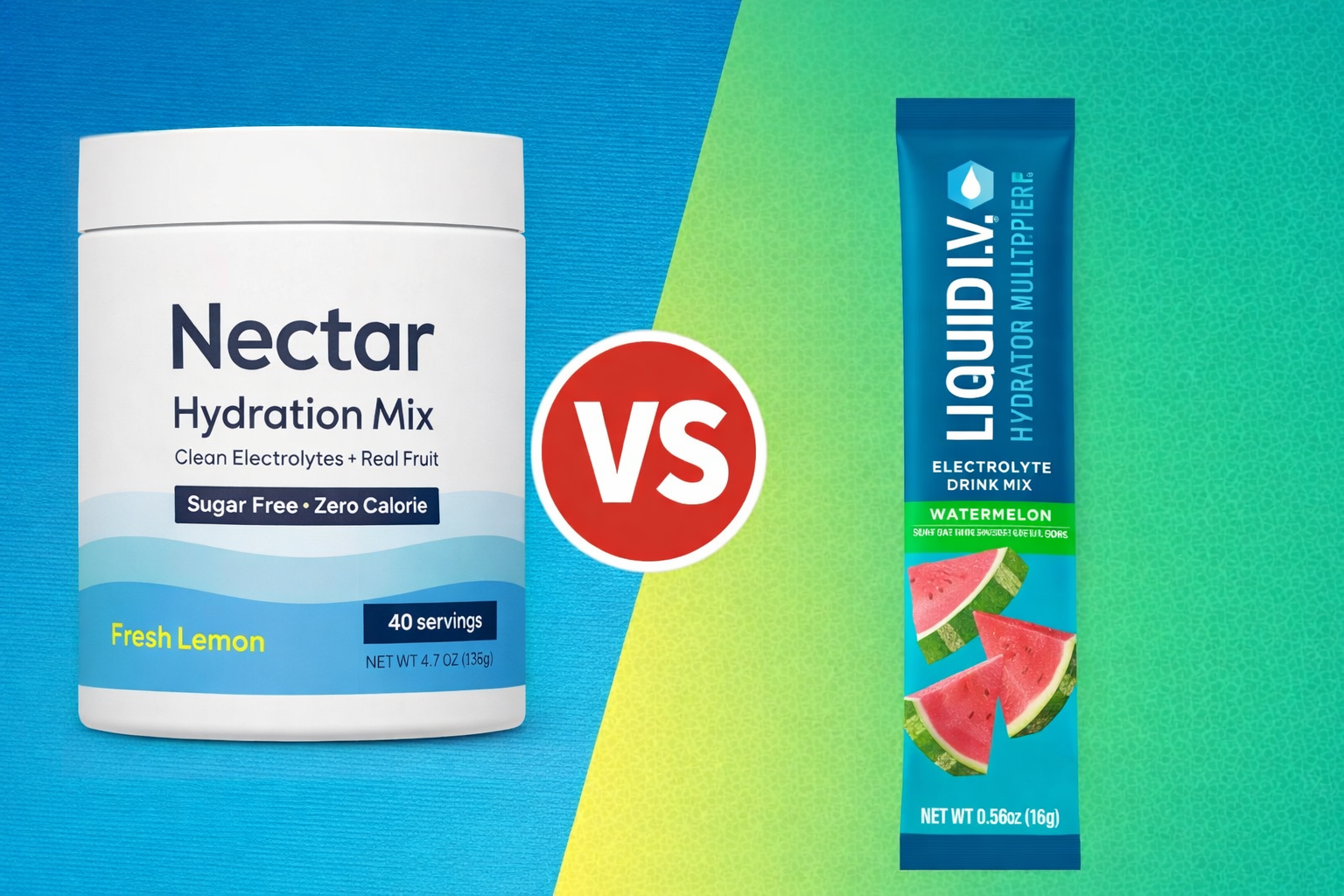
When it comes to nectar vs liquid iv, choosing the right hydration powder can feel overwhelming. Both brands promise effective rehydration, but they take different approaches. Liquid I.V. contains approximately 500mg of sodium and 11g of added sugar, while Nectar offers a lower-sodium alternative with stevia-based sweeteners. Electrolytes essentially help with the fluid balance in our bodies, so understanding which formula works better for your needs matters. We’ll break down everything from ingredients and taste to effectiveness and price, so you can decide which hydration powder deserves a spot in your routine.
Nectar vs Liquid IV: Quick Overview
Both brands have carved distinct positions in the hydration market, but their formulas reflect different philosophies about when and how you should replenish electrolytes.
What is Nectar Hydration?
Nectar positions itself as a clean alternative for people who need consistent hydration without excess sodium or added sugars. A team of doctors and nutritionists formulated the product specifically for daily use rather than intense athletic recovery. The company’s approach centers on simplicity: each serving contains 0 calories, 100mg sodium, and 250mg potassium. Instead of cane sugar, Nectar relies on organic stevia leaf extract for sweetness and uses real organic fruit for flavoring.
The formula includes only seven core ingredients: organic fruit, potassium citrate, magnesium citrate, calcium citrate, non-GMO citric or malic acid, Himalayan pink salt, and organic stevia. Nectar markets itself toward adults, kids, and seniors who want steady hydration throughout their routines without the caloric load or sodium spike found in performance-focused drinks. You can safely consume up to 5 packets daily, which speaks to its gentle formulation designed for frequent use.
What is Liquid IV?
Liquid I.V. takes a different path entirely. Founded by Brandon Cohen in 2012 and later acquired by Unilever in 2020, the brand built its reputation around Cellular Transport Technology (CTT). This system uses a specific ratio of sodium, glucose, and potassium to speed up water absorption in the small intestine. Each serving typically delivers around 500mg of sodium and 11g of sugar, coupled with vitamins B3, B5, B6, B12, and C.
The formula meets World Health Organization standards for Oral Rehydration Solution, which medical professionals use in areas facing hydration crises. Liquid I.V. targets situations where rapid rehydration matters: intense workouts, travel dehydration, heat exposure, or recovery from illness. The brand emphasizes faster hydration than water alone through its glucose-sodium transport mechanism.
Key Differences at a Glance
The contrast between nectar hydration vs liquid iv becomes clear when you examine their core intentions. Nectar delivers moderate electrolytes for maintenance hydration, while Liquid I.V. provides a heavier electrolyte load designed for quick fluid replacement. Nectar contains zero sugar and significantly lower sodium, making it suitable for casual daily drinking. In contrast, Liquid I.V. uses added sugar strategically to enhance absorption speed, though this comes with extra calories. One brand prioritizes everyday consistency, the other focuses on performance-driven recovery.
Ingredients and Nutritional Breakdown
The nutritional profiles reveal where nectar hydration vs liquid iv diverge most sharply. These differences determine which situations call for each product.
Sodium Content: 100mg vs 500mg
Liquid I.V. packs 500mg of sodium per serving, which represents 22% of the daily value. This amount aligns with recommendations from the American College of Sports Medicine for prolonged exercise, which suggests 460-1,150mg per liter to maintain plasma volume and prevent cramping. The high sodium load helps your body retain fluids longer and reduces frequent bathroom trips compared to plain water.
Nectar takes a different approach with just 100mg of sodium per serving. This lower amount works for everyday hydration or light activity, providing enough to enhance water absorption without overwhelming your daily sodium intake. Research indicates that most people already exceed their daily sodium limits, so Nectar’s formulation avoids contributing significantly to that total. Consequently, the 5x difference in sodium content makes these products suited for entirely different scenarios.
Sugar and Sweeteners: Stevia vs Cane Sugar
Liquid I.V. contains 11g of total sugars per serving, primarily from pure cane sugar and dextrose. The company uses these simple sugars deliberately to support the sodium-glucose transport mechanism that speeds water absorption. Each packet delivers 45 calories. Stevia leaf extract appears in the formula too, but as a supplementary sweetener rather than the primary source.
In contrast, Nectar contains zero sugar and zero calories. The formula relies exclusively on organic stevia leaf extract for sweetness. Stevia doesn’t affect blood sugar levels, making it suitable for people managing diabetes or following carbohydrate-restricted diets. Some users report stevia produces an unpleasant aftertaste or digestive issues, though individual tolerance varies.
Potassium and Magnesium Levels
Liquid I.V. provides 370mg of potassium per serving, which equals 8% of the daily value. This mineral works inside cells to regulate fluid balance and support proper muscle contractions. The formula contains no magnesium.
Nectar delivers 250mg of potassium and adds 50mg of magnesium citrate. Magnesium supports over 300 enzymatic reactions in the body, including energy production and muscle relaxation. Equally important, magnesium helps reduce muscle soreness and supports recovery after physical activity.
Calorie Count Per Serving
The calorie difference mirrors their sugar content. Liquid I.V. contains 45 calories per stick, while Nectar remains at 0 calories. For people tracking caloric intake or following strict dietary protocols, this distinction matters significantly. The zero-calorie profile makes Nectar easier to incorporate multiple times daily without affecting energy balance.
Taste and Flavor Options
Flavor profiles separate these two products as distinctly as their formulas do. The taste experience affects whether you’ll actually drink enough water throughout your day.
Nectar’s Fruit-Based Flavors
Nectar offers six light, refreshing flavors built around real organic fruit. The lineup includes Fresh Lemon, Watermelon, Cherry Pomegranate, Wild Berry, and Sunrise Orange. Customer reviews consistently mention the subtle, natural taste that doesn’t overpower your palate. One verified buyer noted that Lemon tastes “crisp, refreshing, and never overwhelming”.
The organic stevia sweetener creates a delicate sweetness without the thick, syrupy quality found in sugar-based competitors. However, some reviewers found the flavors too subtle, describing them as difficult to detect and lacking robust intensity. This mildness works well for people who want hydration drinks they can sip throughout the day without flavor fatigue, but might disappoint those seeking bold taste.
Liquid IV’s Flavor Range
Liquid I.V. provides over 20 flavor options ranging from classic Lemon Lime to novelty choices like Cotton Candy and Popsicle Firecracker. Popular varieties include Passion Fruit, Strawberry, Watermelon, and Tangerine. The Popsicle Firecracker flavor reportedly tastes exactly like the nostalgic summer treat.
Not all flavors perform equally. Multiple reviewers describe Passion Fruit as tasting like “tropical-scented cleaning product”, while Strawberry leaves an artificial coating that lingers. The brand’s Lemon Lime and Tangerine flavors average 4.5-star ratings, whereas Passion Fruit and Açaí Berry hover around 3 stars with complaints about medicinal and chemical notes. Pear emerged as particularly polarizing, with some finding it too mild and others appreciating its subtle profile.
Mixability and Aftertaste
Nectar dissolves in under 10 seconds with minimal stirring, leaving no gritty texture. The organic ingredients may leave a small amount of settled particles, requiring a quick stir. Users report no syrupy aftertaste, just smooth flavor.
Liquid I.V. receives mixed reviews for mixability. Many users recommend doubling the suggested water amount from 16 to 32 ounces to make certain flavors palatable. Some flavors create an opaque or tinted appearance in water.
Which One Tastes Better?
Taste preference in nectar hydration vs liquid iv depends entirely on what you’re seeking. Nectar delivers understated, fruit-forward hydration without sweetness overload. Liquid I.V. offers bolder, more dessert-like options that some find too sweet or artificial. Forbes noted that Liquid I.V. ranks among better-tasting powders but runs noticeably sweeter than competitors.
Effectiveness for Different Activities
Activity intensity determines which formula delivers better results. The nectar vs liquid iv debate shifts dramatically depending on whether you’re doing yoga or running a marathon.
Light Exercise and Daily Hydration
Plain water handles most moderate activities lasting under an hour. Research confirms that average exercisers engaging in light physical activity like yoga or Pilates don’t need electrolyte supplementation. Your body maintains electrolyte balance naturally through food when you’re not sweating heavily.
Nectar fits this category perfectly. With 100mg sodium, it enhances water absorption without the excess electrolytes your body doesn’t need during casual movement. Studies show 75% of Americans suffer from chronic dehydration, so adding Nectar to your routine addresses baseline hydration deficits without unnecessary sodium overload.
Liquid I.V. proves excessive for desk work, errands, or short walks. The 500mg sodium and 11g sugar serve no functional purpose when you’re not depleting electrolytes through sweat.
Post-Workout Recovery
Recovery depends on workout intensity. After moderate gym sessions, Nectar provides adequate electrolyte replacement to restore balance. The magnesium citrate particularly supports muscle repair and reduces soreness.
Liquid I.V. accelerates recovery following intense sessions where you’ve lost significant fluids. The higher sodium content helps your body retain water more effectively than plain hydration. Research indicates proper electrolyte replacement can reduce recovery time by up to 20%.
High-Intensity Training and Endurance Sports
Endurance athletes need serious sodium replacement. Runners sweat between 400ml to 2,400ml per hour, losing 115mg to over 2,000mg of sodium per 100ml of sweat. Sports dietitians recommend 700-900mg sodium per 1,000ml of fluid during prolonged training.
Liquid I.V. matches these requirements better. Exercise lasting beyond 60 minutes, especially in heat, demands the 500mg sodium per serving[321]. The added carbohydrates provide quick energy that supports performance during extended efforts.
Nectar falls short for serious athletes. The 100mg sodium proves insufficient to replace sweat losses during high-intensity training. One review noted it works for moderate exercise but remains inadequate for rigorous activity.
Who Should Use Which Product?
Choose Nectar for daily hydration, light exercise under 60 minutes, or situations requiring multiple servings throughout the day. The zero-calorie, low-sodium profile makes it safe for frequent use.
Pick Liquid I.V. when exercising vigorously for over an hour, training in hot environments, or during periods of excessive fluid loss. The formula specifically targets scenarios where rapid rehydration matters most.
Price Comparison and Value
Budget considerations often tip the scales in the nectar vs liquid iv decision. Price differences extend beyond the sticker value on each packet.
Cost Per Serving Breakdown
Nectar markets itself as costing half the price of competitors, but this claim requires context. A single 30-packet pouch costs USD 43.95, or USD 37.95 with a subscription (USD 1.26 per serving). The advertised USD 0.87 per serving only materializes when you purchase four pouches at once with a subscription. Bulk discounts scale progressively: two pouches save 21%, three pouches save 33%, and four pouches save 42%.
Liquid I.V. prices more consistently across purchase sizes. The standard Hydration Multiplier costs USD 24.99 for 16 packets (USD 1.56 per serving). However, Costco members access significantly better value at USD 32.99 for 30 packets (USD 1.10 per serving). Sugar-free versions start at USD 21.84.
In terms of base pricing without bulk commitments, Liquid I.V. actually costs more per serving than Nectar’s subscription rate.
Packaging Options: Packets vs Tubs
Both brands primarily offer stick packets rather than tubs. Nectar ships in resealable pouches containing 30 servings. Shipping costs USD 4.95 for single-pouch orders but becomes free with subscriptions or orders of two or more pouches. Nectar provides a 90-day guarantee, though details remain unclear.
Liquid I.V. packages come in various sizes from 10 to 30 servings depending on the product line. Free shipping applies to orders over USD 40.00.
Where to Buy and Best Deals
Nectar sells exclusively through its website. Liquid I.V. appears in Costco, Walmart, Target, and Amazon, providing wider retail access.
For maximum savings, Liquid I.V.’s LIV Membership costs USD 5.00 every three months but unlocks 20-30% discounts on all orders. Students receive 22% off their first order through verification. Seasonal promotions reach up to 40% off during Black Friday and Cyber Monday.
Comparison Table
Nectar vs Liquid IV: Comparison Table
| Feature | Nectar | Liquid IV |
|---|---|---|
| Sodium per Serving | 100mg | 500mg (22% daily value) |
| Sugar per Serving | 0g | 11g (cane sugar and dextrose) |
| Calories per Serving | 0 | 45 |
| Potassium per Serving | 250mg | 370mg (8% daily value) |
| Magnesium per Serving | 50mg | 0mg |
| Sweetener Type | Organic stevia leaf extract | Cane sugar, dextrose, and stevia leaf extract |
| Number of Flavors | 6 fruit-based flavors | Over 20 flavors |
| Price per Serving | $1.26 (subscription), $0.87 (bulk subscription) | $1.56 (standard), $1.10 (Costco) |
| Key Technology | Simple electrolyte formula with 7 core ingredients | Cellular Transport Technology (CTT) with sodium-glucose transport |
| Best For | Daily hydration, light exercise under 60 minutes, frequent use throughout the day | Intense workouts over 60 minutes, rapid rehydration, endurance sports, heat exposure |
| Target User | Adults, kids, and seniors needing consistent daily hydration | Athletes and individuals needing performance-driven recovery |
| Daily Serving Limit | Up to 5 packets daily | Not specified |
| Vitamins Included | Not mentioned | B3, B5, B6, B12, and C |
| Taste Profile | Light, subtle, fruit-forward, not overpowering | Bold, sweeter, dessert-like options |
| Mixability | Dissolves in under 10 seconds, no gritty texture | Mixed reviews; many recommend doubling water amount |
| Where to Buy | Exclusively through website | Costco, Walmart, Target, Amazon, and website |
| Founded/Formulated By | Team of doctors and nutritionists | Brandon Cohen (2012), acquired by Unilever (2020) |
Conclusion
The nectar vs liquid iv debate doesn’t have a universal winner, given that these products serve completely different purposes. Liquid I.V. takes the edge for athletes and anyone recovering from intense workouts lasting over an hour. The 500mg sodium and strategic sugar content deliver rapid rehydration when you need it most.
Nectar wins for everyday hydration. The zero-calorie, low-sodium formula works perfectly for daily use without excess sugar or sodium overload.
Rather than picking one as objectively better, consider your specific needs:
- Daily hydration and light activity? Choose Nectar.
- Intense training or rapid recovery? Go with Liquid I.V.
- Budget-conscious? Both offer comparable value with subscriptions.
Your activity level ultimately determines which formula deserves space in your routine.