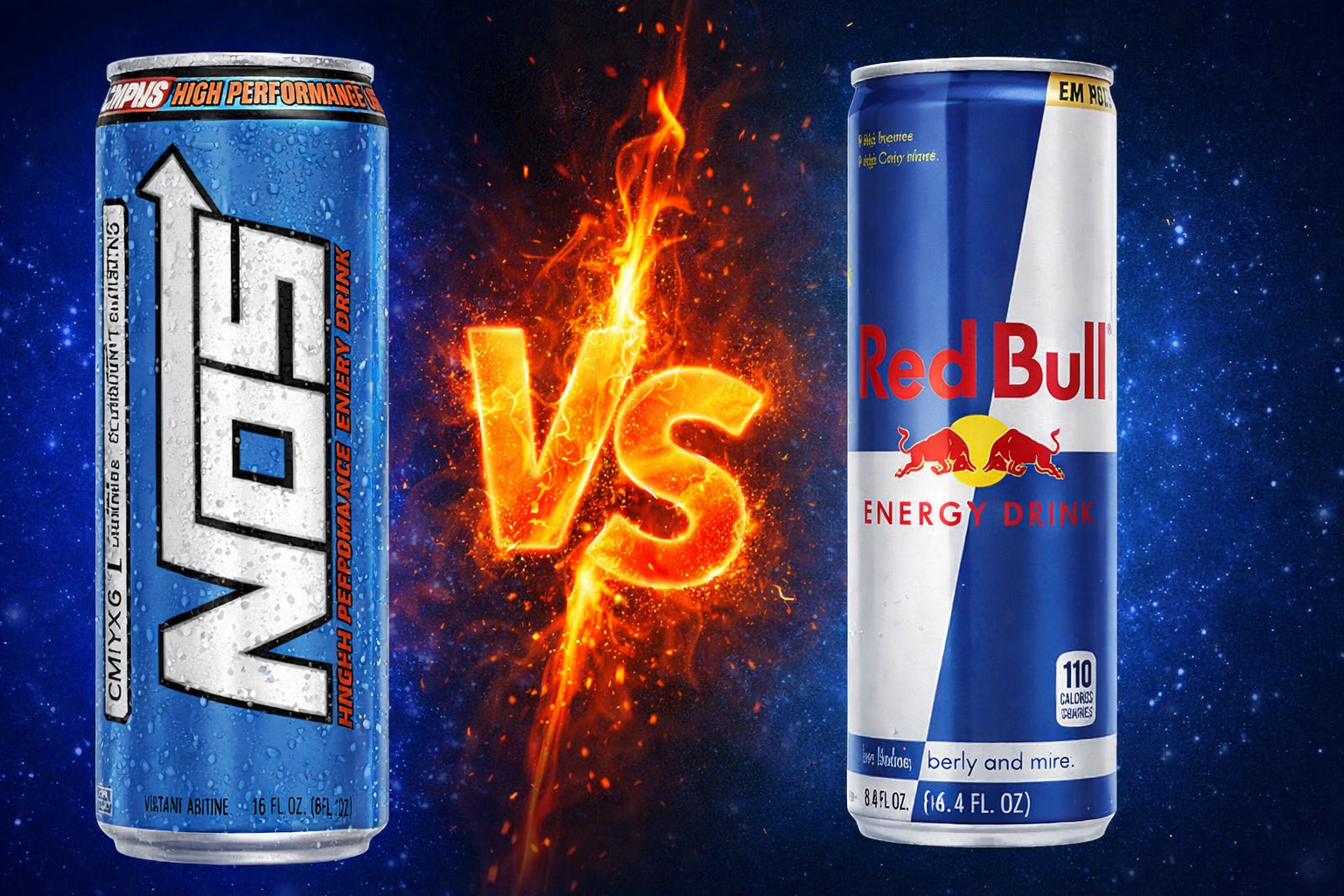
I’ve lost count of how many times I’ve reached for an energy drink when I was tired, bored, or just trying to push through a long day. Over the years, two names keep coming up in my fridge and at gas stations: NOS and Red Bull. I’ve had both more times than I probably should admit, in classrooms, on road trips, and during late-night work sessions. They promise the same thing—energy—but they feel very different once you actually drink them. So instead of talking labels and marketing hype, I want to break this down based on my own experience with NOS vs Red Bull and how each one really hits when you need a boost.
What Is NOS Energy Drink?
NOS is one of those energy drinks I noticed everywhere before I ever actually tried it. It first launched back in 2005, and these days it’s produced by Monster Beverage. From the start, NOS has leaned hard into the whole high-performance, intense-energy image, and honestly, that comes through once you drink it.
Most of the time, I see NOS sold in 16-oz cans, which already tells you it’s aiming for a stronger hit. It uses something called the CMPLX6 energy blend, which is basically a mix of caffeine, taurine, guarana, inositol, and B-vitamins. In real-world terms, it feels like it’s designed for focus and power, not just a light pick-me-up.
Flavor-wise, NOS doesn’t play it safe. I’ve tried options like Original, GT Grape, Sonic Sour, and Nitro Mango, and they’re all bold in their own way. There are also Zero Sugar versions, which I’ve reached for when I want the energy without the sugar crash later. Overall, NOS feels like it’s built for people who want their energy drink to hit hard and fast.
What Is Red Bull?
Red Bull is probably the most recognizable energy drink I can think of. No matter where I’ve traveled, I’ve seen it sitting in coolers and vending machines, always in that small, slim can. It’s made by Red Bull GmbH and is designed more around alertness and short-term focus than raw intensity.
The classic Red Bull can is 8.4 fl oz (250 ml), which feels almost modest compared to bigger energy drinks. Inside, you’re getting caffeine, taurine, glucuronolactone, and B-vitamins. For me, that smaller size makes it feel more controlled, like something I can drink without committing to a huge caffeine hit all at once.
Red Bull is also everywhere when it comes to flavor options. Along with the Original, there’s Sugar-Free and Zero, plus a long list of Edition flavors like Tropical, Red, and Blue. I’ve always felt Red Bull is meant to be easy to drink and predictable, especially if you just want a steady boost without overdoing it.
Electrolyte Amounts (Exact Numbers per Can)
Before getting into numbers, I want to clear something up because this gets misunderstood a lot. Neither NOS nor Red Bull is an electrolyte drink. I’ve made that mistake before, especially during long days or workouts, and it’s worth calling out directly.
NOS (16 fl oz can)
- Sodium: ~410 mg
- Potassium, magnesium: Not significant
- Overall: Not balanced like a sports or hydration drink
NOS definitely has more sodium than I expected the first time I checked the label. Still, it’s not paired with other key electrolytes in a meaningful way, so it doesn’t really help with proper hydration.
Red Bull (8.4 fl oz can)
- Sodium: ~105 mg
- Other electrolytes: Negligible
Red Bull has even less sodium, and just like NOS, it’s missing the electrolyte mix you’d want for endurance or heavy sweating.
Verdict
Both drinks contain some sodium, but that’s where the electrolyte story ends. From my experience and looking at the labels, neither NOS nor Red Bull provides proper electrolyte balance for hydration, workouts, or endurance training. If hydration is the goal, I’ve learned it’s better to treat these as energy drinks only and reach for a real electrolyte or sports drink instead.
Caffeine Content
This is where the difference between NOS and Red Bull really hits me the most.
| Drink | Caffeine |
|---|---|
| NOS (16 oz) | ~160 mg |
| Red Bull (8.4 oz) | 80 mg |
Sugar Content
Sugar is one of the main reasons I’m careful with how often I drink energy drinks, and NOS Original is a big example of why. One 16 oz can has around 51 grams of sugar, which is extremely high and actually pushes past the daily recommended limit for added sugar for most adults. You can taste it too. NOS hits sweet right away, and while that can feel energizing at first, it’s also the kind of sweetness that can lead to a rough crash later.
Red Bull Original isn’t exactly low-sugar, but it’s noticeably lighter. An 8.4 oz can contains about 27 grams of sugar, which is still a lot, just roughly half of what NOS delivers. For me, Red Bull feels less overwhelming in that department, especially if I’m trying not to overload on sugar in one sitting.
That said, both brands clearly know this is a concern. NOS and Red Bull each offer Zero or Sugar-Free versions, which I’ve leaned on more over time when I want the caffeine without the sugar spike.
Carbohydrate Content
When you look at total carbs, the pattern stays the same. NOS Original has around 54 grams of carbohydrates, while Red Bull Original has about 28 grams. Almost all of those carbs come straight from added sugar.
From my experience, this isn’t the kind of carbohydrate that helps with real performance or endurance. There’s no maltodextrin or balanced carb blend here, just sugar meant to deliver quick energy. That’s fine for a short boost, but it’s not something I’d rely on for workouts or long physical sessions.
Ingredients Comparison
When I actually look past the branding and read the ingredient labels, NOS and Red Bull start to feel more similar than different. Both lean on caffeine as the main driver, with supporting ingredients that sound impressive but don’t always change the experience much.
NOS key ingredients include caffeine sourced from both synthetic caffeine and guarana, along with taurine, guarana extract, inositol, and B-vitamins like B6 and B12. The regular version uses sugar, while the Zero Sugar versions rely on sweeteners like erythritol and sucralose. On paper, NOS feels stacked and aggressive, which fits its overall image.
Red Bull’s ingredient list is a bit cleaner and more straightforward. It contains caffeine, about 1 gram of taurine, glucuronolactone, and a broader mix of B-vitamins, including B3, B5, B6, and B12. Like NOS, it comes in both sugar-sweetened and non-caloric sweetened versions.
Reality check: from my experience, most of the noticeable performance and energy effects come from the caffeine itself, not the extra blends layered on top. The added ingredients may support the formula, but the way each drink feels mostly comes down to caffeine dose, serving size, and how much sugar is along for the ride.
Health & Wellness Benefits (and Limits)
This is the part where I had to be honest with myself about how and why I drink these. Both NOS and Red Bull can be useful, but neither is something I’d call “healthy” in the long-term sense.
With NOS, the biggest upside is the strong alertness boost. When I’m wiped out and need sharp focus fast, it’s effective. It does what it promises in the short term, especially for fatigue or long mental stretches. The downside is hard to ignore, though. The sugar content is extremely high in the original version, the sodium is higher than most people realize, and drinking it frequently just doesn’t feel sustainable. For me, NOS is more of an occasional, high-impact option, not a daily habit.
Red Bull feels more restrained by comparison. The caffeine level is closer to a strong cup of coffee, and the smaller can makes it easier to control how much I’m taking in. I also like that sugar-free options are easy to find almost everywhere. On the flip side, the original version still carries a lot of sugar for its size, and despite the unique ingredients like taurine and glucuronolactone, there’s limited evidence that they add much beyond what caffeine already does.
Price Comparison
Price is one of the reasons I’ve gone back and forth between these two over the years.
NOS usually runs about $2 to $3 for a 16-oz can in the U.S., depending on where I buy it. For the amount of caffeine you’re getting, it’s a solid value. If I’m looking strictly at cost per milligram of caffeine, NOS almost always comes out ahead, especially at gas stations and convenience stores.
Red Bull, on the other hand, almost always costs more per ounce. It’s clearly positioned as a premium brand, and you feel that at checkout. That said, buying multipacks does help bring the per-can price down, and that’s usually how I justify it when I know I’ll be drinking it more than once in a week.
In short, NOS wins on raw value, while Red Bull charges more for consistency, branding, and that smaller, more controlled serving.
Flavor & Taste
Taste is where my opinion on NOS and Red Bull really splits, because they’re going for completely different experiences.
With NOS, the first thing I notice is how sweet and bold it is. It leans heavily into a candy-like profile. The Original flavor tastes like a citrus-orange soda with a slightly chemical edge that you either get used to or don’t. GT Grape and Nitro Mango tend to be fan favorites for a reason. They’re loud, sweet, and easier to enjoy. Sonic Sour, though, is hit or miss. I’ve had friends love it, and others take one sip and hand it back.
Red Bull is a different animal. It has that sharp carbonation and a sweet, almost medicinal flavor that’s hard to compare to anything else. It doesn’t really taste like soda, which I think is why it stands out. Some people hate it at first. Others, myself included, end up craving it. The Edition flavors like Tropical and Yellow are smoother and more approachable, especially if the original taste feels too intense.
Customer Experience
From what I’ve seen and experienced, NOS and Red Bull attract very different kinds of fans.
NOS is widely available across the U.S., especially in gas stations, convenience stores, and big-box retailers. I’ve found it’s usually a better deal when you buy multipacks, which makes it popular with regular energy-drink users. People who love strong, sweet energy drinks tend to swear by it, while more health-focused buyers often criticize it for the sugar, sodium, and overall intensity.
Red Bull feels more polished on the customer experience side. It’s available almost everywhere in the world, and no matter where I buy it, the packaging and quality are consistent. That reliability builds trust and strong brand loyalty. At the same time, price complaints come up constantly. Even fans admit they’re paying a premium, especially when buying single cans.
In short, NOS appeals to people chasing value and intensity, while Red Bull wins over those who care about consistency, availability, and brand familiarity.
Which One Should You Choose?
After drinking both more times than I can count, this is how I break it down for myself.
I reach for NOS when I want maximum caffeine impact and I know I need a strong, fast energy hit. It’s the option I pick when I’m exhausted and performance matters more than subtlety. If sugar isn’t a major concern, or if I’m grabbing a Zero Sugar version, NOS makes sense for those high-demand moments.
I choose Red Bull when I want moderate, controlled energy that won’t feel overwhelming. The smaller serving size helps me pace myself, and I like knowing exactly what I’m getting every time. Brand consistency and wide availability also matter when I’m traveling or just want something familiar.
Final Thoughts
After going back and forth between NOS and Red Bull for years, I don’t see this as a clear winner situation. They’re built for different moments. NOS is loud, intense, and effective when I’m running on empty and need a serious push. Red Bull is more controlled and predictable, something I’m comfortable drinking without worrying that I overdid it.
What I’ve learned is that the label matters less than how your body responds. Caffeine is doing most of the work in both drinks, and everything else is secondary. Neither one replaces sleep, real food, or proper hydration, and neither should be an everyday crutch.
If you use them intentionally and sparingly, both can earn their place. The mistake is treating either one like a health drink instead of what they really are: tools for short-term energy, not long-term wellness.