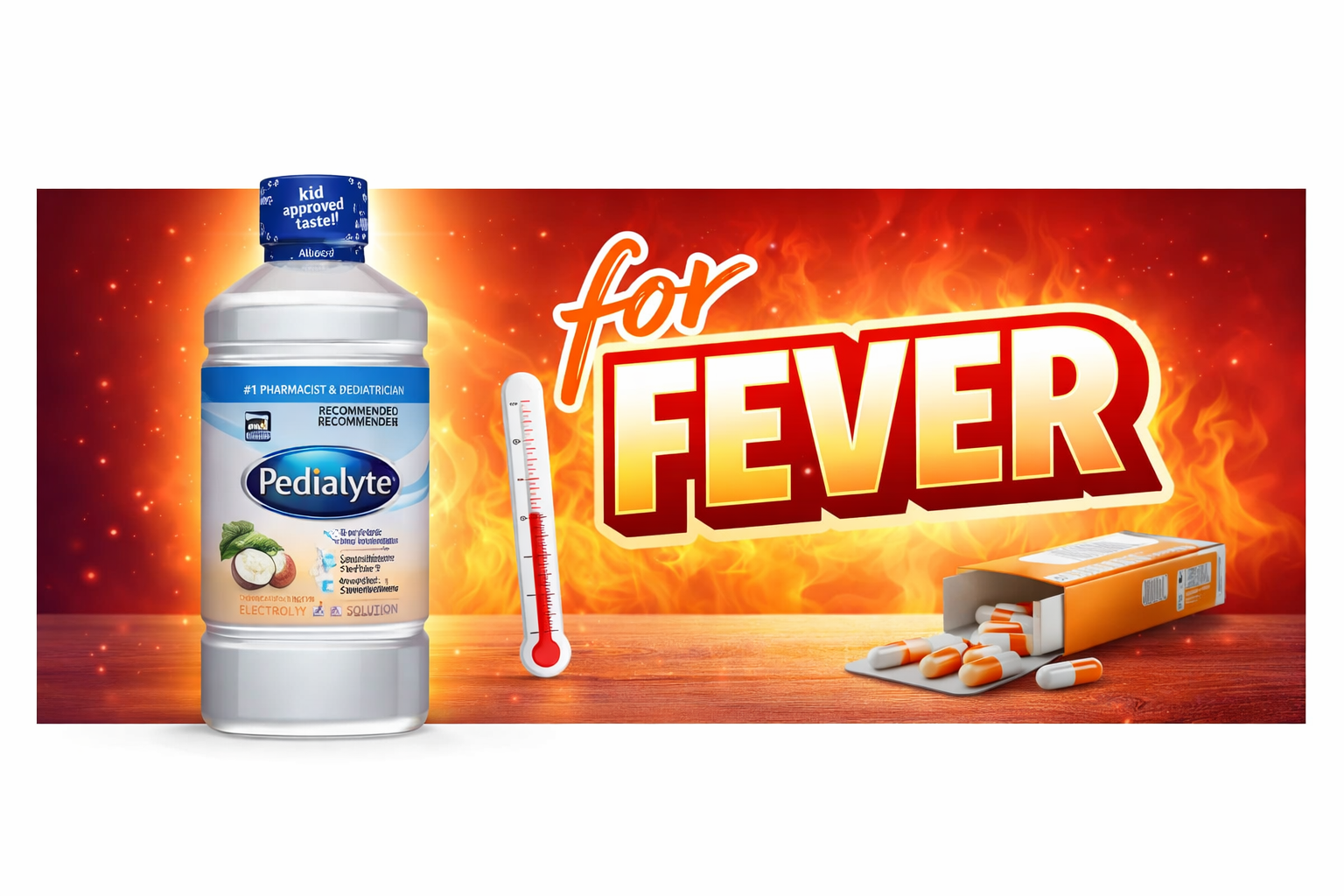
When I have a fever, I usually don’t feel like doing much of anything. I’m tired, sweaty, a little shaky, and drinking plain water suddenly feels like a chore.
The last time I had a fever, I noticed I wasn’t drinking enough. I felt dry, weak, and lightheaded, which made everything worse. That’s when I reached for Pedialyte.
I’d always thought of Pedialyte as something for kids, but I wanted something that would help me stay hydrated without upsetting my stomach. Here’s how it worked for me and when it helped the most.
Can Pedialyte Help Reduce a Fever?

When I had a fever, staying hydrated was harder than I expected. I was sweating more, didn’t feel like eating, and plain water just wasn’t cutting it. I needed something my body could absorb easily.
That’s where Pedialyte helped.
One serving of Pedialyte (about 1 liter) contains roughly:
- 1,030 mg of sodium
- 780 mg of potassium
- Small amounts of zinc and chloride
Those numbers matter when you have a fever. Sodium helps your body hold onto fluids, and potassium supports muscle function and overall balance. When those drop too low, you can feel weak, dizzy, and overheated.
From my experience, once I started drinking Pedialyte, I felt less drained. I wasn’t sweating as much, my mouth wasn’t dry, and I didn’t feel as shaky when I stood up. That better hydration seemed to help my body regulate itself, and over time, my fever eased down along with rest and medication.
Pedialyte didn’t act like a fever reducer on its own, but by replacing fluids and electrolytes, it helped my body do what it was already trying to do: cool down and recover.
The Best Way to Reduce a Fever (What Actually Helped Me)
From my experience, there isn’t one single thing that instantly knocks a fever out. What worked best was doing a few simple things together and letting my body do its job.
1. Stay hydrated
This was the biggest one for me. When I didn’t drink enough, my fever felt worse. Using something like Pedialyte helped me replace fluids and electrolytes faster than plain water, especially when I was sweating a lot.
2. Rest as much as possible
I noticed my fever stayed higher when I tried to push through the day. Once I stayed in bed, relaxed, and actually rested, my body temperature slowly started to come down.
3. Use fever-reducing medicine if needed
When the fever felt uncomfortable, over-the-counter medicine helped bring it down. Hydration made those meds work better for me instead of feeling like they wore off too fast.
4. Don’t overdress or overheat
I kept the room cool and wore light clothes. Bundling up made me feel hotter and more miserable.
5. Eat lightly or not at all
I didn’t force food when I wasn’t hungry. I focused on fluids first, then ate simple foods once I felt better.
For me, hydration plus rest made the biggest difference. Pedialyte didn’t replace medicine, but it supported my body so the fever could come down more smoothly and naturally.
How I Used Pedialyte for a Fever
When I had a fever, I didn’t try to drink a lot at once. That usually makes me feel worse. Instead, I kept it simple.
I took small sips every 10 to 15 minutes, especially during the first few hours when I was sweating the most. Even when I didn’t feel thirsty, I still sipped a little, because I knew I was losing fluids.
I drank Pedialyte at room temperature, which was easier on my stomach than something cold. I also used it before and after taking fever medicine, since staying hydrated helped me feel more stable as the meds kicked in.
On days when the fever lasted longer, I spread one bottle out over several hours instead of finishing it quickly. That steady hydration worked better for me than chugging water and feeling bloated.
For me, the key was consistency. Small, regular sips helped my body stay hydrated and made the fever easier to handle while I rested and recovered.
Final Thoughts
Pedialyte didn’t instantly make my fever disappear, but it helped in a way that actually mattered. By keeping me hydrated, it made the fever easier to deal with and supported my body while it recovered.
When I’m sick, drinking enough fluids is always a challenge. Pedialyte made that part simpler. It was easy on my stomach, didn’t taste too strong, and helped me feel less weak and drained.
I see it as a support tool, not a cure. Along with rest and fever medicine, Pedialyte helped me get through the worst part of having a fever and feel more like myself again.