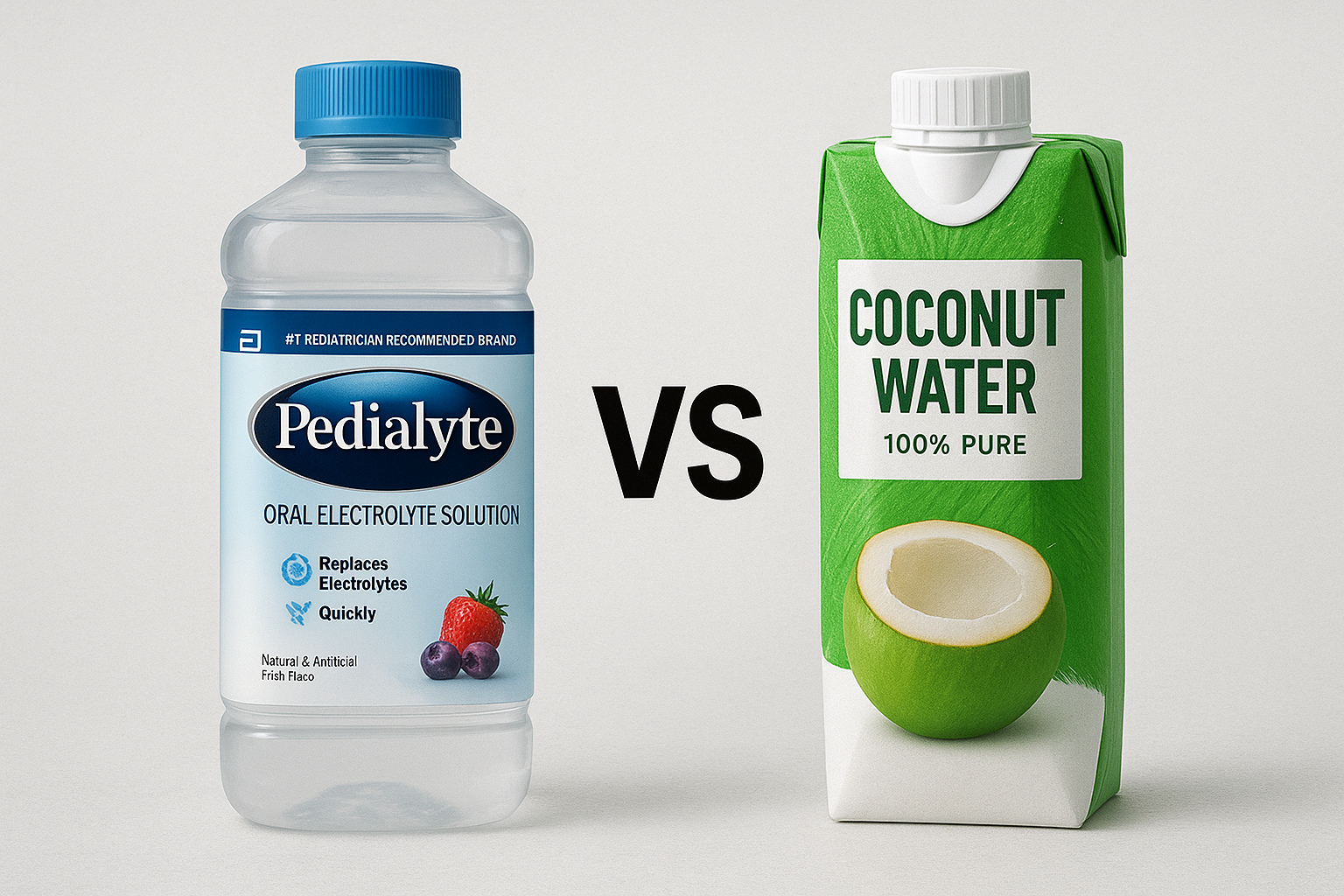
If you’ve ever felt wiped out from a tough workout, a long night, or just a rough day, you’ve probably reached for something to rehydrate fast. Two options tend to come up a lot: Pedialyte and coconut water. They both promise to bring you back to life, but they work in different ways, and the choice can depend on what your body actually needs. Before we compare them point by point, let’s break down what makes each one useful, when they help most, and how to pick the better fit for your situation.
What Is Pedialyte?
Pedialyte is basically the drink you grab when plain water just is not cutting it. It was originally made for kids who were losing fluids from being sick, but adults quickly caught on because it works. If you have ever woken up feeling drained after a rough stomach bug, a long hike in the heat, or even a night out that went a little too far, Pedialyte is the kind of thing that helps you bounce back.
Its strength comes from the electrolyte balance. It has more sodium and potassium than most sports drinks and far less sugar, which means your body can absorb it fast instead of getting weighed down by sweetness. It is not a drink you casually sip every day. It is more of a practical fix for those moments when your body needs real, effective rehydration.
What Is Coconut Water?
Coconut water is the naturally sweet liquid you find inside young green coconuts. If you have ever cracked one open on a hot day or grabbed a chilled bottle after a workout, you know it feels light, refreshing, and easy to drink. It is not heavy or salty. It is more like a clean, simple boost when you want something that hydrates without feeling like a sports drink.
It is naturally packed with potassium, along with a little sodium and magnesium. That is why so many people reach for it after exercising or whenever they feel a bit drained. It will not hit as hard as Pedialyte when you are seriously dehydrated, but it does give you gentle, steady hydration. It tastes better too, especially if you like a hint of natural sweetness without added sugar.
Key Differences:
Hydration Effectiveness
When it comes to pure hydration power, Pedialyte usually wins. It is built for situations when your body is running low on electrolytes and needs a quick refill. The higher sodium content helps your system pull in water fast, which is why you feel the difference pretty quickly after drinking it. If you have ever been wiped out from a stomach bug or a long sweaty day, you know how fast it can steady you.
Coconut water works, just in a different way. It gives you a gentle boost instead of that quick turnaround. It is rich in potassium, and the natural sweetness makes it easier to drink, but it does not have enough sodium to replace heavy losses. If you are dealing with mild dehydration after a workout or you just feel a bit worn down, coconut water can be enough. It tastes better and feels lighter, but it is not the drink you rely on when you are seriously depleted.
Electrolytes
The biggest difference between the two comes down to their electrolyte mix. Pedialyte is packed with sodium and has a solid amount of potassium. That combo helps your body pull water in fast and actually hold onto it. If you have ever felt shaky or lightheaded from losing too many fluids, you know how important that balance is. Pedialyte is built to fix that.
Coconut water leans heavily on potassium. It has a little sodium, but not nearly enough to replace what you lose during heavy sweating or illness. This is why coconut water tastes smoother and a bit sweeter, but also why it does not hit as hard when you are really dehydrated.
Sugar
When you compare the two, the sugar difference is pretty clear. Pedialyte stays on the low side with about 6 grams of sugar in a 12 ounce serving. That small amount is intentional. It helps your body absorb electrolytes quickly without making the drink overly sweet, which is helpful when you are feeling drained or slightly nauseous.
Coconut water sits in a different zone. A typical 12 ounce serving usually has somewhere between 10 and 15 grams of natural sugar. Some brands can even creep higher. It is not added sugar, but it still gives you a sweeter sip and a bigger bump in sugar overall.
So the takeaway is simple. If you want strong hydration with minimal sugar, Pedialyte keeps things tight. If you want something that tastes naturally sweet and refreshing, coconut water gives you that, just with more sugar in the mix.
Calories
Calories are another place where the two drinks split. Pedialyte stays fairly low, usually landing around 35 calories in a 12 ounce serving. It is designed to hydrate without giving you much extra energy or sugar, so the calorie count stays small and simple.
Coconut water brings a bit more to the table. A typical 12 ounce serving sits in the range of 60 to 70 calories, depending on the brand. Most of those calories come from its natural sugars. It is still lighter than most sports drinks, but it is almost double what you get from Pedialyte.
If you are aiming for fast hydration with minimal calories, Pedialyte is the leaner choice. If you prefer a more refreshing, naturally sweet drink and do not mind a slightly higher calorie count, coconut water fits the moment.
Flavors
When it comes to flavor variety, the two drinks feel totally different. Pedialyte offers a wide range because it is designed for people who may not feel great and need options that go down easily. You will find classics like orange, grape, berry, lemon lime, and even unflavored for those moments when anything sweet feels like too much. The taste is usually mild and a bit salty, which makes sense since it is built around electrolytes.
Coconut water is more straightforward. Its main “flavor” is just coconut, with that light, clean sweetness you get from the inside of a young green coconut. Some brands branch out with versions like pineapple, mango, or watermelon, but the base taste is always that gentle coconut profile. If you like it, it is refreshing. If you do not, no amount of extra flavoring will fully hide it.
Price
When you look at cost, the difference shows up right away. Pedialyte is usually the pricier option. A standard 1 liter bottle often runs 3 to 6 dollars in the US, sometimes even a bit more depending on the store or the specific formula. You are paying for its medical grade electrolyte balance, which is why the price sits higher.
Coconut water is generally easier on the wallet. A typical 12 to 16 ounce bottle usually falls between 2 to 4 dollars, and buying it in larger cartons can bring the price down even further. Even the flavored or “premium” versions tend to stay cheaper than Pedialyte.
So if cost matters, coconut water is the budget friendly pick. If you want stronger, faster hydration and do not mind spending a little extra, Pedialyte justifies its higher price.
For Athletes
When it comes to athletes, the choice depends on the intensity of the workout and how much you are sweating. Pedialyte is the stronger option for heavy training days when you lose a lot of sodium. If you have ever finished a long run or a hard gym session and noticed salt on your skin, that is your body telling you it needs more than just water. Pedialyte’s higher sodium content helps you bounce back faster, especially after intense or high heat workouts.
Coconut water works well for lighter sessions. If you are doing yoga, a short run, or a moderate gym workout, the natural potassium in coconut water gives you a nice boost without feeling too heavy or salty. It is refreshing, easy to drink, and feels more like a natural pick me up than a recovery tool.
For High Performance Users
If you push your body hard on a regular basis, the difference between these two drinks becomes even more obvious. High performance users are not just dealing with a little sweat. You are burning through electrolytes fast, and your recovery window matters. In that case, Pedialyte usually fits better because it gives you a precise electrolyte balance that helps restore what you lose during long, intense sessions. The higher sodium content is the key. It helps your body hold onto water so you can recover quicker and stay sharp for the next round.
Coconut water still has a place, just in a different lane. It is great for steady hydration throughout the day or between lighter sessions. The natural potassium keeps your muscles feeling good, and the easy flavor makes it simple to drink regularly. But when you are pushing your limits, relying on coconut water alone can leave you short on sodium and a step slower than you want to be.
For Casual Hydration
For everyday sipping, coconut water usually takes the lead. It tastes better, feels lighter, and gives you a natural boost without feeling like you are drinking something meant for recovery. If you are hanging out at home, running errands, or just want something refreshing on a warm day, coconut water fits right into your routine. The natural sweetness and clean flavor make it easy to enjoy without thinking too much about it.
Pedialyte, on the other hand, is not really a casual drink. It works best when your body needs targeted hydration, not just a simple pick me up. The taste is mild and a bit salty, and the formula is focused on recovery, not flavor. You can drink it casually, but it feels more like a tool than a daily beverage.
Overall Winner
If you stack everything side by side, the “winner” really comes down to what you need in the moment. Pedialyte is the stronger choice when you are actually dehydrated. It hits fast, replaces electrolytes efficiently, and helps you recover when your body is running low. If you are coming off a tough workout, a long day in the heat, or a stomach bug, Pedialyte is hard to beat.
Coconut water takes the lead for everyday life. It tastes better, feels lighter, and gives you a natural boost without feeling like a medical drink. For casual hydration, light workouts, or just something refreshing to keep around, coconut water wins on comfort and convenience.