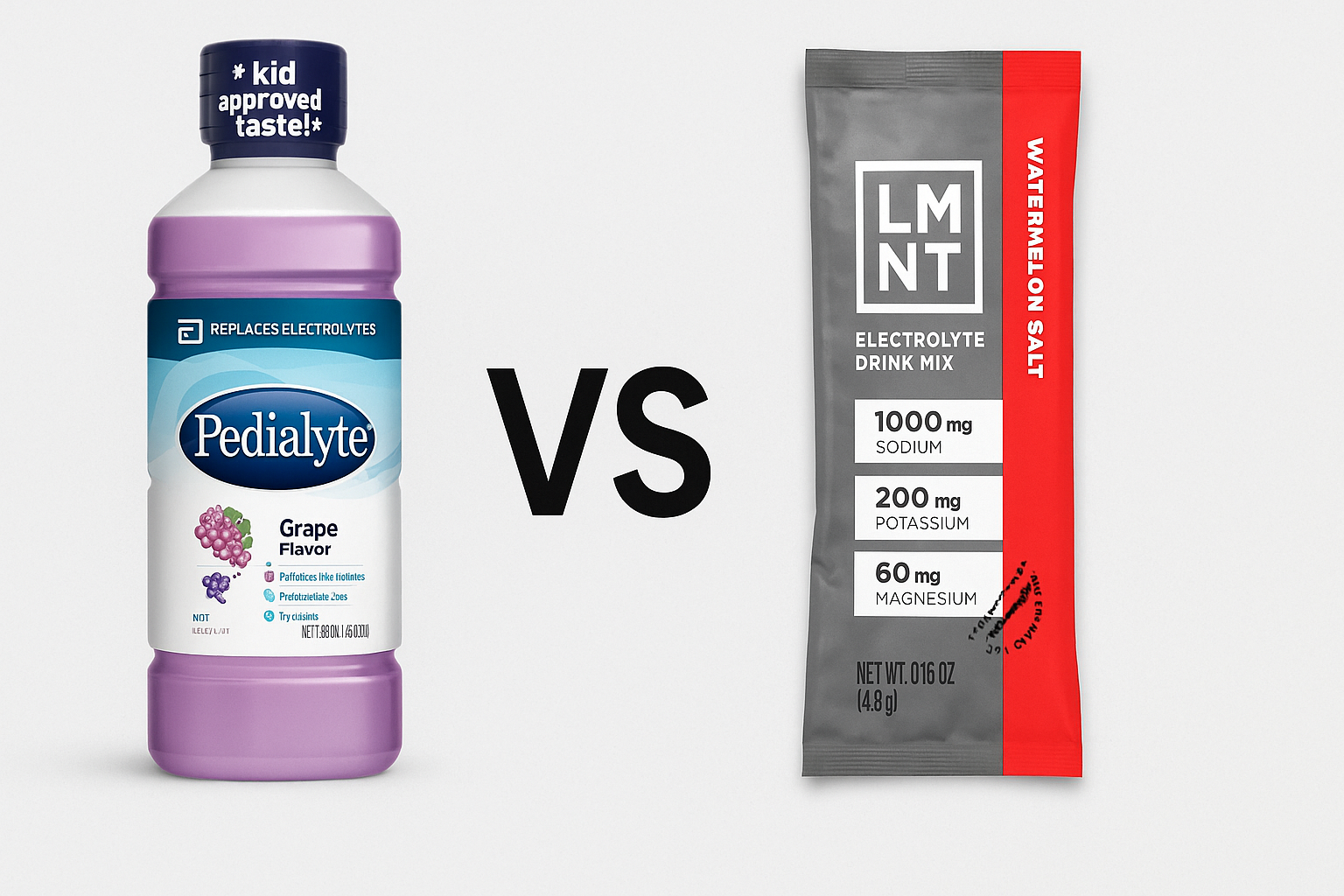
Electrolyte drinks aren’t just for athletes anymore. From hangover relief to illness recovery, heat exhaustion to fasting support, people across all lifestyles are turning to electrolyte supplementation for hydration and wellness. But with so many options available, how do you choose the right one?
Two products dominate the conversation: Pedialyte and LMNT. While both promise superior hydration, they take fundamentally different approaches. Pedialyte is a medical-grade oral rehydration solution formulated with glucose to maximize absorption during illness. LMNT is a high-sodium, zero-sugar electrolyte mix designed for active individuals and those following low-carb lifestyles.
The Pedialyte vs LMNT debate ultimately comes down to your specific hydration needs, dietary preferences, and health goals. In this comprehensive comparison, you’ll learn the science behind each formula, detailed nutritional breakdowns, best use cases, cost analysis, and which product aligns with your lifestyle. Let’s dive in.
Understanding Electrolytes and Hydration Science
Electrolytes—sodium, potassium, magnesium, and chloride—are minerals that carry electrical charges in your body. They’re essential for maintaining fluid balance, enabling nerve signals, and triggering muscle contractions. When you sweat, vomit, or experience diarrhea, you lose both fluids and electrolytes, which can lead to dehydration.
This is where oral rehydration therapy (ORT) comes in. The mechanism behind ORT relies on sodium-glucose cotransport: glucose enhances the intestines’ ability to absorb sodium, and sodium pulls water along with it. According to the CDC, this coupled transport occurs at the intestinal brush border via a protein called sodium-glucose co-transporter 1 (SGLT1), and it remains functional even during severe diarrhea.
The World Health Organization (WHO) established the gold standard for oral rehydration solutions: 75 mEq/L sodium and 75 mmol/L glucose with a total osmolarity of 245 mOsmol/L. This precise 1:1 ratio optimizes fluid absorption for treating dehydration caused by illness.
However, not all hydration needs are medical. Performance hydration, daily wellness, and dietary-specific requirements call for different formulations—which is where the Pedialyte vs LMNT comparison becomes relevant.
Pedialyte: Medical-Grade Oral Rehydration Solution
Originally developed as a pediatric rehydration solution, Pedialyte treats mild-to-moderate dehydration caused by vomiting, diarrhea, and illness. It’s formulated to align closely with WHO oral rehydration standards.
Pedialyte Classic Nutritional Profile (per 1 L):
- Sodium: 1,080 mg (47% Daily Value)
- Potassium: 780 mg (15% DV)
- Chloride: 1,240 mg (50% DV)
- Zinc: 7.8 mg (70% RDI) for immune support
- Total carbohydrates: 19 g
- Total sugars: 13 g (from dextrose)
The dextrose (glucose) in Pedialyte isn’t just filler—it’s a critical component that activates the sodium-glucose cotransport mechanism. This allows your intestines to absorb sodium and water more efficiently than drinking plain water or beverages without this specific ratio.
Pedialyte uses artificial sweeteners (sucralose and acesulfame potassium) to improve taste without adding excessive sugar. Some flavors also contain artificial colors like Yellow 6.
You can purchase Pedialyte in ready-to-drink 1-liter bottles (typically $6-7), powder packets that mix with water, and freezer pops for children.
LMNT: High-Sodium Performance Hydration
LMNT takes a different approach to hydration. Created for athletes, low-carb dieters, and anyone seeking higher sodium intake, LMNT delivers electrolytes without sugar or unnecessary additives.
LMNT Nutritional Profile (per stick pack):
- Sodium: 1,000 mg
- Potassium: 200 mg
- Magnesium: 60 mg
- Zero sugar
- Zero carbohydrates
The 1,000 mg sodium dose addresses a specific problem: modern diets are often low in sodium, and certain lifestyles demand more. People following ketogenic or paleo diets, practicing intermittent fasting, or engaging in intense exercise lose significant sodium and need replenishment without breaking dietary protocols.
Unlike Pedialyte, LMNT contains no glucose. This makes it unsuitable for clinical oral rehydration therapy, but ideal for daily electrolyte maintenance and performance hydration when medical-grade absorption isn’t necessary.
LMNT’s ingredient list is refreshingly short. The flavored varieties use stevia leaf extract for sweetness, while the Raw Unflavored option contains nothing but pure electrolyte salts—no sweeteners, no colors, no fillers.
Pricing runs $1.50 per stick pack for a 30-pack box ($45 total) or $1.13 per stick for the 120-pack Insider Bundle ($135 one-time, $117 with subscription).
Pedialyte vs LMNT: Key Differences
Electrolyte Ratios:
- Pedialyte provides higher potassium (780 mg vs 200 mg) and includes substantial chloride (1,240 mg)
- LMNT focuses on high sodium (1,000 mg) and adds magnesium (60 mg), which Pedialyte lacks
Sugar Content:
- Pedialyte: 13g sugar per liter (necessary for glucose-sodium cotransport)
- LMNT: 0g sugar
Intended Use:
- Pedialyte: Medical rehydration during illness, vomiting, diarrhea
- LMNT: Performance, wellness, daily hydration for active lifestyles
Dietary Compatibility:
- Pedialyte contains sugar and artificial ingredients that may not align with keto, paleo, or clean-eating preferences
- LMNT is keto-friendly, paleo-friendly, gluten-free, and vegan
Format:
- Pedialyte offers ready-to-drink bottles requiring no preparation
- LMNT comes as powder packets you mix with water (16-32 oz recommended)
Best Use Cases: When to Choose Pedialyte
Pedialyte excels in specific situations where medical-grade rehydration matters:
- Recovering from illness: Stomach flu, food poisoning, or any gastrointestinal condition causing rapid fluid loss through vomiting or diarrhea
- Rehydrating children: The proven glucose-sodium formula maximizes absorption, and kid-friendly flavors encourage compliance
- Convenience priority: Ready-to-drink bottles require zero preparation—just open and sip
- Budget considerations: At roughly $6-7 per liter, Pedialyte offers more economical rehydration than using multiple electrolyte packets
Pedialyte isn’t ideal for daily use if you’re following low-sugar or ketogenic diets, as the 13g sugar per liter can disrupt ketosis and add unwanted carbohydrates.
Best Use Cases: When to Choose LMNT
LMNT serves different hydration needs, particularly for active and health-conscious individuals:
- Athletic performance: Prolonged exercise, especially in heat, demands sodium replacement—LMNT delivers 1,000 mg per serving
- Low-carb diets: Perfect for ketogenic, paleo, carnivore, or other low-carb lifestyles that require electrolytes without carbs
- Intermittent fasting: Maintains electrolyte balance without breaking your fast (zero calories, zero sugar)
- Daily wellness: Supports energy, hydration, and electrolyte balance as part of a proactive health routine
- Clean ingredients: No artificial sweeteners, colors, or preservatives appeal to those prioritizing ingredient quality
- Portability: Lightweight packets fit easily in gym bags, travel kits, and hiking packs
Cost Analysis: Pedialyte vs LMNT
Pedialyte:
- 1-liter bottle: approximately $6.99 ($0.21/oz)
- Powder packets: roughly $1.37 per packet (makes 16 oz)
LMNT:
- Single stick pack: $1.50 (mix with 16-32 oz water)
- Insider Bundle: $1.13 per stick with bulk purchasing
For occasional illness recovery, Pedialyte offers better value. For daily users who prioritize premium ingredients and higher sodium content, LMNT’s cost reflects its formulation and quality. Pedialyte powder packets provide a middle-ground portable option at a lower price point than LMNT.
Taste and Flavor Options
Taste is subjective, but understanding flavor profiles helps set expectations.
Pedialyte offers fruit-flavored options like Mixed Fruit, Strawberry, Grape, and Berry Frost, designed for palatability—especially important for children. An unflavored version is available for those who prefer neutral taste. The combination of sugar and artificial sweeteners creates a sweeter profile.
LMNT provides unique flavors including Citrus Salt, Raspberry Salt, Watermelon Salt, and seasonal options, all using natural flavoring. The Raw Unflavored version contains zero additives. Due to its high sodium content, LMNT tastes noticeably saltier. Many users find this refreshing once adjusted, while others prefer diluting it in more water (32 oz instead of 16 oz).
Which Electrolyte Solution Should You Choose?
The Pedialyte vs LMNT decision hinges on understanding their core differences: Pedialyte is a medical-grade rehydration solution with glucose designed for maximum absorption during illness. LMNT is a high-sodium, zero-sugar electrolyte mix formulated for performance, wellness, and dietary compatibility.
Choose Pedialyte if you:
- Are recovering from illness with vomiting or diarrhea
- Need the proven glucose-sodium formula for clinical rehydration
- Want an affordable, ready-to-drink option
- Are rehydrating children
Choose LMNT if you:
- Are an athlete losing significant sodium through sweat
- Follow a ketogenic, paleo, or low-carb diet
- Want clean ingredients without artificial additives
- Need daily electrolyte support for energy and wellness
- Practice intermittent fasting
Many people keep both products on hand for different situations: Pedialyte for sick days and medical needs, LMNT for workouts and daily hydration.
Listen to your body, consult healthcare providers if you’re managing medical conditions like high blood pressure or kidney disease, and experiment to discover what works best for your lifestyle. Both Pedialyte and LMNT excel in their respective domains—the right choice depends entirely on your unique hydration needs.
Ready to optimize your hydration strategy? Try both products to find your personal solution, and explore additional resources on electrolyte science and optimal hydration for peak performance and wellness.