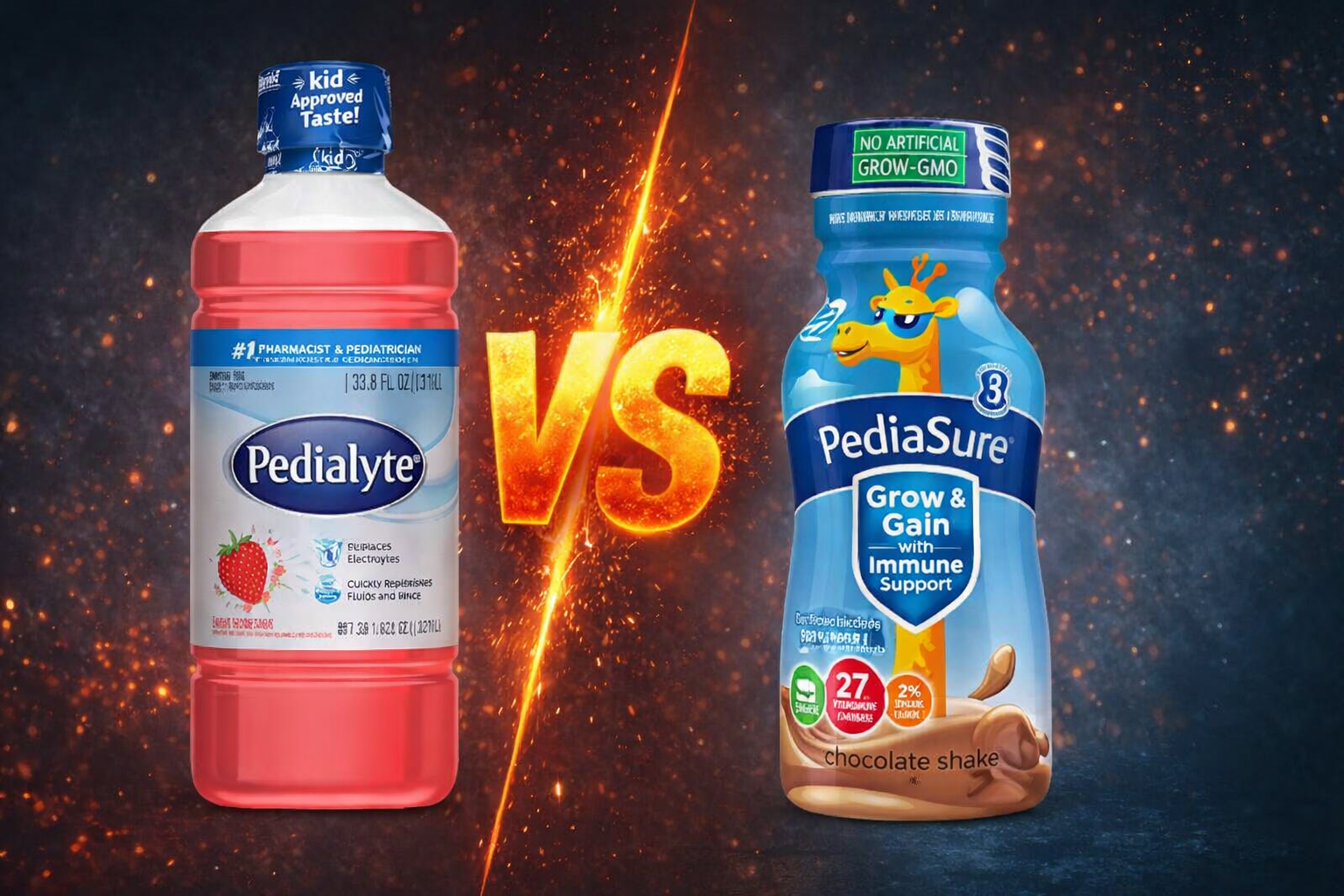
Walk into any pharmacy, and you’ll spot two colorful bottles sitting side by side: Pedialyte and PediaSure. Despite their similar names and pediatric origins, these products serve completely different purposes. One restores what you lose during illness or intense physical activity. The other provides comprehensive nutrition when dietary intake falls short.
Understanding the distinction matters. Reaching for the wrong bottle won’t just waste your money—it could delay proper treatment for dehydration or fail to address nutritional gaps when they matter most. Whether you’re recovering from stomach flu, training for a marathon, or helping a child who refuses vegetables, knowing which product to choose can make a real difference in your health outcomes.
What Pedialyte Does (And Why Adults Started Drinking It)
Pedialyte is an oral rehydration solution designed to replace fluids and electrolytes lost through vomiting, diarrhea, or excessive sweating. Originally formulated for children with gastroenteritis, it contains a precise balance of sodium, potassium, and chloride that helps your body absorb water more efficiently than plain water or sports drinks.
The science behind oral rehydration therapy dates back decades. In 2002, the World Health Organization updated its recommended formula to include 75 mEq/L of sodium and 75 mmol/L of glucose—a composition that optimizes fluid absorption in the small intestine. Pedialyte Classic contains 45 mEq/L of sodium, while Pedialyte AdvancedCare Plus bumps that up to 60 mEq/L, offering 33% more electrolytes than the original formula.
Here’s what you’ll find in a 1-liter bottle of Pedialyte Classic:
- Calories: 70
- Sodium: 1,080 mg
- Potassium: 780 mg
- Total sugars: 13g
- Zinc: 7.8 mg (for immune support)
The relatively low sugar content is intentional. Unlike sports drinks that can contain 20+ grams of sugar per serving, Pedialyte uses just enough glucose to facilitate sodium and water absorption without overwhelming your system during illness.
The Celebrity Effect: From Children’s Medicine to Adult Lifestyle Hack
Pedialyte’s adult fanbase exploded around 2015, fueled partly by celebrity endorsements. Singer Pharrell Williams told US magazine that he drinks it “almost every day.” Pop star Miley Cyrus posted photos of herself drinking Pedialyte on Instagram, sparking conversations about the product as a hangover remedy and hydration hack.
Abbott Laboratories, which manufactures Pedialyte, capitalized on this trend. In 2021, the company launched Pedialyte Sport, specifically targeting athletes with five key electrolytes for muscle support before, during, and after exercise. A survey conducted on behalf of Abbott found that 46% of adults who exercise intensely at least three days per week mistakenly believe energy drinks and soda can aid rehydration—beverages that actually contribute to dehydration due to high sugar content and insufficient electrolytes.
The adult market now represents a significant portion of Pedialyte’s sales. Beyond hangover relief (though no solid clinical evidence supports this use), adults turn to Pedialyte for travel-related dehydration, heat exhaustion, and recovery from intense workouts.
PediaSure: When Calories and Nutrients Matter More Than Hydration
PediaSure Grow & Gain serves an entirely different purpose. It’s a therapeutic nutrition shake designed as a complete, balanced meal replacement or supplement for children ages 1 to 13 who struggle with growth, have poor appetite, or are recovering from illness.
Each 8-ounce serving of PediaSure Grow & Gain delivers:
- Calories: 240
- Protein: 7g
- Fat: 9g
- Carbohydrates: 33g
- Total sugars: 9g
- Added sugars: 8g
- 25 essential vitamins and minerals
Unlike Pedialyte, PediaSure is calorie-dense by design. It provides substantial energy and nutrients to support weight gain and growth. The formula includes calcium for bone development, iron for cognitive function, and prebiotics to support digestive health in some varieties.
Abbott Nutrition states that PediaSure can be used as a sole source of nutrition or as a supplement. It’s intended for oral consumption or tube feeding under medical supervision. However, it’s not appropriate for infants under 1 year (unless directed by a physician) or children with galactosemia.
The “Picky Eater” Solution
Many parents turn to PediaSure when their children refuse balanced meals. A child who survives on chicken nuggets and crackers might miss essential nutrients for growth and development. PediaSure fills those gaps, providing a safety net while parents continue working on expanding their child’s dietary preferences.
That said, nutrition experts emphasize that PediaSure should complement—not replace—efforts to establish healthy eating patterns. It’s a tool, not a permanent solution.
Side-by-Side: How These Products Compare
| Feature | Pedialyte Classic | PediaSure Grow & Gain |
|---|---|---|
| Primary Purpose | Rehydration | Nutritional supplementation |
| Calories (per serving) | 70 (per liter) | 240 (per 8 fl oz) |
| Protein | 0g | 7g |
| Total Sugars | 13g | 9g |
| Sodium | 1,080 mg | 90 mg |
| Key Ingredients | Electrolytes, zinc | Protein, vitamins, minerals |
| Best For | Dehydration from illness, exercise | Growth support, meal replacement |
The contrast is stark. Pedialyte prioritizes electrolyte replacement with minimal calories. PediaSure delivers complete nutrition with sufficient calories to support growth or recovery.
When to Choose Each Product
Reach for Pedialyte when:
- You’re experiencing vomiting or diarrhea
- You’ve been sweating heavily during exercise or hot weather
- You’re traveling and worried about dehydration
- You need quick electrolyte replacement without extra calories
The CDC recommends oral rehydration therapy for children with mild to moderate dehydration, suggesting 50-100 mL of ORS per kilogram of body weight over 2-4 hours. Even children who are vomiting can often tolerate ORS when given in small amounts (5 mL every 5 minutes, gradually increasing).
Choose PediaSure when:
- A child falls below growth percentiles
- Dietary intake is severely limited
- Recovery from illness has depleted nutritional stores
- A medical condition affects appetite or nutrient absorption
Always consult a pediatrician before starting PediaSure, especially if using it as a primary nutrition source. Medical supervision ensures the product is appropriate for your child’s specific situation.
The Bottom Line: Different Tools for Different Jobs
Pedialyte and PediaSure aren’t competitors—they’re complementary products designed for distinct health challenges. Pedialyte addresses the immediate problem of dehydration by replacing lost fluids and electrolytes. PediaSure tackles the longer-term issue of inadequate nutrition by providing a dense source of calories, protein, and micronutrients.
Neither product should replace medical advice. If you or your child shows signs of severe dehydration (decreased urination, extreme thirst, dizziness, rapid heartbeat), seek immediate medical care. Similarly, persistent poor growth or severe feeding difficulties warrant professional evaluation beyond over-the-counter supplements.
The celebrity-driven popularity of Pedialyte among adults isn’t entirely misguided—the product does offer effective rehydration for various situations. Just remember that it’s not a magic cure-all, and its benefits are specific to fluid and electrolyte replacement.
Choose based on what your body actually needs at that moment: rapid rehydration or comprehensive nutritional support. When you understand the fundamental difference, the right choice becomes clear.