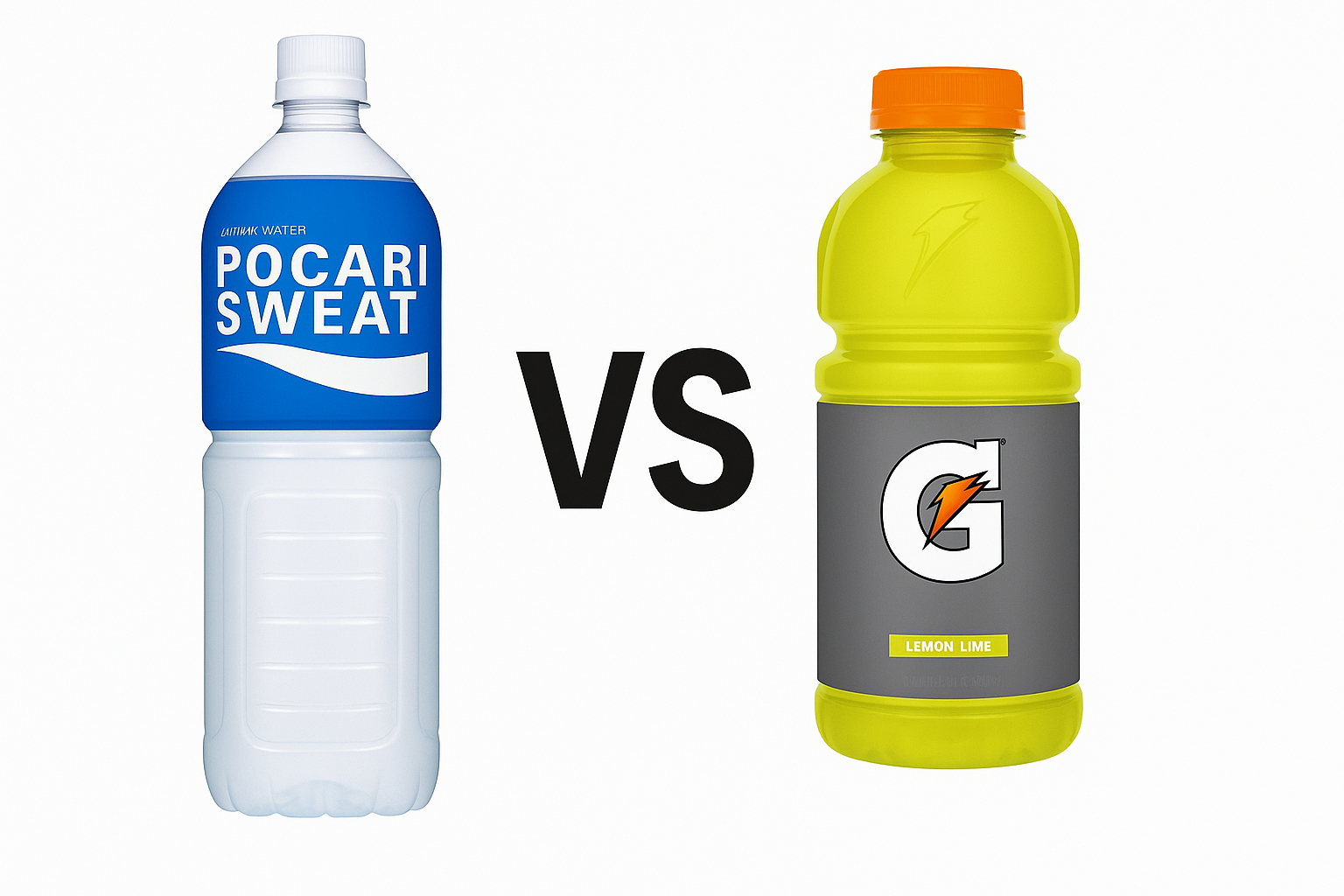
You’re midway through a grueling workout. Sweat drips, muscles burn, and you reach for a sports drink. But which one? Pocari Sweat or Gatorade?
Both promise to restore what sweat takes away, but these two hydration heavyweights come from different worlds. Pocari Sweat emerged in 1980s Japan as a “drinkable IV,” inspired by hospital rehydration solutions. Gatorade was born in a University of Florida lab in 1965, designed to keep football players performing in scorching heat.
While both aim to replenish fluids and electrolytes, they differ significantly in formulation, cultural positioning, and intended use. Understanding these differences can help you choose the right drink for your body and goals.
Let’s examine the science behind effective hydration, compare their nutritional profiles, explore how each drink conquered its market, and provide practical guidance on which bottle deserves a spot in your gym bag.
What Makes a Sports Drink Effective? The Science of Hydration
When you exercise, you lose more than just water. Sweat carries away electrolytes—primarily sodium and potassium—that your body needs to function properly. According to the American College of Sports Medicine, losing more than 2% of your body weight from dehydration can compromise athletic performance.
An effective sports drink should deliver three key components:
Fluid for rehydration: Plain water works, but drinks with the right mix of ingredients are absorbed faster.
Electrolytes to restore balance: Sodium and potassium help maintain proper muscle function and prevent cramping.
Carbohydrates for energy: Sugar provides fuel to working muscles during prolonged exercise.
The magic happens when these elements combine in the right proportions. Sports drinks with around 6% carbohydrate concentration help your body absorb fluids more efficiently than water alone, especially during intense or extended workouts.
But here’s the catch: “effective” varies based on exercise duration, intensity, and your individual sweat rate. Some athletes lose more sodium than others. Some workouts demand more energy. Understanding your needs helps you choose wisely.
Nutritional Breakdown: Pocari Sweat vs Gatorade
Let’s compare what’s actually in each bottle. Here’s how they stack up per 100ml:
Calories
- Pocari Sweat: 25 kcal
- Gatorade Thirst Quencher: ~24 kcal
Carbohydrates/Sugars
- Pocari Sweat: 6.2g (from sugar and high-fructose corn syrup)
- Gatorade: ~6g (primarily from sucrose, glucose, and fructose)
Sodium
- Pocari Sweat: ~49mg (0.12g salt equivalent)
- Gatorade: ~46mg
Potassium
- Pocari Sweat: 20mg
- Gatorade: ~14mg
Additional Electrolytes
- Pocari Sweat: Calcium (2mg), Magnesium (0.6mg)
- Gatorade: Phosphorus (included in full bottle formulation)
Both drinks deliver roughly similar carbohydrate concentrations around 6%, which aligns with sports nutrition guidance for optimal fluid absorption and energy delivery.
Pocari Sweat offers slightly higher potassium and includes calcium and magnesium, reflecting its “body fluid balance” positioning. These extra minerals mirror the composition of human body fluids more closely.
Gatorade’s formulation emphasizes sodium and carbohydrates optimized for American athletes’ typical sweat rates and performance needs.
Neither is dramatically “better.” Effectiveness depends on your individual needs, sweat composition, and exercise context.
The Story Behind Each Drink: Origins and Market Evolution
Pocari Sweat: Japan’s “Drinkable IV”
Over 40 years ago, an Otsuka Pharmaceutical researcher fell ill with diarrhea during a business trip to Mexico. At the hospital, doctors told him to stay hydrated but offered only regular carbonated drinks. The researcher thought: wouldn’t it be better to have an easy-to-drink beverage that could supply both water and nutrients?
Later, he witnessed a doctor drinking an IV solution pouch to rehydrate after surgery. The lightbulb moment struck—what if you could create a drinkable IV?
As a leading IV solutions manufacturer since 1946, Otsuka had the expertise to turn this vision into reality. Researchers spent three years developing a beverage that could replenish water and electrolytes lost through everyday perspiration, not just sports.
They discovered that sweat from daily activities differs from athletic sweat—it has lower salt concentration. After creating over 1,000 prototypes (most tasting terribly bitter), they found that adding citrus powder juice eliminated the bitterness.
Pocari Sweat launched in Japan in 1980, right as jogging became popular and society grew more health-conscious. But consumers didn’t immediately embrace it. The concept was unfamiliar. The blue packaging broke beverage industry norms. The name confused English speakers.
Otsuka didn’t give up. Employees visited sports facilities, saunas, and stores to explain the importance of rehydration and offer samples. By the end of the campaign, 30 million bottles had been distributed for free.
The persistence paid off. By summer 1982, Pocari Sweat became a major hit. Otsuka had successfully created an entirely new market category in Japan.
International expansion began in 1982, starting with Hong Kong and Taiwan. Today, Pocari Sweat is sold in over 20 countries across Asia and the Middle East, with particularly strong presence in Indonesia, where it’s used as accessible first aid during dengue fever outbreaks.
Unlike Western sports drinks, Pocari Sweat positioned itself as an everyday health beverage. Japanese consumers drink it after baths, first thing in the morning, during illness, and yes, after exercise.
Gatorade: From University Lab to Global Icon
In spring 1965, University of Florida assistant football coach Dwayne Douglas asked kidney disease specialist Dr. Robert Cade a simple question: Why do players lose so much weight during practices and games but urinate so little?
Cade quickly realized players were sweating so much they had no fluids left to urinate. But the underlying implications intrigued him more.
Working with research fellows, Cade studied 10 freshman football players and discovered their electrolytes were completely out of balance, blood sugar was low, and total blood volume had dropped. Each condition alone could incapacitate a player. Together, they caused serious problems.
The solution? Give players water with salt to replace what they lost in sweat, plus sugar to maintain blood sugar—but not so much that it upset their stomachs.
The first batch tasted awful. When Cade’s wife suggested adding lemon juice, Gatorade was born.
Legend says the first field test came in a scrimmage between the varsity B team and freshmen. The B team led 13-0 at halftime. In the second half, the freshmen—who’d been given the solution—roared back, scoring multiple touchdowns and dominating the fourth quarter.
Impressed, Coach Ray Graves asked Cade to prepare enough for the varsity’s game against heavily favored LSU. Cade’s team worked through the night, hand-squeezing lemons.
On October 2, 1965, Florida came from behind to defeat LSU 14-7 in 102-degree heat when the Tigers wilted in the fourth quarter.
By 1966, Gatorade became a sideline staple. The Gators rolled to an 8-2 record, earning a reputation as a second-half team. After a season-ending victory, a Miami Herald reporter interviewed Graves about Gatorade. The story went national.
Commercialization followed quickly. Stokely-Van Camp secured rights in 1967 and began selling hundreds of thousands of gallons annually. Legal disputes were settled in 1973, establishing royalties for both the University of Florida and the original inventors.
In 1983, Quaker Oats purchased Stokely-Van Camp and launched Gatorade into superstardom. Drawing on vast marketing resources and utilizing icons like Michael Jordan, Quaker secured over 80% of the sports beverage market. From about $100 million in sales in 1983, Gatorade grew to more than $2.2 billion by 2001.
PepsiCo purchased Quaker Oats in 2001, further cementing Gatorade’s dominance.
The company established the Gatorade Sports Science Institute, where scientists study physiological, biochemical, and sensory responses to nutrition, exercise, and the environment. Remarkably, the formula has changed very little since 1965—a testament to how well Cade’s original research held up.
Cultural Perspective: Pocari Sweat’s Reign in Japan
While Gatorade dominates globally, Pocari Sweat rules Japan. It’s not just a sports drink—it’s woven into daily life.
Japanese culture emphasizes preventive health and maintaining balance. Pocari Sweat fits perfectly. You’ll find it in the nation’s roughly 5 million vending machines, chilled and ready. People drink it after hot baths, during illness, in the morning, and after work.
The brand appeals to youth through vibrant advertising. In 2020, Otsuka even recruited virtual pop star Hatsune Miku as a brand ambassador.
This cultural resonance gives Pocari Sweat staying power. While Western sports drinks position themselves as performance enhancers for serious athletes, Pocari Sweat presents itself as a gentle health companion for everyone.
Gatorade is available in Japan, but Pocari Sweat’s 40-year head start, localized branding, and cultural fit have secured its leadership position. In 2019, there were 6,491 types of soft drinks competing in Japan’s beverage market. Pocari Sweat has outlasted countless competitors by staying true to its hydration message while continuously refreshing its image.
Which Should You Choose? Practical Guidance
Your choice depends on exercise type, duration, and personal preference:
For intense, prolonged workouts (over 1 hour) or high sweat rates: Both are effective. Choose based on taste and availability. Gatorade may feel more familiar to Western athletes. Pocari Sweat’s gentler sweetness appeals to those who find Gatorade too sugary.
For moderate exercise (under 1 hour) or casual hydration: Pocari Sweat’s lighter flavor and “everyday health drink” positioning may be preferable. Some find it less cloying than Gatorade.
For recovery from illness (fever, diarrhea): Pocari Sweat’s formulation and cultural use as an oral rehydration aid make it popular, though both can restore fluids and electrolytes effectively.
For athletes in hot, humid climates: Both work well. Your individual sweat rate and electrolyte loss should guide your choice. Try both to see which you tolerate and absorb better.
Remember, the American College of Sports Medicine recommends customized hydration plans. Measure your body weight before and after exercise to estimate your sweat rate. Some athletes lose significantly more sodium than others—you might need to supplement with salty snacks or choose the drink with higher sodium content.
Neither drink is a magic bullet. Proper pre-hydration (starting several hours before exercise) and drinking to thirst during activity matter just as much as which bottle you choose.
Choose What Works for Your Body
Pocari Sweat and Gatorade are both scientifically sound sports drinks with similar carbohydrate and electrolyte profiles. The real differences lie in cultural positioning and market evolution.
Pocari Sweat thrives as Japan’s everyday hydration companion, built on a “body fluid balance” philosophy that makes it suitable for workouts, recovery, and daily wellness. Gatorade dominates globally as the performance-driven sports drink, born from athletic research and marketed to serious competitors.
Experiment with both to discover what works best for your body, exercise routine, and taste preferences. Track your sweat rate by weighing yourself before and after workouts to personalize your hydration strategy.
At the end of the day, the best sports drink is the one that helps you perform at your best—and that you’ll actually drink.