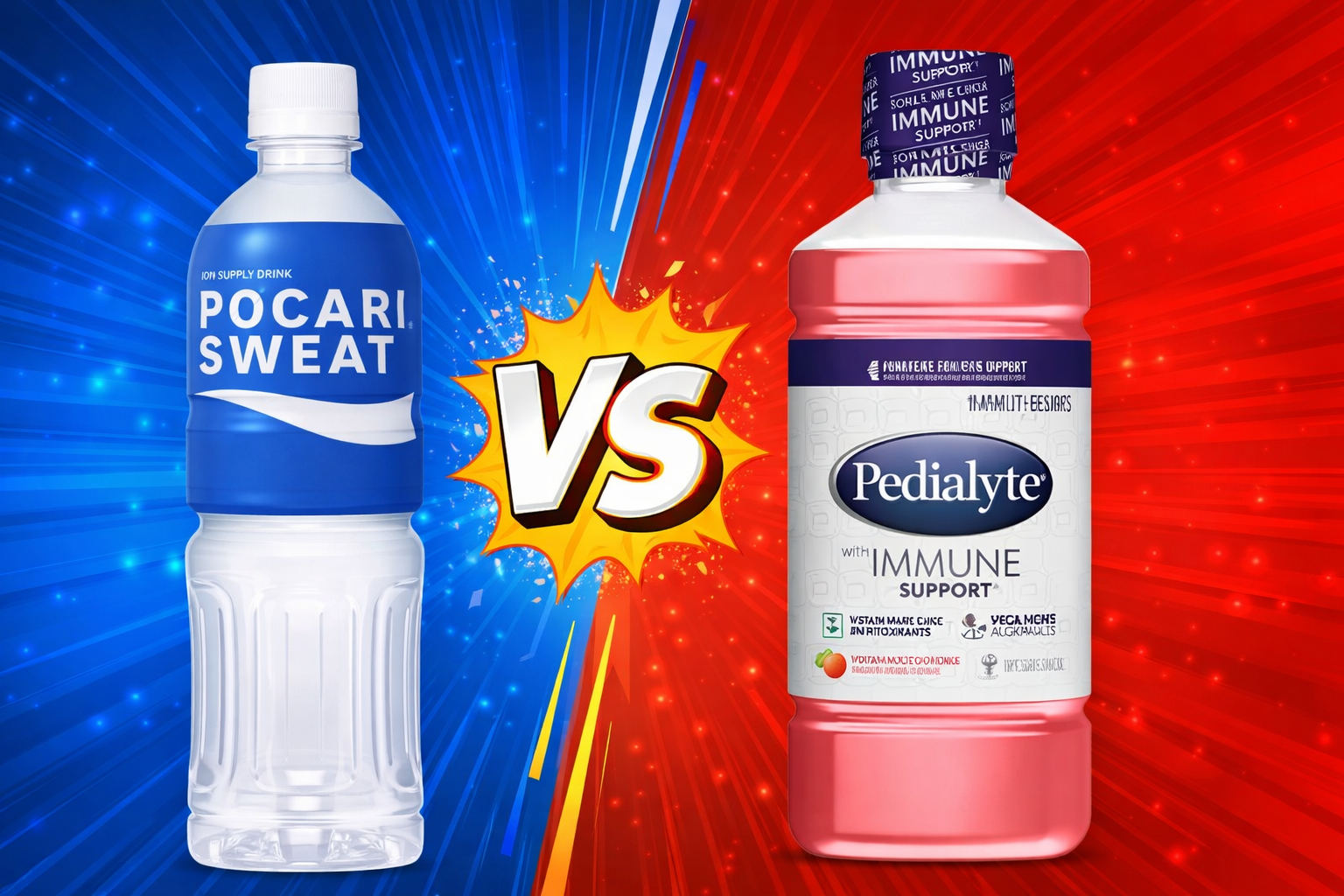
Ever wondered if the colorful drink in your hand really helps with dehydration? Or is it just a quick sugar fix? Whether you’re done with a tough workout or getting over a stomach bug, your body needs the right minerals. The wrong drink can leave you feeling tired and drained for hours.
When you sweat a lot or do a long endurance event, you need more than just water. Your body needs a mix of sodium and potassium to perform well. Knowing how your body absorbs these nutrients is key to quick recovery and better health.
The market for electrolyte drinks has grown a lot, offering many choices for different lifestyles. You might see a light blue Japanese label next to a clinical bottle for kids. Both promise to quench your thirst, but they use different formulas.
Looking into different hydration alternatives helps you find the best one for your needs. This comparison between Pocari Sweat and Pedialyte looks at which is better for athletes versus those getting over an illness. Let’s explore the science to see which one should be in your fridge.
Key Takeaways
- Pocari Sweat is made for active recovery and sports performance.
- Pedialyte is for medical-grade rehydration when you’re sick or have fluid loss.
- Sugar content is very different between these two popular drinks.
- Clinical drinks usually have more sodium than sports versions.
- Your choice should depend on whether you’re exercising or recovering from a virus.
- Taste and flavor variety are important for regular use.
The Battle for Hydration Supremacy
The fight for the best hydration drink is getting fierce. Pocari Sweat and Pedialyte are leading the pack. They’re both known for helping you stay hydrated, but they serve different purposes.
Pocari Sweat is a big name in Asia and is now popular worldwide. It has the right mix of electrolytes for your body. Pedialyte, made for kids, is now a hit with adults looking for a good rehydration drink.
It’s important to look at their electrolyte composition, rehydration effectiveness, and taste profiles. Here’s a quick comparison of their main features.
| Drink | Primary Use | Electrolyte Profile |
|---|---|---|
| Pocari Sweat | General hydration and sports | Isotonic with sodium, potassium, and calcium |
| Pedialyte | Rehydration for illness and medical conditions | Varied formulations with sodium, potassium, and chloride |
Looking closer at each drink shows that your choice depends on your needs. If you’re an athlete or recovering from illness, knowing what each drink offers is key.
What Is Pocari Sweat?
Pocari Sweat is a well-known Japanese isotonic drink. It helps replace the body’s lost fluids and electrolytes. Being isotonic, it’s made to match the body’s fluids, allowing for quick absorption and hydration.
Origins and Brand Background
Pocari Sweat was introduced in Japan in 1980 by Otsuka Pharmaceutical Co., Ltd. It was made to be an isotonic drink for easy absorption. This helps replace fluids and electrolytes lost through sweat. It has become popular worldwide, known for its hydration benefits.
The company says, “Pocari Sweat was created to keep the body’s fluid and electrolyte balance.”
“Our aim was to develop a beverage that is not just a drink, but a solution for replenishing what’s lost through sweat,”
Otsuka Pharmaceutical Co., Ltd.
Key Ingredients and Formulation
Pocari Sweat’s formula focuses on its isotonic nature. It has sodium, potassium, and glucose, mirroring the body’s fluids. This helps in quick hydration.
| Component | Amount per Serving |
|---|---|
| Sodium | 460mg |
| Potassium | 310mg |
| Calcium | 10mg |
| Magnesium | 12mg |
Target Market and Positioning
At first, Pocari Sweat was for athletes and those who do hard physical activities. They lose a lot of fluids and electrolytes. But now, it’s for everyone who needs hydration.
Pocari Sweat benefits include easy absorption and replenishing fluids and electrolytes. It’s a great hydration alternative and isotonic drink.

What Is Pedialyte?
Pedialyte is more than just a drink for kids. It’s a solution for anyone who needs to stay hydrated. It was made to help kids who get dehydrated from being sick or having diarrhea. Now, it’s a go-to for people of all ages.
Medical Heritage and Development
Pedialyte started as a way to treat dehydration in kids. It uses the idea of oral rehydration therapy. This means it helps replace lost fluids and electrolytes.
It’s known for its essential electrolytes that keep our bodies balanced. Its success has made it popular among adults too, who look for good hydration.
Core Components and Formula
Pedialyte’s formula is key to its success. It has a mix of electrolytes and fluids. Sodium, potassium, chloride, and citrate are some of the main ingredients. They help keep our body’s fluid balance right.
Here’s a look at Pedialyte’s classic formula:
| Component | Amount per Serving |
|---|---|
| Sodium | 370 mg |
| Potassium | 380 mg |
| Chloride | 300 mg |
| Citrate | 530 mg |
Evolution from Children’s Medicine to Adult Drink
At first, Pedialyte was just for kids. But soon, adults, especially athletes and outdoor workers, started using it too. Now, Pedialyte is seen as a versatile drink for many needs.
More adults use Pedialyte because they know how important electrolytes are. It’s now common in gym bags and recommended by doctors for all ages.
Electrolyte Composition Breakdown
Drinks like Pocari Sweat and Pedialyte help balance your body’s fluids. But they have different ingredients. Knowing these differences helps you pick the best drink for staying hydrated.
Pocari Sweat’s Electrolyte Profile
Pocari Sweat aims to match your body’s natural electrolyte levels. It has a special mix of electrolytes that help with hydration.
Sodium and Potassium Content
Pocari Sweat has 21.5 mg of sodium and 10.5 mg of potassium per 100ml. This makes it great for replacing these important electrolytes.
Sugar and Calorie Count
It has 6.2 grams of sugar per 100ml. This sugar helps give you energy, adding up to 25 kcal per 100ml.
Pedialyte’s Electrolyte Profile
Pedialyte was made for medical use. It has a special mix of electrolytes for rehydration.
Sodium and Potassium Content
Pedialyte has 45 mEq/L of sodium and 20 mEq/L of potassium. This is different from Pocari Sweat, showing it’s more for medical use.
Sugar and Calorie Count
Pedialyte has less sugar than Pocari Sweat in some versions. For example, the classic version has 9 grams of sugar per 8 oz serving. This means it has fewer calories.
Side-by-Side Nutritional Comparison
Comparing Pocari Sweat and Pedialyte shows their different ways to help with hydration. Here’s a table that highlights their nutritional differences:
| Nutrient | Pocari Sweat (per 100ml) | Pedialyte (per 8 oz serving) |
|---|---|---|
| Sodium | 21.5 mg | 370 mg |
| Potassium | 10.5 mg | 280 mg |
| Sugar | 6.2 g | 9 g |
| Calories | 25 kcal | 36 kcal (for some flavors) |
Hydration Effectiveness and Performance
It’s important to know how Pocari Sweat and Pedialyte hydrate the body. They help replace lost electrolytes and fluids. But they do it in different ways.
How Pocari Sweat Hydrates Your Body
Pocari Sweat matches the body’s natural electrolyte balance. This makes it a good choice for staying hydrated. Its isotonic properties help it get absorbed quickly into the blood.
Isotonic Properties and Absorption Rate
Pocari Sweat has the same electrolyte concentration as blood. This lets it get absorbed fast. The rapid absorption rate helps keep the body’s fluids in balance. This is key for good performance and recovery.
How Pedialyte Restores Fluid Balance
Pedialyte is based on Oral Rehydration Solutions (ORS). It helps restore the body’s fluid balance with essential electrolytes and fluids.
Oral Rehydration Solution Science
Pedialyte follows the World Health Organization’s ORS guidelines. It’s great for rehydrating the body, especially after illness or hard exercise. The right mix of sodium, potassium, and other electrolytes helps maximize fluid absorption and balance the body.
Scientific Evidence and Research Studies
Research supports the effectiveness of Pocari Sweat and Pedialyte. Studies show isotonic drinks like Pocari Sweat help athletes stay hydrated. Pedialyte’s ORS-based formula has been proven to rehydrate kids and adults.
The scientific evidence shows these drinks are good hydration alternatives. They’re useful for athletes or those recovering from illness. Both Pocari Sweat and Pedialyte offer pocari sweat benefits and effective hydration.
Taste, Texture, and Drinkability
The taste, texture, and how easy it is to drink an electrolyte drink matter a lot. This is why comparing Pocari Sweat and Pedialyte is key.
Pocari Sweat Flavor Profile
Pocari Sweat has a mild and refreshing taste. People say it’s clean and easy to drink. This makes it great for those who like a light flavor in their drinks.
Pedialyte Flavor Options and Varieties
Pedialyte, however, has a salty flavor because it has more sodium. It comes in many flavors. This gives users lots of choices based on their taste.
Real User Experiences and Preferences
People have different opinions. Some like Pocari Sweat’s clean taste. Others prefer Pedialyte’s stronger flavors.
| Aspect | Pocari Sweat | Pedialyte |
|---|---|---|
| Taste | Mild, refreshing | Salty, various flavors |
| Texture | Light, easy to drink | Thicker due to higher electrolyte content |
| Drinkability | High | Moderate to High |
| User Preference | Preferred by those who like mild taste | Preferred by those who need robust hydration |
The taste, texture, and how easy it is to drink Pocari Sweat and Pedialyte affect what people choose. Pocari Sweat is loved for its mild taste and easy drinking. Pedialyte is valued for its strong hydration and variety of flavors.
Best Use Cases: When to Choose Each Drink
Knowing when to use Pocari Sweat and Pedialyte can help you pick the right drink. Each has its own benefits for different needs.
Pocari Sweat: Ideal Scenarios
Pocari Sweat is great for those who do intense activities or need hydration in the heat. It’s made to quickly replace lost electrolytes and fluids.
Sports and Exercise
It’s perfect for athletes and gym-goers. Its balanced electrolyte composition keeps you hydrated during and after workouts. This boosts performance and helps with recovery.
Daily Hydration and Heat Exposure
For those who work outside or live in warm places, Pocari Sweat is essential. It replaces lost electrolytes and fluids, keeping you hydrated and energized.
Pedialyte: Best Situations
Pedialyte is made for medical dehydration and recovery. It’s formulated to meet specific hydration needs caused by illness or fluid loss.
Illness and Dehydration Recovery
It’s very effective for those getting better from dehydration caused by sickness. Its precise electrolyte balance quickly restores fluid balance.
Hangover Relief
Many use Pedialyte to help with hangovers. It replenishes lost electrolytes and fluids, easing dehydration symptoms from drinking too much.
Athletic Performance vs. Medical Recovery
Choosing between Pocari Sweat and Pedialyte depends on the situation. For athletic performance, Pocari Sweat is better because it supports long workouts. For medical recovery, Pedialyte is better at fixing dehydration from illness or medical issues.
Pocari Sweat vs Pedialyte: Price and Availability
When looking for hydration alternatives, the cost and where to buy Pocari Sweat and Pedialyte matter a lot. Both are electrolyte drinks that help replace lost fluids. But their prices and availability can affect your decision.
Cost Comparison Per Serving
The cost per serving is key when comparing Pocari Sweat and Pedialyte. Pocari Sweat usually costs more than Pedialyte, especially in small sizes. But prices can change based on the store and where you are.
| Drink | Serving Size | Average Cost Per Serving |
|---|---|---|
| Pocari Sweat | 500ml | $1.50 – $2.50 |
| Pedialyte | 1 Liter | $1.00 – $2.00 |
Where to Buy in the United States
You can find Pocari Sweat and Pedialyte in the U.S. through different stores and online.
Online Retailers
Online, you can buy Pocari Sweat and Pedialyte on Amazon, Walmart.com, and Asian grocery websites. These sites offer good prices and delivery right to your door.
Physical Store Availability
Pedialyte is easy to find in CVS, Walgreens, and stores like Walmart and Target. Pocari Sweat is mostly in Asian grocery stores or big supermarkets with international sections.
Value for Money Analysis
Looking at value, consider the cost per serving and how well each drink hydrates and replaces electrolytes. Pedialyte might be cheaper, but Pocari Sweat could be better for some people, even if it costs more.
In summary, choosing between Pocari Sweat and Pedialyte depends on your hydration needs, budget, and where you can buy them easily.
Conclusion
Choosing between Pocari Sweat and Pedialyte depends on your needs and likes. Both drinks are good at replacing lost electrolytes. But they serve different purposes.
Pocari Sweat is perfect for those who need a drink to stay hydrated during and after exercise. It’s loved by athletes and people who are always on the move.
Pedialyte is made for rehydrating the body, especially when you’re sick. It’s good for both kids and adults, thanks to its different formulas.
When deciding between Pocari Sweat and Pedialyte, think about what you need. Pocari Sweat is great for staying hydrated during sports or daily activities. Pedialyte is better for getting better when you’re sick.
It’s important to know the differences between these drinks. The right choice can help you stay hydrated and feel better, whether you’re working out or recovering from an illness.
FAQ
Is Pocari Sweat better than Pedialyte for hangovers?
While both are excellent electrolyte drinks, Pedialyte is generally considered more effective for hangovers because its higher sodium content helps your body retain water more aggressively after alcohol-induced dehydration.
Are there any Pocari Sweat benefits for athletes compared to sports drinks like Gatorade?
Yes, many athletes find Pocari Sweat benefits include a less syrupy taste and an isotonic formula that is easier on the stomach during high-intensity movement compared to traditional high-fructose sports drinks.
Can I drink Pedialyte for adults every day?
While it is safe, Pedialyte is designed as one of the more potent hydration alternatives for fluid loss. For daily maintenance, a drink with less sodium, like Pocari Sweat or plain water, is usually sufficient unless you are training intensely.
Which is the best rehydration drink for a stomach flu?
Pedialyte is the preferred choice for illness. As a specialized oral rehydration solution, it follows clinical guidelines to replace electrolytes lost through vomiting or fever more effectively than standard beverages.
Where can I find Pocari Sweat in the US?
Unlike Pedialyte, which is in every drugstore, Pocari Sweat is often found in Asian supermarkets like 99 Ranch Market or purchased in bulk via Amazon.
Does Pocari Sweat or Pedialyte have more sugar?
In a standard sports drink comparison, Pocari Sweat typically contains more sugar/carbohydrates than standard Pedialyte, as it is designed to provide quick energy alongside hydration.
What exactly are isotonic drinks?
Isotonic drinks like Pocari Sweat have a similar salt and sugar concentration to the human body, allowing for rapid fluid absorption without causing the bloating sometimes associated with hypertonic (high sugar) drinks.