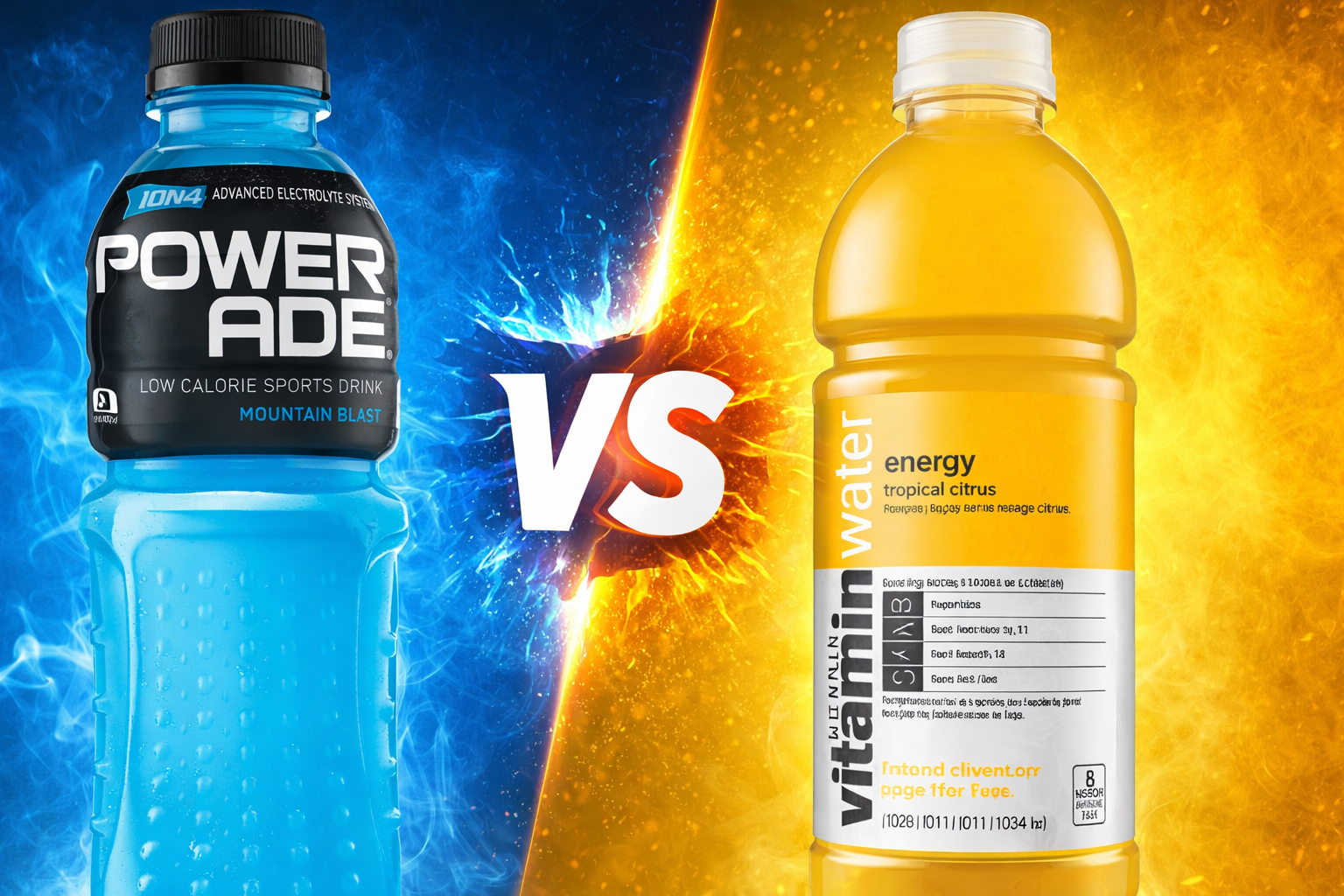
Hydration drinks aren’t one-size-fits-all. Some focus on athletic performance, while others lean toward everyday refreshment with added nutrients. Let’s take a closer look at Powerade vs Vitamin Water, comparing them section by section.
What Are Powerade and Vitamin Water?
Understanding Their Purpose and Who They’re Made For
When you’re coming off a tough workout, spending hours in the heat, or just feeling run-down — plain water doesn’t always cut it. Your body doesn’t just lose fluids. It loses electrolytes and energy support, too. That’s where enhanced hydration drinks step in.
Two popular options people often compare are Powerade and Vitamin Water. While both are meant to improve hydration, they’re built for very different situations and types of users.
Powerade
Powerade was developed specifically for athletes who lose fluids and electrolytes during intense physical activity. Backed by sports science and widely used in competitive athletics, it’s designed to keep performance steady when sweat levels are high.
Powerade focuses on replacing what the body burns through during workouts. It combines electrolytes with carbohydrates to support endurance, muscle function, and sustained energy, making it a staple on sidelines and in gyms.
Purpose: Hydration and electrolyte replacement during exercise
Key Users: Athletes, gym-goers, people doing high-intensity workouts
Core Strength: Electrolytes plus carbs to support endurance and performance
Vitamin Water
Vitaminwater was created as a lighter alternative to traditional sports drinks. Instead of targeting intense athletic recovery, it focuses on everyday hydration with added vitamins and a more lifestyle-oriented appeal.
While it does contain electrolytes, Vitamin Water leans more toward casual consumption. It’s designed for people who want flavored water with nutrients rather than a performance-driven hydration solution.
Purpose: Everyday hydration with added vitamins
Key Users: Casual exercisers, office workers, lifestyle-focused consumers
Core Strength: Added vitamins with mild electrolytes for light hydration
How Powerade and Vitamin Water Work Inside Your Body
Hydration isn’t just about drinking water — it’s about how your body uses that water.
When you sweat or go about a busy day, your body loses fluids and key electrolytes like sodium and potassium. These minerals help regulate muscle movement, nerve signals, and overall energy. If they’re not replaced properly, you may feel tired, unfocused, or weak.
Both Powerade and Vitamin Water help with hydration — but they work in very different ways.
How Powerade Works
The moment you drink Powerade, your body begins absorbing a mix of water, electrolytes, and carbohydrates designed for active use.
Powerade is formulated to support hydration during or after intense physical activity, when sweat loss is high.
Here’s the process step by step:
- Rapid Fluid Uptake: Sodium in Powerade helps your body retain water instead of flushing it out quickly.
- Electrolyte Replacement: Sodium and potassium replenish minerals lost through sweat, supporting muscle function and reducing cramp risk.
- Energy Support: Carbohydrates provide quick fuel to help maintain endurance during workouts or games.
- Performance Maintenance: The electrolyte-carb balance helps delay fatigue during prolonged physical exertion.
Within about 10–20 minutes, athletes often notice steadier energy and reduced thirst during activity.
What It Feels Like: Functional and effective. Your body feels supported, especially during workouts — not refreshed for relaxation, but fueled to keep moving.
How Vitamin Water Works
Vitaminwater focuses less on athletic performance and more on everyday hydration with added nutrients.
It hydrates primarily like flavored water, with a lighter electrolyte profile and a stronger emphasis on vitamins.
Here’s how it works:
- Basic Hydration: Water is absorbed normally through digestion, helping maintain fluid levels during daily activities.
- Light Electrolyte Support: Small amounts of electrolytes contribute to mild hydration, but not heavy sweat replacement.
- Vitamin Absorption: Added vitamins like B-complex and vitamin C support metabolism, energy production, and immune health.
- Lifestyle Energy: Some formulas include sugar or sweeteners that offer a gentle energy lift without targeting performance.
Rather than acting quickly, Vitamin Water supports hydration gradually throughout the day.
What It Feels Like: Clean and easy. You feel refreshed and lightly energized, without the intensity or heaviness of a sports drink.
All Product Variants and Their Specific Use Cases
Not all hydration needs are the same — sometimes you’re grinding through a tough workout, sometimes you’re just trying to stay alert through a long workday. Powerade and Vitamin Water approach hydration from very different angles, which shows clearly in their product lineups.
Let’s break down what each brand offers and when each option actually makes sense.
Powerade Product Lineup and Use Cases
Powerade is built around athletic performance. All variants are ready-to-drink sports beverages designed to replace fluids, electrolytes, and energy lost through sweat.
1. Powerade Mountain Berry Blast (Original Formula)
Use Case: Intense workouts and sports performance
This is the classic Powerade most people recognize. It delivers electrolytes and carbohydrates to help maintain endurance during prolonged physical activity.
✅ Best For: Team sports, long gym sessions, high-sweat workouts
2. Powerade Fruit Punch / Grape / Orange
Use Case: Performance hydration with flavor variety
These flavors offer the same electrolyte and carb profile as the original but cater to different taste preferences. They’re meant to encourage consistent fluid intake during activity.
✅ Best For: Athletes who want performance hydration without flavor fatigue
3. Powerade Zero
Use Case: Electrolyte replacement without sugar
Powerade Zero removes sugar while keeping sodium and potassium intact. It’s designed for hydration support without extra calories.
✅ Best For: Low-calorie diets, light workouts, casual fitness routines
4. Powerade Ultra
Use Case: Maximum electrolyte replenishment
This version contains higher electrolyte levels and B vitamins to support energy metabolism during extreme exertion.
✅ Best For: Long competitions, endurance training, intense heat conditions
Vitamin Water Product Lineup and Use Cases
Vitaminwater focuses on lifestyle hydration rather than athletic recovery. Its variants are built around vitamins, flavor, and light refreshment.
1. Vitamin Water XXX (Acai-Blueberry-Pomegranate)
Use Case: Antioxidant support with hydration
Contains vitamins A, C, and E aimed at general wellness rather than sweat recovery.
✅ Best For: Everyday hydration, desk jobs, light activity
2. Vitamin Water Power-C (Dragonfruit)
Use Case: Immune-focused hydration
High in vitamin C with mild electrolytes, designed to support immunity while keeping you hydrated.
✅ Best For: Busy days, travel, immune-conscious consumers
3. Vitamin Water Energy (Tropical Citrus)
Use Case: Light energy boost
Includes caffeine from green tea alongside B vitamins for gentle stimulation.
✅ Best For: Afternoon slumps, casual energy needs
⚠️ Note: Not ideal for workouts or dehydration recovery
4. Vitamin Water Zero
Use Case: Flavored hydration without sugar
Sweetened with zero-calorie sweeteners, this version focuses on taste and vitamins rather than performance.
✅ Best For: Sugar-conscious users, daily sipping
Final Words
Hydration isn’t one-size-fits-all — it depends on what your body is going through.
- Powerade is built for performance, sweat, and recovery.
- Vitamin Water is made for daily hydration, flavor, and lifestyle use.
If you’re training hard, competing, or sweating heavily, Powerade fits the moment.
If you’re at work, traveling, or just want something tastier than plain water, Vitamin Water does the job.
Frequently Asked Questions (FAQs)
1. Why do I still feel dehydrated even after drinking water?
Because hydration isn’t just about fluids. When you sweat or stay active, your body also loses electrolytes like sodium and potassium. Water alone replaces fluid, but electrolytes help your body retain that water inside your cells.
2. What are electrolytes, and why do they matter?
Electrolytes are minerals that regulate fluid balance, muscle contraction, nerve signals, and blood pressure. Without them, water passes through your body too quickly, leaving you feeling tired or dehydrated.
3. Which is better for dehydration — Powerade or Vitamin Water?
Powerade is better for dehydration caused by exercise, heavy sweating, or heat exposure.
Vitaminwater is better for light, everyday hydration but is not ideal for real dehydration.
4. Can I drink Powerade or Vitamin Water every day?
Yes, but with context. Vitamin Water is fine for daily sipping. Powerade is best used around workouts or intense activity, as regular daily use can add unnecessary sugar if you’re not exercising.
5. Is water alone enough to stay hydrated in the heat?
Not always. In hot conditions, you lose electrolytes through sweat. Without replacing them, water alone may not keep you properly hydrated.
6. What’s the difference between electrolyte drinks and vitamin drinks?
Electrolyte drinks like Powerade focus on replacing sodium and potassium lost through sweat.
Vitamin drinks like Vitamin Water emphasize added vitamins and flavor, with only mild electrolyte support.
7. How fast do Powerade and Vitamin Water work?
Powerade typically works within 10–20 minutes during or after exercise due to its electrolyte-carb balance.
Vitamin Water hydrates more gradually, similar to flavored water.
8. Can I mix these drinks with water bottles?
Powerade and Vitamin Water are both pre-mixed and ready to drink. No measuring or mixing required.
9. Do these drinks help with hangovers?
They can help with fluid replacement, but results vary.
🏆 Winner: Powerade, because it contains more electrolytes to replace what’s lost through dehydration.
10. Are these drinks safe for kids?
Small amounts are generally fine for active kids. However, watch sugar intake. For regular use or younger children, consult a pediatrician.
11. Do Powerade or Vitamin Water help with muscle cramps?
Yes, but Powerade is more effective. Muscle cramps are often linked to low sodium or potassium, which Powerade replaces more efficiently.
12. Can Powerade or Vitamin Water replace meals?
No. They provide fluids and minerals, not protein, fiber, or complete nutrition. Always pair them with proper meals.
13. What’s the best time to drink them?
- Before workouts: Light hydration
- During workouts: Powerade to replace sweat loss
- After workouts: Powerade for recovery
- Throughout the day: Vitamin Water for casual hydration
14. Can these drinks help with heat exhaustion?
They can help during early signs like fatigue or thirst. If symptoms worsen (confusion, vomiting, fainting), seek medical help immediately.
15. Which is more cost-effective — Powerade or Vitamin Water?
Vitamin Water is cheaper for daily use and casual hydration.
Powerade offers better value during workouts or intense activity.
🏆 Winner: Vitamin Water for lifestyle hydration, Powerade for performance and recovery.