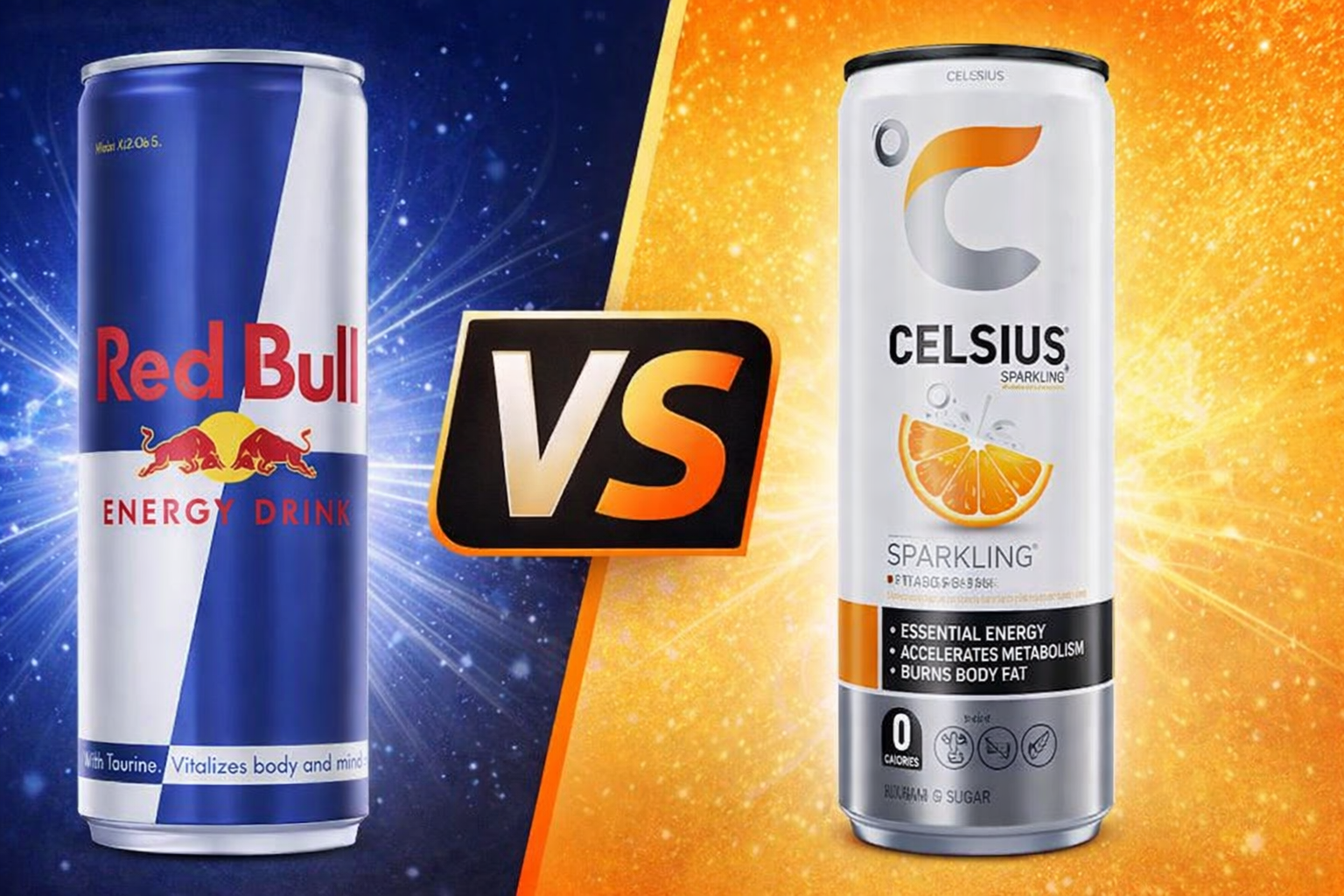
When it comes to celsius vs red bull, the choice isn’t as simple as grabbing the nearest can.
Both energy drinks dominate the market, but they take completely different approaches to boosting your energy. Celsius energy drinks pack 200 to 300 mg of caffeine per can, while Red Bull contains just 80 mg per 8.4 oz can[-3]. That’s a massive difference, and it raises an important question: is celsius bad for you, or is it simply more effective?
With Celsius now ranking as the third-largest energy drink company in the US, we decided to break down exactly how these two stack up. Let’s dive into what actually makes each drink work and which one deserves a spot in your routine.
Caffeine Content and Energy Delivery: The Core Difference
The caffeine gap between celsius energy drinks and Red Bull extends beyond simple milligram counts. A standard 12-ounce Celsius delivers 200 mg of caffeine, while Celsius Heat pushes that to 300 mg. Red Bull’s classic 8.4-ounce can contains just 80 mg, though their 12-ounce size increases to 114 mg. Per ounce, Celsius concentrates approximately 16.7 mg of caffeine compared to Red Bull’s 9.5 mg.
This concentration directly affects how fast you feel the boost. Caffeine enters your bloodstream within 10 to 20 minutes of consumption, with peak alertness hitting between 15 and 45 minutes after you drink. The effects typically last anywhere from 2 to 5 hours, though caffeine has a half-life of about 5 to 6 hours in most adults. Specifically, this means half the caffeine remains active in your system even after five hours pass.
The source matters too. Celsius uses natural caffeine from guarana seed extract, while Red Bull relies on synthetic caffeine. Natural caffeine absorbs more gradually, producing a smoother energy curve with less jitteriness. Synthetic caffeine hits the bloodstream quickly, creating a sharper spike followed by a steeper drop. Your body needs roughly 12 hours to completely clear caffeine from your system, which explains why afternoon consumption can disrupt sleep quality.
Ingredients Breakdown: What’s Actually Inside Each Can
Beyond their caffeine profiles, celsius vs red bull diverge sharply on sugar and supplemental ingredients. Red Bull contains 27 grams of sugar per 8.4 oz can, comparable to apple juice. Celsius energy drinks contain zero sugar, using sucralose as a sweetener at approximately 100 mg per can.
Both drinks include taurine, an amino acid naturally present in your brain, heart, and muscles. Red Bull delivers 1000 mg per serving, whereas Celsius includes taurine in its MetaPlus proprietary blend. Your body already contains 70 times more taurine than what’s in one can, making supplemental amounts relatively modest.
B-vitamins appear in both formulas. Red Bull provides niacin, pantothenic acid, B6, and B12, which support energy metabolism and reduce fatigue. Celsius matches these B-vitamins while adding vitamin C for immune support.
The distinction grows with Celsius-exclusive ingredients. Green tea extract supplies EGCG, a compound that boosts metabolism. Chromium helps normalize blood sugar levels and control hunger. Ginger root supports thermogenesis and digestion. Glucuronolactone appears in both drinks as a stimulant that improves memory and concentration.
Sucralose remains controversial. While the FDA considers it safe, studies link it to gut bacteria disruption and potential metabolic effects. European authorities set the acceptable daily intake at 15 mg per kg of body weight.
Real-World Performance: Taste, Price, and Who Should Choose Which
Flavor preference splits sharply in the celsius vs red bull debate. Celsius struggles with consistency, earning 82% negative flavor reviews citing weak carbonation and artificial notes. Red Bull offers over 20 distinct editions including Watermelon, Peach, and seasonal releases, while Celsius markets 24 flavors ranging from Mango Lemonade to Fantasy Vibe.
Price-wise, energy drinks typically range from $0.22 to $1.75 per serving. Single cans cost more than cases, with budget options under $2.00 and premium varieties approaching $4.00 per can. Both brands fall within this spectrum at major retailers.
Celsius suits fitness enthusiasts who need pre-workout stimulation. The brand clinically proves metabolism acceleration when combined with exercise, making it ideal for active lifestyles. Correspondingly, those focused on calorie control benefit from its sugar-free formula.
Red Bull works better for moderate energy needs. If you prefer lower caffeine intake or experience jitters from high-dose stimulants, Red Bull’s 80 mg provides a gentler boost.
Neither drink belongs in certain hands. Celsius explicitly warns against use by anyone under 18, pregnant, nursing, or caffeine-sensitive. In fact, the American Academy of Pediatrics states energy drinks have no place in adolescent diets. Those with heart conditions, hypertension, anxiety disorders, or sleep problems should avoid both options entirely.
Comparison Table
Celsius vs Red Bull: Comparison Table
| Attribute | Celsius | Red Bull |
|---|---|---|
| Caffeine Content (Standard) | 200 mg per 12 oz can | 80 mg per 8.4 oz can |
| Caffeine Content (Variations) | Celsius Heat: 300 mg | 12 oz size: 114 mg |
| Caffeine Concentration | 16.7 mg per ounce | 9.5 mg per ounce |
| Caffeine Source | Natural (from guarana seed extract) | Synthetic |
| Caffeine Absorption | Gradual absorption, smoother energy curve, less jitteriness | Quick absorption, sharper spike followed by steeper drop |
| Sugar Content | 0 grams (sugar-free) | 27 grams per 8.4 oz can |
| Sweetener | Sucralose (~100 mg per can) | Sugar |
| Taurine | Included in MetaPlus proprietary blend (amount not specified) | 1,000 mg per serving |
| B-Vitamins | Niacin, pantothenic acid, B6, B12 | Niacin, pantothenic acid, B6, B12 |
| Additional Vitamins | Vitamin C | Not mentioned |
| Exclusive Ingredients | Green tea extract (EGCG), chromium, ginger root | Glucuronolactone |
| Shared Ingredients | Glucuronolactone, taurine | Glucuronolactone, taurine |
| Number of Flavors | 24 flavors (e.g., Mango Lemonade, Fantasy Vibe) | Over 20 editions (e.g., Watermelon, Peach, seasonal releases) |
| Flavor Reception | 82% negative reviews citing weak carbonation and artificial notes | Not mentioned (variety emphasized) |
| Price Range | $0.22 to $1.75 per serving (typical energy drink range) | $0.22 to $1.75 per serving (typical energy drink range) |
| Best Suited For | Fitness enthusiasts, pre-workout stimulation, active lifestyles, calorie control | Moderate energy needs, those sensitive to high caffeine, preference for lower caffeine intake |
| Proven Benefits | Clinically proven metabolism acceleration when combined with exercise | Not mentioned |
| Market Position | 3rd largest energy drink company in the US | Not mentioned |
| Usage Warnings | Not for anyone under 18, pregnant, nursing, or caffeine-sensitive | Not for those with heart conditions, hypertension, anxiety disorders, or sleep problems |
| General Contraindications | Heart conditions, hypertension, anxiety disorders, sleep problems | Heart conditions, hypertension, anxiety disorders, sleep problems |
Conclusion
The celsius vs red bull decision comes down to your caffeine tolerance and lifestyle needs. Celsius delivers significantly more caffeine (200-300 mg) and works best for fitness enthusiasts who need intense pre-workout energy. Red Bull’s lower caffeine content (80 mg) suits casual users seeking moderate boosts without jitters.
All things considered, neither option wins universally. Pick Celsius for workout performance and metabolism support. Choose Red Bull for gentler energy and better flavor variety. Just remember the age restrictions and health warnings apply equally to both.