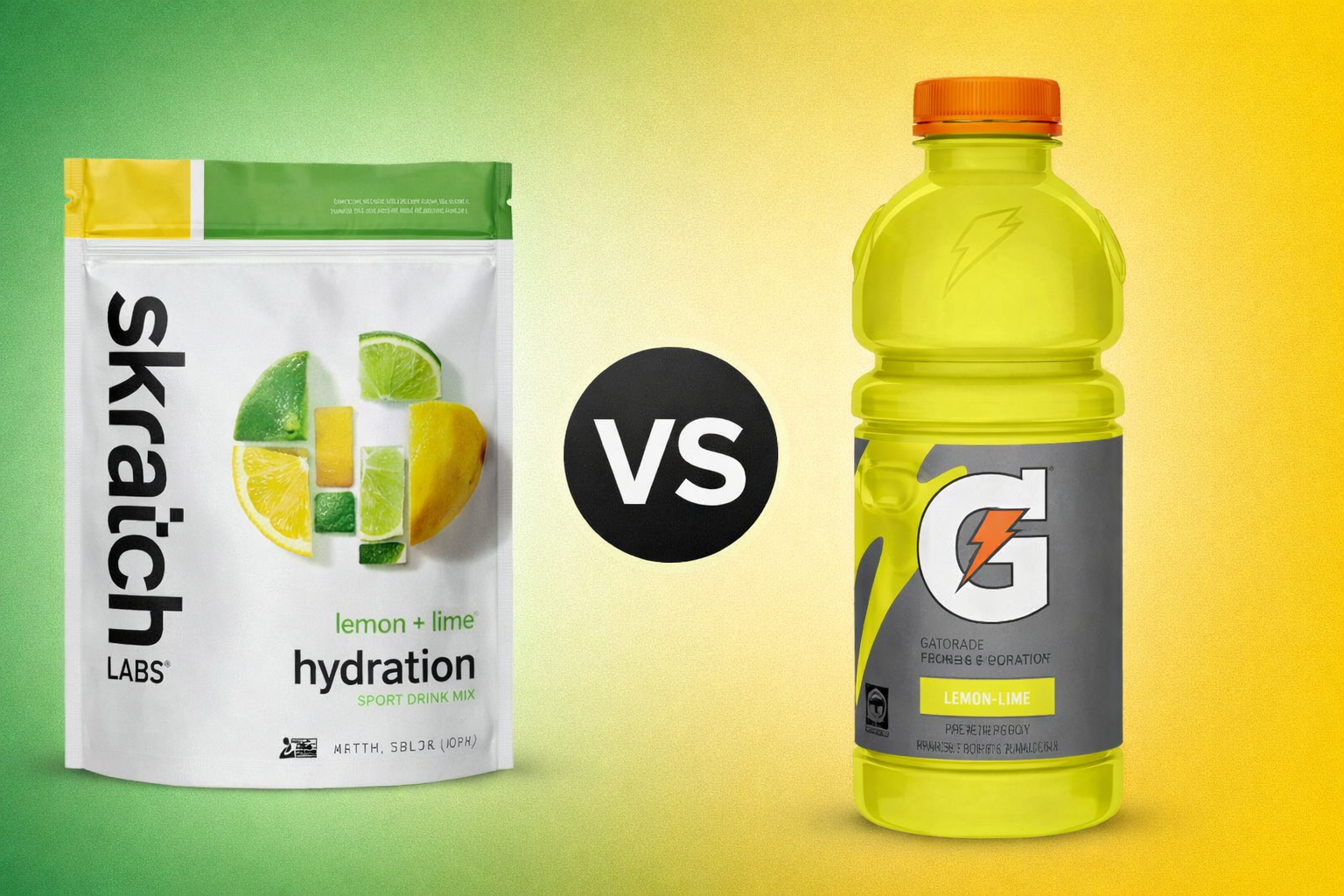
When people search for Skratch vs Gatorade, they are usually trying to answer a practical question: which sports drink actually makes more sense to use during exercise or recovery? Both drinks are designed to help with hydration and electrolyte replacement, but they come from very different philosophies about how athletes should fuel their bodies.
On the surface, the comparison seems simple. Gatorade is the classic sports drink most people grew up seeing on football sidelines, basketball courts, and convenience store shelves. It’s brightly colored, sweet, and widely available almost everywhere. Skratch Labs, on the other hand, is a relatively newer brand that built its reputation among cyclists, runners, and endurance athletes who wanted something that felt less artificial and easier on the stomach.
The biggest difference between the two usually comes down to formulation and philosophy. Gatorade was originally designed in the 1960s to replace electrolytes and carbohydrates lost by college football players in Florida heat. Its formula emphasizes quick carbohydrates and sodium to keep energy levels up during intense activity. Skratch took a different approach decades later. The brand’s founder, Dr. Allen Lim, reportedly started experimenting with simpler drink mixes because athletes were complaining that traditional sports drinks were too sugary and caused stomach issues during long rides.
I remember the first time I noticed the difference in real life during a long cycling event. At the start line, most casual riders had bottles filled with bright blue or neon orange Gatorade. But when I looked at the serious cyclists—especially the ones with expensive road bikes and aerodynamic helmets—many of them were mixing small powder packets into their bottles. That powder was Skratch.
What struck me immediately was the smell. Gatorade has that strong candy-like sweetness you can detect even from a few feet away. Skratch smelled more like diluted fruit juice, almost subtle.
In practical terms, that difference reflects what each drink is trying to do.
Gatorade typically contains more sugar, which means it delivers fast carbohydrates. That can be useful during high-intensity sports like basketball, football, or short races where quick energy is important. If someone is playing a pickup soccer game in a hot park or running a fast 5K race, Gatorade can actually work well because the body burns those simple sugars quickly.
Skratch tends to contain less sugar and focuses more on balanced hydration and digestibility. It was designed with endurance sports in mind—long cycling rides, marathons, ultramarathons, and triathlons where athletes might be drinking fluids continuously for several hours.
The difference becomes obvious once you start watching how people actually use these drinks during real activities.
I once overheard two runners talking before a half marathon in Chicago. One of them said he stopped drinking Gatorade during training because “it sits like syrup in my stomach after mile eight.” The other runner nodded and pulled a Skratch packet out of his pocket. He said something like, “This stuff feels lighter.”
That observation shows up a lot among endurance athletes. During very long efforts, overly sweet drinks can become difficult to tolerate. When the body is under physical stress, digestion slows down. Drinks with heavy sugar concentrations sometimes feel sticky or thick.
Skratch intentionally keeps the carbohydrate concentration lower so that fluids absorb faster.
But there’s an interesting tradeoff that people rarely talk about.
Because Skratch is milder, some athletes accidentally underfuel when they rely on it alone. Gatorade’s sweetness, while sometimes annoying, actually reminds people that they are consuming energy. Skratch can taste so light that people forget they may still need additional calories through gels or food.
I once saw this happen during a long group ride outside Boulder, Colorado—an area where Skratch is particularly popular. A cyclist I was riding with had two bottles of Skratch but no energy bars or gels. Around hour three he started fading badly. Another rider casually handed him a sugary energy chew and said, “You’re probably low on carbs.” Within minutes he looked noticeably better.
That moment made me realize something subtle about these drinks: they influence how people manage energy, not just hydration.
Another difference appears in where you encounter each drink in the real world.
Gatorade dominates mainstream environments. Walk into almost any convenience store, airport kiosk, or gas station and you’ll see entire refrigerators filled with it. I’ve seen travelers grab bottles of Gatorade at airports like Chicago O’Hare or Dallas–Fort Worth after long flights simply because it’s the most recognizable hydration drink available.
Skratch appears more often in specialty environments. Bike shops, running stores, outdoor gear retailers, and endurance events tend to carry it. I once visited a small cycling shop in Girona, Spain—a place famous for professional cyclists training in Europe—and Skratch drink mix packets were stacked right next to energy gels on the counter.
That distribution pattern reveals something about each brand’s identity.
Gatorade is designed for mass accessibility. It works for athletes, casual exercisers, and even people recovering from illness or dehydration.
Skratch feels more like a specialized tool designed for people who train regularly and care about the nuances of sports nutrition.
There are also behavioral differences in how people prepare the drinks.
Gatorade is usually ready to drink. People grab a bottle, twist the cap, and start drinking immediately. Skratch usually requires mixing powder with water. That small step might seem trivial, but it actually shapes usage patterns.
Athletes who use Skratch tend to prepare their bottles before workouts. That preparation step often happens in kitchens, locker rooms, or at the trunk of a car before a ride. I’ve seen cyclists carefully measure powder scoops into bottles in parking lots before starting long rides.
That ritual creates a sense that the drink is part of a planned training strategy, not just a random beverage.
Another subtle difference appears in taste fatigue.
During long endurance events, flavors that initially seem appealing can become overwhelming. After hours of sweating, the body often craves lighter flavors or even plain water. Skratch’s milder taste can become an advantage here. Many athletes say they can keep drinking it for hours without getting tired of the flavor.
With Gatorade, I’ve noticed people often switch between it and water during long activities because the sweetness builds up.
Interestingly, professional teams sometimes combine both strategies. During certain cycling races or marathons, athletes will alternate between electrolyte drinks and carbohydrate gels or bars rather than relying entirely on one drink.
Another operational detail people rarely think about is sodium concentration.
Sweat contains sodium, and replacing it is important during prolonged exercise. Gatorade contains sodium, but its formula was originally built for shorter athletic events. Skratch slightly increases sodium levels relative to sugar concentration to improve fluid absorption during endurance activities.
That design choice matters more than many people realize. During long races or hikes in hot weather, maintaining sodium balance helps prevent cramping and supports fluid retention.
I once noticed this difference during a desert trail run in Arizona. Aid stations were offering both Gatorade and Skratch. The experienced runners tended to refill bottles with Skratch or electrolyte mixes, while newer runners often grabbed Gatorade simply because they recognized the brand.
Later at the finish area, several runners were talking about stomach issues during the race. A volunteer casually mentioned that many endurance athletes prefer lower-sugar drinks because they’re easier to tolerate in extreme heat.
None of this means one drink is universally better.
If someone is playing a one-hour basketball game or needs a quick energy boost during a workout, Gatorade works perfectly well. It’s convenient, affordable, and easy to find almost anywhere.
But if someone regularly does long-distance running, cycling, triathlons, or multi-hour training sessions, Skratch often becomes appealing because it feels lighter, less sweet, and easier to drink repeatedly over time.
What fascinates me most after observing athletes for years is that the choice between these drinks often reflects how seriously someone approaches training.
Casual athletes tend to choose whatever is available—often Gatorade. Endurance athletes who carefully plan nutrition strategies often gravitate toward Skratch.
In that sense, the comparison between Skratch and Gatorade isn’t just about ingredients. It reflects two different approaches to sports nutrition: one designed for universal convenience, and the other built for athletes who treat hydration almost like a performance science.