Long run. The temperature climbs. Your legs tighten, and your energy begins to fade.
You’re drinking fluids — but are you drinking the right ones?
For runners chasing stronger finishes and fewer mid-run crashes, hydration isn’t just about comfort — it’s a powerful performance tool. Yet many athletes still wrestle with one critical question:
👉 Does endurance improve more from carbohydrates… or from higher sodium?
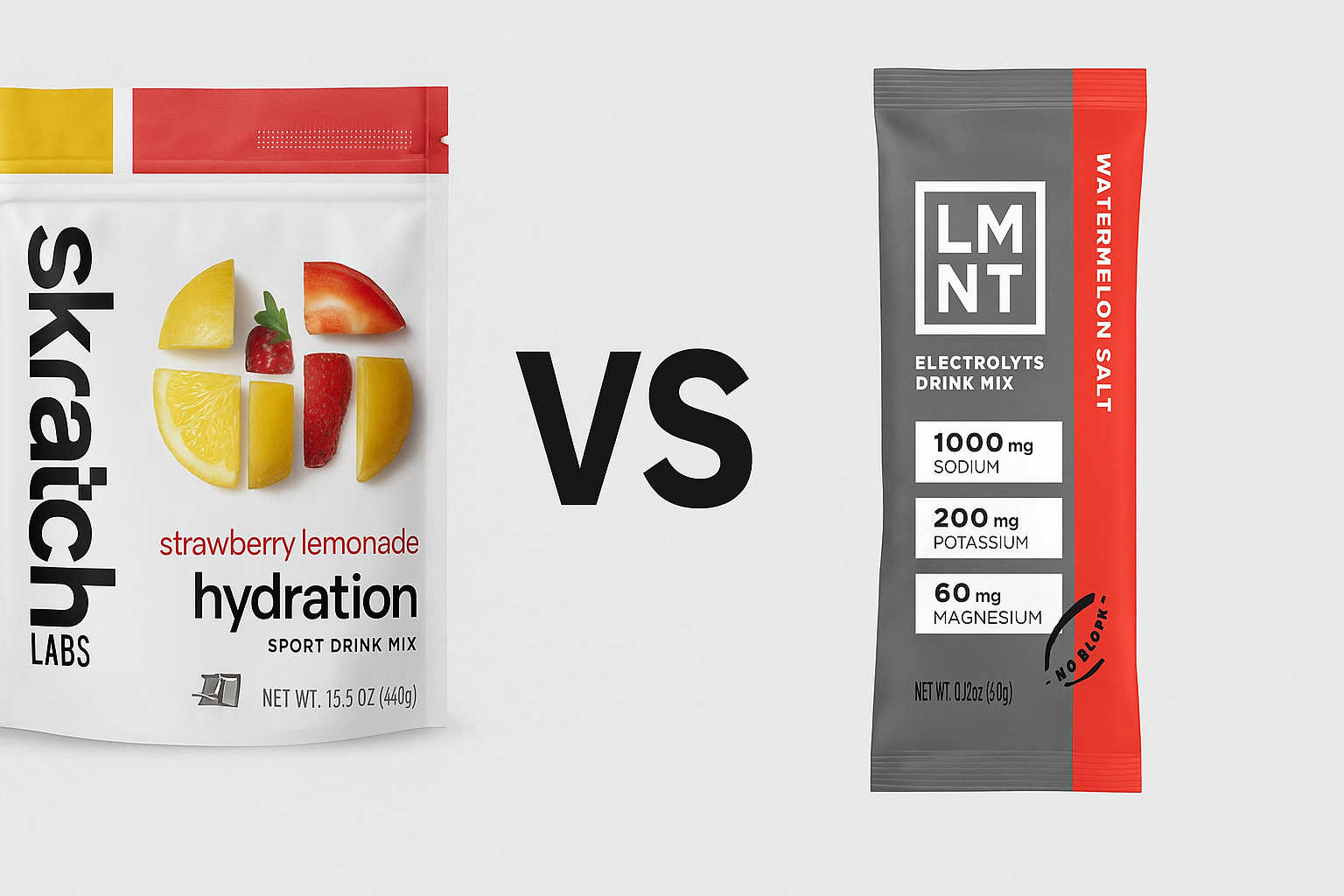
Two popular electrolyte options dominate this debate:
- Skratch — a carbohydrate-based drink with moderate sodium designed to replace sweat losses while fueling performance.
- LMNT — a high-sodium, zero-sugar formula created for heavy sweaters and athletes who prefer low-carb hydration.
So which one truly supports endurance?
The answer isn’t universal. It depends on your sweat rate, race distance, environment, and fueling strategy. Let’s examine the science, compare the formulas, and explore real-world runner scenarios to determine which drink deserves a place in your training plan.
Why Hydration Is a Performance Tool — Not Just a Comfort One
Many runners obsess over mileage, pacing, and shoe choice — yet overlook hydration, one of the simplest ways to protect endurance.
Research consistently shows that carbohydrate-electrolyte solutions can improve endurance performance, particularly during exercise lasting longer than 60–90 minutes. These drinks work by:
- Enhancing fluid absorption
- Maintaining blood volume
- Delivering rapid energy to working muscles
- Supporting electrolyte balance
Sodium also plays a vital role. Most guidelines recommend roughly 500–700 mg per liter during prolonged exercise, although athletes training in heat or those prone to cramping may require higher amounts.
Reality check: Many endurance slowdowns aren’t caused by poor fitness — they result from dehydration or inadequate fueling.
Before deciding which drink offers the greater advantage, let’s look at what each one actually delivers.
Skratch vs LMNT: Quick Nutrition Comparison
At its core, this debate centers on fuel versus electrolyte concentration.
| Feature | Skratch | LMNT |
|---|---|---|
| Sodium | ~400 mg | 1,000 mg |
| Potassium | ~80 mg | 200 mg |
| Magnesium | Present | 60 mg |
| Carbohydrates | ~20 g | 0 g |
| Sugar | Yes (~6% solution) | None |
What This Means for Runners
👉 Skratch provides energy and hydration simultaneously.
👉 LMNT emphasizes aggressive electrolyte replacement without added calories.
At first glance, LMNT may appear more powerful because of its sodium content. But endurance isn’t dictated by sodium alone.
Numbers don’t determine performance — physiology does.
The Science: Do Carbs or Sodium Improve Endurance More?
Carbohydrates as Performance Fuel
During long runs, your body depends heavily on stored glycogen. Once those reserves decline, fatigue rises quickly — the dreaded “bonk.”
Carbohydrate-electrolyte drinks help sustain energy output during prolonged exercise, which explains why most marathon fueling strategies prioritize steady carbohydrate intake.
Key takeaway:
If your muscles run out of fuel, sodium alone won’t rescue your pace.
For runners regularly exceeding the one-hour mark, drinks containing carbohydrates often provide a meaningful performance advantage.
Sodium’s Role — And Its Limits
Sodium supports performance in several important ways:
- Replaces sweat losses
- Maintains fluid balance
- Helps reduce the risk of hyponatremia
- Supports nerve and muscle function
However, research on sodium supplementation alone shows mixed results regarding direct performance gains.
👉 Higher sodium does not automatically translate into faster running.
Its true value becomes evident when sweat losses are substantial — particularly in hot climates or among runners with naturally salty sweat.
Why Hydration Needs Vary So Much
One of the most common mistakes runners make is copying someone else’s hydration strategy.
Sweat sodium concentrations vary dramatically:
- Some runners lose only a few hundred milligrams per hour.
- Others — often called “salty sweaters” — can lose 1,000 mg or more per hour.
This wide variability explains why one athlete thrives on moderate electrolytes while another struggles with cramps without aggressive sodium replacement.
Personalized hydration almost always outperforms generic advice.
So which drink aligns best with your running style?
Which Drink Fits Your Running Style?
The ideal hydration strategy should feel practical, not theoretical. Here’s how each option performs across common training scenarios.
Best for Short Runs (<60 Minutes)
For most easy runs, plain water is typically sufficient, provided you begin well hydrated.
Where does Skratch fit? While it may be unnecessary for shorter efforts, it remains a reasonable choice if you prefer light flavor or want a mild electrolyte boost.
LMNT, by contrast, may be excessive unless you’re training in extreme heat or already know you’re a heavy sweater.
Bottom line: Save specialized hydration for when your body truly needs it.
Best for Long Runs and Marathon Training (≥60–90 Minutes)
✅ Likely winner: Skratch
Why?
- Supplies carbohydrates to sustain energy
- Replaces electrolytes at moderate levels
- Supports prolonged effort without requiring separate fuel
When endurance hinges on maintaining glycogen stores, combining hydration and fuel becomes a smart — and often simpler — strategy. Many runners appreciate not having to juggle gels alongside electrolyte capsules.
Best for Hot Weather or Heavy Sweaters
✅ Potential winner: LMNT
LMNT may be especially helpful if you:
- Finish runs with visible salt stains
- Experience frequent muscle cramps
- Train in high temperatures
- Lose large amounts of sweat
Higher sodium intake can restore electrolyte balance more effectively under these conditions.
That said, remember one essential rule:
⚠️ Never experiment with hydration on race day. Always test new strategies during training first.
Now, let’s see how this plays out in real-world scenarios.
Real Runner Case Studies
Case Study 1 — Recreational Marathoner
Profile:
- Weekly mileage: 25–40 km
- Moderate sweat rate
- No history of cramping
Strategy: Uses Skratch on runs longer than 90 minutes.
Outcome: Reports steadier energy, fewer late-run slowdowns, and manageable stomach comfort.
Insight: When fueling is the primary limiter, carbohydrate drinks often deliver the greatest benefit.
Case Study 2 — Hot-Climate Ultra Runner (“Salty Sweater”)
Profile:
- Sweat sodium around 1,200 mg/L
- Regular cramping during long efforts
Strategy: LMNT paired with a small carbohydrate source.
Outcome: Experiences fewer cramps and improved perceived recovery after long runs.
Insight: In extreme conditions, sodium requirements can outweigh traditional fueling strategies.
What These Examples Teach Us
There is no universal winner.
Context determines performance.
Smart runners adapt hydration strategies to their physiology — not marketing claims.
Expert Guidance Every Runner Should Know
Leading sports performance organizations emphasize several consistent principles:
- Athletes exercising longer than an hour typically benefit from sodium-containing fluids.
- Fueling strategy is just as important as electrolyte replacement.
- Starting exercise well hydrated significantly reduces performance risk.
Perhaps the most important takeaway?
👉 Hydration and fueling should be practiced — not improvised.
Treat them like pacing: a core component of training rather than an afterthought.
Safety Notes Runners Often Ignore
Performance matters — but safety matters more.
Watch Your Total Sodium Intake
LMNT delivers a large sodium dose per serving, which can accumulate quickly alongside everyday dietary sodium.
Runners with medical conditions — particularly those related to blood pressure — should consider consulting a healthcare professional before significantly increasing sodium intake.
Pay Attention to GI Tolerance
Highly concentrated electrolyte drinks can trigger nausea in some athletes.
Always test during training — never during competition.
Avoid Last-Minute Changes
Race week is not the time to overhaul your hydration plan.
Smart runners rehearse everything, including what they drink.
The Verdict: Which One Actually Improves Endurance?
Let’s simplify the decision.
If endurance depends primarily on fueling:
✅ Skratch often has the edge.
Carbohydrates sustain effort — and sustained effort defines endurance.
If endurance is threatened by heavy sodium loss:
✅ LMNT may be the smarter choice.
Replacing significant electrolyte losses can help prevent performance collapse.
The Ultimate Insight
The best hydration strategy is individualized — not branded.
Your sweat rate, training environment, and fueling habits matter far more than product hype.
Elite runners don’t ask, “Which drink is best?”
They ask:
👉 “What does my body actually need?”
Conclusion: Are You Under-Fueling… or Under-Replacing Electrolytes?
Endurance isn’t just about fitness.
It’s about physiological support — giving your body the fluids, fuel, and electrolytes it needs to perform when fatigue sets in.
Before your next long run, ask yourself:
👉 Are you running out of energy…
👉 Or running out of electrolytes?
Your Next Steps
- Evaluate your sweat rate
- Test hydration strategies during long runs
- Adjust based on performance feedback
Now we want to hear from you:
👉 Are you Team Carbs or Team Sodium?
Share your experience in the comments — your insight might help another runner avoid the dreaded mid-run crash.