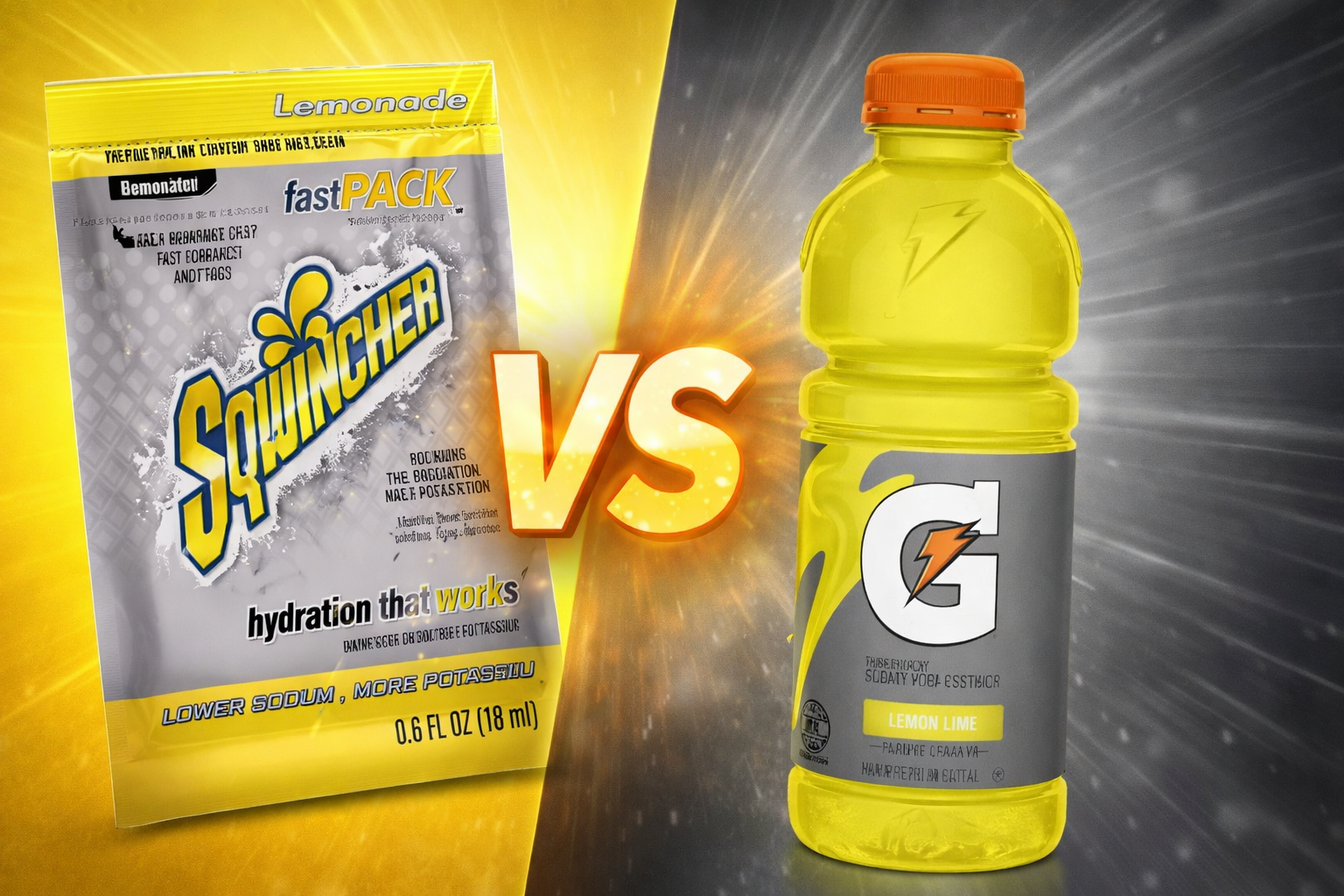
When you’re sweating buckets on a job site or pushing through an intense workout, reaching for the right electrolyte drink can make all the difference. But with so many options on the market, how do you choose between industry staples like Sqwincher and Gatorade?
Both brands promise rapid rehydration and electrolyte replenishment, yet they cater to surprisingly different audiences. Gatorade has dominated the sports drink market for decades, while Sqwincher has carved out a dedicated following among industrial workers and outdoor laborers.
This comprehensive comparison breaks down everything from ingredient lists to cost efficiency, helping you determine which drink actually delivers on its promises. Whether you’re working a 12-hour shift in the summer heat or training for your next marathon, understanding these differences could transform your hydration strategy.
Breaking down the ingredients: What’s really in your bottle?
The ingredient lists of Sqwincher and Gatorade reveal fundamental differences in their formulation philosophies.
Gatorade’s classic formula centers around water, sugar (or high fructose corn syrup in some versions), and a blend of electrolytes including sodium, potassium, and small amounts of magnesium and calcium. The drink also contains artificial flavors, citric acid for taste, and food dyes for that signature bright color. Different Gatorade varieties adjust these ratios slightly—G2 offers reduced sugar, while Gatorade Zero eliminates sugar entirely using artificial sweeteners.
Sqwincher takes a similar approach but formulates its drinks specifically for workplace hydration. The base includes water, electrolytes, and carbohydrates, but Sqwincher emphasizes a lower osmolality formula. This means the drink is designed to be absorbed quickly by the body, which matters when you’re losing fluids rapidly through sweat in hot environments. The brand offers multiple product lines including Sqwincher ZERO (sugar-free), Sqwincher LITE (reduced sugar), and Sqwincher Qwik Stik powder concentrates.
Both drinks contain sodium and potassium as their primary electrolytes. Sodium helps retain fluids and maintain proper muscle function, while potassium aids in muscle contractions and prevents cramping. The key difference lies in the concentrations and ratios, which are optimized for different types of physical exertion.
Sugar content showdown: How sweet is too sweet?
Sugar content represents one of the most significant differences between these two drinks and directly impacts who should drink them.
A standard 20-ounce bottle of Gatorade Thirst Quencher contains approximately 34 grams of sugar and 140 calories. That’s roughly the equivalent of 8.5 teaspoons of sugar. While this might sound excessive, those working in extremely hot conditions or engaging in prolonged athletic activity can benefit from the quick energy that sugar provides. However, for moderate activity or office workers, this amount of sugar could contribute to unwanted calorie intake.
Sqwincher’s regular formula contains similar sugar levels—about 30-35 grams per 20-ounce serving, putting it in the same ballpark as Gatorade. The difference becomes apparent when you look at their alternative formulations. Sqwincher LITE cuts the sugar content roughly in half, while Sqwincher ZERO eliminates it completely using sucralose as a sweetener.
For industrial workers burning thousands of calories during physical labor in high temperatures, the sugar in these drinks serves a practical purpose. It provides immediate energy and helps with fluid absorption. But if you’re reaching for an electrolyte drink after a casual gym session or during office hours, you might want to consider the lower-sugar alternatives both brands offer.
The calorie counts follow the sugar content predictably. Regular formulas from both brands hover around 140-150 calories per 20-ounce serving, while their zero-sugar options drop to under 10 calories.
Target audiences: Blue-collar workers vs elite athletes
The most interesting distinction between Sqwincher and Gatorade isn’t what’s in the bottle—it’s who the bottle is designed for.
Gatorade was born in a University of Florida laboratory in 1965, specifically created to help the Florida Gators football team perform better in sweltering conditions. Since then, it has positioned itself squarely in the athletic performance space. Professional athletes, weekend warriors, and anyone involved in sports recognize the brand’s iconic lightning bolt logo. Gatorade sponsors major sporting events, partners with elite athletes, and markets itself as the drink of champions.
Sqwincher, launched in 1975 by a company called Kent Precision Foods Group (now part of Sqwincher Corporation), took a different path. The brand targeted industrial work environments where heat stress and dehydration posed serious safety risks. Construction sites, manufacturing plants, warehouses, and outdoor work crews became Sqwincher’s primary market. The packaging reflects this focus—you’ll often find Sqwincher in bulk containers, cooler packs, and workplace-friendly formats rather than individual sports bottles.
This targeting difference influences everything from flavor profiles to distribution channels. Gatorade is ubiquitous in convenience stores, vending machines, and gyms. Sqwincher is more commonly purchased through industrial supply distributors, safety equipment vendors, and in large quantities for workplace hydration programs.
The occupational safety angle also means Sqwincher has invested heavily in education around heat illness prevention and OSHA compliance, positioning itself as a workplace safety solution rather than just a beverage choice.
Taste test: Flavor profiles and variety
Taste is subjective, but the flavor approaches of these two brands reveal different priorities.
Gatorade offers an extensive flavor lineup, with over 20 varieties in regular rotation. Classic options like Fruit Punch, Lemon-Lime, and Orange remain bestsellers, while the brand regularly experiments with new flavors and limited editions. Gatorade tends toward bold, sweet flavor profiles that appeal to younger consumers and athletes looking for something that tastes more like a treat than medicine.
Sqwincher’s flavor range includes options like Fruit Punch, Lemon-Lime, Orange, Grape, and Mixed Berry. The taste profile typically registers as slightly less sweet than Gatorade, which many industrial workers prefer when drinking multiple bottles throughout a shift. There’s also a focus on flavors that remain palatable even when consumed warm—an important consideration when drinks sit in workplace coolers or hot environments.
Reviews across both brands show passionate defenders on each side. Gatorade fans appreciate the familiar taste and the perception that they’re drinking what professional athletes use. Sqwincher loyalists often mention that the drinks are easier to consume in large quantities without the cloying sweetness that can make Gatorade difficult to drink repeatedly.
Both brands offer powder formats that allow users to adjust concentration to personal preference, which adds another dimension to the taste experience.
What social media reveals about the Sqwincher vs Gatorade debate
Social media conversations around Sqwincher and Gatorade paint an interesting picture of brand loyalty and use cases.
On platforms like Reddit, Twitter, and Facebook, the debate often splits along occupational lines. Construction workers, electricians, HVAC technicians, and other tradespeople frequently share photos of Sqwincher coolers on job sites, praising its effectiveness in extreme heat. These discussions emphasize function over fashion—users care about staying hydrated and avoiding heat exhaustion, not about drinking what their favorite athlete endorses.
Gatorade dominates sports-related social media conversations. Athletes post workout photos with Gatorade bottles, and the brand maintains an active presence across all major platforms. The hashtag #Gatorade has millions of posts, mostly showing athletic achievement and sporting events.
Community debates often center around value and effectiveness. Industrial workers argue that Sqwincher is formulated specifically for their needs and works better during extended shifts in hot conditions. Athletes and fitness enthusiasts counter that Gatorade’s research-backed formula and variety make it superior for sports performance.
An interesting subset of discussions involves people who switched from one brand to the other. Former Gatorade drinkers working in industrial settings often report that Sqwincher “sits better” when drinking multiple bottles per day. Conversely, some Sqwincher users trying Gatorade mention they prefer the taste and wider availability.
TikTok and Instagram feature taste test videos comparing the two brands, with results varying widely based on personal preference. These informal reviews often conclude that the “best” drink depends entirely on your specific situation and taste preferences.
The online consensus, if there is one, suggests that both drinks effectively deliver electrolytes and hydration, but serve different lifestyles and work environments.
Hydration science: Absorption rates and effectiveness
The science behind electrolyte replacement determines how well these drinks actually work when your body needs them most.
Both Sqwincher and Gatorade are designed to be isotonic or slightly hypotonic solutions, meaning their concentration of dissolved particles is similar to or slightly less than your blood. This matters because it affects how quickly fluids move from your stomach into your bloodstream.
Gatorade’s formulation includes a 6% carbohydrate solution, which research has shown to be optimal for both fluid absorption and energy delivery during exercise. The sodium content (about 110mg per 8 ounces) helps maintain fluid balance and encourages drinking by making you slightly thirsty.
Sqwincher emphasizes its lower osmolality, claiming faster absorption than competitors. While specific absorption rate data from independent studies comparing the two brands directly is limited, both drinks fall within the range that sports science considers effective for rehydration.
The real-world effectiveness of either drink depends on several factors: how much you’re sweating, the duration and intensity of activity, environmental conditions, and individual physiology. For short-duration activity (under an hour), water alone typically suffices. For longer periods of exertion, especially in heat, both drinks provide the electrolytes and carbohydrates your body needs.
One consideration is that drinks with too much sugar can actually slow absorption and cause gastrointestinal distress in some people. Both brands’ lower-sugar options address this concern while still providing electrolytes.
The bottom line from a hydration science perspective: both drinks are formulated to support effective rehydration, with minor differences that might matter more for specific use cases than for general performance.
Cost comparison: Getting the most bang for your buck
Price often becomes the deciding factor, especially when purchasing in bulk for workplaces or teams.
Retail pricing for individual bottles puts Gatorade and Sqwincher in similar ranges—typically $1 to $2 per 20-ounce bottle depending on location and retailer. Gatorade’s ubiquity means you can find it almost anywhere, often on sale at grocery stores and big-box retailers.
The cost equation changes dramatically with bulk purchasing. Sqwincher shines here, offering various bulk formats specifically designed for workplace distribution. A typical workplace cooler pack (50 servings) costs around $30-40, working out to roughly $0.60-0.80 per serving. Powder concentrates reduce the cost even further, though they require mixing.
Gatorade also offers bulk purchasing through warehouse clubs and online retailers, with prices dropping to around $0.70-1.00 per bottle when buying by the case. The powder format (Gatorade Thirst Quencher Powder) brings costs down to approximately $0.40-0.60 per serving when mixed properly.
For industrial workplaces providing hydration to employees, Sqwincher’s distribution through safety equipment suppliers and industrial vendors often includes volume discounts and convenient delivery options that factor into the total cost equation. These workplace programs sometimes include free coolers and dispensers with regular purchases.
For individual consumers, cost-per-serving becomes less critical, and convenience often wins. Gatorade’s availability at every gas station and convenience store makes it the grab-and-go choice, even if it costs slightly more per serving.
When calculating true cost effectiveness, consider frequency of use. If you’re drinking one electrolyte beverage after an occasional workout, a few extra cents per bottle hardly matters. If you’re providing hydration for a 20-person crew working outdoors all summer, those pennies add up quickly.
The verdict: Choosing the right drink for your lifestyle
After examining ingredients, costs, target audiences, and effectiveness, which drink deserves a spot in your cooler?
The honest answer depends entirely on your specific needs. Gatorade excels for athletic performance, short-duration activities, and situations where convenience matters. Its extensive flavor variety, widespread availability, and sports-focused formulation make it ideal for gym sessions, weekend sports, or occasional hydration boosts. If you’re an athlete or recreational sports enthusiast who values taste variety and doesn’t need to drink multiple bottles daily, Gatorade is your best bet.
Sqwincher wins for industrial work environments, extended periods of heavy sweating, and bulk purchasing scenarios. Construction workers, warehouse employees, outdoor laborers, and anyone spending long hours in hot conditions will appreciate its formulation designed specifically for workplace hydration. The bulk purchasing options and workplace-friendly packaging make it the practical choice for employers managing hydration programs.
Both brands offer low-sugar and zero-sugar options that expand their usefulness. If you’re concerned about sugar intake but still want electrolyte replacement, Gatorade Zero or Sqwincher ZERO provide viable solutions.
Consider making your choice based on these guidelines: Choose Gatorade if you prioritize taste variety, engage primarily in sports or fitness activities, need convenient single-serving availability, and don’t mind paying a slight premium for brand recognition. Choose Sqwincher if you work in industrial settings or outdoor labor, need to purchase in bulk, prefer a less sweet taste profile, or want a product specifically designed for prolonged heat exposure.
Ultimately, the best electrolyte drink is the one you’ll actually drink consistently. Proper hydration beats perfect formulation every time. Try both brands, compare how they make you feel during and after physical exertion, and stick with whichever option keeps you properly hydrated and performing at your best.