Most people assume all electrolyte drinks do the same thing — replace fluids and prevent dehydration. But true hydration is more complex than simply drinking flavored water with minerals.
The real question isn’t which drink tastes better or costs less.
👉 It’s which one your body can actually use.
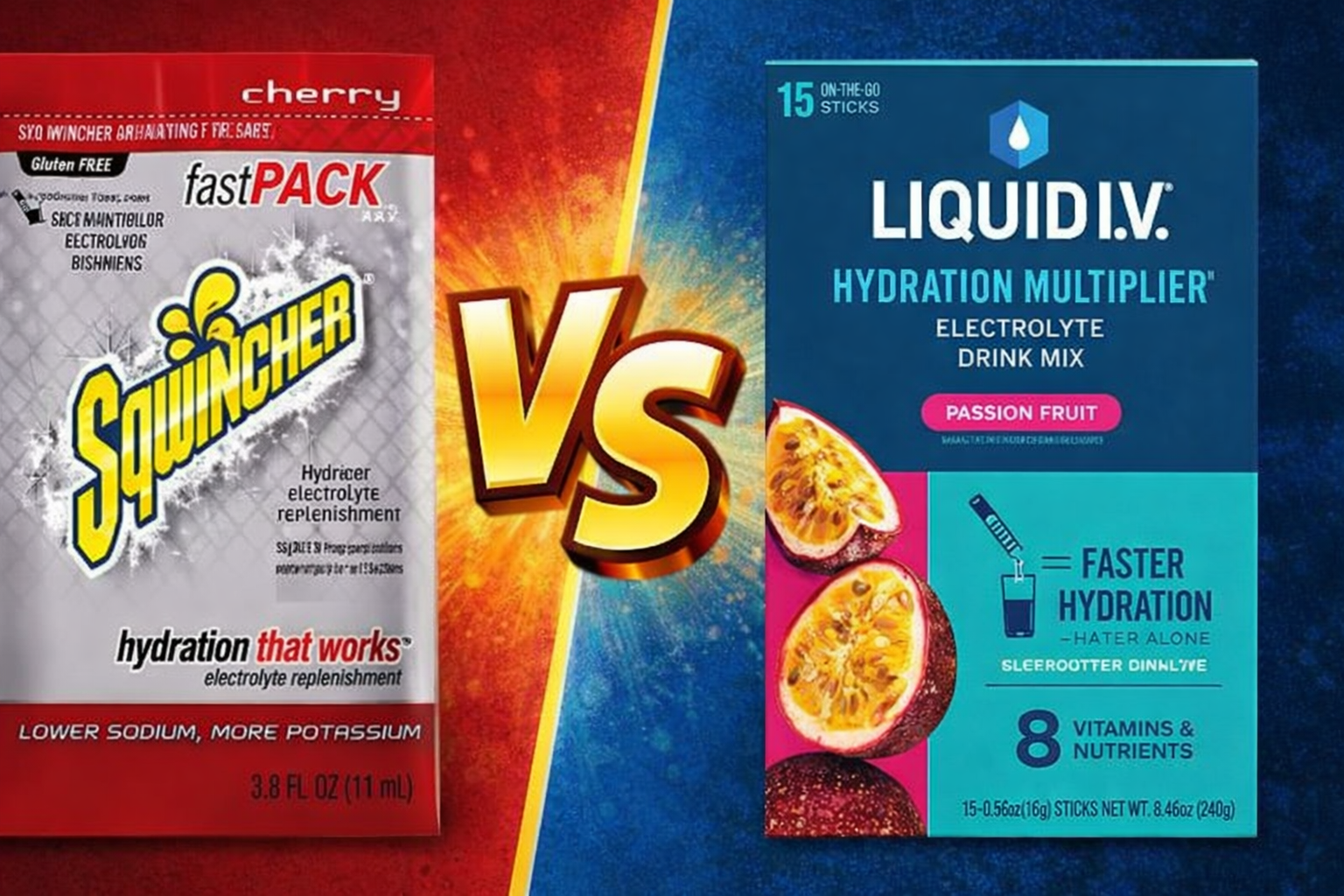
Sqwincher and Liquid I.V. approach hydration from completely different philosophies. One was built for industrial workers sweating in extreme conditions. The other focuses on rapid absorption using glucose-powered hydration technology.
Understanding that difference is the key to choosing correctly.
This guide goes beyond nutrition labels to analyze hydration efficiency, electrolyte density, physiological value, and real-world effectiveness.
Why This Comparison Matters More Than You Think
Hydration isn’t just about fluid intake — it’s about fluid retention.
Your body requires a precise balance of:
- Sodium to hold onto water
- Potassium for cellular function
- Glucose to accelerate absorption
- Proper concentration for rapid bloodstream entry
A drink can look impressive on a label yet fail where it matters most: inside your cells.
Poor hydration can lead to:
- Early fatigue
- Brain fog
- Headaches
- Reduced endurance
- Slower recovery
The goal isn’t to drink more — it’s to retain more.
What Most Electrolyte Drink Reviews Get Wrong
Before comparing these two, we need to correct some industry-wide misunderstandings.
Mistake 1: Obsessing Over Calories
Low-calorie hydration is not automatically effective hydration.
Mistake 2: Treating Sugar as the Enemy
In reality, small amounts of glucose activate sodium transport mechanisms that help your body absorb fluids faster.
Mistake 3: Assuming All Electrolytes Are Equal
Sodium drives hydration. Magnesium is helpful — but not the primary rehydration mineral.
Mistake 4: Ignoring Sweat Science
Electrolyte needs vary dramatically depending on climate, exertion, and physiology.
👉 Hydration effectiveness depends far more on electrolyte concentration than branding.
Hydration Philosophy: Aggressive vs Maintenance Hydration
One of the smartest ways to evaluate electrolyte drinks is to categorize them by strategy.
Liquid I.V. — Aggressive Hydration
Liquid I.V. is designed to rapidly correct dehydration rather than simply prevent it.
Its formula uses a sodium + glucose transport mechanism inspired by oral rehydration science — the same physiological principle used in medical settings.
This makes it particularly effective when your body is already depleted.
Think of it as functional hydration.
Sqwincher — Performance Maintenance Hydration
Sqwincher was originally developed for high-heat workplaces like construction sites, mining operations, and industrial environments.
Its goal is steady electrolyte replacement during prolonged sweating rather than rapid correction.
Think of it as operational hydration.
👉 One replaces what you lost.
👉 The other helps prevent loss from becoming dehydration.
Neither approach is universally better — only better suited to different situations.
Electrolyte Density: The Metric Smart Buyers Should Watch
Instead of focusing on marketing claims, evaluate hydration drinks using a more intelligent metric:
👉 Electrolyte Density = minerals delivered relative to energy intake.
Why this matters:
Athletes and heavy sweaters don’t just need fluids — they need meaningful sodium replacement.
A lightly dosed drink may taste refreshing but can underperform physiologically during heavy sweat loss.
Key Insight:
Hydration isn’t about how much you drink — it’s about what your body can use.
Practical Interpretation:
- Higher density → stronger recovery support
- Moderate density → sustainable for longer drinking sessions
Liquid I.V. typically delivers a more concentrated electrolyte load, while Sqwincher often balances electrolytes with drinkability for extended use.
Sweat Sodium Replacement: Are You Actually Replacing What You Lose?
Here is a reality most consumers never hear:
👉 Humans can lose 800–1500 mg of sodium per hour during intense sweating.
Now ask yourself:
Is your hydration drink truly replacing those losses — or just flavoring your water?
Liquid I.V.
Better suited for noticeable electrolyte depletion.
Sqwincher
Effective for ongoing replacement during continuous work or activity.
Smart takeaway:
Match your drink to your sweat rate — not your taste preference.
The best hydration drink is the one aligned with your physiology.
The False Hydration Problem
One of the biggest hydration mistakes is relying on fluids that lack enough sodium.
Drinking large volumes of low-electrolyte beverages can dilute sodium levels in the bloodstream — reducing your body’s ability to retain water.
This creates what experts sometimes call functional dehydration.
👉 You can drink constantly and still remain underhydrated.
True hydration requires replacement — not dilution.
Sugar vs Sugar-Free: Stop Thinking in Extremes
The anti-sugar trend has created confusion in the hydration space.
Here’s the reality:
Sugar in electrolyte drinks serves a physiological purpose.
It helps:
- Activate sodium-glucose transport
- Improve fluid uptake
- Provide quick energy during exertion
But context matters.
For sedentary individuals, frequent high-sugar hydration may add unnecessary calories.
Memorable Insight:
👉 In hydration, sugar is a tool — not a villain.
Hydration Personalization Model (Most Buyers Skip This Step)
There is no universally perfect hydration drink because bodies differ dramatically.
Your ideal choice depends on:
- Sweat rate
- Body size
- Climate
- Activity intensity
- Duration of exertion
Light Sweaters
Office workers, casual exercisers, mild climates.
👉 Moderate electrolyte formulas often suffice.
Heavy Sweaters
Runners, outdoor workers, high-heat athletes.
👉 Stronger sodium support becomes critical.
Hydration should be personalized — not generalized.
This mindset alone puts you ahead of most consumers.
Cognitive Hydration: The Brain Performance Angle
Hydration affects far more than muscles.
Even mild dehydration has been linked to:
- Reduced concentration
- Mood fluctuations
- Slower reaction time
- Mental fatigue
If your work demands focus — long meetings, travel days, intense study sessions — electrolyte balance can quietly influence productivity.
Stronger formulas may help restore energy during fatigue, while lighter drinks can support steady daily mental performance.
Hydration is as much a brain strategy as it is a physical one.
Cost Per Effective Rehydration (Think Smarter Than Price Tags)
Most comparisons focus on cost per packet.
That’s the wrong metric.
Cheap hydration that fails physiologically is not a bargain — it’s wasted effort.
Instead, evaluate:
👉 Cost per meaningful electrolyte delivery.
Sometimes paying slightly more results in faster recovery and fewer servings required.
The real value of a hydration drink lies in effectiveness — not sticker price.
Ingredient Transparency Index
Smart consumers increasingly care about what goes into their hydration.
When evaluating formulas, consider:
- Artificial additives
- Sweetener sources
- Coloring agents
- Sugar types
- Flavor transparency
Brands that clearly communicate ingredient purpose tend to inspire greater trust.
Creating your own mental scoring system helps cut through marketing noise.
Taste Fatigue: The Factor Nobody Talks About
Here’s a practical truth:
A hydration drink only works if you’re willing to keep drinking it.
Highly intense flavors can become overwhelming over time, while lighter profiles may encourage consistent use.
Ask yourself:
👉 Could you realistically drink this several days in a row?
Long-term drinkability is an underrated performance factor.
Daily Sodium Load: Can You Overdo Electrolytes?
Electrolyte drinks are powerful tools — but they aren’t mandatory daily beverages for everyone.
If your diet already contains substantial sodium, layering aggressive hydration on top may be unnecessary unless you’re sweating heavily.
Think of electrolyte drinks as situational performance tools, not automatic lifestyle staples.
Balanced usage is smarter than habitual consumption.
Situational Hydration Guide
Choosing correctly often comes down to context.
Better Moments for Strong Hydration Support:
- Intense workouts
- Heat exposure
- Illness recovery
- Travel fatigue
Better Moments for Moderate Support:
- Normal daily activity
- Light exercise
- Preventive hydration
Match the tool to the scenario.
Your body will notice the difference.
Who Should Skip Electrolyte Drinks Entirely?
A surprising number of people may not need them regularly.
You might be fine with water if you:
- Rarely sweat heavily
- Eat a mineral-rich diet
- Stay consistently hydrated
- Perform low-intensity activity
Recommending against unnecessary use builds credibility — and protects readers from overconsumption.
Final Verdict: Which One Wins?
There is no universal winner because hydration is deeply personal.
👉 If your priority is rapid electrolyte replacement, a stronger formula like Liquid I.V. often makes sense.
👉 If your goal is steady hydration during prolonged activity, Sqwincher aligns naturally with that need.
The smartest takeaway is simple:
The best hydration drink is the one that matches your sweat rate, environment, and physiology.
Not the trend.
Not the branding.
Not the loudest marketing claim.
Your body is the final judge.