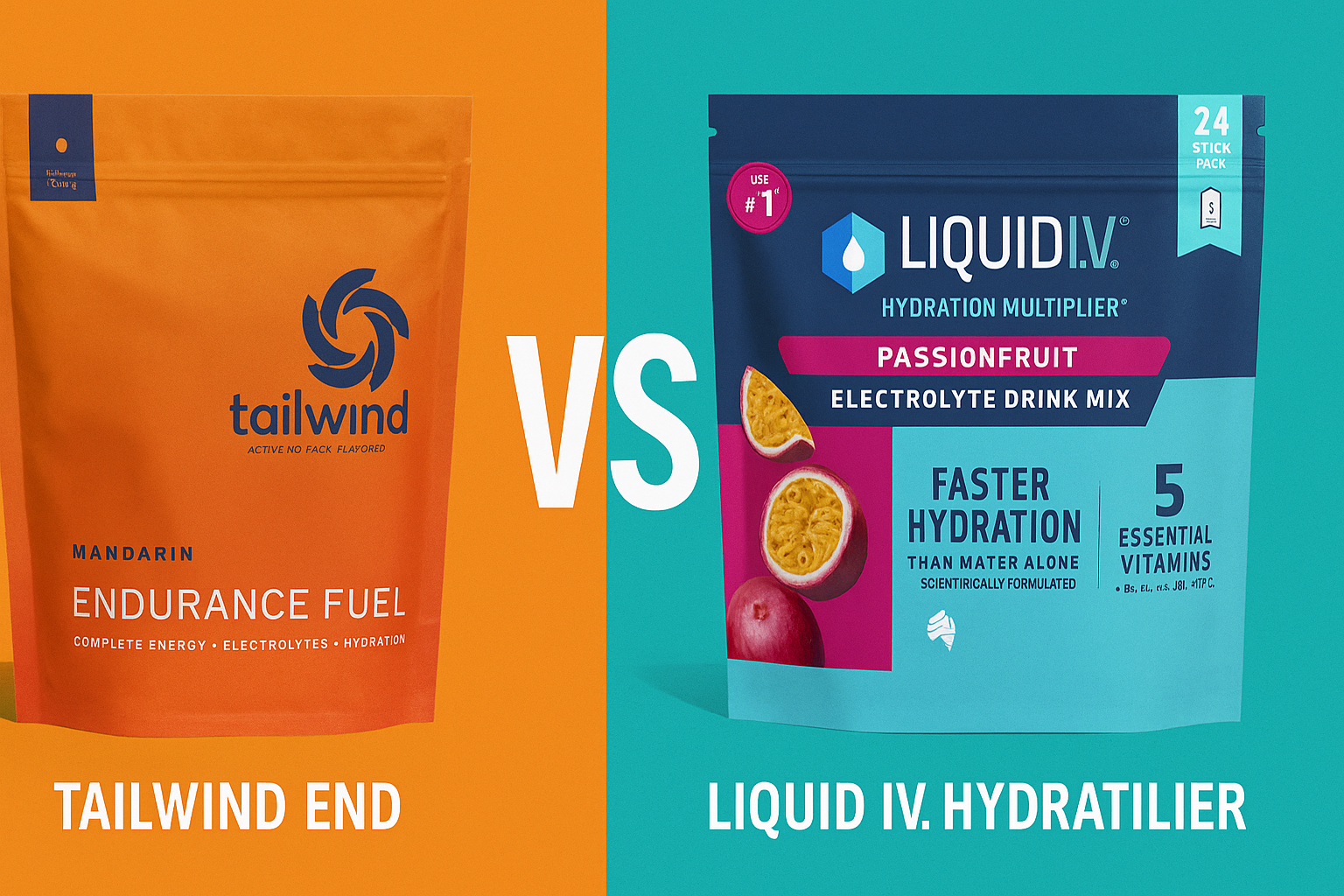
Tailwind and Liquid I.V. are both popular hydration products, but they’re made for different types of users. Tailwind is designed mainly for endurance athletes who need steady fuel during long workouts, while Liquid I.V. is built for fast, everyday hydration. Understanding that difference makes the comparison much clearer.
What Is Tailwind?
Tailwind is a hydration and fueling mix made specifically for endurance athletes. It’s designed for long runs, bike rides, and training sessions where you need more than just water. Instead of focusing only on electrolytes, Tailwind also provides calories from simple carbohydrates, so it helps keep your energy steady while you hydrate.
What makes Tailwind stand out is how easy it is on the stomach. The formula is simple, with no artificial sweeteners, colors, or preservatives, which is why many athletes use it as their main fuel during long efforts. You mix it with water and sip it throughout your workout, rather than using separate drinks, gels, or snacks.
In short, Tailwind is built for performance and endurance, not casual hydration. It’s meant to support long, steady effort rather than quick rehydration.
Pros and Cons of Tailwind
Pros
- Provides both hydration and calories for long workouts.
- Easy on the stomach, even during tough exercise.
- Simple, clean formula with no artificial colors or sweeteners.
- Great for endurance athletes training for long distances.
Cons
- Not ideal if you just want quick hydration without calories.
- Flavor options are limited compared to some other hydration brands.
- Can be more expensive per serving than basic electrolyte drinks.
- The calorie content isn’t necessary for casual or short workouts.
What Is Liquid I.V.?
Liquid I.V. is a hydration drink mix designed to help your body absorb water more efficiently than plain water alone. It uses a specific ratio of electrolytes, glucose, and water—based on oral rehydration science—to speed up fluid absorption. You mix a packet with water, and it’s meant to hydrate you faster than just drinking water.
People often reach for Liquid I.V. after workouts, during travel, in hot weather, or anytime they feel mildly dehydrated. It also includes added vitamins like Vitamin C and several B vitamins, which some users appreciate for extra support.
Pros and Cons of Liquid I.V.
Pros
- Hydrates quickly and effectively using oral rehydration science.
- Includes added vitamins like Vitamin C and B-complex.
- Easy to mix and drink on the go.
- Widely available and comes in many flavor options.
Cons
- Doesn’t provide calories or fuel for long workouts.
- Some flavors can be sweet for those who prefer milder taste.
- More expensive per serving than plain electrolyte powders.
- Not specifically designed for endurance fueling.
Which Is Healthier?
When it comes to overall healthiness, Liquid I.V. generally comes out ahead for everyday hydration. It’s lower in calories, has added vitamins (like Vitamin C and B-complex), and focuses on helping your body absorb fluids efficiently without extra fuel. For someone who just wants to stay hydrated throughout the day, Liquid I.V. feels lighter and more balanced.
Tailwind isn’t unhealthy—its formula is just built differently. Because it includes calories and carbs to fuel endurance activity, it’s naturally higher in calories and sugars. That’s a good thing during long workouts, but it’s more than what most people need for regular hydration.
So for most people looking at general health and daily hydration, Liquid I.V. is the healthier option. Tailwind is healthier in the context of fueling long athletic efforts, but not for everyday use.
Which Is Better for Hydration?
Both Tailwind and Liquid I.V. do a good job of hydrating you, but they’re built for slightly different goals.
Liquid I.V. is better for quick, everyday hydration. Its formula is designed to help your body absorb water faster than plain water, and it works well for workouts, heat exposure, travel, or just staying hydrated throughout the day.
Tailwind also hydrates, but it shines most when you need hydration plus fuel. Because it includes calories and carbs, it keeps your energy stable during long runs, rides, or extended workouts while still replacing electrolytes.
So if your main goal is pure hydration, Liquid I.V. gets the edge. If you want hydration plus sustained energy, Tailwind may be the better fit during long workouts.
Which Has More Flavors?
Liquid I.V. offers a much wider range of flavors overall. Its Hydration Multiplier line includes popular options like Lemon Lime, Passion Fruit, Tropical Punch, Strawberry, Acai Berry, Arctic Raspberry, Concord Grape, Golden Cherry, Grapefruit, Guava, Mango, Pear, Piña Colada, Seaberry, Strawberry Lemonade, Watermelon, and Orange Vanilla. Liquid I.V. also releases seasonal and limited-edition flavors, along with sugar-free versions, which adds even more variety.
Tailwind has fewer flavors and keeps its lineup focused on performance rather than variety. Its main options include Mandarin Orange, Berry, Lemon, Raspberry, Grape, Colorado Cola, Dauwaltermelon, Tropical Buzz and Raspberry Buzz (both caffeinated), along with Naked, which is unflavored. The flavors are simple and clean, designed to be easy to drink during long workouts.
Which Has More Natural Ingredients?
When it comes to natural ingredients, Tailwind and Liquid I.V. take slightly different approaches. Tailwind keeps its formula very simple and performance-focused. It uses clean carbohydrates, electrolytes, and natural flavors without artificial colors or sweeteners, which many people see as closer to a natural, straightforward hydration mix. The ingredient list is short and easy to recognize, and it doesn’t include extras that aren’t directly related to fueling and hydration.
Liquid I.V. also uses recognizable ingredients, but its products include more added vitamins, flavorings, and sometimes sweeteners, depending on the variety you choose. While many of its flavors use natural fruit-based extracts, the overall formula has a longer list of ingredients compared with Tailwind’s minimal profile.
Because of the simpler, more focused ingredient list, Tailwind tends to have a more natural ingredient profile, especially if your priority is a clean, uncomplicated mix for hydration and endurance. Liquid I.V. isn’t full of artificial ingredients, but its added vitamins and flavor components make it less minimal compared with Tailwind.
Which Has More Vitamins?
When comparing Tailwind and Liquid I.V. on vitamins, Liquid I.V. includes more added vitamins overall. Liquid I.V. is built not just to hydrate but also to provide extra nutritional support, so its packets typically contain Vitamin C and several B vitamins, such as B3 (niacin), B5 (pantothenic acid), B6, and B12. These added nutrients are marketed to help with energy, immune support, and overall recovery, which many everyday users appreciate.
Tailwind, on the other hand, focuses mainly on electrolytes and calories for endurance fueling. Its formula doesn’t emphasize added vitamins, and the amounts of vitamins, if any, are much lower than what you’d find in Liquid I.V.
Which Is Better in Taste?
Taste can be subjective, but most people find Liquid I.V. easier and more enjoyable to drink. Its flavors tend to be fruitier and sweeter, which makes them fun and refreshing, especially when you’re just trying to stay hydrated during the day. Because the mix is lighter, it feels more like a flavored drink than a performance fuel, and the wider range of flavor options means there’s likely something to suit different taste preferences.
Tailwind also tastes clean, but the flavor profile is generally milder and simpler. It’s designed to be easy on the stomach during long workouts, which means the taste isn’t as bold or sweet as Liquid I.V. Some athletes actually prefer this—especially during a long run or ride where overly sweet flavors can become tiring—but for most casual users, Tailwind’s flavor comes across as more functional than enjoyable.
Which Is More Affordable?
Tailwind is generally the more affordable option when you look at cost per serving. Most Tailwind servings fall in the range of about $1.00 to $1.30, especially if you buy larger bags. Since it’s designed for frequent use during long workouts, the pricing works well for athletes who go through a lot of it.
Liquid I.V. tends to cost more per serving. A single packet usually runs around $1.25 to $1.75, depending on the flavor and where you buy it. While it’s convenient and widely available, the per-use cost adds up faster if you’re using it daily.
Overall, if price is a deciding factor, Tailwind is usually the more budget-friendly choice, especially for regular or high-volume use.
Final Winner
Liquid I.V. is the overall winner for most people. It offers more flavor options, tastes better to a wider audience, includes more added vitamins, and works well for everyday hydration. It’s easy to use, widely available, and fits naturally into daily routines.
That said, Tailwind still wins in a specific area. If you’re an endurance athlete who needs hydration and calories together during long workouts, Tailwind is the better choice. It’s more affordable for frequent use and designed for steady fueling.
But looking at the full picture—taste, variety, convenience, and everyday hydration—Liquid I.V. comes out ahead as the overall winner.
My 4-Week Personal Hydration Experiment: Tailwind First, Then Liquid I.V.
Why I Decided to Try Hydration Powders
For a long time, I depended almost entirely on plain water. It worked for basic hydration, but after longer workouts, hot afternoons, or physically demanding days, I sometimes felt drained faster than expected. There were moments when water just didn’t seem to restore my energy quickly enough, especially when I was sweating more than usual.
That’s when I decided to run a small personal experiment. Instead of jumping between brands, I committed to using one hydration powder consistently for four weeks, paying attention to every small detail — energy levels, drinking habits, recovery, taste fatigue, and even how convenient it felt in daily life. After those four weeks, I would switch to another product and observe the difference.
I started with Tailwind because it is often associated with endurance users and steady hydration rather than quick fixes.
Weeks 1–4 With Tailwind
I ordered Tailwind Nutrition Endurance Fuel online, mainly for convenience. When the package arrived, the sticks were neatly packed and lightweight, making them easy to store in a kitchen drawer or toss into a gym bag without taking up space.
On the first day, I prepared it in the morning before heading out. Opening the packet was effortless — a quick tear at the notch and it opened cleanly without spilling powder. I poured the entire stick directly into my water bottle without using a spoon since it was already pre-measured. The powder looked extremely fine, almost like soft sugar.
After shaking the bottle for about ten seconds, the drink turned clear with very little foam. It didn’t look heavy or overly processed — more like lightly flavored water.
The first sip surprised me. The flavor was mild, not overly sweet, and very easy to drink. Instead of feeling like I was consuming a sports drink, it felt closer to enhanced water. Because of that, I naturally took frequent sips without forcing myself.
During the first week, the biggest change I noticed was behavioral: I started drinking more fluid overall simply because it was pleasant and not overwhelming. There was no strong aftertaste, no sticky feeling in my mouth, and no sense of “flavor fatigue,” even when the bottle sat beside me for hours.
By the second week, I began appreciating how gentle it felt on my stomach. Some drinks tend to sit heavily, especially during movement, but this one felt light. I never experienced bloating or that uncomfortable sloshing sensation.
The third week is when I realized something subtle but important — hydration had become automatic. I wasn’t thinking about when to drink; I just kept sipping. That consistency alone made my afternoons feel more stable, particularly on warmer days.
By week four, Tailwind had quietly blended into my routine. It wasn’t dramatic or exciting, but it was dependable. Cleanup was also simple; a quick rinse removed any trace from the bottle with no sticky residue left behind.
My overall impression after four weeks was that Tailwind focuses on sustained, effortless hydration rather than intensity. It never tried to grab attention — it simply worked in the background.
Switching to Liquid I.V.
After completing the four-week cycle, I wanted to experience the opposite style of hydration — something known for stronger flavor and faster perceived impact. That’s when I purchased Liquid I.V. Hydration Multiplier from a nearby store so I could start immediately.
Weeks 5–8 With Liquid I.V.
The first thing I noticed was how portable the packets were. They were slim and flexible, easy to slide into a pocket of my bag. Opening one required slightly more force than Tailwind, but it still tore open without needing scissors.
When I poured the powder into water, it dropped quickly to the bottom because the granules felt a bit heavier. As soon as I shook the bottle, I saw more foam than before, and the drink appeared slightly cloudy — visually signaling that it was more concentrated.
The aroma was noticeably stronger too. Even before tasting it, the fruity scent stood out.
My first sip made the contrast immediately clear. The flavor was bold, sweeter, and carried a mild saltiness. Unlike Tailwind, which disappeared into the background, Liquid I.V. made its presence known right away.
During the first week, I found myself drinking it more deliberately rather than continuously. It felt less like an all-day companion and more like a targeted hydration boost.
By the second week, I started associating it with moments when I needed faster recovery — after being in the heat, after a demanding workout, or when I simply felt more depleted than usual. Psychologically, the stronger taste created a sense that something restorative was happening.
In the third week, one small detail became noticeable: a faint sweet aftertaste lingered longer than Tailwind’s clean finish. It wasn’t unpleasant, but it was something I remained aware of.
Bottle cleaning also required slightly more attention because the sweetness left a light film inside.
By week four, a clear pattern had formed. Liquid I.V. felt powerful and purposeful — almost like pressing a reset button when my body felt low.
My Honest Reflection After 8 Weeks
What surprised me most was not which drink was “better,” but how differently they shaped my hydration habits.
Tailwind made hydration feel effortless and continuous. I drank more without thinking about it.
Liquid I.V. made hydration feel intentional and immediate. I reached for it when I wanted noticeable replenishment.
If Tailwind was quiet consistency, Liquid I.V. was noticeable support.
After this experiment, I realized the best hydration choice often depends less on ingredients alone and more on how naturally the drink fits into your daily behavior.