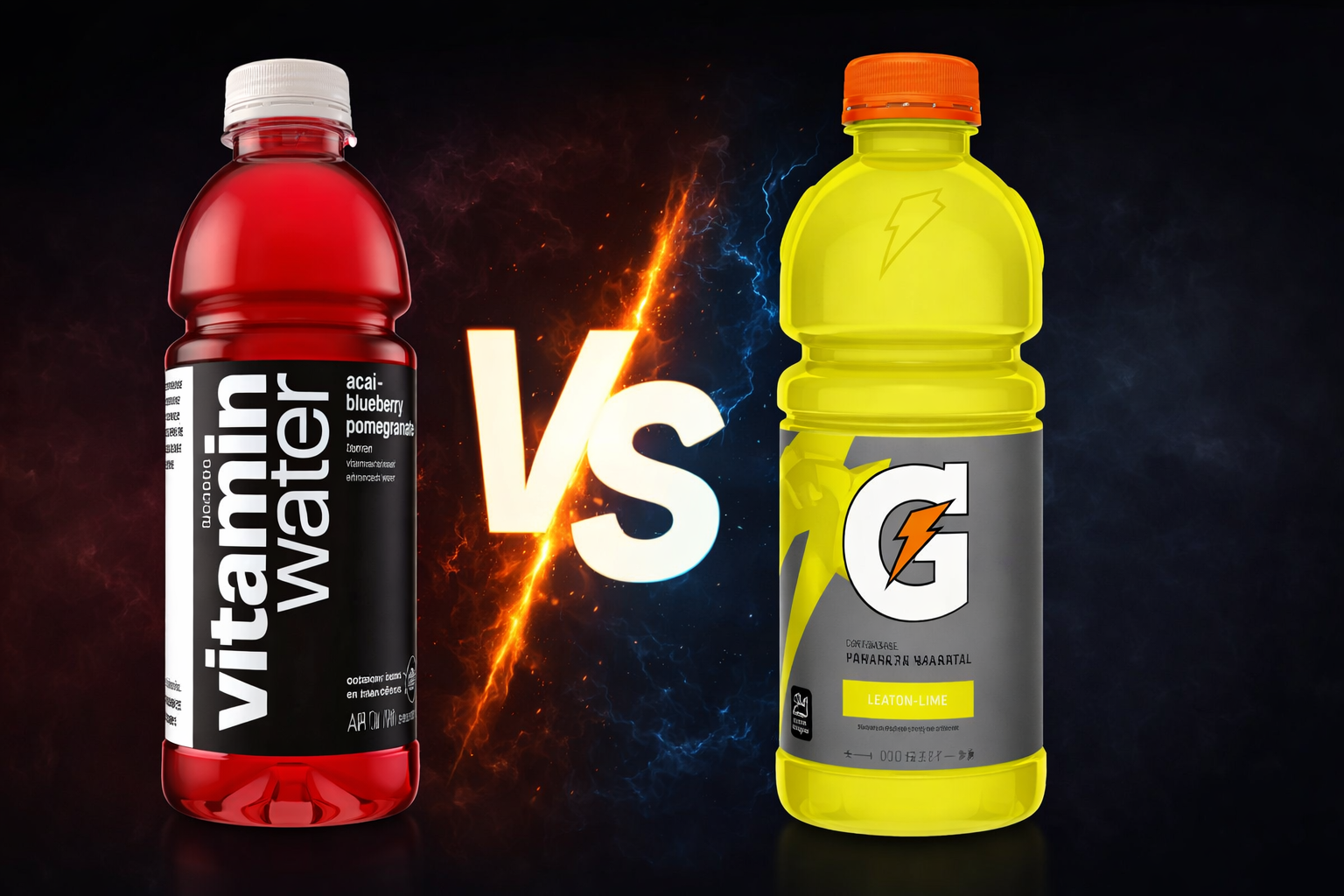
Most people don’t question their hydration choices — they just grab whatever looks healthy or athletic. One bottle promises vitamins, antioxidants, and lifestyle wellness. The other is stamped with decades of elite sports credibility and sideline coolers.
But here’s the truth most labels won’t tell you:
👉 The best hydration drink depends less on branding and more on your body’s physiological needs at that exact moment.
Hydration isn’t one-size-fits-all. Your sweat rate, workout intensity, environment, and timing all determine whether Vitaminwater, Gatorade, or plain water is the smartest choice.
Understanding when Vitaminwater works, when Gatorade performs better, and when neither is necessary can dramatically improve:
- Energy levels
- Workout performance
- Recovery speed
- Day-to-day hydration efficiency
Let’s break down the hydration science in a way most blogs never do — practical, physiological, and brand-neutral.
How Much Dehydration Is Enough to Need Electrolytes?
One of the biggest hydration myths is that electrolytes are always necessary. In reality, your body only needs electrolyte replacement after a measurable level of fluid loss.
The 2% Rule
When you lose approximately 2% of your body weight through fluids, dehydration begins to meaningfully affect performance.
At this threshold, the body struggles with:
- Temperature regulation
- Muscle contraction efficiency
- Blood circulation
- Cognitive focus and reaction time
For a 180-lb (82-kg) person, that’s just over 3.5 pounds of fluid — easy to lose during prolonged exercise or heat exposure.
How Vitaminwater Works Here
Vitaminwater contains small amounts of electrolytes like potassium and sometimes sodium, but typically far less sodium than the body loses through sweat.
👉 Physiological result:
It can assist with mild hydration but may not restore electrolyte balance quickly enough during heavier fluid loss.
Best suited for:
- Light workouts
- Casual physical activity
- Daily hydration with flavor
- Minor fatigue or sluggishness
Vitaminwater functions more like enhanced water, not a true electrolyte replacement beverage.
How Gatorade Works Here
Gatorade is engineered around a proven formula: sodium + carbohydrates.
This combination activates sodium-glucose co-transporters in the gut, which significantly improves fluid absorption and retention.
👉 Physiological result:
Your body holds onto more of the fluid you drink instead of flushing it out, accelerating rehydration.
Best suited for:
- Long workouts
- Hot or humid environments
- Heavy sweating
- Competitive or endurance activity
Bottom Line
- Mild dehydration → Vitaminwater can help
- Noticeable sweat loss → Gatorade is the stronger physiological choice
When Water Is Actually Better Than Electrolyte Drinks
Here’s a hydration truth that surprises many people:
Electrolytes are not automatically superior to water.
If sweat loss is minimal, water hydrates just as effectively — without added sugars, sodium, or calories.
How Vitaminwater Performs
Most Vitaminwater varieties contain added sugars (unless you choose the Zero version).
👉 If you drink it without needing electrolytes, you may simply be adding unnecessary calories to your day.
Good use case:
- When plain water feels boring
- When flavor helps you drink more fluid overall
Not ideal:
- As an all-day, everyday beverage
How Gatorade Performs
Because Gatorade was designed for athletes, casual consumption can oversupply:
- Sodium
- Sugar
- Calories
👉 This makes it less suitable for sedentary or low-activity days.
Smart Hydration Rule
For:
- Office days
- Short walks
- Errands
- Light gym sessions
👉 Water wins.
Electrolyte drinks should be reserved for situations where your body truly needs mineral replacement.
How Fast Should You Expect to Feel Better?
Hydration speed isn’t about how cold or sweet a drink tastes — it’s about electrolyte concentration, especially sodium.
Typical Recovery Windows
- Mild dehydration: 15–30 minutes
- Moderate dehydration: 30–60 minutes
How Vitaminwater Works
With lower sodium levels, Vitaminwater supports hydration more gradually.
👉 You may feel refreshed quickly, but cellular hydration may lag behind, especially after intense sweating.
Think of it as steady rehydration, not rapid correction.
How Gatorade Works
Gatorade’s sodium-glucose system pulls fluids into the bloodstream more efficiently.
👉 This often leads to faster, more noticeable improvement, particularly after demanding activity.
Performance Insight
When hydration speed matters, sodium matters — and Gatorade typically delivers more of it.
What Happens If You Drink Electrolytes When You’re Not Dehydrated?
More hydration tools do not equal better hydration.
Electrolyte drinks are corrective, not preventive.
How Vitaminwater Affects the Body
Frequent consumption may lead to:
- Hidden sugar intake
- Unnecessary daily calories
- Reduced fat-burning efficiency during workouts
Even though it sounds “healthy,” it can quietly shift your energy balance upward.
How Gatorade Affects the Body
Regular use without heavy sweating may cause:
- Excess sodium intake
- Water retention
- Bloating for some individuals
👉 Over time, it behaves more like a sports soda than a hydration solution.
Key Takeaway
Electrolytes should be used strategically, not habitually.
Should You Drink Electrolytes Before, During, or After Activity?
Timing matters just as much as drink choice.
Before Activity
Vitaminwater:
Useful for light pre-hydration without excess sodium.
Best when:
- Workout intensity is moderate
- Weather is mild
Gatorade:
More effective before endurance sessions or extreme heat exposure because it boosts fluid retention early.
👉 Advantage: Gatorade for high-demand sessions.
During Activity
Vitaminwater:
May fall short during prolonged sweating due to limited sodium replacement.
Gatorade:
Specifically designed for this phase.
It helps:
- Maintain blood volume
- Delay fatigue
- Sustain performance
👉 Clear winner during exercise: Gatorade.
After Activity
Vitaminwater:
Appropriate for gentle recovery when dehydration isn’t severe.
Gatorade:
Superior when large electrolyte deficits must be replaced quickly.
Especially valuable after:
- Endurance training
- Competitive sports
- Outdoor labor
Strategy
Match the drink to sweat intensity, not routine.
Who Actually Benefits MOST From Electrolyte Drinks?
Despite marketing, not everyone needs them.
People Who Benefit Greatly
Gatorade is ideal for:
- Endurance athletes
- Soccer, basketball, and football players
- Construction workers
- Military training
- High-heat environments
Vitaminwater is better for:
- Lifestyle exercisers
- People reducing soda intake
- Those needing flavor motivation to hydrate
- Light fitness routines
People Who Often Don’t Need Either
- Desk workers
- Short workout participants
- Casual walkers
👉 Water plus a balanced diet usually provides enough electrolytes.
The Real Decision: Vitaminwater or Gatorade?
Instead of asking which drink is “healthier,” ask:
👉 What is my body losing right now?
Choose Vitaminwater if:
- Sweat loss is low
- You want lighter hydration
- Performance is not the priority
Choose Gatorade if:
- You are sweating heavily
- Athletic output matters
- Rapid rehydration is necessary
Choose water if:
- It’s a normal day
- Activity is short
- Meals already contain adequate sodium
👉 The smartest hydration habit is flexibility, not brand loyalty.
Final Verdict + CTA
Hydration isn’t about copying athletes or choosing what sounds nutritious — it’s about giving your body exactly what it needs at the right time.
Vitaminwater supports casual hydration, while Gatorade excels in performance recovery and electrolyte replacement.
The most common mistake?
👉 Treating electrolyte drinks as everyday beverages instead of targeted tools.
Ask yourself this before your next sip:
“Did I actually sweat enough to earn this drink?”
Master that one question, and you’ll hydrate smarter than 90% of people.
Want better energy, stronger workouts, and faster recovery?
Start matching your hydration strategy to your lifestyle — not the label on the bottle.