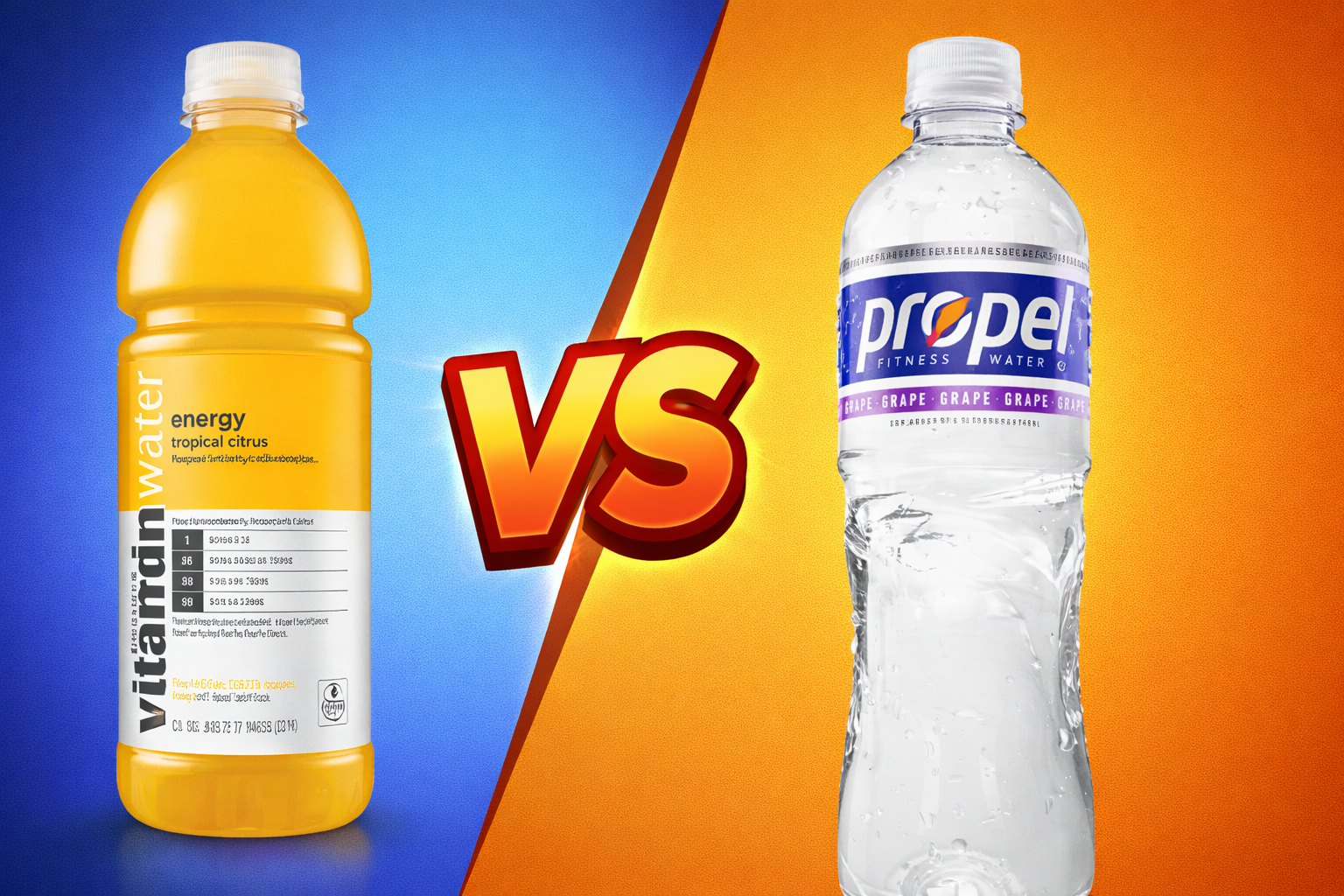
I’ve always been that person staring at the drink fridge, trying to convince myself I’m making a “healthier” choice. On days when plain water feels boring, I usually end up grabbing either Vitamin Water or Propel. They both promise hydration with a little extra something, and honestly, they seem pretty similar at first glance. I’ve gone back and forth between the two over the years, sometimes based on taste, sometimes on what was on sale, and sometimes just on vibes. After drinking both more times than I can count, I started wondering which one actually makes more sense for everyday hydration and workouts. That’s what got me comparing Vitamin Water vs Propel from my own experience.
What Is Vitaminwater?

Vitaminwater, officially called Glacéau Vitaminwater and owned by Coca-Cola, is basically flavored water with added vitamins and a small dose of electrolytes. Depending on which bottle you grab, it’s either sweetened with sugar (the regular line) or non-caloric sweeteners (Vitaminwater Zero).
I’ve always seen it as that middle-ground drink. It feels a little more interesting than plain water but not as intense as a full-on sports drink. That’s also how it’s marketed: an everyday “functional” drink that gives you hydration plus some extra nutrients.
Key Claims: Science-Backed or Exaggerated?
“Nutrient-enhanced” → Mostly true
Vitaminwater does contain real vitamins, especially vitamin C and several B vitamins. You’ll also get small amounts of potassium, magnesium, and calcium. It’s not just flavored water with a fancy label. That said, the amounts aren’t usually high enough to replace a balanced diet.
“Hydrates better than water” → Exaggerated
From my experience, it hydrates just fine, but it doesn’t feel magically better than plain water. The electrolyte levels are pretty low, so unless you’re doing light activity, it’s not going to outperform water in any meaningful way. For heavy sweating or long workouts, it falls short compared to true sports drinks.
“Healthy soda alternative” → Partly true
Vitaminwater Zero fits this claim better since it skips the sugar. Regular Vitaminwater, though, can pack around 25–32 grams of sugar per bottle. That’s close to soda territory, which kind of undermines the “healthy” image if you’re drinking it often.
What Is Propel?

Propel is a zero-calorie, zero-sugar fitness water made by PepsiCo under the Gatorade umbrella. You’ll usually see it sold in ready-to-drink bottles or those little powder packets you mix with water. I’ve tried both, mostly depending on whether I’m at home or throwing something in my gym bag.
To me, Propel has always felt more “fitness-focused” than Vitaminwater. It’s clearly aimed at light workouts, walks, or just staying hydrated during the day, not fueling long runs or intense training sessions. The whole pitch is electrolytes and vitamins without any sugar or calories.
Key Claims: Science-Backed or Exaggerated?
“Replaces electrolytes lost in sweat” → Partly true
Propel does include sodium and potassium, which are the main electrolytes you lose when you sweat. From my experience, it’s enough for casual workouts or warm days. That said, the amounts are pretty modest. Compared to full sports drinks or medical-grade oral rehydration solutions, it’s on the lighter side.
“Zero sugar, zero calories” → Accurate
This claim holds up. Propel is sweetened with sucralose and acesulfame-K, so you get flavor without any sugar or calories. If you’re watching sugar intake or just don’t want extra calories in your drink, this is where Propel really stands out for me.
Electrolyte Amounts (Exact Numbers)
This is where things really clicked for me. Once I actually looked at the numbers instead of the marketing, the difference between Vitaminwater and Propel became pretty obvious.
Here’s a side-by-side look at what you’re actually getting per bottle or packet:
| Nutrient | Vitaminwater (20 oz, regular) | Vitaminwater Zero | Propel (20 oz bottle) | Propel Powder Packet |
|---|---|---|---|---|
| Sodium | 0–30 mg | 0–30 mg | ~160–230 mg | ~210 mg |
| Potassium | ~50–150 mg | ~50–150 mg | ~40–65 mg | ~60–65 mg |
| Magnesium | Small amount | Small amount | Trace | Trace |
| Calcium | Small amount | Small amount | Trace | Trace |
Bottom line
Propel contains significantly more sodium, and that’s the electrolyte that actually matters most when you’re sweating. After workouts, hot days, or anything that leaves me salty and dehydrated, Propel just makes more sense.
Vitaminwater technically has electrolytes, but the amounts are minimal. In real-world terms, it hydrates more like flavored water than a functional electrolyte drink. For me, that makes Vitaminwater more of a taste-first option, while Propel is the better pick when hydration is the goal.
Sugar Content
This is usually the deal-breaker for me. Regular Vitaminwater can contain anywhere from 25 to 32 grams of added sugar in a 20 oz bottle. That’s a lot for something that’s often marketed as a healthier hydration drink. It tastes good, no doubt, but sugar-wise it’s much closer to soda than most people realize.
Vitaminwater Zero fixes that issue by cutting the sugar entirely. It’s sweetened with erythritol and stevia, so you still get the flavor without the sugar hit. From my experience, it’s a better everyday option if you like Vitaminwater but don’t want the sugar crash that can come with the regular version.
Propel also has zero grams of sugar and relies on artificial sweeteners for taste. If sugar intake matters to you at all, Propel and Vitaminwater Zero are the clear winners here. At that point, the choice really comes down to taste and whether you want more electrolytes or just flavored water.
Ingredients Comparison
When I started reading the ingredient lists instead of just the front labels, the difference in priorities between these two drinks became pretty clear.
Vitaminwater leans more toward being a flavored vitamin drink. The regular versions use cane sugar or crystalline fructose for sweetness, while the Zero line switches to erythritol and stevia. For electrolytes, it includes potassium phosphate, magnesium lactate, and calcium lactate, but only in small amounts. Most bottles are fortified with vitamin C and several B vitamins like B3, B5, B6, and B12. Some flavors go further and add vitamin A, vitamin E, or zinc. You’ll also see things like vegetable juice for color and gum acacia for texture.
Propel, on the other hand, is much more straightforward and hydration-focused. Sodium chloride (basically salt) is front and center, along with potassium citrate or monopotassium phosphate. Those are there specifically to replace what you lose in sweat. Instead of sugar, Propel uses sucralose and acesulfame-K for sweetness. It still includes vitamins C, E, and several B vitamins, but the list feels more functional than flashy. Citric acid and natural flavors round things out.
From my perspective, Vitaminwater is built to taste good and deliver vitamins, while Propel is built to support hydration first. That difference shows up clearly once you actually look at what’s inside each bottle.
Hydration Effectiveness
In my experience, Vitaminwater hydrates about the same as any flavored water. It definitely helps you get fluids in, especially if plain water feels boring, but the electrolyte levels are too low to make a real difference after a workout or a hot day. I don’t notice much of a recovery boost when I drink it post-exercise.
Propel does a better job when hydration actually matters. The higher sodium content makes it more effective for light to moderate sweating, like gym sessions, long walks, or being outside in the heat. It’s the one I reach for when I feel a little depleted and water alone doesn’t quite cut it.
That said, neither drink is meant for extreme dehydration. They don’t replace oral rehydration solutions or high-sodium sports drinks designed for endurance events or illness-related fluid loss. For everyday hydration and casual workouts, though, Propel clearly has the edge for me.
Health & Wellness Benefits
With Vitaminwater, the main benefit is the vitamin content. It delivers large doses of B vitamins and vitamin C, which can be useful if your diet is lacking or you just like the idea of a vitamin boost in your drink. That said, the regular versions come with a lot of added sugar, which feels unnecessary from a health standpoint. The Zero line fixes that problem and gives you the vitamins without the calories, making it a more reasonable everyday option in my book.
Propel takes a different approach. There’s no sugar and no calories at all, which makes it easy to fit into almost any routine. It focuses more on supporting electrolyte balance rather than providing energy or sweetness from sugar. For me, that’s great for workouts or hot days. The only real downside is that it uses artificial sweeteners, which some people don’t tolerate well or just prefer to avoid.
Price Comparison
Price-wise, Vitaminwater usually lands somewhere between $1.25 and $2.00 per bottle, depending on the store and whether it’s on sale. That’s pretty typical for a flavored, branded drink, and it’s not something I’d want to buy every single day at full price.
Propel bottles are priced in a similar range, so there’s not a big difference if you’re comparing bottle to bottle. Where Propel really pulls ahead for me is with the powder packets. When you buy them in bulk, the cost per serving drops a lot, making them much easier on the budget.
If you’re drinking these regularly, Propel powder is usually the most cost-effective option. It’s also convenient to stash in a bag or drawer, which is a nice bonus.
Taste & Flavor
Taste is where personal preference really takes over. Vitaminwater is noticeably sweet, with bold, almost candy-like flavors. It also has a slightly thicker mouthfeel, which makes it feel more like a drink than water. I enjoy it when I’m craving something flavorful, but it can feel like too much if I’m just trying to hydrate. The Zero versions are less heavy, though I do notice a mild stevia aftertaste in some flavors.
Propel tastes much lighter and cleaner overall. It’s more “water-like,” which I actually prefer during or after workouts. The powder packets tend to taste sweeter than the bottled versions, especially if you mix them with less water. Like most zero-sugar drinks, there can be an artificial sweetener aftertaste, and some people are more sensitive to that than others.
Customer Experience
From what I’ve seen and experienced, Vitaminwater is incredibly easy to find just about anywhere. Gas stations, grocery stores, airports, vending machines, you name it. The flavors are a big part of its appeal, and a lot of people buy it simply because it tastes good. Most of the criticism I hear centers on the sugar content in the regular versions and the way it’s marketed as a health drink when it’s often closer to a sweet beverage.
Propel is also widely available both in stores and online, and I’ve never had trouble finding it. The powder packets are a standout for convenience. They’re easy to travel with and don’t take up much space, which I appreciate. The most common complaints tend to focus on the artificial sweeteners, especially from people who are sensitive to the taste or how their body reacts to them.
Which One Should You Choose?
If I’m being honest, this choice really comes down to what you want out of the drink.
You might lean toward Vitaminwater if you’re looking for a vitamin-focused flavored drink and you genuinely enjoy bold, sweet flavors. It works well when plain water feels boring and you want something that tastes more like a treat. If sugar is a concern, I’d stick with Vitaminwater Zero, which gives you the vitamins without the sugar overload.
On the other hand, Propel makes more sense if you want zero sugar and zero calories across the board. It’s the better option when you need actual electrolyte support for workouts or warm-weather sweating. I also prefer it when I want something lighter and less syrupy that still feels refreshing.
For me, Vitaminwater is more of a flavor and vitamins choice, while Propel is my go-to for practical hydration.
Final Thoughts
After going back and forth between these two for years, I don’t really see this as a “winner takes all” situation. Vitaminwater and Propel serve different purposes, even though they sit on the same shelf.
Vitaminwater is something I reach for when I want flavor and a vitamin boost, especially if I’m choosing the Zero version to avoid sugar. It feels more like a flavored beverage than a hydration tool. Propel, on the other hand, is what I grab when hydration actually matters. The extra sodium makes a real difference after workouts or on hot days, and the zero sugar aspect makes it easy to drink regularly without thinking about calories.
If I had to simplify it, Vitaminwater is about taste and vitamins, while Propel is about function and hydration. Once you’re clear on what you want from the drink, the choice becomes pretty straightforward.