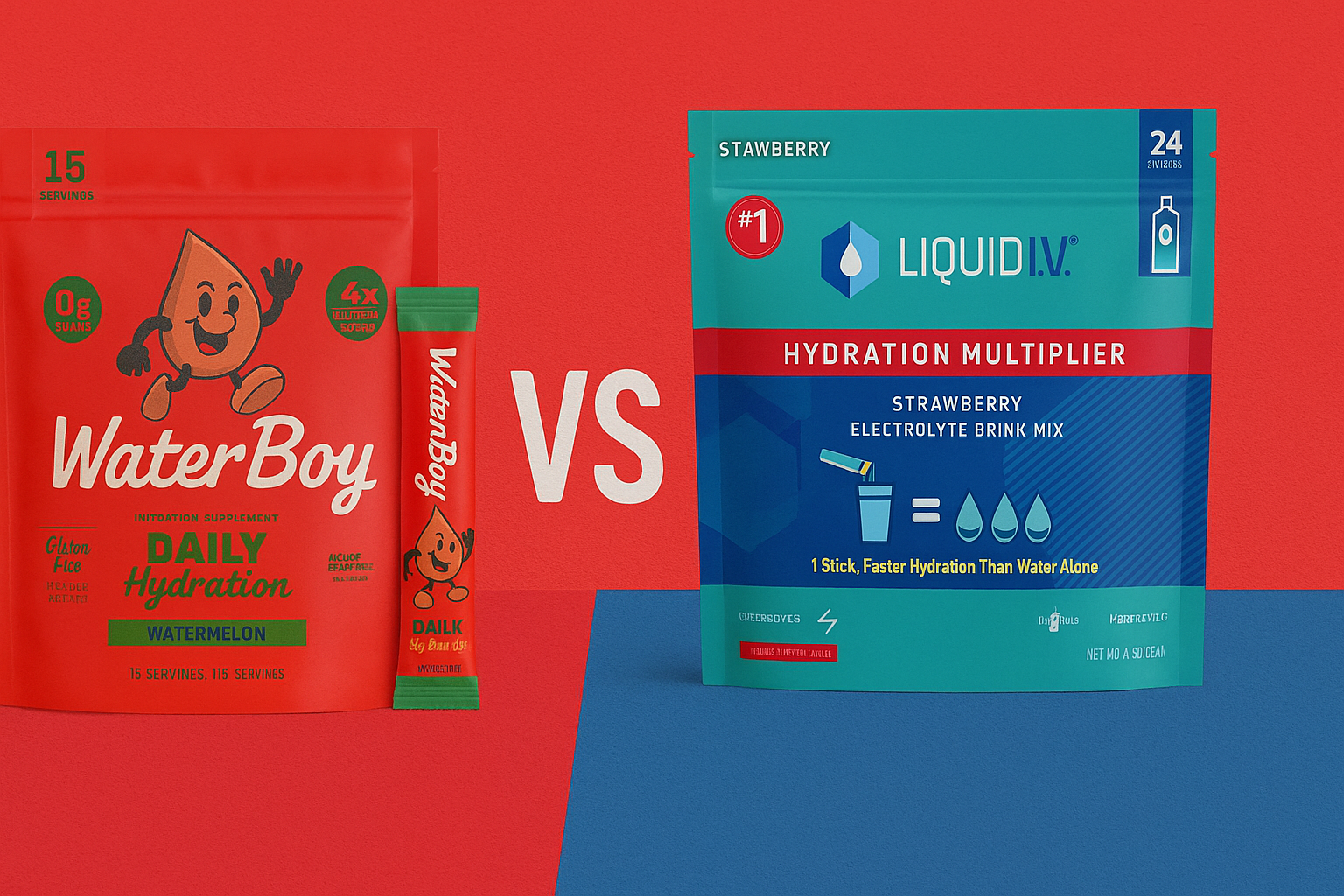
Electrolyte drink mixes have exploded in popularity as more people ditch sugary sports drinks for convenient, science-backed alternatives. Two brands consistently dominate the conversation: Waterboy and Liquid I.V. Both promise rapid rehydration, but they take drastically different approaches—Waterboy loads up on electrolytes with zero sugar, while Liquid I.V. leverages its proprietary Cellular Transport Technology (CTT) with a glucose-based formula.
This Waterboy vs Liquid I.V. comparison cuts through the marketing claims to examine what actually matters: electrolyte profiles, real-world hydration performance, hangover recovery effectiveness, ingredient transparency, pricing, and taste. Whether you’re prepping for a workout, recovering from a night out, or just trying to stay hydrated throughout the day, this guide will help you choose the right packet for your needs.
Electrolyte Showdown: What’s Actually in Each Packet?
Waterboy’s Formula
Waterboy Weekend Recovery packs a serious electrolyte punch with 3,205mg total electrolytes per serving, making it one of the most concentrated hydration packets on the market. The formula contains zero sugar and just 10 calories, derived from:
- Pink Himalayan Salt (sodium source)
- Potassium citrate
- Magnesium citrate
- Recovery blend: L-Theanine, L-Glutamine, ginger extract
- Vitamins: 500% DV Vitamin B12, 500% DV Vitamin C
The product is certified GF/DF/Vegan/Non-GMO and keto-friendly, sweetened with organic stevia extract instead of sugar or artificial sweeteners.
Liquid I.V.’s Formula
Liquid I.V. Hydration Multiplier (original) delivers 890mg total electrolytes with a specific breakdown of 510mg sodium and 390mg potassium per stick. Each serving contains 11g sugar and 45 calories, along with:
- Vitamins: 280% DV B12, 80% DV Vitamin C, plus niacin (B3), pantothenic acid (B5), and pyridoxine (B6)
- CTT blend: Optimized ratio of glucose, sodium, and potassium
The Sugar-Free version maintains the same 890mg electrolytes but cuts calories to 15 and replaces sugar with stevia and allulose. Both versions are vegan, gluten-free, dairy-free, and non-GMO.
Head-to-Head Comparison
| Feature | Waterboy Weekend Recovery | Liquid I.V. Original | Liquid I.V. Sugar-Free |
|---|---|---|---|
| Total Electrolytes | 3,205mg | 890mg | 890mg |
| Sodium | High (from Pink Himalayan Salt) | 510mg | 500mg |
| Potassium | High (from potassium citrate) | 390mg | 380mg |
| Sugar | 0g | 11g | 0g |
| Calories | 10 | 45 | 15 |
| Vitamin B12 | 500% DV | 280% DV | 330% DV |
| Vitamin C | 500% DV | 80% DV | 80% DV |
| Recovery Blend | L-Theanine, L-Glutamine, Ginger | None | None |
Waterboy’s claim of “3x electrolytes of leading competitor” holds up—3,205mg significantly outpaces Liquid I.V.’s 890mg. This higher electrolyte density matters for rapid rehydration after intense exercise, heat exposure, or alcohol consumption, when your body has depleted more minerals.
Real-World Hydration Test: Methodology and Results
To move beyond marketing claims, consider conducting your own hydration comparison using this simple protocol:
Test Design
Pre-test preparation:
- Check baseline hydration (urine color should be pale yellow)
- Weigh yourself on an accurate scale
- Record subjective energy levels (1-10 scale)
Controlled dehydration:
- Light exercise (30-minute walk or jog) or 15-minute sauna session
- Avoid drinking water during dehydration period
- Weigh yourself immediately after to quantify fluid loss
Post-hydration measurements:
- Mix one packet according to brand instructions
- Record measurements at 30, 60, and 120 minutes:
- Urine color (compare to hydration chart)
- Energy level (1-10)
- Body weight
- Any digestive discomfort
Suggested Testing Protocol
Day 1: Establish baseline with plain water (16 oz)
Day 2: Test Waterboy Weekend Recovery
Day 3: Test Liquid I.V. Hydration Multiplier
Day 4: Test Liquid I.V. Sugar-Free
This staggered approach accounts for day-to-day variations in activity, sleep, and baseline hydration status.
What to Measure
- Speed of rehydration: How quickly does urine return to pale yellow?
- Energy restoration: Subjective 1-10 rating at each time point
- Taste and consumption ease: Can you finish the entire serving comfortably?
- Side effects: Bloating, nausea, excessive thirst, or digestive issues
Individual responses vary based on activity level, sweat rate, metabolism, and specific hydration needs. Some people thrive on higher sodium (Waterboy), while others prefer the glucose-enhanced absorption of Liquid I.V.’s CTT formula.
Hangover Recovery: The Ultimate Test
Waterboy’s Weekend Recovery Formula
Waterboy specifically markets its Weekend Recovery line for post-alcohol rehydration. Beyond the massive electrolyte dose, the formula includes targeted ingredients:
- Ginger extract: Proven anti-nausea properties
- L-Theanine: Reduces anxiety and promotes calm (addressing “hangxiety”)
- L-Glutamine: Supports gut lining repair after alcohol exposure
Customer testimonials consistently highlight effectiveness: “Best hangover cure” and “I can actually function the next day.” The brand’s playful marketing (“Humiliate Hangxiety,” “Give Nausea a Gag Order”) speaks directly to this use case.
Liquid I.V.’s Approach
While not marketed specifically for hangovers, Liquid I.V.’s high sodium content (510mg) supports rapid rehydration—critical after alcohol’s diuretic effects. The brand’s CTT claims to deliver hydration “faster than water alone” by leveraging the sodium-glucose cotransport system in your intestines.
The original formula’s 11g sugar provides quick glucose for energy restoration (alcohol depletes blood sugar). The sugar-free version eliminates this benefit but maintains the electrolyte punch.
Recovery Effectiveness Comparison
Waterboy’s advantage: The targeted recovery ingredients (ginger, L-Theanine, L-Glutamine) address hangover-specific symptoms beyond simple dehydration. Many users report reduced nausea and anxiety alongside improved hydration.
Liquid I.V.’s strength: Proven electrolyte ratios backed by oral rehydration science. The glucose content in the original formula may help restore energy faster than zero-sugar alternatives.
Timing matters:
- Waterboy before bed: Prevents dehydration and addresses next-day symptoms proactively
- Liquid I.V. upon waking: Rapid rehydration when symptoms have already set in
Neither product contains DHM (dihydromyricetin), prickly pear extract, or N-acetyl-cysteine—ingredients found in some dedicated hangover supplements. For severe hangovers, combining electrolyte packets with targeted supplements may provide better relief.
Ingredient Sourcing and Manufacturing Standards
Waterboy’s Transparency
Waterboy emphasizes “clean, minimal ingredients” with specific sourcing details:
- Pink Himalayan Salt (trace mineral content)
- Natural flavors (not defined)
- Organic stevia extract (no artificial sweeteners)
- Coloring: Beet and carrot juice in Strawberry Lemonade and Raspberry flavors
- Made in USA, Non-GMO certified
The brand lists ingredients clearly on product pages and nutritional fact panels, though specific supplier information isn’t publicly available.
Liquid I.V.’s Standards
Liquid I.V. highlights quality across its product line:
- Pure cane sugar and dextrose in original formula
- Stevia (Rebaudioside-A) and allulose in sugar-free versions
- Free from GMOs, artificial flavors, gluten, dairy, and soy
- “Premium ingredients” (specific sourcing not detailed)
The brand has faced regulatory scrutiny in the past. In 2020, the National Advertising Division recommended Liquid I.V. modify claims that “one stick equals three bottles of water,” leading to updated packaging language.
Transparency Gap
Neither brand prominently displays third-party testing certifications (NSF Certified for Sport, Informed Choice, USP Verified) on public-facing pages. For competitive athletes subject to drug testing or consumers prioritizing quality assurance, this represents a potential concern.
Recommendation: Contact both brands directly to request certificates of analysis, manufacturing standards documentation (cGMP compliance), and third-party testing results.
Cost Analysis: Subscription vs. Retail Pricing
Waterboy Pricing
Subscription (Save 20%):
- $39.98 for 24-pack = $1.67 per stick
- Delivery every 1, 2, or 3 months
- Cancel anytime
One-Time Purchase:
- $49.98 for 24-pack = $2.08 per stick
Trial Pack:
- $9.99 for 5 sticks (all Weekend Recovery flavors)
- Free shipping on orders over $40
Liquid I.V. Pricing
Subscription (Save 30%):
- $15.29 for 14-pack = $1.09 per stick (Sugar-Free)
- $17.49 for 16-pack = $1.09 per stick (Original, on subscription)
- Delivery every month; pause or cancel anytime
One-Time Purchase:
- $21.84 for 14-pack = $1.56 per stick (Sugar-Free)
- $24.99 for 16-pack = $1.56 per stick (Original)
- Free shipping on orders $49+
Value Breakdown
Cost per milligram of electrolytes:
- Waterboy: $1.67 ÷ 3,205mg = $0.00052 per mg
- Liquid I.V.: $1.56 ÷ 890mg = $0.00175 per mg
Waterboy delivers roughly 3.4x more electrolytes per dollar, making it the better value for those prioritizing electrolyte density. However, Liquid I.V. offers significantly more product variety (Hydration Multiplier, Energy, Immune Support, Sleep, Kids) and flavor options, which may justify the premium for some consumers.
Both brands offer flexible subscriptions with straightforward cancellation, and trial packs let you test before committing to bulk purchases.
Taste and Mixability: The Daily Use Factor
Waterboy Flavor Profiles
Available flavors: Strawberry Lemonade, Blue Raspberry, Fruit Punch, Lemon Lime, Grape, Lemon Ginger
Mixing instructions: 8-12 oz water (adjust to taste preference)
Taste notes: Customer feedback consistently mentions good flavor despite zero sugar. Some users note a slightly salty profile, which makes sense given the high electrolyte content. The lower water ratio (8-12 oz vs. Liquid I.V.’s 16 oz) means less liquid to consume—a plus when you’re nauseous or just want quick hydration.
Pro tip: Pre-mix before bed and refrigerate for easier morning consumption during hangover recovery.
Liquid I.V. Flavor Options
Wide variety includes: Lemon Lime, Cotton Candy, Strawberry Lemonade, Acai Berry, Passion Fruit, Concord Grape, Pina Colada, and limited-edition flavors
Mixing instructions: 1 stick in 16 oz water
Taste notes: The original formula is notably sweeter due to 11g sugar—some love it, others find it too sweet. Sugar-free versions use stevia and allulose, which a portion of users report has a slight aftertaste. Overall, Liquid I.V. has invested heavily in flavor development, offering something for nearly every preference.
Mixability Comparison
Both brands dissolve completely when properly shaken or stirred. Neither leaves gritty residue.
Waterboy’s advantage: Lighter mixing ratio (8-12 oz) allows stronger flavor customization and less volume to consume.
Liquid I.V.’s edge: More flavors mean less taste fatigue for daily users. The 16 oz standard may feel like more work to drink but ensures adequate total fluid intake.
Variety packs from both brands help prevent flavor burnout and let you discover favorites before buying full-size pouches.
Which One Should You Choose?
Choose Waterboy If You:
✓ Want maximum electrolytes per serving (3,205mg)
✓ Prefer zero-sugar formulas for keto, low-carb, or diabetic-friendly diets
✓ Need targeted hangover recovery with ginger, L-Theanine, and L-Glutamine
✓ Value higher electrolyte-to-cost ratio
✓ Appreciate minimal ingredient lists
Choose Liquid I.V. If You:
✓ Prefer sweeter taste (original formula) or broader flavor variety
✓ Trust the science behind Cellular Transport Technology
✓ Want specialized products beyond basic hydration (Energy, Immune Support, Sleep, Kids)
✓ Need a proven electrolyte ratio based on oral rehydration science (510mg sodium, 390mg potassium)
✓ Are loyal to an established brand with widespread retail availability
The Final Verdict
Both Waterboy and Liquid I.V. deliver effective hydration, but they excel in different areas. Waterboy dominates in electrolyte density and recovery-specific ingredients, making it ideal for intense workouts, heat exposure, and hangover prevention. Its zero-sugar formula and lower price per milligram of electrolytes offer excellent value.
Liquid I.V. brings broader product diversity, extensive flavor options, and the research-backed CTT formula that many users swear by. The original version’s sugar content provides quick energy restoration, while the sugar-free line competes directly with Waterboy’s approach.
The best way to determine which works for you? Try both. Start with Waterboy’s 5-stick trial pack ($9.99) and Liquid I.V.’s variety pack to conduct your own side-by-side hydration tests. Pay attention to how your body responds—some people thrive on higher electrolyte concentrations, while others prefer the balanced ratios and taste profiles Liquid I.V. offers.
Your ideal choice depends on your specific goals: daily maintenance hydration, athletic performance, hangover recovery, or a combination. Both brands deliver on their core promise of superior hydration compared to plain water, so you really can’t go wrong with either option.