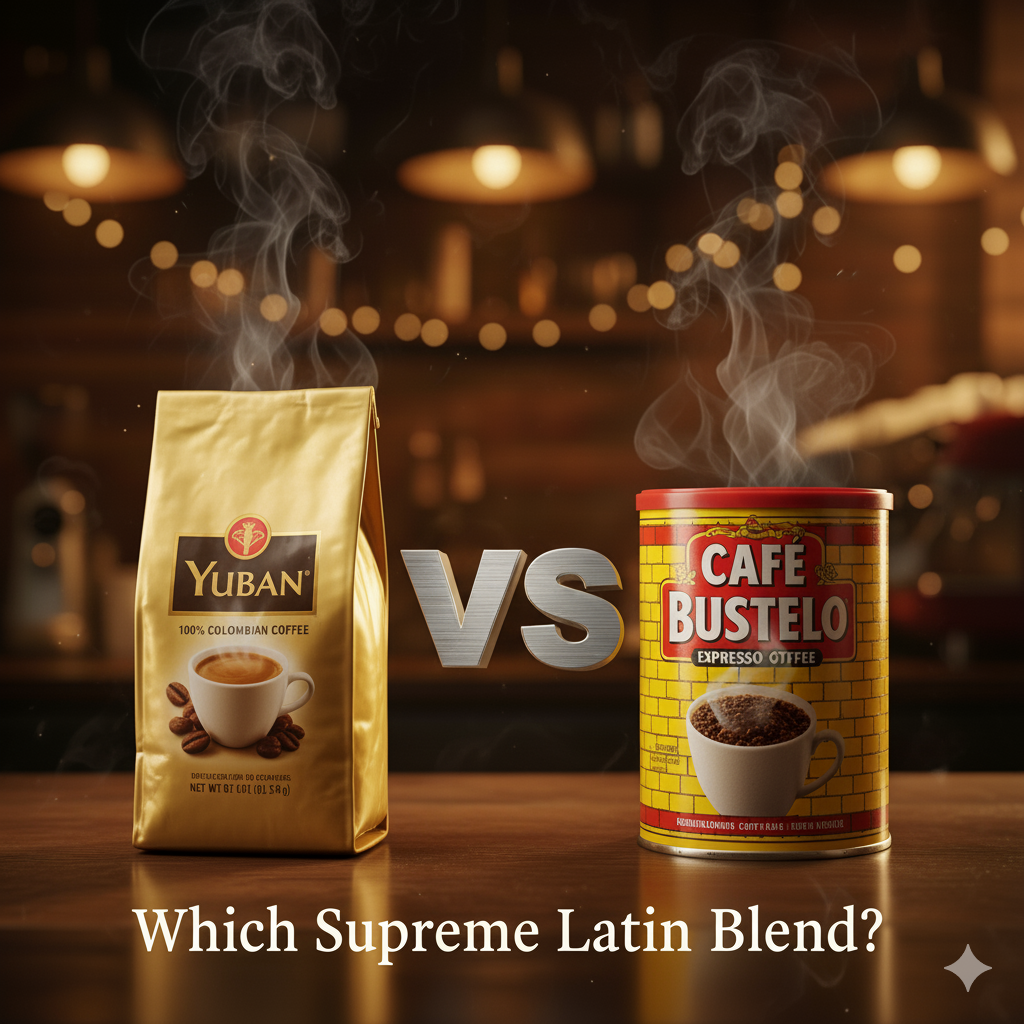
Coffee lovers often align themselves with strong brand loyalties — and few rivalries spark more passion than Yuban vs Café Bustelo. One leans toward smooth, broadly appealing flavor; the other embraces boldness and depth. But behind the taste, there’s history, science, ownership changes, and evolving sustainability initiatives.
In this updated guide, we’ll dive into both brands — with corrections and the latest context — comparing them across heritage, chemistry, brewing techniques, ethics, and more.
1. Introduction: The Clash of Two Coffee Icons
If you walk into any supermarket aisle, you’ll spot Yuban Coffee and Café Bustelo side by side. Yet, these names evoke very different experiences: Yuban conjures images of slow, comforting mornings; Café Bustelo evokes bold espresso and urban vitality.
Today’s comparison covers:
- Their shifting ownership and business structure
- The bean blends behind each label (no longer simply “Arabica vs. blend”)
- A deeper dive into flavor chemistry
- Updated sustainability practices
- Refined brewing advice reflecting real-world preferences
- And, of course, how they stack up in taste, price, and culture in 2025
Whether you prefer drip, espresso, or something in between — this is your definitive guide.
2. The Origin Stories: From Heritage to Household Names
Yuban’s Path to Mainstream Prominence
Yuban began in the early 1900s, created by John Arbuckle, who named it as a contraction of Yuletide Banquet. Over the decades, Yuban became part of Kraft’s coffee portfolio, marketed as a premium grocery brand. Its reputation rested on consistency, reliability, and a quietly confident brand tone.
Café Bustelo’s Roots and Ownership Shift
Café Bustelo was founded by Gregorio Bustelo, a Spaniard who immigrated to New York and brought his passion for strong coffee. Its Cuban-style espresso quickly gained traction in Latino and urban communities, solidifying its place in American coffee culture.
Importantly, Café Bustelo is no longer fully under Kraft Heinz. In 2011, J.M. Smucker Co. acquired parts of the coffee business and now oversees various coffee brands including Café Bustelo. The shifting ownership is critical to note because it affects marketing, sourcing, and sustainability strategy moving forward.
These trajectory differences shape not just brand image but their operational approach and consumer outreach.
3. Bean Sourcing and Roast Profiles (Revised)
Previously, we simplified matters by saying Yuban was strictly Arabica and Bustelo always a blend. The reality is more nuanced.
Varied Blends Across Product Lines
- Yuban offers multiple lines (e.g. Yuban Classic, Yuban Dark, etc.), and many of these blends use a mix of Arabica and Robusta beans, especially for their darker roast or espresso-style offerings.
- Café Bustelo similarly varies its formulations. While some products lean heavier in Robusta to boost crema and boldness, others use higher proportions of Arabica for smoother variants.
Roast Profiles & Regional Influence
- Both brands offer medium, dark, and espresso-style roasts.
- Bean sourcing spans major coffee regions (Brazil, Colombia, Honduras, etc.), with each region’s terroir influencing acidity, body, and aromatic nuance.
- Dark roasting tends to mask origin characteristics in favor of caramelization and depth; lighter blends preserve more of the bean’s unique notes.
In short: both brands flexibly adjust their blends and roast levels depending on the product line. There’s no one-size-fits-all “Yuban is Arabica only.”
4. Flavor Chemistry: How Taste Is Engineered (Expanded)
Let’s go deeper into the science behind the cup.
Key Chemical Players
- Maillard Reaction & Strecker Aldehydes: These reactions create melanoidins, which contribute to browning and complex “toasty” notes.
- Chlorogenic Acids (CGA) and their breakdown products influence perceived acidity and bitterness. In darker roasts, many CGAs break down, reducing brightness and increasing smoothness.
- Trigonelline decomposes into nicotinic acid (vitamin B3) and other volatiles that contribute to aroma.
- Volatile Aromatic Compounds: Aldehydes, ketones, pyrazines, furans, and phenols all play roles in nutty, chocolate, fruity, or smoky flavors.
- Caffeine & Alkaloids: While caffeine adds bitterness and stimulation, it’s the interplay with other compounds that rounds the flavor.
How Yuban and Bustelo Differ Chemically
- Yuban’s medium-roast blends aim to preserve more CGAs for bright notes, while still building desirable Maillard compounds.
- Café Bustelo’s darker roast/blend formulas push toward deep caramelization and reduced acidity, creating a heavier mouthfeel and intense aroma.
- The presence of Robusta in some Bustelo variants supplies higher caffeine and more robust (sometimes harsher) alkaloids.
By engineering roast curve (temperature vs. time) and blending ratios, both brands calibrate flavor profiles to align with their brand identity: smoother and balanced (Yuban) vs bold and full-bodied (Bustelo).
5. Brewing and Preparation Techniques (Refined Advice)
Let’s fine-tune the brewing guidance in light of real-world usage.
- Moka Pot / Espresso: Café Bustelo really shines when brewed in a moka pot or espresso machine using a fine grind. That method accentuates its boldness and crema.
- Drip Machines / Pour-Over: Many users also run Café Bustelo through drip or pour-over machines using the same fine grind (or slightly coarser) to make a strong “morning cup.”
- Yuban works best with medium-to-coarse grinds in drip brewers, French press, or pour-over setups, allowing extraction that emphasizes smoothness and clarity without over-extracting bitterness.
- Cold Brew / Immersion Methods: Both brands can benefit from cold brew or extended steeping to draw out sweet, low-acid compounds while softening harsher notes.
In practice: although moka pot is ideal for Bustelo’s bold style, many drinkers adapt it to drip brewers for convenience — and it still makes a powerful cup.
6. Price, Value, and Accessibility (Updated Context)
Price dynamics remain competitive.
- Yuban Coffee typically retails between $6–$8 USD per 12–13 oz (340–368 g) can, depending on roast and retailer.
- Café Bustelo often falls in the $4–$6 USD range per 10–12 oz (283–340 g) brick or can, making it more affordable per ounce in many cases.
Due to its historically broad appeal, Café Bustelo enjoys deeper distribution in discount grocers, bodegas, and Latino markets — increasing its accessibility. Yuban, meanwhile, remains strong in mainstream grocery chains and online platforms.
Given the ownership by Smucker for Bustelo, there’s potential for strategic pricing or promotional bundling with other Smucker-owned coffee lines. Keep an eye on deals that reflect this larger corporate umbrella.
7. Cultural Significance and Brand Identity
Café Bustelo has an almost mythic cultural footprint. Its bright yellow packaging became an icon in Latino communities, appearing in murals, music videos, and everyday kitchens. It’s not just coffee — it’s identity, pride, ritual. Its strong character reflects the boldness of the communities that embraced it.
Yuban’s identity is more understated. It leans into Americana, comfort, nostalgia, and mid-century domesticity. It doesn’t shout — it reassures. Its branding is conservative, familiar, and welcoming.
We see that Bustelo’s voice is bold, vivid, and emotionally grounded in community. Yuban’s is steady, calm, and quietly confident. Both resonate, just in different emotional registers.
8. Consumer Reviews and Public Sentiment
Let’s revisit public sentiment with an updated lens:
- Yuban consumers continue to highlight smoothness, drinkability, and consistency. Some longtime fans lament changes in roast intensity over time, but overall sentiment remains favorable for everyday drinkers.
- Café Bustelo continues to dominate praise for bold flavor and value. On forums and social media, it’s often regarded as “the best bang-for-your-buck bold coffee.” Some complaints cite excessive bitterness or harsh edges when mis-brewed, but those are usually tied to grind or brew errors.
In recent years, Bustelo’s cultural branding and digital campaigns have attracted new, younger fans who may not have Latino heritage but appreciate its aesthetic and character. The brand effectively leverages nostalgia, authenticity, and bold identity.
9. Health and Nutrition Insights
Nutritionally, both coffees are light — the differences lie in caffeine and acidity.
- Café Bustelo often reaches 120–150 mg caffeine per 8 oz, especially in darker roast or espresso-style brews.
- Yuban tends to range 95–130 mg, depending on the roast and brewing method.
Both coffees deliver beneficial compounds such as polyphenols and antioxidants. Those with sensitivity to acidity or caffeine may find Yuban’s milder profiles gentler on digestion, while Bustelo delivers a more potent energy boost.
As always, avoid additives (cream, sugar) if you want to keep your cup as healthful as possible.
10. Sustainability and Ethical Sourcing (Updated Practices)
This is an evolving arena, so here’s the latest:
Yuban’s Strategy
Yuban continues to promote Rainforest Alliance certification across many of its blends, supporting farm-level biodiversity, soil conservation, and fair labor practices. Their packaging emphasizes recyclability and reduced environmental footprint.
Café Bustelo (Smucker-era Initiatives)
Since becoming part of J.M. Smucker’s coffee portfolio, Café Bustelo has increased its visibility in Smucker’s broader sustainability commitments. The brand now participates in:
- Supplier codes of conduct
- Social impact programs, including the Café Bustelo El Café del Futuro Scholarship
- Efforts to improve traceability and empower farmers in sourcing countries
However, as of this writing, Café Bustelo does not uniformly carry major third-party sustainability certifications (e.g., Fair Trade, Rainforest Alliance) across all its product lines — though that could shift under Smucker’s oversight.
The key takeaway: Yuban leans more on environmental certification; Bustelo is leaning into social investment and corporate-level sustainability alignment.
11. Marketing and Consumer Demographics
Café Bustelo’s marketing is dynamic, vibrant, and culturally layered. It’s found new life through collaborations with artists, social media creators, and pop culture references. The brand speaks to younger, identity-driven consumers who want their coffee to reflect values and personality.
Yuban’s approach is quieter but steady, appealing to older or more traditional consumers who value consistency, trust, and legacy. Its packaging uses earthy, muted tones and imagery of nature or comfort.
In terms of demographics:
- Bustelo skews younger, urban, multicultural, and often digitally engaged.
- Yuban skews toward mature audiences, nostalgic buyers, and those who favor reliability over flash.
12. Final Verdict: Which Coffee Brand Wins? (Revisited)
With all the updated facts, here’s the revised side-by-side:
| Aspect | Yuban Coffee | Café Bustelo |
|---|---|---|
| Flavor Profile | Smooth, balanced, moderate roast complexity | Bold, full-bodied, darker roast emphasis |
| Caffeine & Intensity | Moderate (95–130 mg) | Higher (120–150 mg), especially in espresso-style |
| Best Brewing Methods | Drip, pour-over, French press, cold brew | Moka pot, espresso, strong drip adaptations |
| Sustainability Focus | Strong environmental certifications | Social programs and developing traceability initiatives |
| Cultural Identity | Comfort, tradition, Americana | Boldness, Latino heritage, expressive culture |
| Price & Accessibility | Slightly premium pricing, broad availability | More cost-effective per ounce, deep distribution in niche markets |
Recommendation Based on Your Preferences:
- Go Yuban if you value gentler flavor, environmental certifications, and a calm cup to start your day.
- Pick Café Bustelo if you crave bold taste, vibrant cultural identity, high caffeine, and great value.
In the end, “better” doesn’t mean one-size-fits-all. The ideal coffee is the one that sparks joy in your cup — every morning.