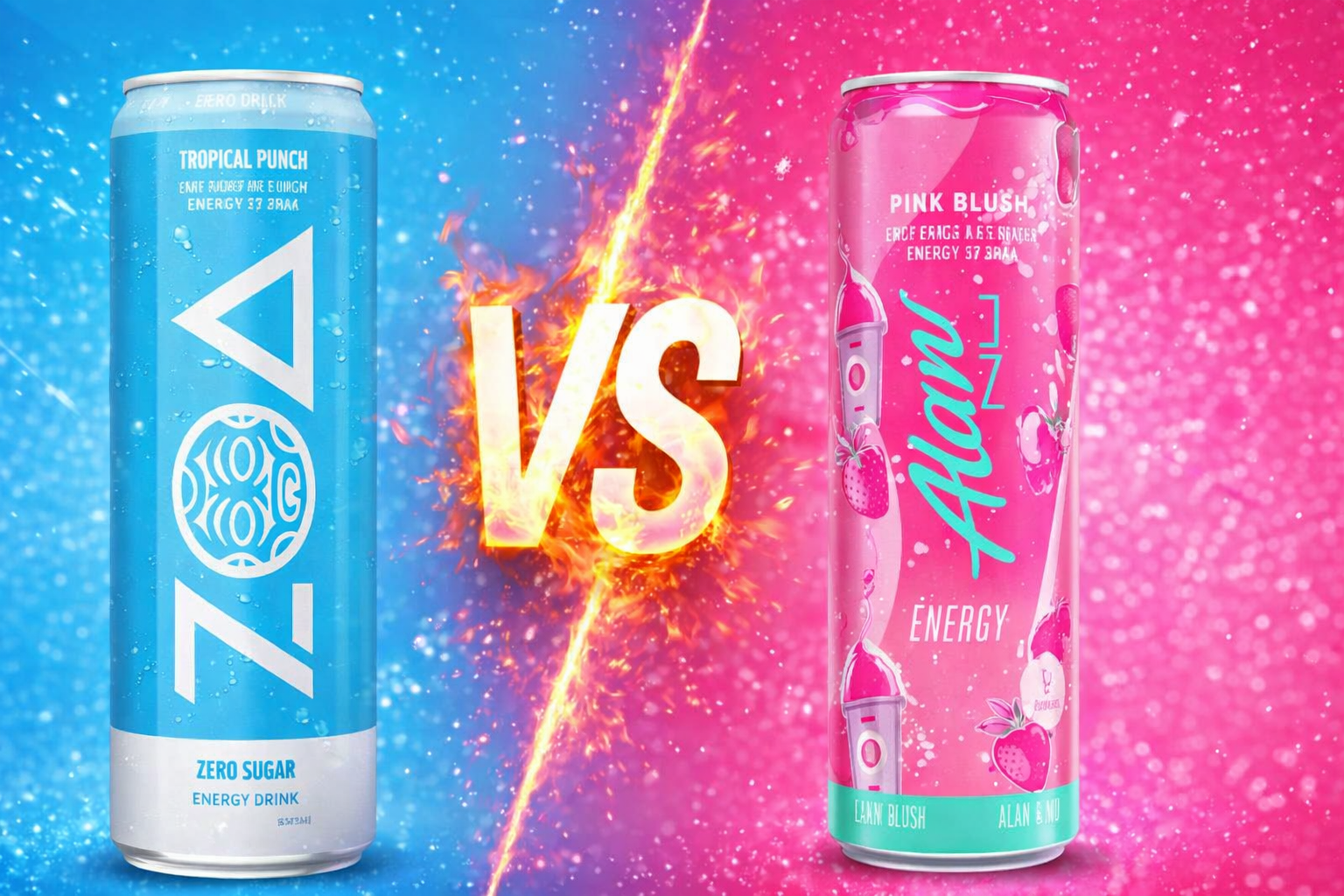
ZOA vs Alani Nu: My Honest Comparison
I didn’t set out to compare energy drinks. It kind of just happened.
Like a lot of people, I’m always looking for something that gives me a clean boost without the shaky, wired feeling. Over time, my fridge kept ending up with two cans more than anything else: ZOA vs Alani Nu. I’d grab one before a workout, another during a long workday, and eventually I realized I was switching between them for very different reasons.
That got me thinking. These two drinks get lumped into the same “healthier energy drink” category, but they don’t actually feel the same when you drink them. The taste, the energy curve, even how I felt an hour later was noticeably different.
So this isn’t a lab test or a hype-filled brand breakdown. It’s just my experience with ZOA vs Alani, how they fit into my routine, and which one I end up reaching for depending on the day.
What Is ZOA Energy?
ZOA Energy is a zero-sugar energy drink co-founded by Dwayne Johnson, and it’s clearly aiming for that “better-for-you” lane. Instead of straight synthetic caffeine, it uses caffeine from green tea and green coffee, then layers in electrolytes, B vitamins, vitamin C, and amino acids.
From my experience, ZOA feels like it’s built for people who want solid energy without sugar, but also want a bit more going on nutritionally. It’s not just about the caffeine hit. There’s a light hydration angle to it, plus some micronutrient support that makes it feel closer to a functional drink than a typical gas-station energy can.
When I grab a ZOA, it usually feels intentional. Like I’m choosing it for a workout, a busy day, or when I want energy that lasts without feeling harsh.
What Is Alani Nu?
Alani Nu is a fitness-focused wellness brand, but most people know it for its energy line. Alani Nu Energy comes in ready-to-drink cans and powdered sticks, both delivering high caffeine with zero sugar and very low calories.
Beyond energy drinks, the brand also offers Alani Nu Electrolyte Purified Water, which leans on potassium for light hydration support. That said, Alani’s main appeal isn’t hydration or vitamins. It’s bold flavors, strong stimulation, and drinks that feel more like a pre-workout in a can.
From my experience, Alani is what I reach for when I want to feel it fast. The flavors are loud, the caffeine hits hard, and the whole brand feels geared toward people who want maximum energy without sugar, even if that means sacrificing a more “balanced” feel.
Caffeine Content
Caffeine is honestly the biggest deciding factor for me when I’m choosing an energy drink. It controls how strong the boost feels, how fast it hits, and whether I’ll feel good or slightly wrecked an hour later.
With ZOA Energy, you’re getting about 160 mg of caffeine per 12-oz can. The caffeine comes from green tea and green coffee extracts. Even though it’s naturally sourced, I want to be clear. Caffeine is still caffeine. The difference for me is more about how it feels than where it comes from.
That 160 mg puts ZOA in a sweet spot. It’s noticeably stronger than soda or lighter energy drinks, but it doesn’t push into “too much” territory. When I drink a ZOA, I feel alert and steady without feeling overstimulated. It’s usually enough for a workout or a long work session without making me jittery.
Alani Nu Energy, on the other hand, brings more heat. A standard 12-oz can has around 200 mg of caffeine, which is roughly 25 percent more than ZOA. I definitely notice the difference, especially if I drink it quickly.
Some Alani flavors also include ingredients like L-theanine, which is often used to smooth out caffeine’s edge. For me, the energy still hits harder and faster than ZOA. It’s the kind of drink I reach for when I really want to feel stimulated and I know I can handle it.
If I had to sum it up based on my own use, ZOA works best when I want a strong but controlled boost. Alani is better when I want maximum stimulation and I’m already caffeine tolerant.
Sugar and Carbohydrate Content
When I’m drinking energy drinks regularly, sugar is one of the first things I check. I don’t want the crash, and I definitely don’t want hidden calories sneaking in.
The good news is that ZOA Energy and Alani Nu are basically even here. ZOA Energy has 0 grams of sugar. Alani Nu Energy also has 0 grams of sugar, and the Alani Electrolyte Water stays at 0 grams as well. Both brands rely on non-nutritive sweeteners instead of sugar to get their flavor.
Carb-wise, there are small differences, but nothing dramatic. ZOA usually lands around 2 to 3 grams of carbohydrates, which works out to roughly 10 calories per can. Alani Nu Energy varies a bit by flavor, coming in anywhere from 0 to 3 grams of carbs and about 5 to 15 calories total. The Alani Electrolyte Water contains zero carbs.
From a hydration standpoint, neither option is doing much heavy lifting. Without glucose, these drinks don’t support active rehydration the way traditional sports drinks or oral rehydration solutions do. For me, that means they’re fine for everyday use or light activity, but they’re not something I’d rely on for serious hydration or recovery after intense sweating.
Ingredients (What Actually Matters)
This is the part I care about most, because ingredients tell you what a drink is really trying to do once the marketing is stripped away.
With ZOA Energy, the ingredient list leans functional and balanced. The caffeine comes from green tea and green coffee, and it’s paired with real electrolytes like sodium, potassium, and magnesium. You also get 100 percent of your daily value of vitamin C, along with a full spread of B vitamins including B1, B2, B3, B5, B6, and B12.
ZOA also adds amino acids such as BCAAs, L-glutamine, L-arginine, and L-citrulline, plus plant-based ingredients like camu camu, acerola, and turmeric extract. In practice, I treat these as bonus ingredients. The doses are modest compared to standalone supplements, so I don’t expect performance-changing effects. Still, they support the idea that ZOA is trying to be more than just caffeine in a can.
Alani Nu Energy takes a different approach. The headline is 200 mg of caffeine per can, and everything else plays a supporting role. Ingredients like taurine, L-theanine, and sometimes L-carnitine are there to enhance stimulation and focus rather than hydration or recovery.
Alani also includes B vitamins and biotin, and it relies on sweeteners like erythritol combined with sucralose or Ace-K. From my experience, the formula feels intentionally simple. It’s designed to hit hard, taste bold, and deliver energy fast, not to provide meaningful electrolyte support.
Health & Wellness Benefits (Reality Check)
This is where I like to slow things down a bit, because neither of these drinks is a magic health product. They’re energy drinks first. Anything beyond that needs some honesty.
With ZOA Energy, the biggest win for me is getting strong energy without sugar. The added electrolytes do help with light hydration, especially on busy days when I’m moving around a lot. I also appreciate the vitamin C and B vitamins. They won’t fix a bad diet, but they can help fill small gaps if you’re not always eating perfectly.
That said, ZOA isn’t a recovery drink. I wouldn’t rely on it after a heavy workout or long sweat session. And the “better-for-you” positioning really only holds up if the rest of your diet is already solid. It’s also worth noting that the brand had a past labeling lawsuit related to preservative claims, which was settled. That doesn’t make the drink unsafe, but it does remind me to take marketing language with a grain of salt.
Alani Nu, on the other hand, is all about the energy hit. The caffeine level is high, and I definitely feel it. For me, the inclusion of L-theanine helps take the edge off, making the stimulation feel a bit smoother than some other high-caffeine drinks. Zero sugar and low calories are also a plus if you’re watching intake closely.
The limitations are more obvious here. The high caffeine isn’t for everyone, especially if you’re sensitive or already consuming coffee. The electrolyte water sounds good on paper, but the lack of sodium limits its usefulness for real hydration. And like many drinks that rely on artificial sweeteners, Alani can cause GI discomfort for some people. I’ve noticed that myself if I drink it on an empty stomach.
Bottom line, both can fit into a healthy lifestyle, but only if you’re clear on what they are and what they aren’t.
Price Comparison (Typical US Retail)
Price is another thing I actually factor in, especially if I’m buying energy drinks regularly instead of just grabbing one here and there.
In most U.S. retailers, ZOA Energy usually falls in the $24 to $30 range for a 12-pack. From what I’ve seen, ZOA’s pricing tends to stay pretty consistent. It doesn’t go on deep discount very often, so what you see is usually what you pay.
Alani Nu Energy has a wider range. A 12-pack typically runs anywhere from about $19.98 up to $29.99, depending on the retailer and promotions. Alani also offers stick packs, which are usually $10 to $15 for a 10-pack, making them a cheaper and more portable option if you’re mixing at home.
In my experience, Alani is easier to find on sale, especially at big-box stores. ZOA feels more premium-priced and steady, while Alani gives you more chances to stock up for less if you time it right.
Flavor & Taste
Flavor is where these two brands feel the most different to me. Even when they’re doing similar flavors, the experience in the can isn’t the same at all.
With ZOA Energy, some of the more popular flavors include Frosted Grape, Super Berry, and White Peach. Overall, the taste comes across as cleaner and less syrupy than a lot of energy drinks. The carbonation feels smoother, and while there can be a mild artificial aftertaste, it’s usually subtle enough that it doesn’t bother me.
I tend to enjoy ZOA when I want something easy to drink over time, not overly sweet, and not overwhelming. It feels more “adult” in flavor, for lack of a better word.
Alani Nu goes in the opposite direction. Popular flavors like Juicy Peach, Pink Slush, and Breezeberry are loud and very sweet. The taste is bold, candy-like, and instantly noticeable.
That can be a good or bad thing depending on your preferences. Some people love how intense and fun the flavors are. For me, they can be hit or miss. When I’m in the mood for something sweet and exciting, Alani hits the spot. Other times, it’s just too much.
If flavor alone is your top priority, Alani stands out. If you prefer something smoother and less sugary-tasting, ZOA is easier to live with day after day.
Customer Experience
Customer experience goes beyond what’s inside the can. Availability, packaging, and consistency all matter if you’re buying these regularly.
ZOA Energy is easy to find. I see it everywhere from Walmart and Amazon to GNC. The branding is clean and simple, and the cans feel sturdy, which I appreciate when ordering online. Reviews are generally positive, often sitting at four stars or higher. Most of the complaints I’ve seen, and occasionally felt myself, revolve around the sweetener aftertaste and the higher price point.
Alani Nu also has a strong retail presence. It’s widely available at Walmart, Kroger, and Amazon, and the brand leans hard into trendy packaging and frequent promotions. Flavor satisfaction is a big reason people keep buying it. The most common complaints tend to be about how sweet the drinks are, the caffeine feeling too strong for some users, and occasional shipping damage when ordering multipacks online.
From my perspective, both brands deliver a solid customer experience. ZOA feels more polished and consistent, while Alani feels more fun and deal-driven.
Which One Should You Choose?
After going back and forth between these two, my choice usually depends on what kind of day I’m having and what I want out of the drink.
I’d choose ZOA Energy if I want moderate to strong caffeine around 160 mg without feeling overstimulated. It’s also my pick when I care about added electrolytes and vitamin C, or when I want an energy drink that feels more functional overall. The less aggressively sweet flavors make it easier for me to drink regularly without getting burned out.
On the flip side, I go with Alani Nu when I want maximum caffeine at 200 mg and I know I can handle it. If I’m craving bold, candy-style flavors or I catch a good sale, Alani makes more sense. Hydration and balance take a back seat here. It’s really about energy and focus first.
In short, ZOA fits better into my daily routine, while Alani is what I reach for when I want a harder hit and a more fun flavor.
Final Thoughts
After spending a lot of time with both, I don’t see this as a clear winner situation. ZOA Energy and Alani Nu are built for different people and different moments.
ZOA feels like the smarter everyday option for me. The caffeine is strong but controlled, the electrolytes and vitamin C add some functional value, and the flavors don’t overwhelm me. It’s the drink I’m more likely to grab without overthinking it.
Alani, on the other hand, is more of a deliberate choice. When I want maximum energy, bold flavor, and a noticeable kick, it delivers. I just have to be mindful of the higher caffeine and sweetness, especially if I’m drinking it later in the day.
At the end of the day, neither drink replaces good sleep, real food, or proper hydration. But if you know what you’re looking for and use them intentionally, both can fit into a balanced routine.