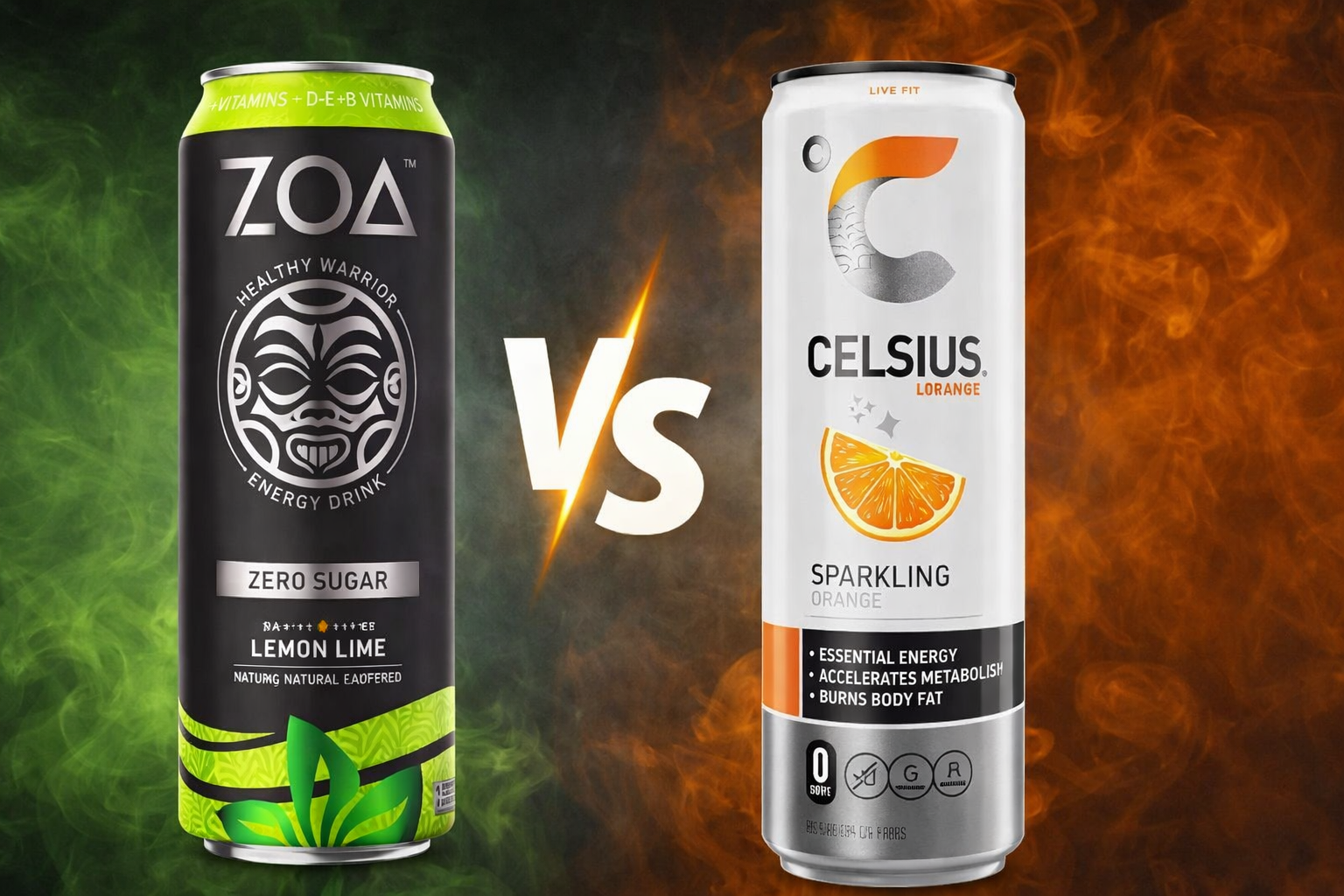
The energy drink market is booming. Valued at USD 79.39 billion in 2024, it’s projected to reach USD 125.11 billion by 2030, according to Grand View Research. But consumers aren’t just looking for any energy boost anymore. They want functional performance, clean ingredients, and real results.
Enter Zoa and Celsius—two performance energy drinks that have captured the attention of fitness enthusiasts and health-conscious consumers alike. Both promise zero sugar, natural caffeine, and a lineup of vitamins designed to fuel your day. But which one is better for your fitness goals?
With 64% of consumers finding free-from additives appealing and 57% preferring sugar-free options (Beverage Industry, 2025), the demand for healthier energy drinks has never been higher. This Zoa vs Celsius comparison breaks down caffeine content, nutritional profiles, flavor variety, and lifestyle positioning to help you choose the right fuel for your routine.
The Energy Drink Market: A Shift Toward Functional Performance
The days of sugary, jitter-inducing energy drinks are fading. Consumers now seek sustained energy, mental clarity, and hydration—not just a quick caffeine hit. The focus has shifted from “quick fix” formulas to functional beverages that support overall health and wellness.
Natural ingredients are driving this change. Many consumers conflate “natural” with “healthier,” gravitating toward plant-derived caffeine sources like green tea extract instead of synthetic alternatives. This preference has fueled demand for botanical-based energy drinks packed with adaptogens, vitamins, and amino acids.
Zoa and Celsius are leaders in this performance energy sector. Both brands emphasize clean formulas, zero sugar, and functional benefits that go beyond basic energy. But they cater to slightly different needs and lifestyles.
Zoa vs Celsius: Caffeine Content and Sources
Caffeine is the backbone of any energy drink, but the source and amount matter.
Zoa contains 160 mg of caffeine per 12 fl oz can, sourced naturally from green coffee and green tea. This moderate dose provides a steady energy boost without overstimulation, making it ideal for those who want sustained focus throughout the day.
Celsius offers more variety—and more caffeine. The standard line contains 200 mg per 12 fl oz can, while Celsius Essentials packs 270 mg per can. On-the-go powder packets contain 200 mg. Caffeine is derived from guarana extract, green tea, and other natural sources.
The FDA recommends up to 400 mg of caffeine per day for most adults. Celsius advises no more than two standard cans (or one Essentials can) per day to stay within safe limits. Zoa’s lower caffeine content allows for more flexibility if you consume other caffeinated beverages like coffee or tea.
If you’re sensitive to caffeine or prefer a balanced boost, Zoa’s 160 mg offers energy without the jitters. For pre-workout intensity or high-performance needs, Celsius delivers a stronger punch.
Nutritional Breakdown: Calories, Sugar, and Vitamins
Both Zoa and Celsius are zero-sugar, low-calorie options, but their functional ingredients differ.
Zoa contains 10 calories and 2 g total carbohydrates per 12 fl oz can. It’s fortified with B vitamins (B3, B6, B2, B12) and vitamin C (ascorbic acid). What sets Zoa apart is its 190 mg of branched-chain amino acids (BCAAs)—L-Leucine, L-Valine, and L-Isoleucine—which support muscle recovery and growth. It also includes an electrolyte blend (potassium citrate, magnesium lactate, sodium citrate) for hydration, plus camu camu extract (a superfruit rich in antioxidants and vitamin C) and turmeric extract. Sweetened with sucralose and acesulfame potassium.
Celsius also has 10 calories and 0–2 g carbohydrates per can. It’s loaded with 7 essential vitamins, including Vitamin C (60 mg), Niacin (20 mg/130% DV), Biotin (300 mcg/1000% DV), and a full lineup of B vitamins (B5, B3, B6, B2, B12). Celsius features its proprietary MetaPlus blend, which includes taurine, guarana seed extract, green tea extract standardized to 15% EGCG, ginger root extract, and chromium chelate (50 mcg/140% DV). The brand markets these ingredients as metabolism boosters and fat burners. Sweetened with sucralose.
Both drinks are vegan and gluten-free. Zoa emphasizes recovery and balance with BCAAs and electrolytes, while Celsius highlights metabolic performance and energy acceleration.
Flavor Variety and Availability
Variety keeps energy drinks exciting, and both brands deliver.
Zoa offers eight flavors, including Frosted Grape, Green Apple, Mango Splash, Wild Orange, Cherry Limeade, Strawberry Watermelon, Pineapple Coconut, and White Peach. The brand emphasizes “great taste” with natural flavors and no synthetic colors. Zoa’s streamlined lineup focuses on bold, refreshing profiles.
Celsius provides a wider range across multiple product lines: standard carbonated drinks, Fizz-Free options (like Peach Mango Green Tea and Pink Lemonade), Vibe drinks, and Essentials. The brand is known for aggressive flavor innovation and seasonal releases, giving consumers more options to match their preferences.
If you want variety and flexibility—including non-carbonated options—Celsius has the edge. If you prefer a curated, lifestyle-driven selection, Zoa’s focused lineup delivers.
Target Audience and Lifestyle Positioning
Both brands appeal to fitness enthusiasts, but with different angles.
Zoa, co-founded by Dwayne “The Rock” Johnson, positions itself around balance, focus, and holistic wellness. The brand’s messaging—”Live healthy. Think healthy.”—targets consumers seeking a balanced energy boost with functional benefits. Zoa appeals to gym-goers, athletes, and those leading active, wellness-focused lifestyles who value recovery and hydration alongside energy.
Celsius markets itself as “functional, essential energy” and “LIVE FIT.” It heavily targets pre-workout consumers, athletes, and fitness enthusiasts with claims of accelerating metabolism and burning body fat. Celsius has a strong presence in sports sponsorships, gaming culture, and collegiate/professional athletics. The brand’s higher caffeine content and performance-focused messaging attract younger demographics and competitive athletes.
Both brands resonate with health-conscious consumers, but Zoa leans toward holistic balance while Celsius emphasizes high-performance and metabolic benefits.
Which Energy Drink is Better for Your Fitness Goals?
The answer depends on your specific needs.
For Pre-Workout Energy: Celsius wins with 200–270 mg of caffeine, providing a stronger, faster boost for intense workouts. The MetaPlus blend and metabolism claims make it ideal for high-performance training.
For All-Day Energy and Focus: Zoa’s 160 mg of caffeine offers a moderate, sustained boost. With added BCAAs and electrolytes, it supports energy without overstimulation—perfect for busy days or evening workouts where you don’t want disrupted sleep.
For Hydration and Recovery: Zoa’s electrolyte blend (potassium, magnesium, sodium) supports hydration and muscle recovery. Celsius focuses more on energy and metabolic performance.
For Caffeine-Sensitive Individuals: Zoa’s lower caffeine content is ideal for those moderating intake. Celsius is better suited for those with higher tolerance or performance needs.
| Feature | Zoa (12 fl oz) | Celsius (12 fl oz) |
|---|---|---|
| Caffeine | 160 mg | 200 mg (270 mg Essentials) |
| Calories | 10 | 10 |
| Sugar | 0 g | 0 g |
| Key Ingredients | BCAAs (190 mg), electrolytes, camu camu, turmeric | MetaPlus blend (EGCG, taurine, ginger), chromium, biotin |
| Best For | All-day energy, recovery, hydration | Pre-workout, high-performance, metabolism boost |
The Final Verdict: Zoa vs Celsius
Zoa and Celsius both deliver clean, functional energy, but they serve different purposes. Zoa offers balanced energy with BCAAs, electrolytes, and lower caffeine—ideal for sustained focus and recovery. Celsius provides high-performance energy with metabolism-boosting claims and higher caffeine—perfect for intense workouts and pre-training fuel.
The “better” choice depends on your fitness goals, caffeine tolerance, and lifestyle. Try both and assess which aligns with your daily routine and performance needs.
Ready to fuel your fitness journey? Pick up a can of Zoa or Celsius and experience the difference for yourself.