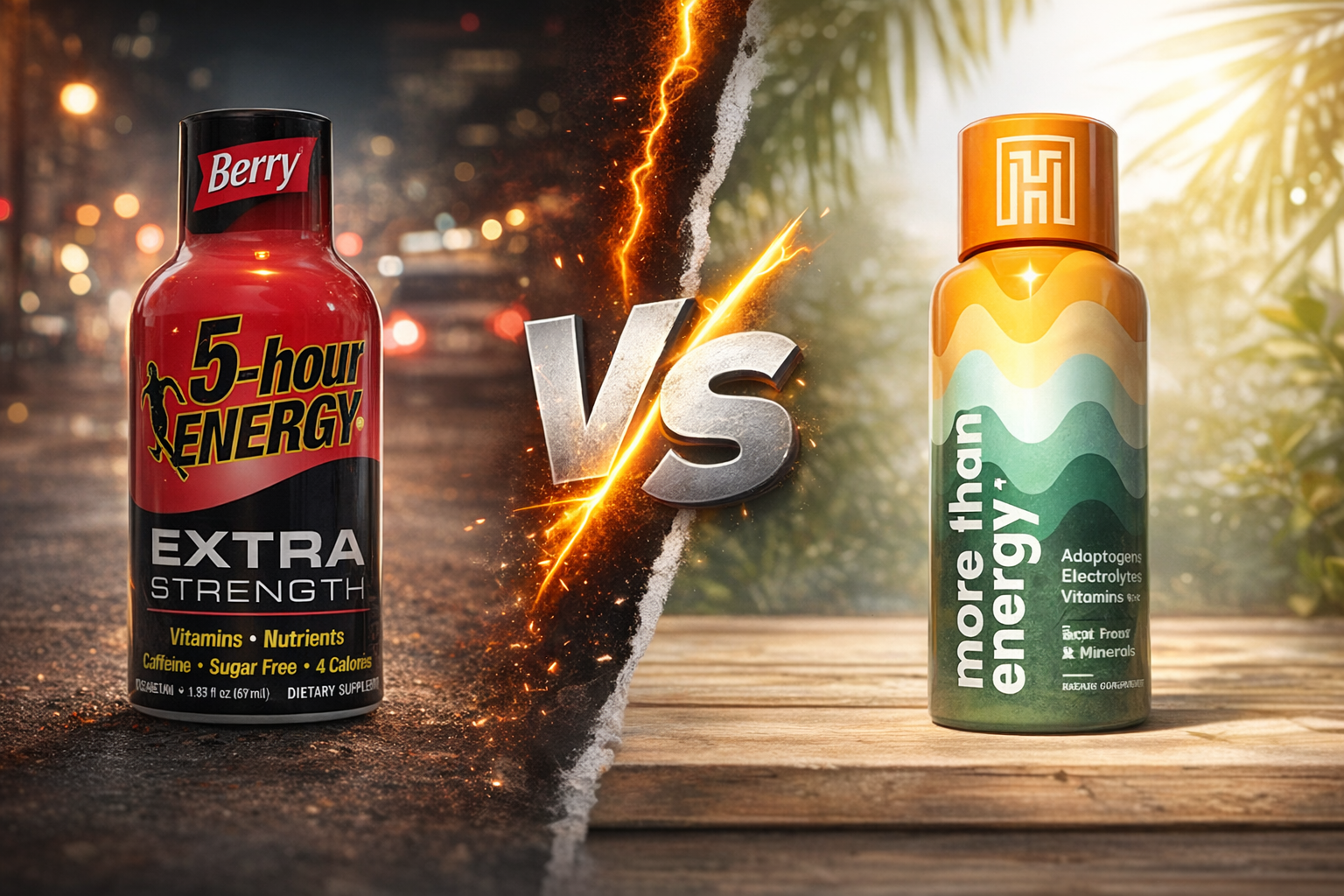
Energy products often get grouped together because they all contain caffeine, but the delivery system and supporting compounds shape the neurological response far more than the raw dose alone. A concentrated shot built around synthetic caffeine behaves very differently from a diluted drink mix pairing caffeine with amino acids and electrolytes.
That contrast is exactly what makes 5 Hour Energy and MTE worth examining closely — they target completely different use patterns despite both being marketed as “clean energy.”
What Is 5 Hour Energy?
5 Hour Energy is essentially a liquid stimulant concentrate packaged in a 1.93 oz bottle. The small volume isn’t just about convenience — it allows the formula to deliver a high caffeine load without requiring fluid intake, which speeds gastric emptying and absorption.
The brand’s formulation relies heavily on pharmacological stimulation rather than metabolic support. Caffeine anhydrous drives the primary effect, while taurine, tyrosine, and phenylalanine are included to support neurotransmitter activity.
B-vitamin levels are intentionally megadosed — often thousands of percent of daily values — primarily because they’re water soluble and safe at high intake, allowing the product to appear nutritionally functional without materially changing acute energy output in non-deficient individuals.
Typical users include long-haul drivers, shift workers, and people needing acute alertness without consuming a full beverage.
What Is MTE?
MTE is structured as a powdered drink mix designed to be diluted in 12–16 oz of water, fundamentally changing how the stimulant is processed physiologically. Fluid volume slows caffeine absorption slightly and reduces perceived intensity.
The formula focuses on neuromodulation rather than stimulation alone. Natural caffeine sources are paired with compounds like L-theanine and electrolytes to smooth the central nervous system response.
Electrolyte inclusion — usually sodium and potassium — is less about hydration marketing and more about maintaining plasma volume during caffeine’s mild diuretic effect, which can influence perceived energy stability.
Its audience skews toward people using energy products daily rather than situationally.
Caffeine Content
5 Hour Energy: ~200 mg (regular) and ~230 mg (extra strength)
MTE: ~100 mg
The difference isn’t just numerical. Caffeine anhydrous reaches peak plasma levels faster than plant-derived caffeine, especially without fluid dilution. That produces a steeper stimulation curve with more pronounced sympathetic nervous system activation.
MTE’s lower dose combined with L-theanine alters alpha brainwave activity, which reduces perceived overstimulation. The subjective effect often feels closer to sustained alertness than a traditional stimulant spike.
People with moderate tolerance often perceive 5 Hour Energy as stronger than its dose suggests because rapid absorption amplifies the onset intensity.
Sugar and Carbohydrate Content
Both formulas avoid sugar, but their metabolic impact differs because of delivery format.
5 Hour Energy contains negligible carbohydrates and almost no osmotic load, meaning it doesn’t slow gastric emptying. That contributes to the rapid onset.
MTE’s dilution increases gastric volume, which slightly delays absorption and contributes to steadier plasma caffeine levels.
Sweetener choice also changes taste perception — sucralose in 5 Hour Energy produces a sharper sweetness profile, while stevia or monk fruit blends in MTE create a softer sweetness curve.
Ingredients That Actually Influence Performance
5 Hour Energy
The formula centers around compounds affecting catecholamine production and neural signaling:
- Tyrosine — precursor to dopamine and norepinephrine, potentially supporting stress resilience under sleep deprivation
- Taurine — modulates calcium signaling and may reduce overstimulation
- Glucuronolactone — included in many energy drinks, though evidence for acute performance impact is limited
The extremely high B12 and B6 doses primarily affect label perception rather than acute energy unless deficiency exists.
MTE
MTE’s ingredient stack is designed to modulate stimulation rather than amplify it:
- L-theanine — increases inhibitory neurotransmitter activity, smoothing caffeine’s effect
- Electrolytes — help maintain neuromuscular function during stimulant use
- Plant extracts — contribute mild cognitive support
The presence of fluid volume combined with these compounds reduces sympathetic overactivation compared to concentrated shots.
Physiological Response Differences
A key difference rarely discussed is how volume affects cardiovascular response.
High-dose caffeine in low fluid volume can produce a sharper increase in heart rate and blood pressure due to rapid plasma concentration changes. That’s more likely with 5 Hour Energy.
Diluted caffeine solutions like MTE create a flatter plasma curve, which many users perceive as less jittery even with similar total intake over time.
Health and Functional Context
5 Hour Energy works best in scenarios involving acute sleep deprivation or time-limited cognitive demand because the high stimulant load temporarily increases alertness through adenosine receptor antagonism.
MTE aligns better with repeated daily use because the lower dose reduces cumulative sympathetic stress, which can matter for people consuming caffeine multiple times per day.
Neither formula meaningfully enhances recovery, but electrolyte inclusion in MTE makes it more compatible with light physical activity.
Price Comparison
5 Hour Energy:
Single bottles typically retail around $3–$4, reflecting convenience packaging and brand recognition. Bulk packs reduce cost to roughly $2.50 per serving.
MTE:
Stick packs usually range from $1.50–$2 each depending on bundle size, positioning it closer to a daily-use supplement rather than a situational stimulant.
Cost per milligram of caffeine is lower with MTE, though 5 Hour Energy charges a premium for portability.
Flavor and Sensory Profile
Concentration heavily shapes taste.
5 Hour Energy flavors are intense with a noticeable vitamin bitterness because high B-vitamin concentrations influence taste receptors. The small volume means sweetness is more pronounced.
MTE’s dilution produces a lighter flavor with lower perceived sweetness intensity and minimal lingering aftertaste. The drinking experience resembles flavored water rather than a supplement shot.
Customer Experience Patterns
Frequent 5 Hour Energy users often report consistent stimulation regardless of fatigue level, which speaks to the reliability of high-dose caffeine delivery. Complaints usually center around intensity rather than effectiveness.
MTE users frequently mention sustained focus without noticeable peaks, reflecting the neuromodulatory approach. Feedback tends to emphasize usability throughout the day rather than emergency energy.
Brand perception also diverges — 5 Hour Energy is viewed as utilitarian, while MTE aligns with the functional wellness category.
Choosing Based on Use Case
Acute cognitive demand
Situations like overnight driving, tight deadlines, or severe sleep restriction favor a higher caffeine load with rapid onset. The concentrated shot format delivers that effect efficiently.
Daily cognitive workload
Moderate caffeine paired with theanine supports sustained attention without pushing sympathetic activation repeatedly throughout the day.
Stimulant tolerance
High tolerance users often require larger doses to perceive effects, making the higher caffeine option more noticeable. Lower tolerance individuals typically experience smoother energy with moderate dosing.
Fluid intake preference
People who dislike drinking large volumes often prefer the shot format, while those already consuming water throughout the day integrate powdered mixes more easily.
Practical Decision Framework
Choose based on stimulation intensity and frequency of use rather than brand perception.
- Need rapid alertness with minimal fluid → higher-dose shot
- Need steady cognitive support across several hours → lower-dose drink mix
- High caffeine tolerance → stronger dose likely feels more effective
- Sensitive to overstimulation → moderate dose with theanine reduces peaks
Final Thoughts
These products represent two distinct categories rather than direct competitors: one prioritizes pharmacological stimulation, the other prioritizes neuromodulated energy delivery.
The decision comes down to whether the goal is acute alertness or repeatable daily focus.