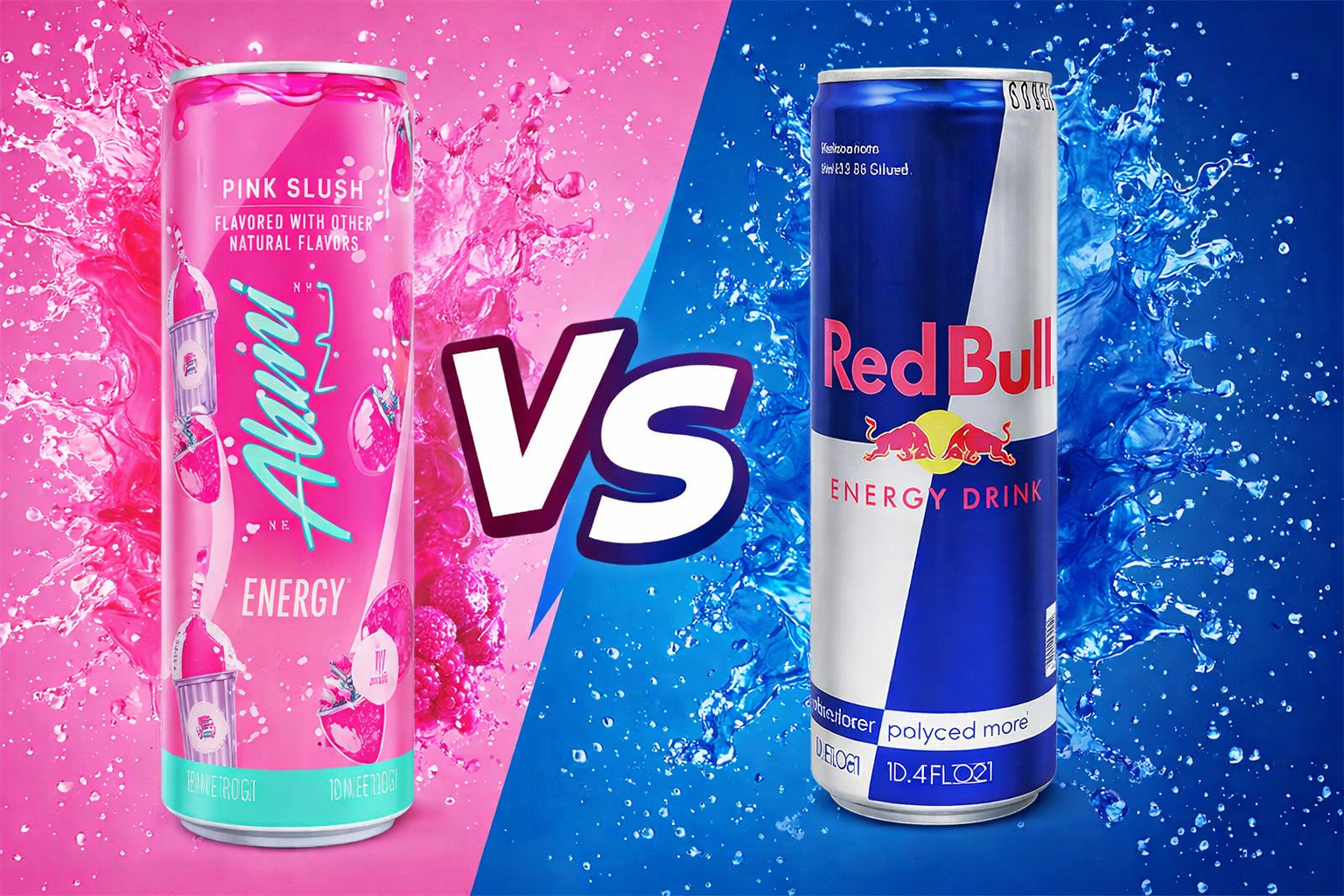
When people search for Alani vs Red Bull, they’re usually trying to answer a simple question: Which energy drink is better for energy, taste, and everyday use? Both drinks promise a boost of energy, focus, and performance, but the experience of drinking them is surprisingly different.
From a practical standpoint, the biggest difference comes down to branding, ingredients, and how people actually use them in daily life. Red Bull has been around for decades and built its reputation around extreme sports, nightlife, and fast energy. Alani Nu, on the other hand, arrived much later and positioned itself as a modern “fitness lifestyle” energy drink, popular among gym-goers, influencers, and younger consumers who want energy without the heavy, sugary feel.
In terms of caffeine, they’re relatively close but not identical. A standard Red Bull (8.4 oz) contains about 80 mg of caffeine, while a typical Alani Nu Energy (12 oz) contains 200 mg of caffeine. That difference matters more than people expect. In real life, Alani tends to feel noticeably stronger simply because it delivers more caffeine in a single can.
I first noticed this difference a couple of years ago at a local gym. Red Bull had always been the drink I associated with quick energy—something people grabbed at gas stations or convenience stores before a long drive. But suddenly I started seeing people in the weight room walking in with brightly colored Alani cans. The branding looked more like something from a lifestyle brand than a traditional energy drink. Someone once joked near the squat rack, “Red Bull is what you drink before a road trip, Alani is what you drink before leg day.” It wasn’t scientifically accurate, but it captured the vibe perfectly.
The flavor experience between the two drinks is another major difference that becomes obvious once you’ve tried both multiple times. Red Bull has a very distinctive taste—slightly medicinal, slightly sweet, with a tangy bite that longtime fans immediately recognize. It’s one of those flavors that hasn’t changed much over the years. People either love it or tolerate it because they want the energy.
Alani Nu feels completely different. Its flavors are designed to taste closer to modern flavored sodas or candy-inspired drinks. Variants like Cosmic Stardust, Cherry Slush, or Breezeberry are intentionally playful and sweet. I remember opening my first Alani and being surprised by how little it tasted like a traditional energy drink. It reminded me more of a sparkling fruit soda than the classic “energy drink flavor.”
That difference actually influences who tends to buy each drink. Red Bull still dominates in places like airports, nightclubs, and small convenience stores. If you walk into almost any airport convenience shop—whether it’s in Mumbai, Dubai, or London—you’ll see Red Bull stacked near the checkout counter. It’s almost treated like coffee: a quick, reliable energy fix.
Alani shows up more often in gyms, supplement stores, and lifestyle-focused grocery sections. I once noticed a full shelf of Alani at a fitness store next to protein powders and pre-workouts. That placement isn’t accidental. The drink is marketed almost like a lighter, more approachable alternative to pre-workout supplements.
Ingredients also shape how people perceive these drinks. Red Bull contains caffeine, taurine, B vitamins, and sugar in its original version. The sugar content is noticeable, which is why some people prefer the sugar-free Red Bull variant. The original formula has about 27 grams of sugar per 8.4 oz can, which is fairly high compared with newer energy drinks.
Alani Nu energy drinks are typically sugar-free, using sweeteners like sucralose. For many people trying to reduce sugar intake, that becomes a deciding factor. I once overheard someone at a grocery store say, “I used to drink Red Bull every day until I realized how much sugar I was getting.” He switched to Alani simply because it felt like a cleaner option.
But there’s a subtle trade-off here that many articles rarely mention. Sugar actually changes the type of energy experience people feel. With sugary drinks like original Red Bull, the energy can feel immediate but sometimes shorter-lived. Sugar spikes can create a quick burst followed by a drop. With sugar-free drinks like Alani, the energy often feels more stable but sometimes slightly slower to kick in.
I noticed this during long study sessions in college libraries. Friends drinking Red Bull sometimes felt energized very quickly but also complained about feeling tired again after an hour or two. Those drinking sugar-free drinks often described the energy as “smoother.” It’s not a universal experience, but it’s something many people casually observe.
Another interesting difference appears in how people socially perceive the two drinks. Red Bull carries a certain legacy. It’s tied to Formula 1 racing, extreme sports events, and decades of marketing campaigns. Even the phrase “Red Bull gives you wings” became part of pop culture.
Alani Nu doesn’t rely on that kind of adrenaline-sports branding. Instead, it leans heavily into social media culture and fitness aesthetics. I once saw a group of young gym members comparing Alani flavors like people compare craft sodas. They weren’t talking about caffeine levels—they were talking about which flavor tasted the best after a workout.
Packaging plays a surprisingly large role in this perception. Red Bull cans are small, narrow, and almost iconic at this point. The silver-and-blue design hasn’t changed much in years. When you hold one, it feels compact and efficient.
Alani cans are larger and far more colorful. Bright pastels, gradients, and playful names dominate the design. The first time I saw a shelf full of them, it almost looked like a display of sparkling water rather than energy drinks.
Price is another practical difference that shows up in real life. Red Bull often costs more per ounce, partly because of its brand strength and smaller can size. In many convenience stores, a single Red Bull can be priced surprisingly high compared with other energy drinks.
Alani tends to be slightly cheaper per serving when bought in multi-packs or from supplement retailers. I remember checking prices at a supermarket once and realizing a four-pack of Alani cost roughly the same as two individual Red Bulls at a convenience store.
However, Red Bull still wins in one important area: availability. It’s everywhere. Gas stations, hotels, airports, vending machines—you rarely have to look hard to find it. Alani is becoming more common but still isn’t as universally available.
Another subtle difference I’ve noticed involves when people choose to drink these beverages. Red Bull is often used in social settings—late nights, parties, or travel days. It’s also famously mixed with vodka in nightlife environments.
Alani rarely shows up in those situations. Instead, it’s strongly associated with morning routines, gym sessions, and productivity bursts. I once saw someone open an Alani while setting up their laptop at a coworking space, almost the way someone else might open an iced coffee.
There’s also a psychological element to the comparison that many people overlook. Red Bull feels familiar. People know exactly what they’re getting. Alani feels newer and trendier, which attracts a different type of consumer.
In my experience, Red Bull drinkers tend to be habit-driven. They’ve been buying the same drink for years and see no reason to change. Alani drinkers tend to be experimenters, trying different flavors and comparing options.
One last subtle observation I’ve noticed over time is how people talk about these drinks after trying them regularly. Red Bull fans usually describe the drink in terms of reliability—“It always works.” Alani fans often talk about enjoyment—“It actually tastes good.”
That difference might sound small, but it says a lot about how each drink fits into people’s lives. Red Bull is often treated as a functional tool for energy, while Alani is sometimes treated more like a lifestyle beverage that happens to contain caffeine.
So when someone asks which is better—Alani or Red Bull—the answer usually depends on what they’re looking for. If someone wants a classic energy drink that’s widely available and instantly recognizable, Red Bull still holds a strong position. But if someone prefers a higher caffeine boost, sugar-free formula, and modern flavors, Alani often ends up feeling like the better choice.
Both drinks ultimately serve the same purpose—helping people push through fatigue or stay alert—but they approach that goal in noticeably different ways. And once you start paying attention to how people actually use them in daily life, the contrast becomes surprisingly clear.