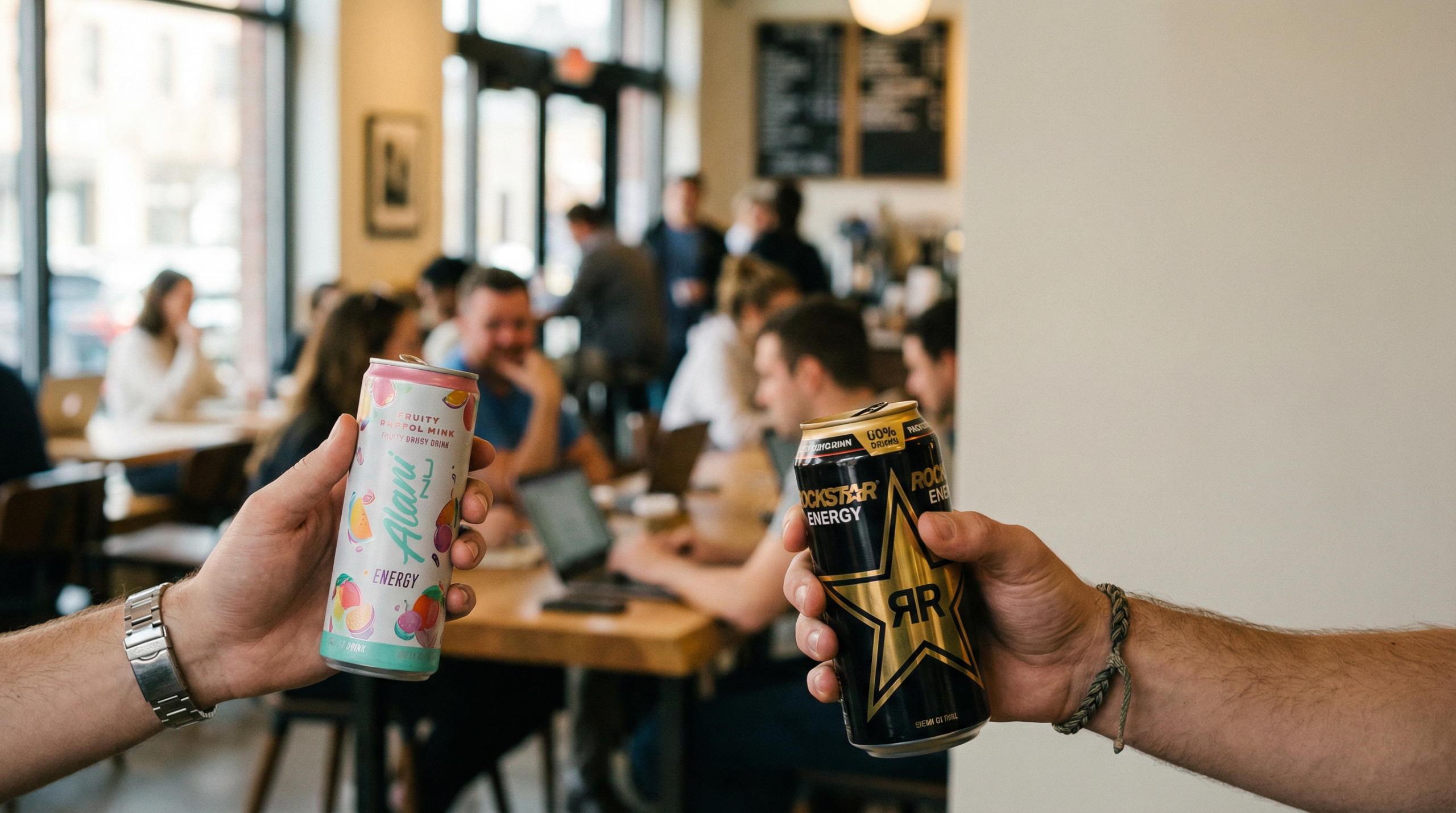
We thoroughly tested Alani vs Rockstar taste to help you make an informed decision. The energy drink aisle has become a battleground where wellness-forward newcomers clash with established powerhouse brands. Alani Nu and Rockstar Energy represent two starkly different philosophies in caffeinated beverages—one born from social media influence and functional nutrition, the other forged in the early 2000s rock-and-roll culture of extreme energy.
Alani Nu entered the market in 2018 with a clear target: fitness enthusiasts and health-conscious consumers seeking clean energy without the caloric baggage. With zero sugar, 200mg of caffeine, and social media-friendly packaging, it quickly carved out space among millennials and Gen Z consumers. Meanwhile, Rockstar—acquired by PepsiCo in 2020 for $3.85 billion—built its reputation on maximum caffeine content and bold flavors that ranked it among the top energy drink options for those seeking intense stimulation.
The Alani vs Rockstar taste debate often centers on this fundamental divide: clean, fruit-forward profiles versus aggressive, candy-like intensity. But taste is just the opening salvo. These brands differ significantly in their ingredient philosophies, nutritional profiles, and the consumer identities they cultivate—differences that reveal competing visions for what energy drinks should deliver in today’s market.
Brand Identity and Market Positioning
Alani Nu emerged as a disruptor in the energy drink space by targeting a demographic largely overlooked by traditional brands: health-conscious women seeking functional beverages without excessive sugar or artificial ingredients. The brand’s Instagram-friendly aesthetic—pastel packaging, aspirational messaging, and influencer partnerships—created a lifestyle appeal that transcends the typical energy drink consumer. Alani Nu positions itself at the intersection of wellness and performance, with products found primarily in specialty fitness retailers, supplement stores, and select mainstream grocers.
Rockstar Energy, by contrast, built its empire on bold, rebellious branding aligned with extreme sports, music festivals, and late-night gaming sessions. Owned by PepsiCo since 2020, Rockstar maintains distribution dominance across convenience stores, gas stations, and mass-market retailers. Its market positioning centers on maximum caffeine delivery and unapologetic flavor intensity—a stark contrast to Alani Nu’s wellness-forward approach.
When comparing Alani vs Rockstar nutrition, the distinction becomes clear: Alani Nu emphasizes clean label ingredients and moderate caffeine (200mg), while Rockstar prioritizes energy punch through higher caffeine variants and classic formulations. These positioning strategies reflect fundamentally different consumer philosophies—one rooted in intentional wellness, the other in performance maximalism.
Nutritional Profile and Health Considerations
Alani Nu positions itself as the healthiest energy drink option through its zero-sugar formulation and inclusion of biotin, a B-vitamin supporting hair, skin, and nail health. Each 12-ounce can delivers 200mg of caffeine while maintaining just 10 calories, using sucralose as a sweetener alternative.
Rockstar, conversely, offers multiple formulations with varying nutritional profiles. The original version contains 160mg of caffeine per 16-ounce can but packs significant sugar content—approximately 62 grams in standard varieties. While Rockstar has introduced sugar-free options using artificial sweeteners, the brand’s heritage product remains a high-calorie, high-sugar choice.
The caffeine comparison reveals strategic positioning: Alani Nu delivers more stimulation per ounce (16.7mg/oz versus Rockstar’s 10mg/oz), potentially requiring less volume for the same energizing effect. However, fitness experts caution that excessive caffeine intake—particularly beyond 400mg daily—can trigger anxiety, sleep disruption, and cardiovascular stress.
Both brands incorporate B-vitamins, though quantities and specific compounds vary. Alani Nu emphasizes biotin and B12, while Rockstar includes a broader B-vitamin complex alongside taurine and guarana. Neither brand, however, escapes criticism for relying on artificial ingredients—a consideration for consumers prioritizing whole-food nutrition.
The flavor-first approach both brands champion inevitably involves sweeteners and artificial elements, positioning them as occasional performance boosters rather than daily wellness staples.
Flavor Variety and Consumer Preferences
Alani Nu has carved its niche through tropical and dessert-inspired profiles that resonate with younger, female-leaning demographics. Flavors like Hawaiian Shaved Ice, Breezeberry, Cherry Slush deliver sweetness without sugar, and appealing to those who prioritize taste alongside health. This strategy contrasts sharply with Rockstar Energy drinks, which lean into bolder, more aggressive flavor combinations—think Punched Guava, Boom Whipped Strawberry, and Lime Freeze—designed for adrenaline-seekers and gamers. Consumer reviews reveal clear divides. Best Products ranks Alani Nu’s Cosmic Stardust and Mimosa among top performers, praising their “candy-like” appeal and Instagram-worthy packaging. Rockstar, however, earns loyalty through variety—over 30 SKUs globally—offering everything from zero-sugar options to high-caffeine performance blends. While Alani Nu focuses on quality over quantity with roughly 20 flavors, Rockstar’s expansive lineup caters to diverse palates, from purists who prefer Original to experimenters chasing limited editions.
The verdict? Alani Nu wins on refinement and Instagrammability; Rockstar dominates through sheer breadth and accessibility. Your preference ultimately hinges on whether you value curated taste experiences or endless experimentation.
Effectiveness and Energy Boost
Alani Nu delivers 200mg of caffeine alongside L-theanine, creating a smooth, sustained energy curve without the jittery spike typical of conventional energy drinks. The L-theanine works synergistically with caffeine to promote focus while mitigating anxiety, making it particularly effective for workouts or concentration-heavy tasks. Users consistently report a clean energy experience lasting 4-6 hours, with a gentler decline compared to high-sugar alternatives.
Rockstar, by contrast, relies on its 160mg caffeine combined with sugar (in classic formulations) or artificial sweeteners (in Zero Sugar variants) to produce a more immediate, intense kick. The taurine and guarana extract amplify this effect, creating what many describe as a “rocket fuel” sensation—ideal for quick energy needs but potentially leading to a sharper crash. Professional athletes and fitness experts note that Rockstar’s formulation caters to those seeking maximum alertness during high-intensity activities.
The core Alani energy drink benefits center on controlled energy delivery and cognitive support, while Rockstar prioritizes raw power and rapid onset. For sustained performance, Alani’s formulation edges ahead; for immediate impact, Rockstar’s aggressive blend delivers results. The question becomes whether you prioritize longevity or intensity—a choice that naturally leads to considerations of cost and where these products are actually available.
Price and Accessibility
Rockstar maintains a decisive advantage in cost and availability. With a price point typically 30-40% lower than Alani Nu—often $2-2.50 per 16oz can versus Alani’s $3-3.50—Rockstar dominates convenience stores, gas stations, and mass retailers nationwide. This ubiquity makes it the default choice for budget-conscious consumers seeking immediate energy without specialty retailer trips.
Alani Nu, conversely, operates on a direct-to-consumer and specialty retail model. While available at select GNC and Vitamin Shoppe locations, plus Amazon, its limited brick-and-mortar presence creates friction for spontaneous purchases. Bulk online ordering (12-pack cases at $30-36) narrows the price gap but requires planning—a barrier for casual users exploring Rockstar energy drink health alternatives.
The accessibility trade-off reflects brand positioning: Rockstar prioritizes mass-market penetration through aggressive distribution partnerships, while Alani leverages scarcity to maintain premium positioning. For committed wellness enthusiasts willing to pre-order, Alani’s per-serving cost becomes justifiable. However, Rockstar’s grab-and-go convenience remains unmatched for time-pressed consumers prioritizing immediate availability over ingredient optimization.
Limitations and Considerations
Neither Alani Nu nor Rockstar represents a universally optimal solution—each carries trade-offs that matter depending on individual physiology and usage patterns. Alani Nu’s premium positioning creates a sustainability barrier for daily consumers; at $2.80-3.20 per can, habitual use accumulates to $80-100 monthly, making it impractical as the best energy drink to stay awake during extended work periods or study sessions.
Rockstar’s sugar-heavy formulations present metabolic concerns. The 60-69g sugar content in standard versions exceeds the American Heart Association’s entire daily recommended intake in a single serving, potentially triggering insulin spikes followed by energy crashes—counterproductive for sustained alertness. Even the zero-sugar variants rely on artificial sweeteners that some consumers experience as digestive irritants.
Caffeine sensitivity creates another variable. Both brands’ 200mg+ caffeine levels approach the FDA’s recommended single-dose maximum, making them inappropriate for individuals with cardiovascular sensitivities or those consuming multiple caffeinated products daily. The afternoon consumption timing matters significantly—ingesting high-caffeine drinks after 2 PM frequently disrupts sleep architecture, creating a counterproductive cycle where energy drinks compensate for inadequate rest they themselves perpetuate.
Key Alani Vs Rockstar Taste Takeaways
Alani Nu and Rockstar occupy distinct niches—neither universally superior, both strategically positioned for different consumer priorities. Alani Nu delivers premium ingredients (200mg caffeine, L-theanine, biotin) with refined flavor profiles at $3-3.50 per can, targeting health-conscious consumers willing to pay for ingredient quality. Rockstar prioritizes accessibility and energy intensity (160-240mg caffeine depending on variant) at $2-2.50 per can, appealing to budget-focused users seeking reliable performance without premium pricing.
The optimal choice hinges on three variables: ingredient sensitivity (those reactive to taurine or high sugar benefit from Alani’s cleaner formulation), budget constraints (Rockstar’s 30-40% lower cost matters for daily consumption), and flavor expectations (Alani consistently outperforms in taste testing). While neither appears on top 10 worst energy drinks lists—which typically feature high-sugar, artificial-heavy formulations—both require moderation: daily consumption exceeding one can risks caffeine dependency and cardiovascular stress regardless of brand positioning.
First satisfy intent then go for information gain—choose based on your primary need (premium experience versus cost efficiency), then optimize within that category.
Comparison Table: Alani Nu vs. Rockstar
| Factor | Alani Nu | Rockstar |
|---|---|---|
| Caffeine Content | 200mg per 12 oz can | 160mg per 16 oz can (varies by variant) |
| Sugar Content | Zero sugar | 62 grams in standard varieties |
| Key Ingredients | L-theanine, L-theanine, biotin, B vitamins | Taurine, guarana extract, B vitamins, ginseng |
| Target Audience | Fitness-focused consumers, primarily women | Mass market, gaming community, night shift workers |
| Price Point | $2.49-$2.99 per can | $1.99-$2.49 per can |
| Flavor Profile | Fruit-forward, lighter sweetness | Bold, conventional energy drink taste |
| Calorie Count | 10 calories per can | 122-280 calories depending on formula |
| Energy Duration | 4-6 hours, with a gentler decline | more immediate, intense kick |
| Primary Retailer Focus | Specialty fitness stores, online | Gas stations, convenience stores, mass retail |
| Best Use Case | Pre-workout boost, sustained focus | Quick energy surge, late-night activities |
This side-by-side breakdown clarifies where each brand excels—Alani Nu for clean-label enthusiasts seeking controlled stimulation, Rockstar for immediate energy without premium pricing. Choose based on whether ingredient transparency or accessibility matters most to your consumption pattern.