The Best Celsius Energy Drink Alternatives in 2026
Celsius has become one of the best-selling energy drinks on the market, and it’s not hard to see why. Zero sugar, vitamins, and a solid caffeine kick have made it a go-to for gym-goers and busy professionals alike. But not everyone wants 200mg of caffeine from a can that lists sucralose and guarana extract on the label. Some want something cleaner. Others want fewer jitters, lower caffeine, or no artificial sweeteners at all.
Whatever the reason, the good news is the market for energy alternatives has never been more diverse. From functional teas to purpose-built clean-energy cans, there are plenty of ways to stay sharp without defaulting to Celsius. This post breaks it all down—what’s in Celsius, what the alternatives look like, and how to pick one that actually fits your lifestyle.
What’s Actually in Celsius?
Before you can find a better alternative, it helps to understand what you’re replacing.
A standard Celsius or Celsius Vibe can contains 200mg of caffeine per serving, sourced from a combination of guarana seed extract and added caffeine. The Celsius Essentials line steps that up to 270mg per can. For context, the FDA advises that up to 400mg of caffeine per day is generally safe for most healthy adults—so a single Celsius puts you halfway there before lunch.
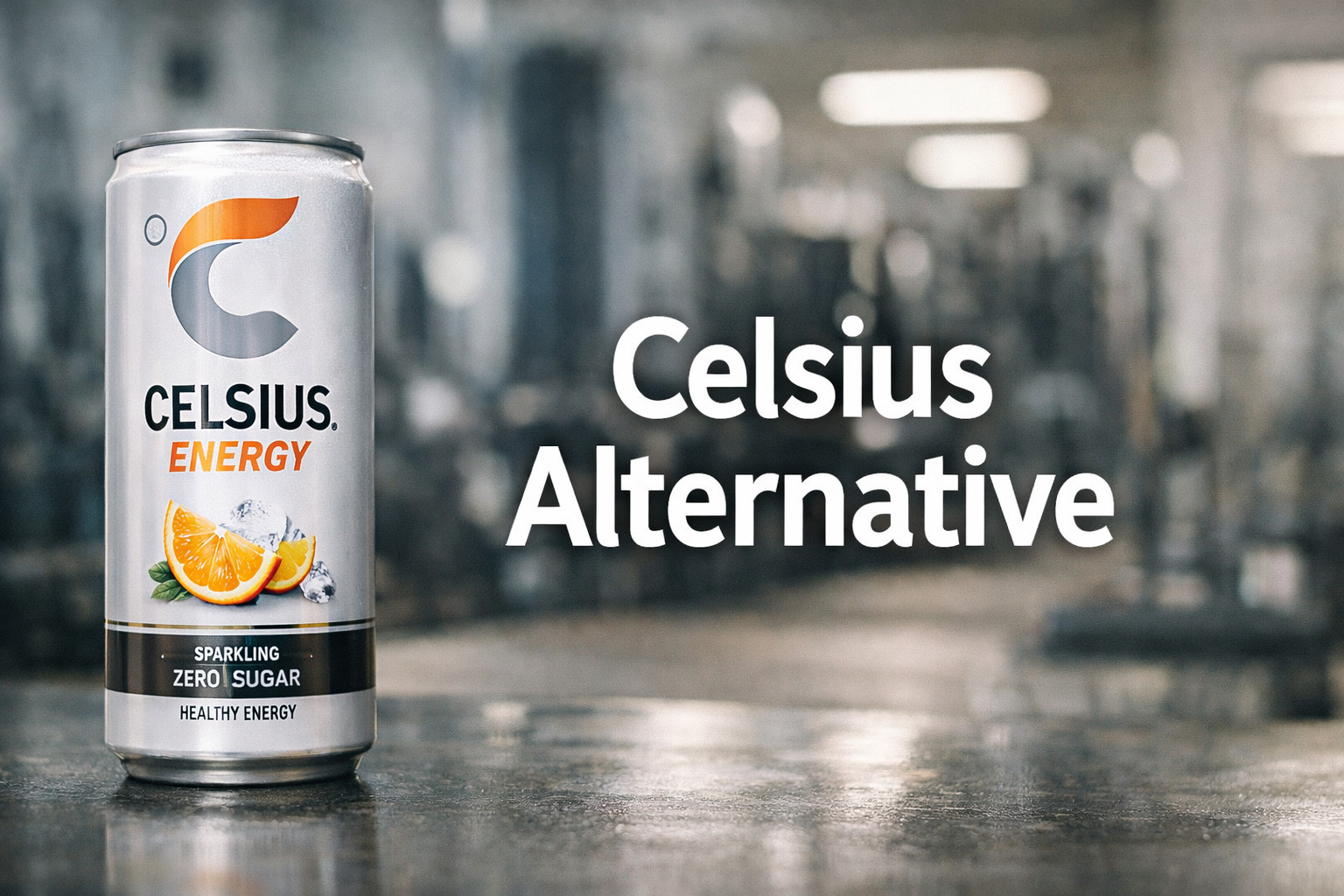
The ingredient list on the original Celsius Sparkling Orange, for example, includes carbonated filtered water, citric acid, taurine, guarana seed extract, caffeine, green tea extract, sucralose (an artificial sweetener), calcium carbonate, and a suite of B vitamins. It’s low-calorie and contains no sugar, but the presence of sucralose is a dealbreaker for some consumers.
None of that makes Celsius dangerous when consumed as directed. But if you’re sensitive to high caffeine, prefer to avoid artificial sweeteners, or just want something with a gentler lift, there are better-suited options.
Natural Energy Boosters Worth Knowing
Before jumping to canned alternatives, it’s worth considering what whole-food energy sources actually look like.
Matcha is powdered green tea that delivers caffeine alongside L-theanine, an amino acid that research has associated with improved attention and reduced anxious jitteriness. A 2023 meta-analysis published in Nutrition Reviews found that the combination of theanine and caffeine had positive effects on cognitive and mood outcomes. Matcha typically contains less caffeine than a can of Celsius—usually in the range of 60–80mg per serving—but the slower release tends to feel smoother.
Yerba mate is a South American herbal tea made from the leaves of the Ilex paraguariensis plant. Caffeine content varies by brew strength but generally falls in the range of 30–80mg per 8-ounce serving. Like matcha, yerba mate contains antioxidants and is often praised for providing sustained focus without a hard crash.
Guayusa is a lesser-known option from the Amazon rainforest. According to Verywell Health, an 8-ounce cup brewed from 2g of dried leaves yields roughly 40mg of caffeine—comparable to a cup of green tea. Guayusa also contains antioxidants including EGCG and chlorogenic acid, and some brands market it for its “calm energy” effect, though research on L-theanine content in guayusa specifically remains inconclusive.
These options are worth exploring if you’d prefer to step away from canned energy drinks entirely. That said, if you still want the convenience of a ready-to-drink can, here are the top alternatives.
Top-Rated Celsius Alternatives: Brand-by-Brand Breakdown
Zevia Energy
Caffeine: 120mg per can | Calories: 0 | Sugar: 0 | Sweetener: Stevia leaf extract
Zevia Energy is one of the most widely recommended alternatives for people who want a clean, no-compromise energy drink. With 120mg of natural caffeine derived from tea leaves, it delivers a gentler lift than Celsius—roughly 40% less per can. It’s sweetened exclusively with stevia leaf extract, meaning no sucralose, no aspartame, no erythritol, and no artificial flavors or colors. It’s also Non-GMO Project Verified, vegan, and gluten-free. For anyone specifically trying to cut out artificial sweeteners, Zevia is probably the most direct swap.
HiBall Energy
Caffeine: 160mg per 16 fl oz can | Calories: 0 | Sugar: 0 | Sweetener: None
HiBall Energy Seltzer takes a minimalist approach. Each 16-ounce can contains 160mg of organic caffeine, alongside organic guarana extract, organic panax ginseng extract, and B vitamins (B3, B5, B6, and B12). The official product page specifically notes that HiBall contains no artificial sweeteners and no taurine—a differentiator from most mainstream energy drinks, including Celsius. The result is something that tastes and feels closer to sparkling water than a traditional energy drink, which suits people who find heavily sweetened drinks too much.
FITAID Energy
Caffeine: 200mg per can | Calories: Not listed on can | Sugar: 0 | Sweetener: Naturally sweetened (no sucralose, no aspartame)
FITAID Energy is aimed squarely at the fitness crowd. Caffeine is sourced entirely from green tea extract rather than synthetic sources, and the brand emphasizes no artificial sweeteners of any kind. It also includes BCAAs and a post-workout vitamin blend, making it more of a recovery-and-energy hybrid than a straight caffeine drink. If you’re using Celsius primarily as a pre-workout, FITAID is one of the closest functional replacements—same caffeine level, different ingredient philosophy.
A Note on Functional Ingredients: Adaptogens and Nootropics
You’ll increasingly see energy alternatives marketing themselves around adaptogens (like ashwagandha and rhodiola) and nootropics (like L-theanine and lion’s mane mushroom). The appeal is a “calm focus” effect—energy without anxiety or crash.
Some of these ingredients have emerging research support. L-theanine in combination with caffeine is probably the best-studied example, with multiple trials suggesting cognitive benefits at common dietary doses. Adaptogens like ashwagandha have shown stress-reduction effects in several small trials, though the evidence base for most of these ingredients is still developing.
If jitter-free focus is what you’re after, choosing a drink that pairs caffeine with L-theanine (as matcha or certain functional energy drinks do) is a more evidence-backed approach than simply reaching for a high-dose adaptogen blend.
Nutritional Comparison at a Glance
| Product | Caffeine | Calories | Sugar | Artificial Sweeteners |
|---|---|---|---|---|
| Celsius (Original) | 200mg | ~10 | 0g | Sucralose |
| Celsius Essentials | 270mg | — | 0g | — |
| Zevia Energy | 120mg | 0 | 0g | None |
| HiBall Energy | 160mg | 0 | 0g | None |
| FITAID Energy | 200mg | — | 0g | None |
For consumers prioritizing zero artificial sweeteners and lower caffeine, Zevia sits at the top. Those who want the same caffeine hit as Celsius but from cleaner sources should look at FITAID. HiBall lands in the middle—high enough caffeine for most, with the most stripped-back ingredient list of the three.
Making the Switch: Practical Tips
Switching energy sources doesn’t have to mean cutting cold turkey. Caffeine withdrawal—headaches, fatigue, and irritability—is real, even if it’s temporary. The FDA notes that cutting back gradually is far more comfortable than stopping abruptly.
A few practical approaches:
- Step down caffeine gradually. If you’re used to 200mg per can, try a 120–160mg option for a week or two before considering lower-caffeine teas.
- Match the timing. If Celsius is your pre-workout ritual, replace it with FITAID or HiBall in the same context so the habit stays intact.
- Introduce natural sources alongside. Adding a morning matcha before switching away from canned drinks entirely eases the transition and builds a sustainable routine.
- Watch total intake. Switching brands doesn’t eliminate the risk of overconsumption. The FDA’s 400mg daily limit applies regardless of whether caffeine comes from Celsius, green tea, or a new-to-you energy drink.
Finding Your Best Fit
The best Celsius alternative is the one that matches what you actually need—whether that’s lower caffeine, cleaner sweeteners, functional recovery ingredients, or just something that tastes better to you. Zevia, HiBall, and FITAID each solve a different part of the problem. And if you’re open to stepping outside the canned-drink category entirely, matcha and guayusa offer a more gradual energy lift with fewer ingredients and a longer history of use.
Start by identifying your primary reason for switching. Everything else follows from there.