Rockstar vs. Red Bull: Which Energy Giant Reigns Supreme?
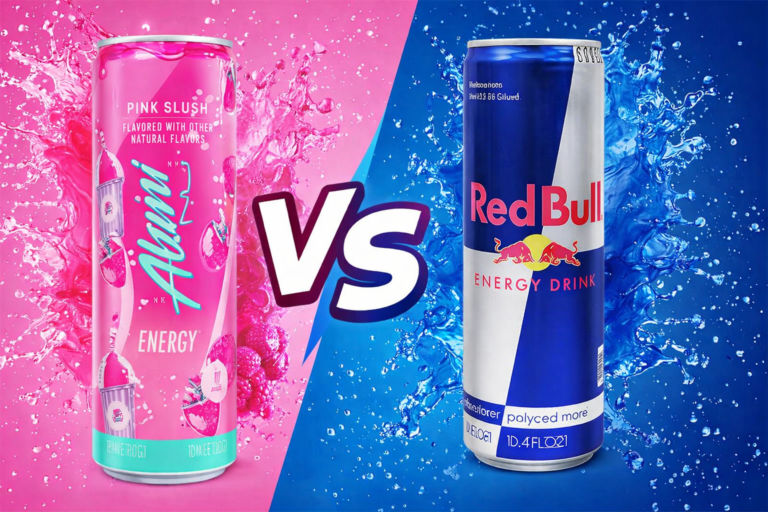
It’s 3:00 PM. Your eyelids are heavy, your focus is drifting, and the deadline is looming. You walk into a convenience store, the fluorescent lights buzzing overhead, and head straight for the cooler. Before you stands a wall of aluminum cans, a kaleidoscope of neon colors and aggressive fonts. Two names dominate the shelf space, locking horns in a battle for your attention and your alertness: Red Bull and Rockstar.
This isn’t just a choice between two fizzy drinks; it’s a choice between two distinct philosophies of energy. One is the sleek, premium European pioneer that practically invented the modern energy drink market. The other is the brash, oversized American contender that promised more fuel for less cash.
For decades, these two titans have engaged in a caffeinated cold war, vying for the loyalty of students, gamers, truck drivers, and extreme athletes. But beyond the flashy branding and adrenaline-fueled marketing campaigns, what actually separates them? Is it the taste? The caffeine kick? The ingredients list?
If you’ve ever stood paralyzed in front of that cooler, unsure which can deserves your hard-earned money, you aren’t alone. We are popping the tabs on both beverages to dissect their histories, ingredients, flavors, and effectiveness to determine which one truly gives you wings—and which one just treats you like a rockstar.
The Battle of the Energy Drink Giants
To understand the rivalry, you have to look at how the energy drink landscape formed. Before these giants arrived, the concept of a dedicated “energy drink” was largely foreign to Western consumers. People relied on coffee or sugary sodas for a boost.
Red Bull’s Global Dominance
Red Bull is the undisputed patriarch of the industry. Its story began in 1987 when Austrian entrepreneur Dietrich Mateschitz discovered a Thai functional drink called Krating Daeng. Mateschitz worked with the Thai owners to modify the formula for Western palates—carbonating it and tweaking the flavor—and launched Red Bull in Austria.
It was a slow burn initially, but the brand exploded globally in the late 90s and early 2000s. Red Bull didn’t just sell a drink; they sold a lifestyle. They positioned the product as a premium functional beverage, packing it in a slim, distinct 8.4-ounce can that stood out against the standard 12-ounce soda cans. This sizing was psychological genius; it suggested potency. If it comes in a small package, it must be strong. Today, Red Bull holds the largest market share in the industry, selling billions of cans annually across the globe.
Rockstar’s Edgy Origins
Enter Rockstar Energy. Founded in 2001 by Russ Weiner, Rockstar entered the market with a strategy designed to disrupt Red Bull’s dominance. Weiner noticed that while people loved energy drinks, they didn’t love the small serving size or the high price point of Red Bull.
Rockstar’s value proposition was simple but effective: “Twice the size for the same price.” They launched with a 16-ounce can—double the standard Red Bull size—for roughly the same cost. It was an immediate hit with consumers who wanted more volume. Rockstar positioned itself as the drink for the hardworking blue-collar worker, the late-night gamer, and the partygoer. While Red Bull was “premium,” Rockstar was “more.” The brand grew rapidly, eventually becoming the third-largest energy drink brand (often trading places with Monster) before being acquired by PepsiCo in 2020 for nearly $4 billion.
Flavor Profiles: The Taste Test
Taste is subjective, but in the world of energy drinks, flavor profiles are distinct and heavily debated.
The Classic Red Bull Taste
Red Bull has maintained a remarkably consistent flavor profile since its inception. Describing the taste of original Red Bull is notoriously difficult. It isn’t quite citrus, and it isn’t quite berry. Fans often describe it as a unique “medicinal” sweetness, while detractors might liken it to liquid candy or cough syrup.
This unique flavor is intentional. It separates the drink from standard sodas, signaling to the brain that you are consuming something functional. While Red Bull has expanded into its “Editions” line (offering flavors like Watermelon, Tropical, and Juneberry), the core identity of the brand remains tied to that original, inexplicable, tart flavor. It is crisp, moderately carbonated, and leaves a slight tang on the tongue.
Rockstar’s Diverse Range
Rockstar has always taken a “kitchen sink” approach to flavor. Because they offer a larger can, the flavor experience is different—you are committing to 16 ounces of liquid, so drinkability is key.
The original Rockstar flavor is often described as sweeter and more bubble-gum-forward than Red Bull. It lacks the medicinal bite of its Austrian rival, leaning closer to a traditional soda profile but with a thicker mouthfeel. However, Rockstar’s true strength lies in its variety. The brand is aggressive with innovation. Their “Punched” line (specifically the Fruit Punch flavor) is a fan favorite, masking the energy supplement taste almost entirely with heavy fruit notes. They also have the “Pure Zero” line for sugar-conscious consumers and “Boom,” which focuses on whipped, creamy flavors like Orange and Strawberry.
If you prefer a drink that tastes like a functional supplement, Red Bull wins. If you want a drink that tastes like a fruit soda or a melted popsicle, Rockstar is likely your better bet.
Ingredient Analysis: What’s Inside the Can?
This is where the rubber meets the road. You aren’t buying these drinks for hydration; you are buying them for effect. Let’s break down the stimulants and supplements.
Caffeine Content
This is the metric most consumers care about.
- Red Bull: The standard 8.4-ounce can contains 80mg of caffeine. To put that in perspective, it is slightly less than an average cup of coffee (which has about 95mg). It provides a functional lift without being overwhelming for most people.
- Rockstar: The standard 16-ounce can contains 160mg of caffeine. This is exactly double the caffeine of a small Red Bull, but remember, you are drinking double the liquid.
However, Rockstar pushes the envelope further with specific sub-lines. The Rockstar “Xdurance” line can pack up to 300mg of caffeine per can. If you are strictly looking for the maximum caffeine per dollar, Rockstar is the mathematical winner. Red Bull is designed for a quick, moderate boost, whereas a full can of Rockstar is a significant stimulant commitment.
Sugar Levels
Both brands are notorious for their sugar content in their original formulas.
- Red Bull: An 8.4-ounce can contains 27 grams of sugar.
- Rockstar: A 16-ounce can of Original Rockstar contains a whopping 63 grams of sugar (though formulas vary slightly by region and recent reformulations).
The sugar crash associated with energy drinks often comes from this massive spike in glucose. Rockstar’s higher sugar content per can means the crash potential is significantly higher if you consume the whole thing at once. Both brands have responded to health trends by heavily pushing their sugar-free versions (Red Bull Sugarfree/Zero and Rockstar Pure Zero), which use artificial sweeteners like sucralose and acesulfame potassium to mimic the original taste without the calories.
Performance Supplements
Beyond caffeine and sugar, both drinks rely on an “energy blend” to justify their claims.
- Taurine: Both drinks prominently feature Taurine, an amino acid found in meat and fish. While often rumored to be bull sperm (an urban legend that Red Bull has fought for decades), it is synthetically produced. Taurine is believed to help with muscle function and may counteract some of the jittery effects of caffeine.
- B Vitamins: Both are loaded with B vitamins (B3, B6, B12), which help the body convert food into energy.
- Ginseng and Guarana: Here is a key difference. Rockstar’s formula typically includes Panax Ginseng root extract and Guarana seed extract. Guarana is a plant that contains natural caffeine (which adds to the kick), and Ginseng is an herbal supplement often linked to energy and focus. Red Bull’s classic formula is simpler and generally does not include these herbs, focusing strictly on the Caffeine/Taurine/B-Vitamin triad.
Marketing Strategies: Lifestyle vs. Attitude
You can’t talk about these brands without discussing how they sell themselves. The marketing is often as potent as the drink itself.
Red Bull: The Content Empire
Red Bull is effectively a media production company that funds its operations by selling aluminum cans. Their marketing strategy is legendary. They don’t just sponsor events; they create them. From the Red Bull Stratos space jump, where Felix Baumgartner broke the sound barrier in freefall, to owning multiple football (soccer) teams and Formula 1 racing teams, Red Bull associates itself with peak human performance.
Their “Gives You Wiings” slogan is aspirational. They target a broad demographic—everyone from the tired office worker to the elite skydiver. Their branding is clean, premium, and focused on “revitalizing body and mind.”
Rockstar: The Party and the Hustle
Rockstar’s marketing has historically been grittier. Their logo—a bold star—and their typography scream “loud.” They have deep roots in the music festival scene (sponsoring the Mayhem Festival and Uproar Festival) and the action sports world, though often the more rugged, dirt-covered side of it compared to Red Bull’s polished presentation.
Rockstar also leans heavily into the gaming community. They have run massive promotions with titles like Cyberpunk 2077 and Call of Duty, offering in-game codes with can purchases. While Red Bull feels like an event, Rockstar feels like a companion for the grind—whether that grind is a 12-hour shift or a 12-hour gaming marathon. Since the PepsiCo acquisition, Rockstar has tried to pivot slightly to a more polished look to compete on the global stage, but its heritage remains rooted in high-energy, high-volume attitude.
Pricing and Value: Bang for Your Buck
If you are purely doing the math, the winner is clear.
Red Bull has successfully maintained a premium price point for decades. Depending on where you live, a single 8.4-ounce can might cost between $2.00 and $3.00. You are paying for the brand equity, the marketing machine, and the specific, condensed formula.
Rockstar, keeping true to its founding promise, generally retails for $1.50 to $2.50 for a 16-ounce can. Often, you can find Rockstar on “2 for $4” deals at gas stations. When you calculate the price per ounce of liquid—and price per milligram of caffeine—Rockstar is objectively the better financial value. You get double the product for roughly the same (or less) money.
However, value is subjective. If you struggle to finish 16 ounces of carbonated sugar water, the extra liquid in a Rockstar isn’t a value; it’s waste. Many consumers prefer Red Bull specifically because it is a quick, digestible shot of energy that doesn’t leave them feeling bloated.
Health and Safety: The Caffeine Caveat
With great power comes great responsibility, and high-caffeine beverages require respect. Neither of these drinks is “healthy” in the traditional sense, though the sugar-free options mitigate the empty calorie issues.
The primary health concern revolves around heart health and blood pressure. Consuming 160mg to 300mg of caffeine rapidly can lead to palpitations, increased blood pressure, and anxiety. Because Rockstar comes in larger cans with higher total caffeine counts, the risk of overconsumption is slightly higher if you aren’t paying attention. Drinking two Rockstars back-to-back puts you at 320mg of caffeine—approaching the daily recommended limit for adults (400mg) in a very short window.
Red Bull’s smaller size serves as a natural limiter. It is harder to accidentally overdo it when the can is gone in a few gulps. However, the acidity in both drinks can be harmful to tooth enamel over time, and the high sugar content in the original versions contributes to the risk of type 2 diabetes and obesity if consumed regularly.
Moderation is the golden rule here. These are functional beverages meant for occasional boosts, not replacements for water or sleep.
Conclusion: Choosing Your Fuel
So, who wins the war?
If you are looking for a quick, refined boost that won’t weigh you down, Red Bull is the champion. Its flavor is iconic, its size is manageable, and it offers a moderate kick that sharpens focus without necessarily causing the jitters. It is the choice for the professional, the student needing a quick lift before an exam, or the athlete looking for a pre-game spark.
If you are looking for maximum intensity, variety, and value, Rockstar takes the crown. It offers double the caffeine and liquid for the same price. It is the choice for the long-haul driver, the gamer pulling an all-nighter, or the person who simply wants their energy drink to last longer than five minutes.
Ultimately, the best energy drink is the one that fits your current need. Sometimes you need wings to fly over a hurdle; other times, you just need the raw horsepower to smash through a wall. Choose wisely.